
Executive Summary
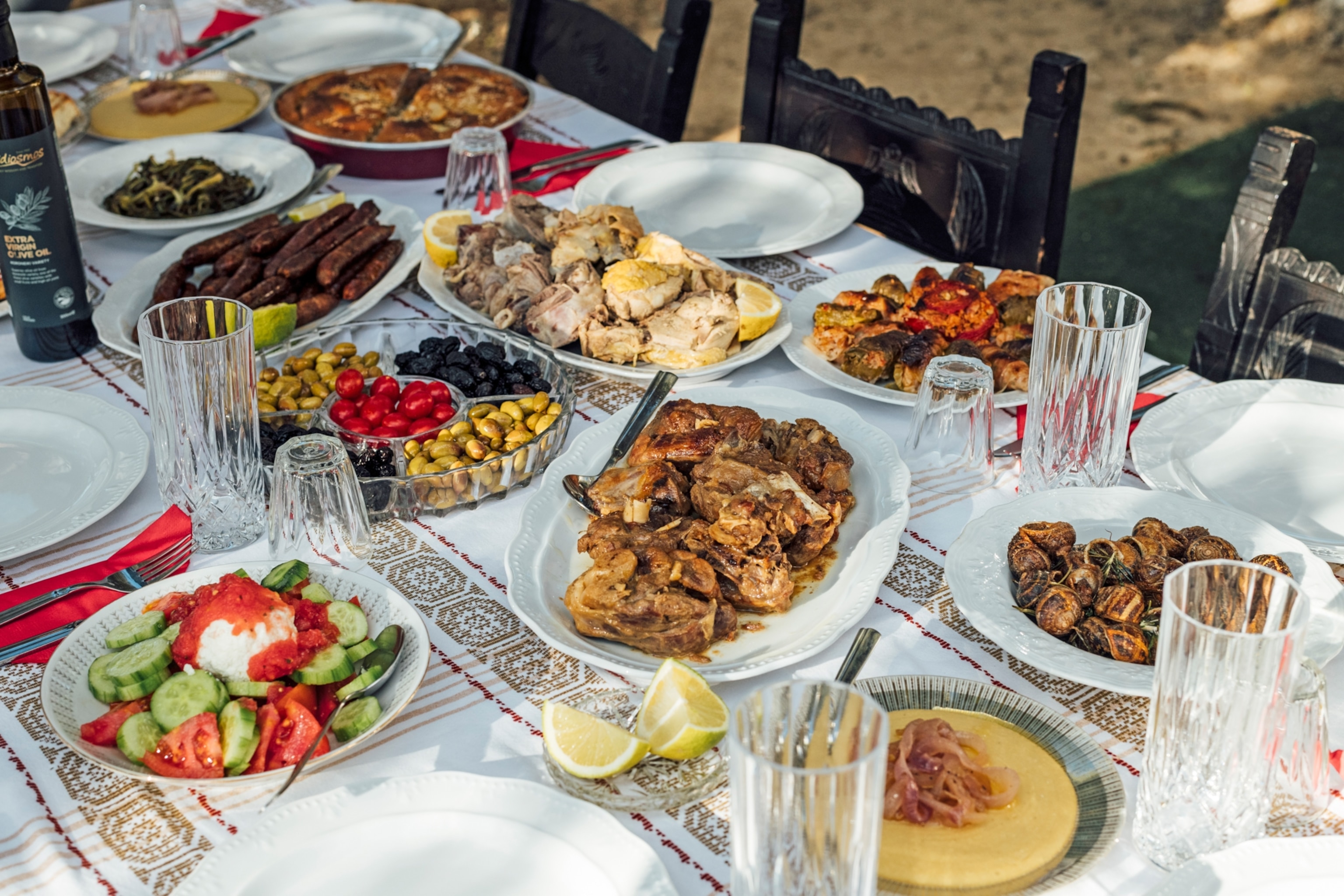
- Crete's Mediterranean Mastery: The Greek island has emerged as the world's most compelling food destination, where ancient olive cultivation, wild herb foraging, and nose-to-tail goat cookery define a cuisine untouched by globalization.
- Tokyo's Dual Identity: The Japanese capital maintains its position as the planet's most Michelin-starred city while simultaneously incubating a radical izakaya culture that rejects formality in favor of anarchic creativity.
- Oaxaca's Indigenous Power: Southern Mexico's culinary capital is experiencing a renaissance of Zapotec and Mixtec ingredients, with mole varieties numbering in the hundreds and mezcal production returning to ancestral methods.
- Naples' Pizza Resistance: The birthplace of pizza is fighting back against industrialized imitation through a strict denominazione and a new generation of pizzaioli treating dough fermentation as a science.
- Taipei's Night Market Evolution: Taiwan's capital has transcended its street food reputation to become Asia's most innovative culinary laboratory, where traditional night market stalls coexist with avant-garde tasting menus.
The global food landscape of 2026 is defined by a paradox. Never has culinary information been more accessible—recipes, reviews, and restaurant livestreams circulate instantaneously across borders—yet never has the physical experience of eating in a specific place mattered more. The destinations that dominate contemporary gastronomy are not merely sources of good meals; they are ecosystems where geography, history, agriculture, and human ingenuity have converged to produce flavors that cannot be replicated elsewhere. To eat in these places is to participate in a form of cultural immersion that transcends consumption.
This guide identifies the destinations where that convergence is most potent in 2026. The selection criteria are deliberately expansive. Michelin stars matter, but so do grandmother recipes, fermentation traditions, and the political economy of food production. The list includes established temples of fine dining and humble street corners where a single dish has been perfected across generations. What unites them is authenticity—a contested term, but one that here signifies a genuine, irreducible connection between what is on the plate and where it is being eaten.
Crete: The Mediterranean's Last Unspoiled Kitchen
The largest of the Greek islands has spent millennia at the crossroads of Mediterranean civilization, yet its cuisine remains remarkably resistant to external influence. The reason is geological and agricultural. Crete's mountainous interior, with its limestone gorges and terraced olive groves, has preserved forms of food production that disappeared from mainland Greece decades ago. The island's signature extra virgin olive oil, pressed from ancient Koroneiki varietals, possesses a peppery intensity that industrial extraction methods cannot replicate. Wild greens known as horta—stamnagathi, vlita, and sorrel—are foraged from hillsides and served simply boiled with lemon and oil, their nutritional density unmatched by cultivated equivalents.
The Cretan diet's fame as a longevity engine, validated by epidemiological studies of the village of Anogia and surrounding highland communities, has paradoxically protected it from touristic dilution. Visitors seeking the Mediterranean diet in its authentic form find not health food but robust, animal-fat-enriched cooking: slow-roasted goat (ofto) in wood-burning ovens, snails cooked with vinegar and rosemary (chochlioi boubouristi), and kalitsounia—hand-rolled pastries filled with mizithra cheese and wild greens. The island's emerging chefs, trained in Athens and London, are returning to apply technical precision to these traditions rather than replacing them.
What makes Crete the premier food destination of 2026 is the accessibility of its supply chain. The taverna owner in Archanes likely pressed the olive oil herself, cured the graviera cheese in her basement, and slaughtered the lamb according to the season. This vertical integration, which would be fetishized as "farm-to-table" elsewhere, is simply the default mode of Cretan food production. The visitor eats not a constructed narrative but an unbroken agricultural tradition.
"On Crete, the question is not where your food comes from. The question is whether you are worthy of eating it. The island does not perform authenticity; it simply never abandoned it."
Tokyo: Precision and Anarchy in Equal Measure
No city possesses Tokyo's concentration of culinary excellence. With over 200 Michelin-starred establishments and a street food culture that rivals any night market in Asia, the Japanese capital offers a density of quality that defies statistical probability. The 2026 landscape, however, is distinguished by a tension between two competing impulses: the relentless refinement of traditional forms and the deliberate disruption of those forms by a younger generation of chefs.
The refinement is visible in the sushi counters of Ginza and Tsukiji, where apprentices still spend years mastering rice temperature and knife angles before touching fish. It is visible in the kaiseki restaurants of Kyoto-trained masters who compose seasonal menus around the exact day of harvest. And it is visible in the ramen shops of Ikebukuro, where broths are simmered for eighteen hours and noodles are extruded to precise hydration percentages. This is the Tokyo of global culinary imagination—disciplined, hierarchical, and technically unsurpassable.
The anarchy is newer and more surprising. A generation of chefs in their thirties and forties, trained in the classical system but impatient with its constraints, has opened izakaya and standing bars that deliberately subvert formality. They serve natural wine with yakitori, apply French butchery techniques to Japanese fish, and plate dishes that reference manga and video game aesthetics. The result is a culinary culture that is simultaneously the most traditional and the most avant-garde in the world, often within the same neighborhood.
Oaxaca: The Indigenous Resistance Through Flavor
Southern Mexico's culinary capital has always been extraordinary, but the 2026 moment is distinct. After decades of marginalization, indigenous Zapotec and Mixtec ingredients, techniques, and knowledge systems are being reclaimed not as folklore but as the foundation of a new gastronomic identity. The result is a cuisine of staggering complexity that is only now receiving international attention commensurate with its depth.
The mole is the most visible expression of this complexity. Oaxaca's seven official moles—negro, rojo, coloradito, amarillo, verde, chichilo, and manchamanteles—are merely the standardized tip of a vast taxonomy. In the villages of the Sierra Norte, families maintain mole recipes with thirty or more ingredients, including chocolate, multiple chili varieties, nuts, seeds, and herbs foraged from specific altitudes. The preparation requires days of grinding, toasting, and simmering, and the results vary not merely by recipe but by the hands that execute them.
Mezcal, Oaxaca's distilled agave spirit, has undergone a parallel renaissance. The industrialized production that dominated the export boom of the 2010s is being challenged by a return to ancestral methods: pit-roasting agave hearts in earthen ovens, crushing by tahona stone, and fermenting in open wooden vats with wild airborne yeasts. The resulting spirits are profoundly site-specific, with flavors that reflect the terroir of individual villages and the agave varietals—tobala, tepeztate, madrecuixe—that grow only in particular microclimates.
Naples: The Dough Fermentation War
The birthplace of pizza is engaged in a struggle for the soul of its most famous export. The Associazione Verace Pizza Napoletana, founded in 1984 to protect the traditional form, has been joined by a younger generation of pizzaioli who treat dough fermentation as a scientific discipline rather than a folk practice. The result is a Neapolitan pizza culture that is simultaneously more rigorous and more diverse than at any point in its history.
The traditional form—San Marzano tomatoes, buffalo mozzarella, 00 flour, wood-fired oven at 485°C, 60-90 second bake—remains legally protected and culturally dominant. But within that framework, innovation is occurring at the margins. Extended cold fermentation, ranging from 24 to 72 hours, is producing dough with deeper flavor complexity and easier digestibility. Heritage grain varieties, including ancient forms of wheat and barley, are being reintroduced to create crusts with distinct nutritional and aromatic profiles. And the topping repertoire, while respecting canonical constraints, has expanded to include local produce—Piemontese anchovies, Calabrian nduja, Campanian friarielli—that express regional Italian identity.
The political dimension is equally significant. Naples' pizza culture is a form of working-class resistance against the industrialized, frozen, and fast-food pizza that dominates global markets. Eating a true Neapolitan pizza in its birthplace is an act of solidarity with a craft tradition that has survived Americanization, globalization, and the pandemic-era collapse of tourism. The pizzaioli who survived 2020-2022 are now the guardians of a heritage that feels more urgent than ever.
Taipei: Asia's Most Democratic Culinary Laboratory
Taiwan's capital has transcended its reputation as a street food paradise to become something more complex: a city where the night market tradition and the fine dining avant-garde coexist in productive tension. The result is a culinary culture that is simultaneously the most accessible and the most intellectually ambitious in East Asia.
The night markets—Shilin, Raohe, Ningxia, and the dozens of smaller neighborhood equivalents—remain the spiritual center. The staples are familiar to global food culture: beef noodle soup, stinky tofu, oyster omelets, bubble tea, and guabao (pork belly buns). But the execution in Taipei is distinguished by a fanatical attention to ingredient quality and technique refinement. The beef noodle soup vendor may source her beef from specific Taiwanese wagyu farms, simmer her broth for twelve hours, and hand-pull her noodles to order. The stinky tofu fryer may maintain a fermentation brine passed down through three generations. These are not industrialized street food products but artisanal expressions within a popular format.
The fine dining layer, which has exploded since 2020, draws on this street food vocabulary while applying modernist technique and presentation. Chefs like Kai Ho at Taïrroir and Zor Tan at Restaurant A are creating tasting menus that reference Taiwanese temple festivals, indigenous foraging traditions, and the island's colonial culinary history. The result is a cuisine that is unmistakably local yet globally legible, capable of satisfying both the Michelin inspectors and the grandmother who remembers Japanese-era food rationing.
| Destination | Signature Experience | Defining Ingredient | Best Season to Visit |
|---|---|---|---|
| Crete, Greece | Highland village feast with ofto and wild greens. | Extra virgin Koroneiki olive oil. | September–October (olive harvest, mild temperatures). |
| Tokyo, Japan | Counter omakase at a Ginza sushi master. | Bluefin tuna (hon-maguro) from Tsukiji. | October–December (peak autumn ingredients). |
| Oaxaca, Mexico | Mole tasting across seven varieties in a Zapotec village. | Chilhuacle negro chili. | July–September (guelaguetza festival season). |
| Naples, Italy | AVPN-certified pizza in a historic Spaccanapoli pizzeria. | San Marzano tomatoes, Campania buffalo mozzarella. | May–June (optimal tomato and basil harvest). |
| Taipei, Taiwan | Night market crawl culminating in a modernist tasting menu. | Taiwanese wagyu beef, indigenous mountain vegetables. | October–November (post-typhoon, pre-winter clarity). |
The Emerging Contenders: Lima, Copenhagen, and Hanoi
Beyond the established destinations, three cities are ascending rapidly in the global culinary consciousness. Lima, Peru, has consolidated its position as the capital of South American gastronomy, with Central and Maido maintaining their global rankings while a second wave of restaurants explores the biodiversity of the Amazon and the Andes. The Peruvian government's investment in culinary diplomacy—positioning its cuisine as a form of soft power—has created infrastructure and visibility that other Latin American capitals struggle to match.
Copenhagen, despite Noma's announced closure in 2024, has proven that its culinary ecosystem is larger than any single restaurant. The New Nordic philosophy, with its emphasis on fermentation, foraging, and hyper-local sourcing, has been absorbed into a broader Danish food culture that now influences everything from school cafeterias to supermarket design. The city's emerging chefs are less focused on Michelin recognition than on building sustainable, community-integrated food systems that may prove more influential in the long term.
Hanoi represents the most dynamic Asian food city outside the established capitals. Northern Vietnamese cuisine, with its emphasis on clarity, balance, and herbal intensity, is distinct from the richer, more sugar-forward traditions of the south. The city's pho culture—morning bowls of beef noodle soup that function as a daily ritual for millions—has been joined by a revival of imperial Hue cuisine, French-Vietnamese bistro cooking, and an emerging natural wine bar scene. The result is a city where the food culture is deepening rather than diluting as it globalizes.
The Path Forward: Eating as Cultural Citizenship
The destinations profiled here share a common characteristic: they are places where food is not merely consumed but is understood as a form of cultural inheritance and identity. To eat in Crete, Naples, or Oaxaca is to participate in a tradition that predates the restaurant, the cookbook, and the food critic. The flavors are inseparable from the landscapes that produced them and the hands that prepared them.
For the contemporary traveler, this presents both an opportunity and a responsibility. The opportunity is to experience cuisines that cannot be replicated through delivery apps or recipe videos. The responsibility is to engage with these food cultures respectfully—to recognize that behind every dish is a supply chain of farmers, foragers, artisans, and cooks whose livelihoods depend on the integrity of the tradition.
The best food destinations in 2026 are not necessarily the most comfortable or the most Instagrammable. They are the places where the connection between land, history, and plate remains visible, tangible, and delicious. To seek them out is to reject the homogenization of global taste and to affirm that food, at its most profound, is a form of place-based knowledge that cannot be exported, only experienced.