
Executive Summary
- Rebel Realignment: A bloc of dissident AIADMK MLAs has formally pledged support to the ruling Tamilaga Vettri Kazhagam (TVK), eroding the principal opposition’s numerical strength.
- Floor Test Sealed: The defection effectively guarantees TVK an unassailable majority in the confidence motion, rendering the opposition’s challenge symbolic at best.
- AIADMK Crisis: Edappadi K. Palaniswami’s leadership faces an existential rupture as the western belt, the party’s traditional stronghold, shows signs of fragmentation.
- Vijay’s Strategy: The TVK leadership is executing a rapid absorption of opposition talent, broadening its coalition beyond the electoral mandate to ensure legislative dominance.
- Opposition Vacuum: The DMK and the rump AIADMK are scrambling to forge a viable counterweight, but the legislative arithmetic now heavily favors the treasury benches.
Chennai, May 12 — The floor test that was supposed to be the opening gambit of a new political era has, before a single vote is cast, turned into a coronation. In a dramatic late-evening development at Fort St. George, a significant bloc of AIADMK legislators broke ranks with the official party leadership and publicly extended support to the ruling Tamilaga Vettri Kazhagam (TVK). The move has not only extinguished any realistic prospect of an opposition challenge to the government’s majority; it has detonated the AIADMK’s internal cohesion and redrawn the power map of Tamil Nadu politics with startling speed.
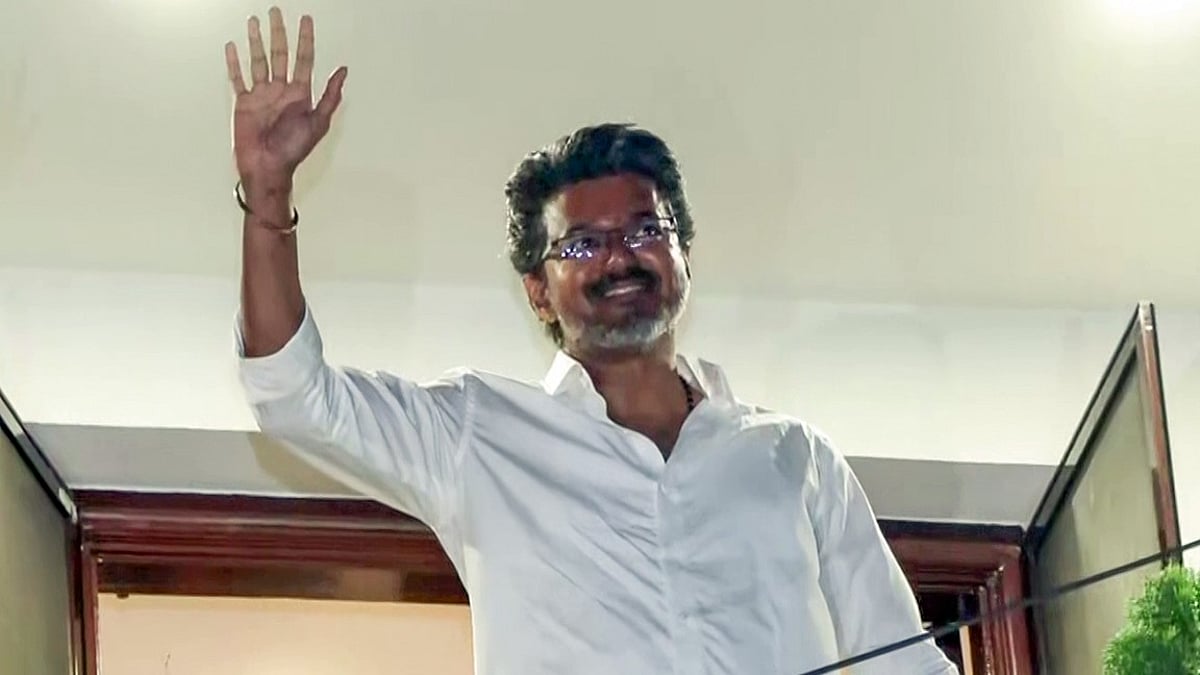
For Vijay, the actor-turned-Chief Minister whose party stormed the assembly in its electoral debut, the rebel backing transforms a workable majority into an overwhelming one. For the AIADMK, the defection represents the most serious fracture since the party’s bifurcation following the demise of Jayalalithaa. And for the DMK, which had hoped to exploit a divided opposition space, the consolidation of power in TVK’s hands threatens to reduce the Dravidian stalwart to a marginal legislative force for the first time in decades.
The Rebel Realignment: How the Numbers Shifted
The defections, announced in a carefully choreographed press conference on the assembly premises, involve MLAs from the AIADMK’s western and southern district bastions. While the exact count remains fluid as procedural formalities are completed, political observers estimate that between eleven and fourteen legislators have crossed the floor or offered letters of unconditional support to the TVK leadership. In a house of 234 members, where TVK already commanded a simple majority through its alliance partners, this additional backing pushes the treasury well past the two-thirds psychological threshold.
The mechanics of the shift are telling. Rather than formally resigning from the AIADMK to trigger by-elections—a high-risk maneuver—the rebel MLAs have invoked the anti-defection law’s intra-party dissent provisions while pledging support to the government on confidence motions. This legal nuance allows them to retain their seats while functionally realigning their legislative loyalty, a tactic that has been employed in Indian state politics before but never on this scale in Tamil Nadu.
The immediate trigger, according to sources within the dissident camp, was a combination of constituency-level neglect and a fundamental disagreement with the AIADMK central leadership’s refusal to acknowledge the depth of the electoral mandate against it. The rebels argue that the party’s refusal to adapt to the post-2026 landscape has rendered it politically irrelevant, and that their support for TVK is a pragmatic effort to secure development funds and ministerial attention for their constituencies.
The Floor Test: From Contest to Formality
Under the Constitution, a Chief Minister appointed by the Governor must prove their majority on the floor of the house within a stipulated window. While TVK’s electoral victory provided a clear mandate, the floor test remains the constitutional moment when the government’s legislative control is formally demonstrated. With the rebel AIADMK MLAs now in the treasury camp, the opposition’s ability to mount even a token challenge has evaporated.
The procedural implications are significant. The protem Speaker, who will preside over the initial proceedings, will now face a lopsided house where the ruling alliance can pass not only the confidence motion but also the election of the substantive Speaker and Deputy Speaker without meaningful resistance. This concentration of procedural power allows TVK to set the legislative agenda, control committee assignments, and dominate the scrutiny of government business for the entire five-year term.
"When the treasury commands this kind of majority, the assembly ceases to be a site of contestation and becomes an instrument of ratification. The opposition’s job is no longer to win votes; it is to stay relevant in the public eye."
— Constitutional Scholar, Madras Law College
AIADMK’s Existential Crisis
The defection has plunged the AIADMK into its deepest crisis since the death of Jayalalithaa. Edappadi K. Palaniswami, who managed to hold the party together through the post-split era, now faces a leadership challenge that strikes at the very heart of his credibility. The western belt—comprising districts like Salem, Erode, Namakkal, and Coimbatore—has been the AIADMK’s impregnable fortress for three decades. The fact that the rebellion is led by MLAs from this region suggests that the party’s social base, built on the Thevar-Gounder-Kongu Vellalar matrix, is no longer monolithic.
Internal party dynamics have compounded the problem. The AIADMK’s organizational structure, which relies heavily on district secretaries with autonomous local fiefdoms, has proven brittle in the face of a charismatic alternative. Vijay’s appeal, which cuts across caste lines in the rural youth demographic, has created a gravitational pull that the AIADMK’s aging leadership has been unable to counter. The rebels, in their public statements, have been careful to frame their move not as a betrayal of the party’s legacy but as a necessary adaptation to a changed political reality.
| Political Formation | Pre-Defection Strength | Post-Defection Estimate | Strategic Position |
|---|---|---|---|
| TVK + Allies + Rebels | ~128 | ~140+ | Unassailable majority; controls Speaker, committees, and legislative agenda. |
| DMK | ~46 | ~46 | Reduced to secondary opposition; must ally with rump AIADMK to mount any challenge. |
| AIADMK (Official) | ~34 | ~20-22 | Leadership crisis; risk of further defections; fighting for official opposition status. |
| Others / Independents | ~26 | ~26 | Fragmented; individual MLAs likely to align with treasury for constituency access. |
TVK’s Consolidation Strategy
For the ruling party, the absorption of AIADMK rebels is not merely a numerical luxury; it is a deliberate strategy of political consolidation. By welcoming dissidents from the opposition, TVK is executing a classic expansion of the winning coalition, neutralizing potential adversaries before they can organize an effective resistance. The move also serves a geographical purpose: the rebel MLAs represent constituencies where TVK’s own organizational footprint remains thin, allowing the government to extend its administrative reach into areas that were electorally hostile.
The risk, however, is ideological dilution. TVK campaigned on a platform of clean governance and anti-dynastic politics, promising a break from the patronage networks that defined the Dravidian era. By inducting seasoned AIADMK operators, the leadership faces the challenge of integrating experienced but politically entrenched figures into a cadre-based organization without alienating its core activist base. The Chief Minister’s office has sought to mitigate this by insisting that rebel support does not guarantee cabinet berths, though political observers note that constituency-level promises are almost certainly being negotiated behind closed doors.
The Opposition’s Dilemma
The DMK, despite being the larger of the two opposition formations, finds itself in a precarious position. With the AIADMK in disarray, the DMK had hoped to claim the Leader of Opposition post and position itself as the primary check on the government. Now, it must contend with a treasury bloc so large that even unanimous opposition cohesion would be insufficient to influence outcomes. The DMK’s legislative strategy is likely to shift from obstruction to selective cooperation, supporting government bills on welfare and development while attempting to corner the administration on law and order and fiscal transparency.
For the rump AIADMK, the immediate priority is survival. Palaniswami must prevent further defections while simultaneously projecting an image of stability to retain the party’s symbol and official recognition. The Election Commission’s rules on intra-party dissent and disqualification will become critical in the coming weeks, as the official faction moves to expel rebels and the rebels challenge the leadership’s legitimacy. The possibility of a formal split, with one faction merging into TVK and the other limping forward as a regional rump, is no longer speculative.
What Happens Next
The floor test, scheduled for the coming session, will now proceed as a formality. The Governor’s address outlining the government’s policy priorities will pass without amendment. The Speaker’s election will be uncontested. And the first budget session will see TVK push through its legislative agenda with minimal friction. For the opposition, the only arena left is the public sphere—using media, local body elections, and civil society mobilization to build pressure outside the assembly.
The longer-term question is whether Tamil Nadu is witnessing a permanent political realignment or a temporary consolidation of power. Historical precedent suggests that overwhelming majorities can breed complacency and corruption, creating space for opposition revival. But Vijay’s personal popularity, combined with the organizational energy of a new party, may prove more durable than the transient waves that lifted previous third forces. For now, the assembly belongs to TVK. The opposition’s task is to ensure that the state does not become a single-party dominion by default.
Nexuswild welcomes factual corrections. Email contact@nexuswild.com with evidence and the article URL.