
Executive Summary
- Festive Tragedy: A 34-year-old man was brutally murdered during Eid celebrations in Ghaziabad's Loni area, turning a religious occasion into a crime scene that has gripped Uttar Pradesh.
- Personal Dispute Escalation: Initial police findings suggest the murder stemmed from a long-standing personal enmity between neighboring families, though investigators have not ruled out broader communal dimensions.
- Law and Order Scrutiny: The killing has intensified criticism of the Yogi Adityanath government's policing record, with opposition parties demanding accountability for deteriorating safety in the National Capital Region.
- Communal Sensitivity: Local authorities have imposed prohibitory orders and suspended internet services in sensitive pockets to prevent the incident from triggering wider religious unrest.
- Forensic Investigation: The Special Operations Group has taken over the case, deploying advanced forensic techniques and facial recognition to identify seven suspects still at large.
The morning of Eid al-Adha in Ghaziabad's congested Loni township began with the familiar rhythms of celebration. Families dressed in their finest attire, children clutching envelopes of eidi, and the aroma of slow-cooked biryani drifting through narrow lanes. By late afternoon, the festive atmosphere had been obliterated by a murder of such brutality that it has since dominated headlines across Uttar Pradesh and forced an uncomfortable reckoning with the fragility of communal peace in India's most populous state.
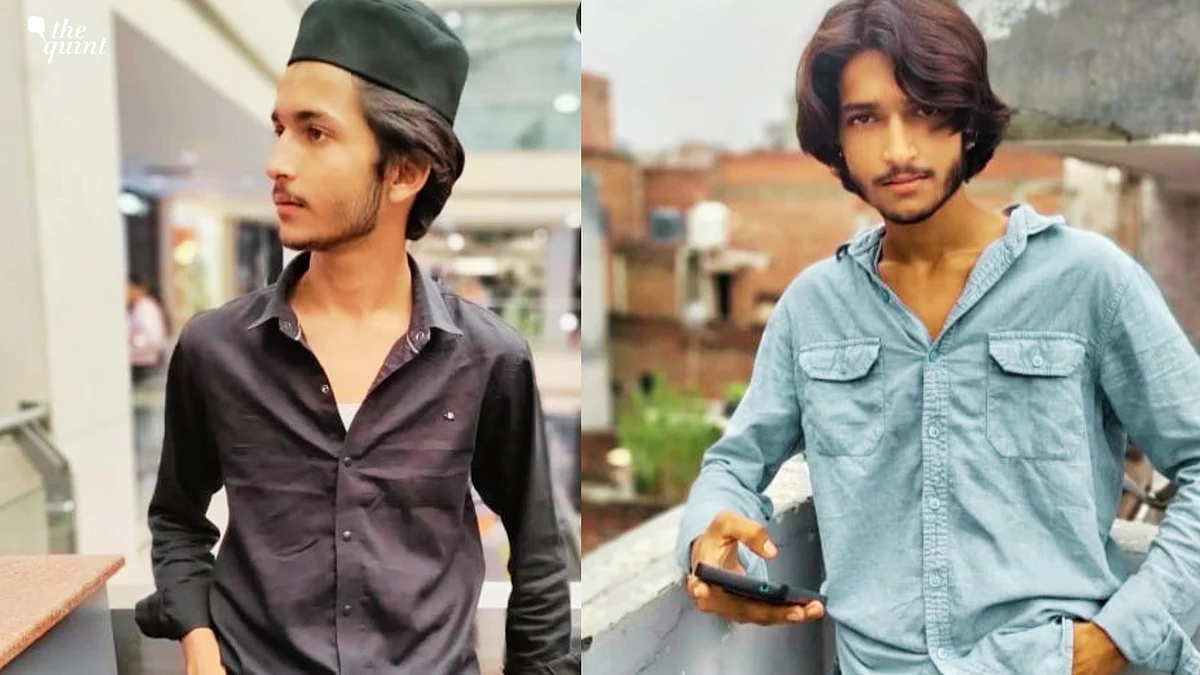
The victim, identified as 34-year-old Arif Khan, a local scrap dealer, was attacked by a group of armed assailants near the Jama Masjid in Loni's Baghpat Road area at approximately 4:30 PM on May 31, 2026. Eyewitness accounts describe a sudden, coordinated assault. Khan was surrounded by seven men wielding knives and iron rods, struck repeatedly in the head and torso, and left bleeding on the street as the attackers fled on motorcycles. He was pronounced dead at the Guru Teg Bahadur District Hospital within the hour.
The Crime and Its Immediate Aftermath
The speed and savagery of the attack suggest premeditation rather than spontaneous violence. According to the First Information Report filed by Khan's elder brother, the family had been embroiled in a property dispute with a neighboring household for nearly three years. The disagreement, originating over a shared boundary wall between adjacent residences in Loni's Qureshi Mohalla, had escalated through verbal altercations, police complaints, and at least one prior incident of physical confrontation in March 2025.
What distinguishes this killing from countless other neighborhood disputes that turn fatal across North India is its timing and location. The murder occurred in broad daylight on one of the most significant religious occasions in the Islamic calendar, within meters of a mosque where hundreds had gathered for Eid prayers. The symbolism was impossible to ignore. Within hours, social media platforms were flooded with unverified videos and inflammatory commentary, some attributing the killing to communal motives despite police statements to the contrary.
The Ghaziabad Senior Superintendent of Police, Nipun Agarwal, moved quickly to contain the narrative. At a midnight press conference on May 31, he confirmed the property dispute angle, named seven suspects based on witness testimony, and announced the formation of a Special Operations Group task force to apprehend the accused. He also imposed Section 144 of the Criminal Procedure Code across Loni and adjacent police station jurisdictions, prohibiting assemblies of more than four persons until further notice.
"This was not a communal incident. It was the culmination of a personal feud that turned lethal. But we are fully aware of the sensitivity of the timing and the potential for mischief. Every resource of the district police is deployed to prevent escalation."
- Nipun Agarwal, Senior Superintendent of Police, Ghaziabad
Investigation Under Pressure: The SOG Takes Over
The Ghaziabad Police Special Operations Group, an elite unit formed in 2023 to handle high-profile criminal cases and organized crime, assumed control of the investigation on June 1. The SOG's mandate includes not only apprehending the seven named suspects - four of whom have been identified as members of the opposing family in the property dispute - but also determining whether the attack was orchestrated with broader intent or local political backing.
Forensic teams have collected blood samples, weapon impressions, and CCTV footage from cameras mounted on the mosque and nearby commercial establishments. The district administration has also invoked the Uttar Pradesh Gangsters and Anti-Social Activities Prevention Act, enabling property attachment and enhanced surveillance of the suspects' known associates. Two of the seven accused have prior criminal records, including charges of extortion and assault, strengthening the police theory that the murder was executed by a locally entrenched criminal network rather than an impromptu mob.
Despite these procedural measures, the investigation faces significant obstacles. Key eyewitnesses, including Khan's brother and several shopkeepers who observed the attack, have reportedly received threats and are reluctant to provide formal testimony without police protection. The remaining five suspects remain at large, and intelligence suggests they may have crossed into neighboring Haryana or Delhi, complicating inter-state coordination.
Political Fallout: Opposition Seizes the Narrative
The murder has provided fertile ground for political contestation in a state where law and order is the defining governance metric. The Samajwadi Party and the Indian National Congress have both issued statements condemning what they describe as a collapse of policing in the National Capital Region, implicitly contrasting the incident with the Yogi Adityanath government's repeated claims of having transformed Uttar Pradesh into a crime-free zone.
Akhilesh Yadav, the Samajwadi Party president, visited Khan's family on June 1, offering condolences and demanding a judicial inquiry into the handling of the prior police complaints filed by the victim. His presence, heavily covered by regional media, was calculated to reinforce the party's Muslim voter outreach ahead of the 2027 state assembly elections. The Congress, through its Uttar Pradesh unit, has organized a statewide protest demanding the resignation of the Ghaziabad police chief and compensation for Khan's family.
The Bharatiya Janata Party's response has been more cautious. Chief Minister Yogi Adityanath issued a terse statement promising "the strictest possible action" against the perpetrators but avoided characterizing the incident beyond its criminal dimensions. BJP spokespersons have accused the opposition of communalizing a personal dispute for electoral gain, while quietly acknowledging internally that any perception of Muslim vulnerability in western Uttar Pradesh could damage the party's carefully constructed Hindu consolidation strategy.
Communal Temperature: Managing the Message
The administrative response to the murder has been shaped by an acute awareness of Ghaziabad's demographic and geographic volatility. Loni sits at the intersection of Uttar Pradesh, Delhi, and Haryana, with a Muslim population estimated at 35 percent and a history of communal incidents dating to the 1987 Meerut riots. The area is also a stronghold of the Tablighi Jamaat and has seen periodic friction between local Muslim communities and Hindu migrant populations from eastern Uttar Pradesh and Bihar.
In this context, the decision to suspend mobile internet services in Loni, Muradnagar, and parts of Hapur district for 48 hours was not taken lightly. The suspension, authorized under the Temporary Suspension of Telecom Services Rules, 2017, was justified by the district magistrate as necessary to prevent the circulation of inflammatory content and the organization of unauthorized processions. Civil liberties organizations have criticized the measure as disproportionate, but local traders and religious leaders have largely supported it, recognizing that a single viral video could transform a localized murder into a regional conflagration.
The role of social media in shaping the incident's aftermath has been particularly fraught. Fact-checking organizations have identified at least fourteen distinct false narratives circulating on WhatsApp, X, and Instagram, including claims that Khan was lynched by a Hindu mob, that the mosque was desecrated, and that police deliberately delayed medical assistance. The Ghaziabad cyber cell has registered cases against six individuals for spreading communal hatred under the Information Technology Act and the Indian Penal Code.
| Administrative Measure | Jurisdiction | Duration / Status | Stated Rationale |
|---|---|---|---|
| Section 144 Imposition | Loni, Muradnagar, Hapur (partial) | Indefinite, subject to review | Prevent unlawful assembly and communal mobilization. |
| Mobile Internet Suspension | Loni, Muradnagar, Hapur (partial) | 48 hours, June 1–3 | Block circulation of inflammatory content and fake news. |
| SOG Investigation Takeover | Ghaziabad District | Active | Accelerate suspect apprehension; probe organized crime links. |
| Gangsters Act Invocation | Named suspects and associates | Active | Enable property attachment and preventive detention. |
| Cyber Cell FIRs | Ghaziabad Cyber Crime Unit | Six cases registered | Prosecute fake news dissemination under IT Act. |
The Victim and the Context: Everyday Violence in Urban Sprawl
Beyond the political and communal dimensions, the murder of Arif Khan illuminates a more mundane reality: the normalization of lethal violence in the ungoverned peripheries of India's megacities. Ghaziabad, officially part of the National Capital Region, functions in practice as a jurisdictional frontier where urban planning, policing, and social services have failed to keep pace with explosive population growth. Loni's population has tripled since 2011, fed by migration from rural Uttar Pradesh, Bihar, and western Bangladesh. Municipal governance is fragmented across the Ghaziabad Nagar Nigam, the Greater Noida Authority, and village panchayats, creating accountability vacuums that criminal networks exploit.
Khan himself was emblematic of this urban precarity. A second-generation scrap dealer operating from a rented warehouse near the Delhi-Wazirabad road, he had no formal property documentation for the land at the heart of the dispute. His family's complaints to local police over three years produced no resolution, in part because the contested plot fell within an ambiguous zone between official municipal boundaries and unrecognized village commons. The murder, in this reading, was not merely a personal feud but the terminal escalation of a property conflict that the state had failed to adjudicate.
For Khan's family, the political and analytical abstractions are irrelevant. His widow, Shabana, and three children have been relocated to a relative's residence in Delhi under police protection. In a brief statement to the press, she demanded only that the accused be hanged. "They killed him in front of God," she said. "On the day of Eid. What justice can there be except the noose?"
The Path Forward: Justice and Prevention
The Ghaziabad murder will be resolved, in a procedural sense, when the seven accused are apprehended, charged, and prosecuted. The SOG has indicated confidence in making arrests within the week, and the evidence assembled - CCTV footage, witness testimony, and forensic matching - appears sufficient to secure convictions under Section 302 of the Indian Penal Code. The Gangsters Act provisions may also enable preventive detention of associates, reducing the risk of retaliatory violence.
But the deeper challenge exposed by the incident is not solvable through policing alone. The communal fault lines of western Uttar Pradesh, the governance deficits of peri-urban sprawl, and the weaponization of social media to inflame religious tensions are structural problems that demand administrative reform, urban planning investment, and digital literacy interventions. The Yogi government has proven adept at managing the optics of law and order; whether it can address the underlying conditions that produce such violence remains an open question.
For now, Ghaziabad holds its breath. The internet suspension will lapse, the political delegations will depart, and the headlines will shift. But in Qureshi Mohalla, where a boundary wall still separates two families now bound by blood, the consequences of this Eid will endure long after the administrative measures are lifted. The question that haunts the neighborhood is not whether justice will be done, but whether the next dispute - over land, over water, over a stray remark - will end with the same finality.
Nexuswild welcomes factual corrections. Email [email protected] with evidence and the article URL.