
Executive Summary
- Historic Rearmament: Germany has approved a €83 billion regular defense budget for 2026, with total military spending reaching approximately €108 billion when combined with the Special Fund, marking a 32% year-on-year increase.
- The Personnel Crisis: Despite record funding, the Bundeswehr remains critically understaffed at roughly 186,000 active soldiers—far short of its 2035 target of 270,000—forcing a national debate on the return of conscription.
- U.S. Missile Ambiguity: Washington's planned deployment of Tomahawk cruise missiles, SM-6 interceptors, and the Dark Eagle hypersonic weapon to German soil faces sudden uncertainty under the Trump administration, threatening to leave a dangerous long-range strike gap in Europe.
- Industrial Bottlenecks: European and U.S. defense manufacturers face severe production backlogs, meaning Germany's procurement surge may not translate into deployable combat power for years, creating a vulnerable transition window.
On March 4, 2026, the German Bundestag formally locked in a defense budget that would have been unthinkable just four years ago. At €83 billion in regular spending—plus another €25.5 billion drawn from the country's Special Defense Fund—Berlin has committed to the largest military expansion in modern German history. The message from Chancellor Friedrich Merz's government is unambiguous: Europe's largest economy intends to build what Merz has called "Europe's most powerful conventional army."
Yet beneath the headline figures lies a far more complicated reality. The Bundeswehr remains plagued by chronic personnel shortages, aging infrastructure, and a procurement bureaucracy so labyrinthine that Defense Minister Boris Pistorius has publicly demanded that industry "stop complaining, start producing." Simultaneously, the United States—long the guarantor of European security—has introduced strategic ambiguity over a planned deployment of long-range precision-strike missiles to Germany, raising the specter of a deterrence gap that money alone cannot close.
The €83 Billion Gamble
Germany's 2026 defense allocation represents a seismic break from decades of fiscal conservatism. Freed from the constitutional "debt brake" for military expenditure, Berlin has embarked on a borrowing-fueled rearmament drive that will see total federal spending reach €520.5 billion. For the Bundeswehr specifically, the regular budget jumped roughly €20 billion from 2025 levels, with procurement receiving the largest share of the increase.
The shopping list is extensive and strategically significant. Germany is funding up to 3,000 Boxer armored vehicles at an estimated €10 billion, approximately 3,500 Patria 6×6 infantry fighting vehicles at €7 billion, and a new tranche of Eurofighter jets costing €4–5 billion. Air defense is receiving particular emphasis, with layered investments in IRIS-T SLM systems, Skyranger mobile platforms, and the Arrow-3 missile defense architecture. ammunition alone accounts for roughly €15 billion in allocated funds—a direct lesson from the industrialized war of attrition raging in Ukraine.
However, the critical question is not what Germany is buying, but when it will actually receive it. The Parliamentary Commissioner for the Armed Forces, Henning Otte, warned in his latest annual report that the Bundeswehr's most pressing constraint is not funding but human capital. With only 186,000 active-duty personnel against a target of 270,000 by 2035, Germany risks fielding world-class equipment without sufficient crews, technicians, and support staff to operate it.
The Personnel Deficit: Equipment Without Crews
The Bundeswehr's manpower crisis is not a recent phenomenon, but it has become acute. Since the suspension of conscription in 2011, Germany's armed forces have struggled to attract and retain talent in a competitive labor market. The average age of contract soldiers has risen steadily, reaching 34 years by late 2024, while promotion bottlenecks and deteriorating base infrastructure have accelerated attrition among experienced non-commissioned officers.
Otte's report leaves little room for diplomatic language: if the current volunteer model fails to generate sufficient recruitment, "the next logical step will be for the state to return to compulsory military service." Defense Minister Pistorius has already proposed a hybrid model beginning in 2026, under which all 18-year-old males would complete suitability questionnaires, with selective service determined by responses. Female participation would remain voluntary, though the Bundeswehr has set ambitious targets of 20% female representation in combat units and 50% in the medical corps—neither of which has been achieved.
For NATO, the implications are severe. Germany is central to the alliance's deterrence architecture in Europe, responsible for enabling capabilities ranging from integrated air defense to logistics and engineering support. If Berlin cannot staff its planned force structure, NATO faces what defense analysts term "equipment without crews"—a hollow force posture that undermines the credibility of deterrence-by-denial along the eastern flank.
"We are no longer in an era where writing checks is enough. If we do not solve the personnel question, we will have the best-equipped ghost army in Europe."
— German Defence Ministry Official, Berlin Security Conference 2026
Washington's Missile Gambit
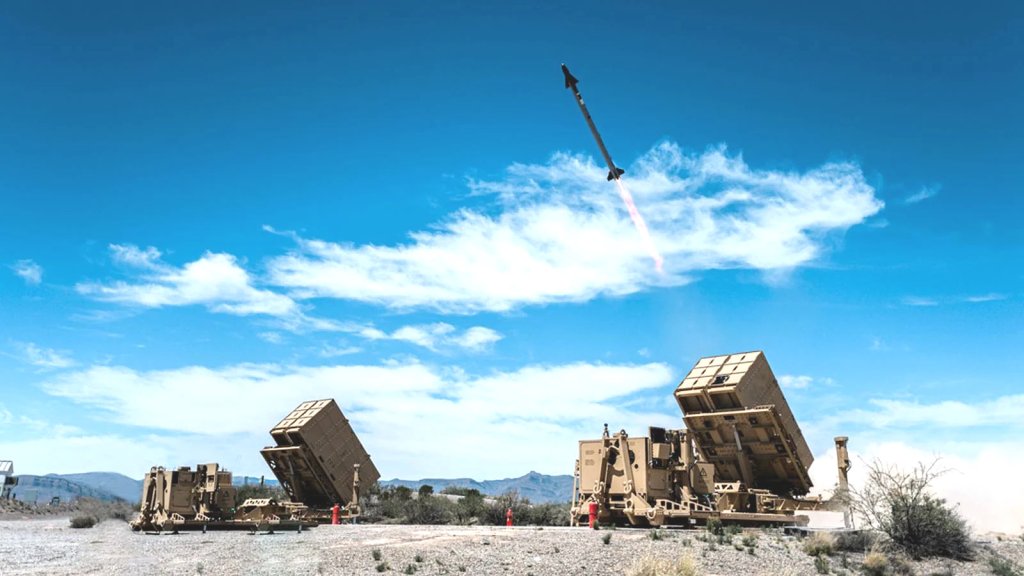
While Berlin struggles to rebuild its conventional forces, the strategic nuclear and long-range precision-strike picture has grown increasingly precarious. In 2024, the Biden administration announced plans to temporarily deploy a U.S. Army Multi-Domain Task Force to Germany, equipped with Tomahawk cruise missiles boasting ranges exceeding 1,500 kilometers, SM-6 dual-capability interceptors, and the developmental Dark Eagle hypersonic weapon. The deployment was explicitly designed to counter Russia's stationing of nuclear-capable Iskander systems and Kinzhal-equipped fighter aircraft in Kaliningrad, which places Berlin within strike range.
The decision was politically delicate from the outset. For Chancellor Olaf Scholz, agreeing to host American long-range missiles on German soil for the first time since the Cold War represented a dramatic break from his traditionally cautious posture toward Moscow. Russian President Vladimir Putin immediately condemned the plan as a provocation that would trigger a "cold war-style missile crisis." Nevertheless, NATO billed the deployment as a necessary response to Russian aggression and a tangible demonstration of the U.S. security commitment to Europe.
That commitment now faces an uncertain future. The Trump administration's abrupt signaling that it may cancel or delay the missile deployment has sent shockwaves through European defense ministries. The Pentagon has reportedly refused to provide NATO allies with a detailed timeline for planned withdrawals of other critical systems—including air and missile defense platforms, strategic airlift, and satellite intelligence—creating planning paralysis in capitals that must decide which domestic investments to prioritize.
Ulrike Franke, senior policy fellow at the European Council on Foreign Relations, described the development in stark terms: "This was a military gap identified by NATO and Germany, a piece of a puzzle and it all made sense. And now this is Trump using wrecking-ball policy to take it all down." The capability gap, she noted, "now isn't going to be plugged anytime soon."
The European Sky Shield and Industrial Reality
Faced with American unpredictability, Germany has accelerated its leadership of the European Sky Shield Initiative (ESSI), a multinational effort to build a layered, integrated air and missile defense architecture across the continent. The initiative, which includes participation from Sweden, the Netherlands, Romania, and others, represents Europe's most ambitious collective defense procurement program since the Cold War.
Germany's own air defense modernization is proceeding on multiple tracks. Beyond the IRIS-T and Arrow-3 investments, Berlin is the largest export customer for Raytheon's SPY-6(V)1 radar, which will equip the future F-127 air-defense frigates. A joint order from Germany, Spain, the Netherlands, and Romania for 1,000 Patriot PAC-2 GEM-T missiles—facilitated by NATO's Support and Procurement Agency—underscores the scale of European demand.
Yet here again, industrial capacity poses a hard constraint. Munitions manufacturers across Europe and the United States are operating at maximum output and still cannot meet demand. Lead times for precision-guided munitions have stretched from months to years, and the specialized workforce required to expand production cannot be trained overnight. Germany's "Bundeswehr Planning and Procurement Acceleration Act," expected to enter force in early 2026, aims to streamline bureaucratic obstacles, but no legislation can instantly conjure missile production lines or skilled defense engineers.
The Special Fund, originally established as a €100 billion one-time injection in 2022, has proven insufficient to cover the full modernization bill. An estimated €67 billion alone is required just to address the Bundeswehr's deteriorating infrastructure—barracks, training facilities, and maintenance depots that have suffered from three decades of neglect.
| Capability Area | Current Status (2026) | Target / Gap | Primary Constraint |
|---|---|---|---|
| Personnel | ~186,000 active soldiers; aging force structure. | 270,000 by 2035; 20% female combat representation. | Volunteer recruitment failing; conscription debate politically divisive. |
| Long-Range Strike | No indigenous deep precision-strike (DPS) capability deployed. | U.S. Tomahawk/SM-6/Dark Eagle deployment now uncertain; European ELSA program years away. | Transatlantic political volatility; European missile development timeline. |
| Air & Missile Defense | Patriot batteries operational; IRIS-T SLM entering service. | Full European Sky Shield coverage; Arrow-3 operational by 2030. | Industrial backlog on interceptors and radar systems; funding absorption capacity. |
| Ammunition Stockpiles | Critical shortfalls in 155mm artillery and precision munitions. | NATO defense planning targets; sustained war-of-attrition reserves. | European production capacity; raw material and propellant bottlenecks. |
| Infrastructure | Deteriorating barracks, training facilities, and maintenance depots. | €67 billion investment backlog cleared by early 2030s. | Construction industry capacity; bureaucratic procurement delays. |
NATO's Five Percent Dilemma
The timing of Germany's rearmament push coincides with NATO's newly adopted spending benchmark of 5% of GDP—split between 3.5% for core defense capabilities and 1.5% for security-related infrastructure. At the Hague summit in 2025, allies agreed to this target, recognizing that the 2% floor established years earlier had become inadequate against a resurgent Russia and an unpredictable United States.
Germany has pledged to reach the 3.5% core target by 2029, a trajectory that would make it one of the alliance's top spenders in both absolute and relative terms. In 2025, German defense expenditure crossed the 2% GDP threshold for the first time since 1990, totaling approximately $114 billion according to SIPRI data. The 2026 budget accelerates that trend dramatically.
However, fiscal constraints elsewhere in Europe threaten to undermine collective burden-sharing. Countries with high public debt ratios and greater geographic distance from Russia—particularly in Southern and Western Europe—face significant political and economic hurdles in meeting the 5% target. As one analysis noted, "countries facing the largest increases required to meet the 5% target are often those with limited fiscal space, lower public support, and greater distance from the perceived military threat."
This uneven burden distribution places even greater strategic weight on Germany's shoulders. If Berlin succeeds in its rearmament program, it could anchor European deterrence and reduce reliance on an increasingly transactional Washington. If it fails—whether due to industrial bottlenecks, personnel shortfalls, or political fatigue—the entire European pillar of NATO risks hollowness at its center.
The Path Forward: Resilience Over Efficiency
As NATO prepares for its July 2026 summit in Ankara, the alliance faces a stark reality: the post-Cold War assumption that European security could be guaranteed by a combination of American power and modest European defense investment is definitively over. In its place, a new model is emerging—one that prioritizes resilience over efficiency, surge capacity over just-in-time procurement, and strategic autonomy over unconditional transatlantic dependency.
For Germany, the coming years will test whether a democracy can rapidly rebuild military muscle after decades of atrophy. The financial resources are now in place. The political will, while contested, has shifted decisively. What remains uncertain is whether Germany's defense industry, its labor market, and its social contract can adapt quickly enough to transform budget lines into deployable, sustainable combat power.
The U.S. missile deployment question encapsulates the broader transatlantic tension. If Washington follows through on its threat to withhold long-range precision-strike capabilities from Europe, the continent will face a dangerous window of vulnerability—measured not in months, but in years—while it races to develop indigenous alternatives under the ELSA program involving Germany, France, Poland, the UK, Italy, and Sweden. During that window, deterrence will rest on capabilities that are promised but not yet delivered, a precarious position against an adversary that has demonstrated both patience and ruthlessness.
The lesson of 2026 is that defense transformation cannot be purchased; it must be built. And building takes time that the current geopolitical environment may not grant.
Nexuswild welcomes factual corrections. Email contact@nexuswild.com with evidence and the article URL.