
Executive Summary
- 2 Billion People, One Month: By 2026, approximately 2 billion people live in areas facing severe water stress for at least one month annually, with urban concentrations amplifying the crisis.
- Groundwater Bankruptcy: Major aquifers beneath Beijing, Delhi, Mexico City, and São Paulo are being depleted faster than natural recharge rates, with some projected to reach critical thresholds by 2030.
- Climate Multiplier: Changing precipitation patterns, glacier retreat, and intensified drought cycles are reducing reliable surface water supplies just as urban populations peak.
- Infrastructure Gap: Global urban water infrastructure requires an estimated $6.7 trillion in investment by 2030 to maintain service levels; current spending covers less than 40 percent of that need.
- Day Zero Precedents: Cape Town's 2018 near-catastrophe was not an anomaly. Chennai (2019), São Paulo (2015), and Jakarta (2024) have all approached or breached urban water collapse.
Water has always been the silent architecture of civilization. Rivers determined where the first cities rose. Aqueducts defined the reach of empire. The Industrial Revolution was, at its core, a story of harnessing water to generate power, process materials, and concentrate populations in places that nature never intended to support millions. What is different in 2026 is that the margin between sufficient water and catastrophic scarcity has narrowed to the point where a single failed monsoon, a prolonged heatwave, or a contaminated reservoir can push a megacity into crisis within weeks.
The statistics are numbing in their scale. The United Nations estimates that by 2025—already in the rearview mirror—1.8 billion people were living in countries or regions with absolute water scarcity, and two-thirds of the global population was experiencing severe water stress during at least part of the year. Urbanization concentrates this stress. Cities occupy 2 percent of Earth's land surface but consume 78 percent of its treated water. They are, by design, dependent on infrastructure that moves water across vast distances, often from watersheds that are themselves under threat.
The Anatomy of Urban Water Vulnerability
Urban water security rests on three pillars: reliable supply, functional infrastructure, and equitable distribution. In 2026, all three pillars are cracking in cities across the developing and developed world. The cracks look different depending on geography and governance, but the underlying physics is the same: demand is growing, supply is becoming less predictable, and the capital required to bridge the gap is not materializing fast enough.
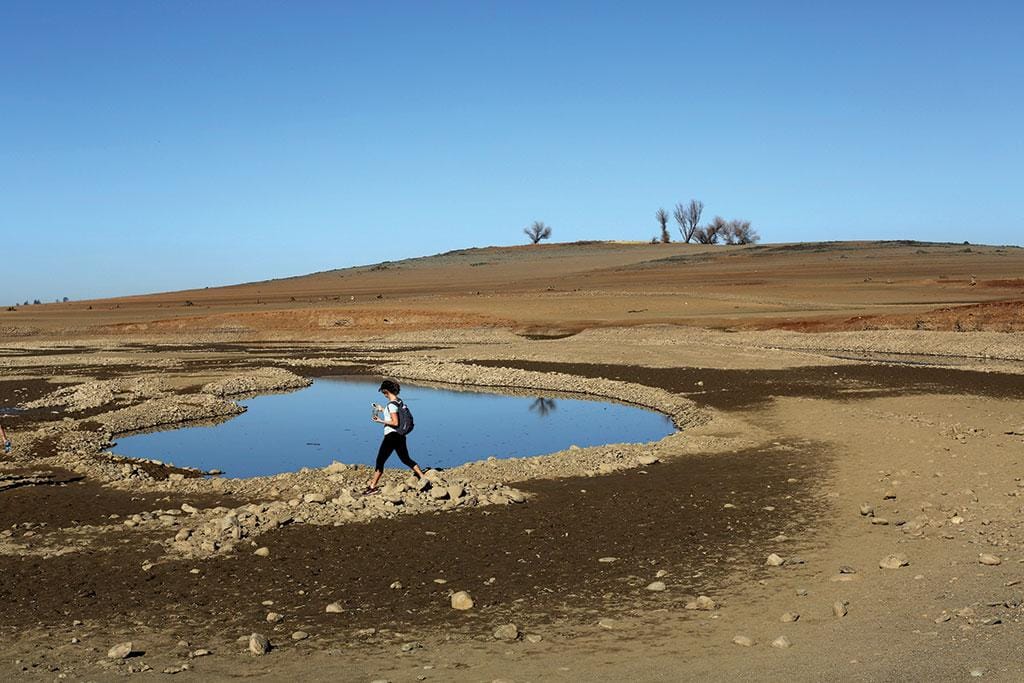
Supply reliability is the most immediate concern. Surface water—rivers, lakes, and reservoirs—remains the primary source for most large cities. But surface water is exquisitely sensitive to climate variability. The Colorado River, which supplies water to 40 million people across the southwestern United States and Mexico, has been in structural deficit for two decades, with reservoir levels at Lake Mead and Lake Powell hovering near the thresholds that trigger mandatory cutbacks. In 2026, negotiations over water allocations between Arizona, California, and Nevada remain unresolved, with federal intervention looming.
In India, the monsoon remains the single largest determinant of urban water security. When the southwest monsoon fails, as it did in 2024 and 2025, reservoir levels across the Deccan Plateau plummet and cities that rely on distant impoundments face rationing. Chennai, which experienced its "Day Zero" in 2019 when all four of its reservoirs ran dry, has invested heavily in desalination and rainwater harvesting since then. But the underlying vulnerability remains: the city still depends on rainfall to recharge its aquifers and fill its tanks.
Groundwater, the invisible buffer that has sustained urban growth for decades, is being exhausted. Mexico City, built on a former lakebed, has sunk more than 10 meters in some areas due to aquifer depletion. The city now pumps water from distances exceeding 100 kilometers, uphill, at enormous energy cost. Beijing's groundwater table has dropped by nearly 30 meters since 1980, forcing the Chinese government to construct the South-North Water Transfer Project—one of the largest engineering feats in history—to move water from the Yangtze basin to the thirsty north.
The Climate Accelerant
Climate change is not creating water scarcity where none existed before. It is amplifying existing vulnerabilities and introducing new ones. The mechanisms are well understood: higher temperatures increase evaporation from reservoirs and soils; altered precipitation patterns shift the timing and intensity of rainfall; glacier retreat reduces the steady summer melt that feeds rivers in high-mountain Asia and the Andes.
The Hindu Kush-Himalayan region, often called the "Third Pole," contains the largest volume of ice outside the polar regions. Its glaciers feed ten of the world's largest river systems, including the Ganges, Indus, Brahmaputra, and Yangtze. These rivers supply water to over 1.9 billion people. Current projections suggest that even under moderate warming scenarios, one-third of Himalayan glacier volume could be lost by 2100. In the near term, meltwater may actually increase river flows, creating a false sense of security. But as glaciers recede past their peak melt contribution, the summer flows that cities depend upon will diminish sharply.
Drought intensity is also increasing. The 2022–2025 drought in the Horn of Africa, the worst in four decades, pushed urban water systems in Nairobi, Addis Ababa, and Mogadishu to the brink. In Nairobi, rationing became so severe that wealthier residents and commercial users relied on private water trucks while poorer neighborhoods went days without supply. The price of tanker water increased by 400 percent, effectively privatizing access to a resource that is supposed to be a public good.
"Water is not running out. What is running out is the margin—the buffer that allowed cities to absorb variability. We built our urban water systems for a stationary climate. The climate is no longer stationary."
— Dr. Giulio Boccaletti, Chief Strategy Officer, The Nature Conservancy
Infrastructure Decay and Investment Failure
Even where water is physically available, it often fails to reach consumers due to infrastructure collapse. Non-revenue water—water that is treated and pumped but lost to leaks, theft, or metering errors—averages 35 percent in developing cities and can exceed 50 percent in the worst cases. Lagos, with a population exceeding 20 million, loses an estimated 45 percent of its treated water to leaks and illegal connections. The water that does arrive is often intermittent, forcing households to store water in rooftop tanks that become breeding grounds for mosquitoes and bacteria.
The global investment gap is staggering. The World Bank estimates that maintaining current levels of urban water service will require $6.7 trillion in capital expenditure by 2030. Achieving universal access to safely managed water and sanitation, the target of Sustainable Development Goal 6, would require an additional $1.7 trillion. Current global spending covers less than 40 percent of the maintenance need and a fraction of the expansion requirement.
| City | Population (Millions) | Primary Water Source | Key Vulnerability | Crisis Proximity |
|---|---|---|---|---|
| São Paulo | 12.4 | Reservoirs / Cantareira System | Deforestation + drought | High (2025 rationing) |
| Cairo | 22.6 | Nile River | Grand Ethiopian Renaissance Dam | Severe (diplomatic) |
| Jakarta | 11.2 | Groundwater (depleted) | Land subsidence + pollution | Critical (2024 collapse) |
| Beijing | 21.8 | Transfer + groundwater | Aquifer depletion | High (managed via transfer) |
| Mexico City | 22.3 | Aquifer / distant imports | Subsidence + overextraction | Critical (structural) |
| Cape Town | 4.8 | Dam reservoirs | Rainfall variability | Managed (post-2018) |
| Phoenix | 5.0 | Colorado River | Structural deficit | High (cutbacks imminent) |
The Geopolitics of Shared Rivers
As surface water becomes scarcer, the rivers that cross international borders are becoming flashpoints. The Nile, shared by eleven countries and critical to Egypt's survival, is the most volatile. The Grand Ethiopian Renaissance Dam, completed and filling in the early 2020s, has fundamentally altered the downstream flow regime. Egypt, which depends on the Nile for over 90 percent of its water, has threatened military action multiple times. In 2026, negotiations mediated by the African Union remain deadlocked, and Cairo is accelerating investments in desalination and wastewater recycling that will take years to offset even a fraction of Nile dependence.
The Indus Waters Treaty between India and Pakistan, signed in 1960 and surviving three wars, is showing strain. Pakistan's lower riparian position makes it vulnerable to upstream Indian hydroelectric and storage projects in Kashmir. Climate-induced glacial melt changes are adding uncertainty to flow predictions that the treaty never anticipated. A renegotiation has been proposed by Islamabad and resisted by New Delhi, leaving the basin in legal limbo just as water stress intensifies on both sides of the border.
The Mekong River, lifeline to 70 million people in Southeast Asia, has been transformed by Chinese dam construction on the upper reaches. The cascade of hydropower projects allows Beijing to regulate flows year-round, but it disrupts the seasonal flood pulse that Vietnamese and Cambodian agriculture depends upon. In 2024, record low wet-season flows devastated the Mekong Delta rice crop, triggering food price spikes and rural-urban migration that further strained Ho Chi Minh City's water infrastructure.
Technological Responses: Desalination, Reuse, and Efficiency
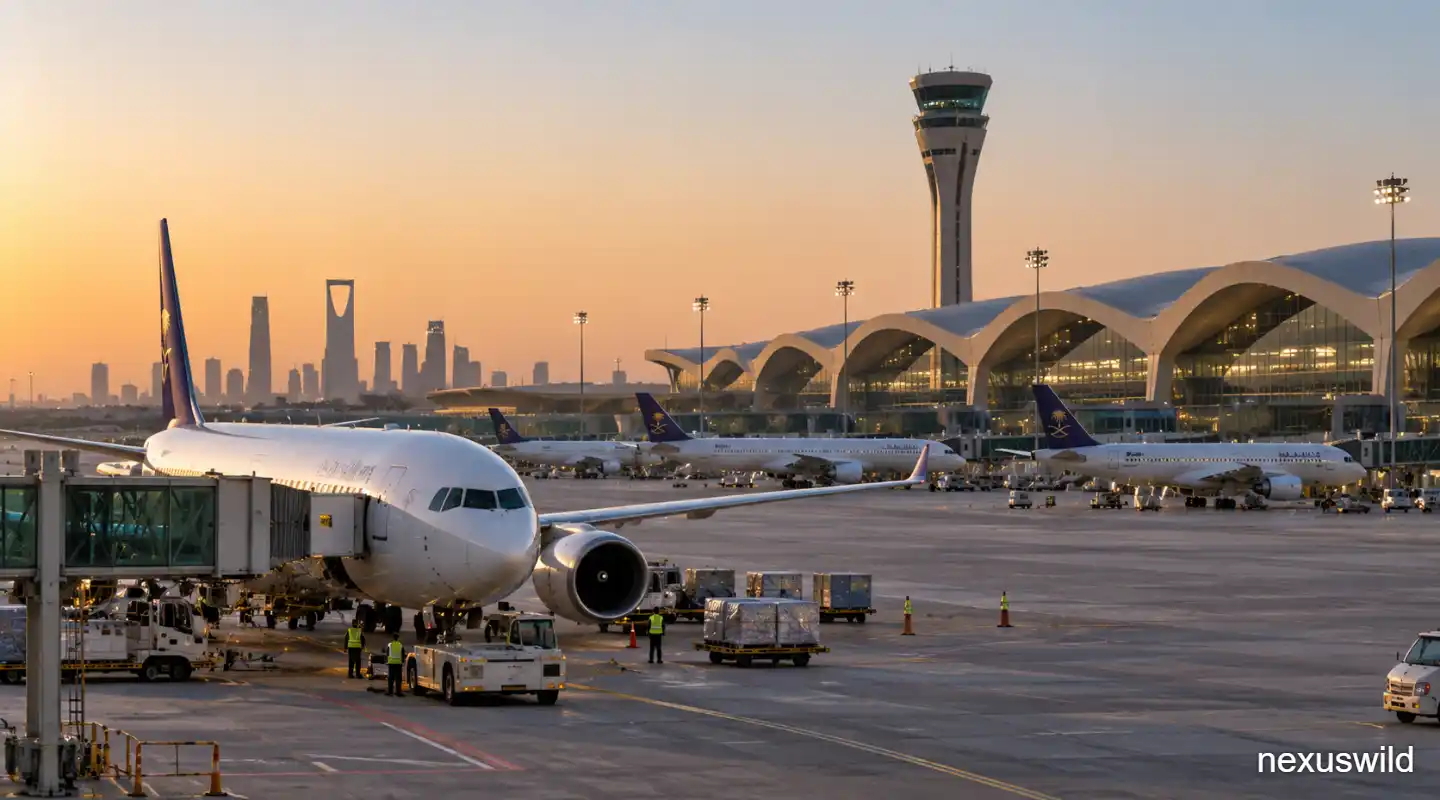
Faced with supply constraints, cities are turning to technology with varying degrees of success. Desalination has expanded dramatically, particularly in the Middle East, North Africa, and Australia. Saudi Arabia now produces more than 7 million cubic meters of desalinated water daily, meeting roughly 70 percent of urban demand. Israel, through a combination of desalination, wastewater recycling, and drip irrigation, has effectively decoupled its economy from freshwater scarcity—though at an energy cost that remains substantial.
Wastewater reuse is less glamorous but potentially more scalable. Singapore's NEWater programme, which treats sewage to potable standards, now supplies over 40 percent of the city's water needs. The technology is proven; the barrier is cultural. "Toilet to tap" remains politically toxic in many jurisdictions, even when the treated water exceeds the quality of conventional supplies. California's efforts to expand indirect potable reuse have been slowed by regulatory caution and public skepticism.
Agricultural efficiency offers the largest untapped source of urban water relief. Agriculture consumes roughly 70 percent of global freshwater withdrawals, with waste levels that are staggering by urban standards. Flood irrigation, still common in India, Pakistan, and the western United States, loses 50 percent or more of applied water to evaporation and runoff. Shifting to drip irrigation, deficit irrigation, and crop switching could free enormous volumes for urban transfer without reducing food production. The obstacle is political: farmers vote, and water reallocations from rural to urban use have triggered protests, litigation, and electoral upheaval from California to Maharashtra.
The Equity Dimension: Who Gets Water When It Runs Short
Water crises are never purely hydrological. They are always social. When supply fails, the distribution of hardship follows predictable patterns. Wealthy neighborhoods maintain service through private wells, tanker deliveries, and political influence. Informal settlements and peripheral suburbs are cut first. Women and girls, who bear the primary responsibility for water collection in most developing societies, lose hours of education and economic opportunity to queueing at communal taps.
In 2024, Jakarta's water crisis exposed these fault lines with brutal clarity. When the city's northern aquifers collapsed due to over-extraction and saltwater intrusion, piped supply to informal riverside communities was suspended for weeks. Residents relied on emergency tanker deliveries that arrived irregularly and were often contaminated. The official death toll from waterborne disease was disputed, but hospital admissions for dehydration and diarrheal illness spiked by over 300 percent in affected districts.
The commodification of water during scarcity raises profound ethical questions. When Cape Town approached Day Zero in 2018, the city implemented severe rationing but maintained supply to wealthier areas with private storage capacity. The crisis accelerated the installation of private boreholes and rainwater harvesting among the affluent, effectively creating a two-tier water system that persists today. Similar patterns are visible in Bengaluru, Santiago, and Tehran: scarcity drives privatization, and privatization deepens inequality.
The Path Forward: Resilience, Not Abundance
The urban water crisis of 2026 is not a temporary disruption that better infrastructure will solve. It is a structural condition of the Anthropocene, in which human demand has outpaced the renewable supply of freshwater in dozens of major basins. The goal for the remainder of this decade cannot be to restore abundance; it must be to build resilience—the capacity to absorb shocks, allocate scarcity fairly, and maintain essential services under conditions of persistent stress.
This requires three convergent strategies. First, demand management must replace supply expansion as the primary policy focus. Pricing water to reflect its true scarcity value, while protecting essential human needs through lifeline tariffs, is the single most effective tool for reducing waste. Second, green infrastructure—wetland restoration, urban forestation, and permeable surfaces—must supplement grey infrastructure by recharging aquifers, reducing runoff, and buffering floods. Third, transboundary water governance must be strengthened before climate stress triggers conflict in shared basins.
The cities that survive the water crisis of the 2030s will not be those with the largest reservoirs or the most desalination plants. They will be those that learned to live within their water budget, to treat every drop as precious, and to distribute scarcity without destroying social cohesion. Water is not optional. Neither, increasingly, is the hard political and technical work of managing its absence.
Nexuswild welcomes factual corrections. Email contact@nexuswild.com with evidence and the article URL.