
Executive Summary
- Iranian Energy Collapse: Sanctions, regional conflict, and aging infrastructure have crippled Tehran's oil and gas output, removing a critical 2.5 million barrels per day from global supply.
- Renewables Surge: The supply shock has triggered an unprecedented acceleration in solar, wind, and battery storage deployment across Europe, Asia, and the Americas.
- Electrification Tipping Point: Transportation, heating, and heavy industry are pivoting to electric systems faster than even the most aggressive IEA net-zero scenarios projected.
- Critical Minerals Race: The transition has ignited a fierce geopolitical contest over lithium, cobalt, and rare earth supply chains, reshaping alliances from the Congo to Chile.
- US-China-EU Green Competition: Energy security is now synonymous with clean technology dominance, turning climate policy into the primary arena of great-power rivalry.
The global energy architecture of 2026 is being rewritten in real time. What began as a regional crisis in the Persian Gulf has metastasized into the single most powerful catalyst for energy transition since the 1973 oil embargo. Iran's hydrocarbon sector—long a pillar of global supply—is now operating at a fraction of its capacity, choked by a tightening web of sanctions, targeted infrastructure degradation, and the strategic decision by Asian importers to diversify supply lines.
The shock has exposed a uncomfortable truth: the world's remaining dependence on concentrated fossil fuel geographies is not merely an environmental liability, but a profound strategic vulnerability. In response, nations are no longer gradually transitioning toward renewables and electrification. They are sprinting.
The Iranian Energy Complex: A System Under Siege
Iran's energy infrastructure has entered a state of acute distress. Years of underinvestment, compounded by advanced sanctions targeting refining technology and maritime logistics, have reduced the country's effective export capacity by nearly 40 percent. The Strait of Hormuz, through which one-fifth of global oil shipments typically flow, has become a high-risk corridor, with insurance costs for tankers transiting the waterway increasing by over 300 percent since early 2025.
Domestically, Iran faces a parallel crisis. Rolling blackouts have become routine even in Tehran, as natural gas shortages force power plants to operate below capacity. The government's strategic decision to prioritize domestic consumption over exports has further tightened global markets, sending benchmark Brent crude prices above $110 per barrel for sustained periods—a level that economists agree acts as a drag on global growth while simultaneously accelerating alternative energy investments.
"We are not witnessing a temporary supply disruption. We are watching the permanent de-risking of the global economy from Persian Gulf hydrocarbons. The cost of inaction on clean energy is now higher than the cost of transition."
— International Energy Agency Executive Director, Davos 2026
The Global Supply Shock: Markets in Turmoil
The removal of Iranian barrels from the market has not occurred in a vacuum. It coincides with disciplined OPEC+ production management and resurgent demand from a post-pandemic industrial rebound in South and Southeast Asia. The result is a structurally tight oil market with diminished spare capacity, amplifying price volatility and forcing importers to confront energy security as an immediate national security imperative.
Europe, which had already severed its reliance on Russian pipeline gas, now finds itself in a double bind. LNG spot markets are fiercely competitive, with Asian buyers willing to pay premiums that European utilities cannot match. Rather than returning to coal—a political impossibility after the 2025 Carbon Border Adjustment Mechanism enforcement—Brussels has accelerated its REPowerEU agenda with emergency legislation mandating faster renewable deployment and grid interconnection.
Developing economies have been hit hardest. Nations from Pakistan to Kenya, dependent on imported fuel for power generation, are facing balance-of-payments crises. The International Monetary Fund has revised down growth forecasts for emerging markets by an average of 1.2 percentage points, citing energy import bills as the primary driver. This economic pressure is, paradoxically, pushing many of these same nations toward decentralized solar and wind as the only viable path to energy independence.
The Renewables Acceleration: From Transition to Surge
The Iran shock has transformed renewable energy from a climate-mandated long-term project into an urgent geopolitical necessity. Global investment in solar photovoltaics, onshore and offshore wind, and battery storage reached $2.1 trillion in the first quarter of 2026—a 68 percent year-over-year increase that dwarfs any previous quarterly surge.
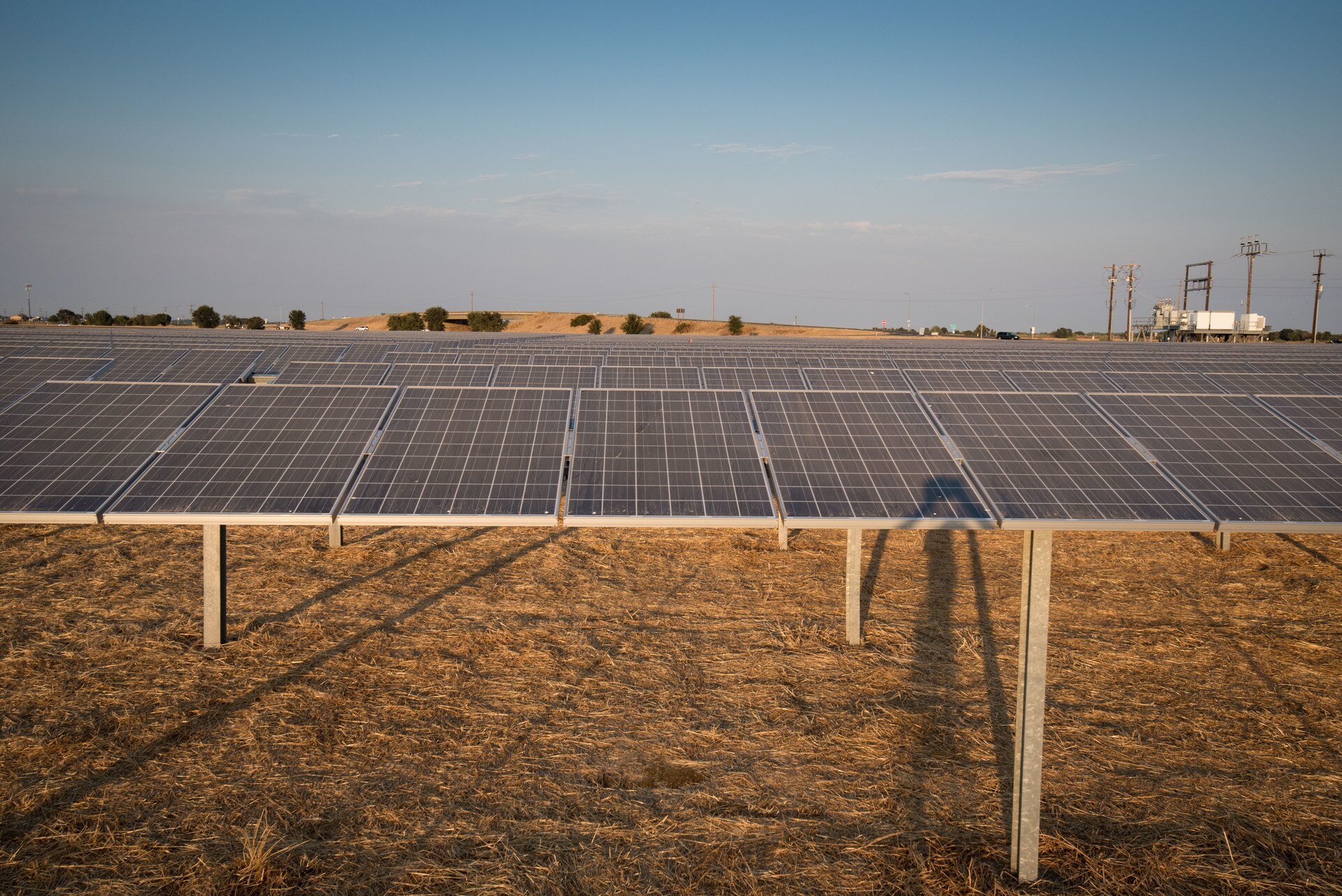
Solar deployment is leading the charge. Module prices, already declining due to Chinese manufacturing scale, have fallen an additional 22 percent as producers anticipate demand. Europe installed 38 gigawatts of new solar capacity in the first four months of 2026 alone, equivalent to its entire 2024 annual total. India has doubled its renewable energy tendering schedule, while Brazil and Chile are racing to exploit their exceptional solar irradiance and wind resources.
The most significant shift, however, is occurring in the United States. The Inflation Reduction Act's clean energy tax credits, already powerful demand drivers, have been supplemented by bipartisan emergency legislation—the Energy Security Acceleration Act of 2026—streamlining federal permitting for transmission lines and renewable projects on federal land. The legislation explicitly frames clean energy as a "strategic asset" in the same category as naval shipyards and semiconductor fabs.
Electrification: Rewiring the Global Economy
Renewable generation is only half the equation. The other half—the electrification of everything that previously ran on combustion—is advancing with startling velocity. Electric vehicle sales have crossed a definitive tipping point in 2026. In China, EVs now represent 58 percent of all new car sales. In Europe, the figure is 47 percent, driven by a combination of high petrol prices and aggressive corporate fleet electrification mandates.
Heavy industry, long considered the final frontier of decarbonization, is showing unexpected momentum. Green hydrogen projects, previously stalled by cost concerns, are receiving fresh capital as industrial gas users seek to insulate themselves from volatile natural gas markets. Steel producers in Germany, South Korea, and Australia are fast-tracking hydrogen-direct reduction plants. The shipping industry, facing both fuel cost spikes and incoming IMO carbon regulations, is placing record orders for methanol and ammonia-compatible vessels.
Buildings and heating are following suit. Heat pump sales in Europe surged 44 percent year-over-year, with governments in Poland, the Netherlands, and the United Kingdom introducing emergency subsidies to accelerate gas boiler replacements. The electrification of heating, once a niche environmental policy, is now framed as a direct response to energy blackmail and price gouging.
Critical Minerals: The New Geopolitical Battlefield
The breakneck pace of electrification has exposed a new chokepoint: the supply chains for lithium, cobalt, nickel, and rare earth elements. These minerals are to the 21st century what oil was to the 20th. China currently dominates refining and processing capacity for nearly all critical battery materials, giving Beijing leverage that Washington and Brussels are scrambling to neutralize.
The response has been a flurry of industrial policy and diplomatic maneuvering. The United States has invoked the Defense Production Act to subsidize domestic lithium extraction in Nevada and North Carolina, while fast-tracking partnerships with Australia and Canada—mineral-rich allies with aligned geopolitical interests. The European Critical Raw Materials Act has been amended to mandate that by 2030, no more than 40 percent of any strategic mineral supply may originate from a single third country.
In Africa and Latin America, the scramble for minerals is reshaping great-power competition. Chinese state-owned enterprises have secured offtake agreements across the lithium triangle of Argentina, Bolivia, and Chile. Meanwhile, Western-backed consortia are investing heavily in the Democratic Republic of Congo's cobalt belt and Zambia's copperbelt, attaching governance and labor conditionality clauses that Beijing typically ignores. The result is a bifurcated mineral order, with resource-rich nations adeptly playing competing powers against one another.
| Energy Vector | 2024 Baseline | Q1 2026 Surge | Primary Driver |
|---|---|---|---|
| Global Solar Deployment | 345 GW annually | 128 GW in Q1 alone | Energy security mandates; module price collapse; grid parity achieved in 140 countries. |
| Electric Vehicle Sales | 17% global market share | 41% global market share | Fuel price volatility; fleet electrification mandates; total cost of ownership parity. |
| Grid-Scale Battery Storage | 42 GW commissioned | 19 GW in Q1 | Grid stability requirements; renewable intermittency management; peak shaving economics. |
| Green Hydrogen Projects | 12 MT annual capacity (planned) | 28 MT capacity (funded) | Industrial gas price hedging; shipping decarbonization; steel sector transition. |
Great Power Competition: The Green Race
The Iran energy shock has fused climate policy with industrial strategy and national security. Clean technology is no longer a moral or environmental pursuit; it is the primary arena of 21st-century great-power competition. The United States, the European Union, and China are each pursuing distinct models of energy dominance, with profound implications for the global order.
China's approach leverages its existing manufacturing supremacy. Beijing has doubled down on solar, battery, and EV exports, using state-directed credit to maintain price leadership even at the cost of short-term profitability. The strategy is clear: dominate the physical infrastructure of the global energy transition, making the world dependent on Chinese clean tech in the same way it was once dependent on Middle Eastern oil.
The United States is responding with an alliance-based model. The "Clean Energy Partnership"—a trilateral framework linking Washington, Tokyo, and Brussels—coordinates investment screening, R&D sharing, and joint financing for mineral extraction in allied jurisdictions. The goal is not merely to decarbonize, but to build a parallel supply chain ecosystem free from Chinese chokepoints.
Europe occupies the most precarious position. It lacks both China's manufacturing scale and America's mineral endowments. Its competitive advantage lies in regulatory standard-setting and green finance. The EU's Carbon Border Adjustment Mechanism, now fully operational, is effectively weaponizing climate compliance as a trade tool, forcing trading partners to align with European decarbonization standards or face punitive tariffs.
The Path Forward: A Permanently Altered Energy Map
As 2026 progresses, it is becoming clear that the global energy map will not revert to its pre-crisis configuration. The Iran shock has demonstrated that fossil fuel supply concentration is an unacceptable strategic risk. Even if Iranian exports were to resume at full capacity tomorrow, the investment decisions already made—solar farms contracted, EV factories tooled, hydrogen plants financed—have locked in a structural shift.
The transition, however, remains uneven and fraught. Grid infrastructure in much of the world is unprepared for the influx of variable renewable generation. Storage technologies, while advancing, have not yet reached the scale required to fully displace dispatchable power. And the social disruption in fossil fuel-dependent regions—from the Gulf states to the American Permian Basin—risks generating political backlash that could slow the transition.
Yet the direction of travel is unmistakable. Energy security in the 21st century is increasingly defined by self-sufficiency through domestically generated renewable electricity, not by the ability to secure tanker routes through contested straits. The Iran crisis has not caused this paradigm shift, but it has dramatically compressed its timeline. What policymakers assumed would take three decades is now unfolding in three years.
For nations that move decisively, the rewards are immense: energy independence, industrial competitiveness, and insulation from the vicissitudes of petrostate politics. For those that hesitate, the penalty is equally clear—permanent exposure to the volatility of a dying hydrocarbon order. The race is on, and the finish line is closer than anyone expected.
Nexuswild welcomes factual corrections. Email contact@nexuswild.com with evidence and the article URL.