
Executive Summary
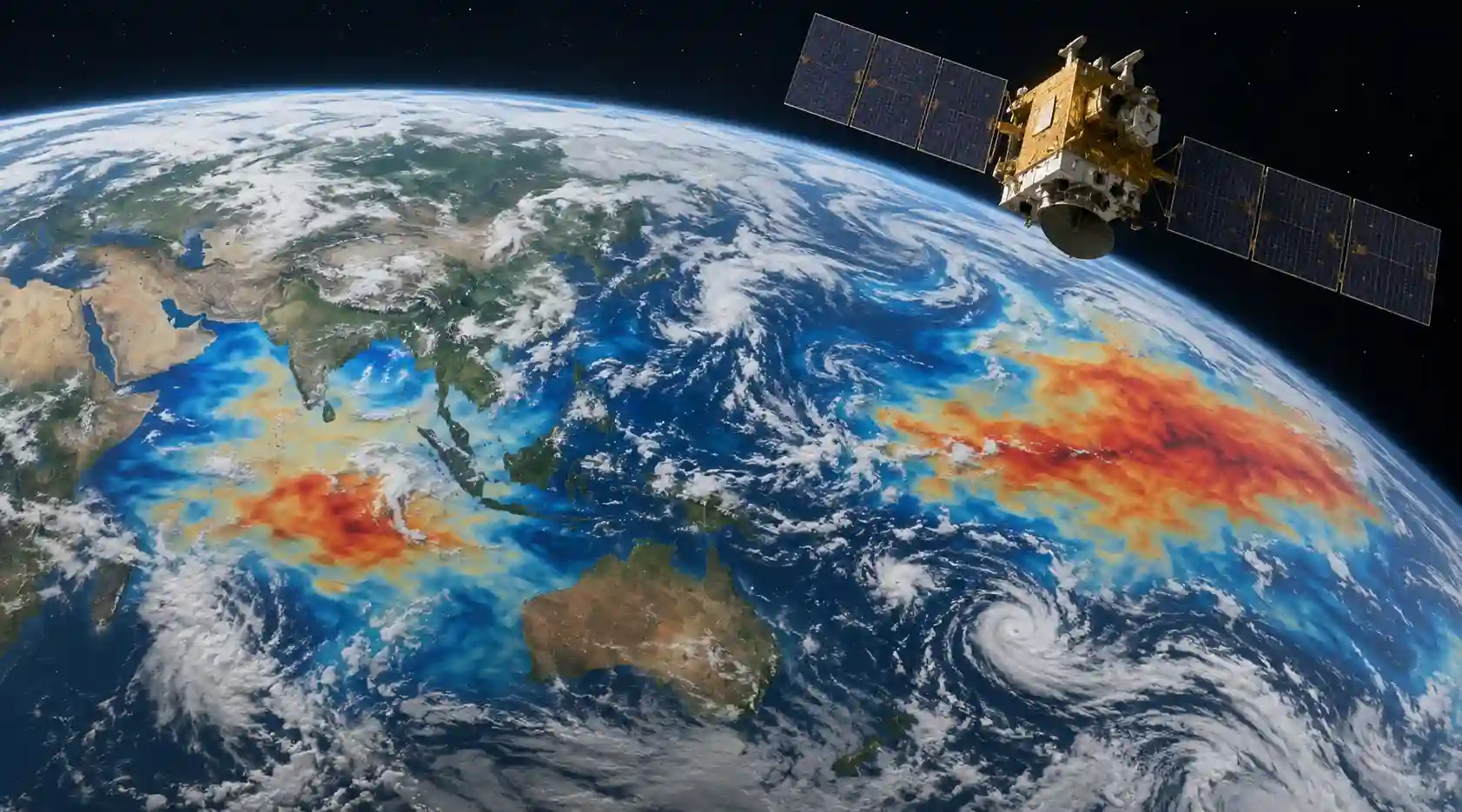
- El Niño Resurgence: The Australian Bureau of Meteorology and NOAA have confirmed the return of El Niño conditions in the equatorial Pacific, with sea surface temperatures 1.8°C above normal, triggering global atmospheric circulation shifts.
- Monsoon Deficit Risk: The India Meteorological Department has revised its southwest monsoon forecast downward to 88 percent of the long-period average, raising the probability of widespread drought in the cereal belt of Punjab, Haryana, and western Uttar Pradesh.
- Food Inflation Threat: A deficient monsoon would reduce kharif rice and soybean output by an estimated 12-18 percent, potentially pushing wholesale food prices up by 8-11 percent and forcing the RBI to delay rate cuts.
- Hydropower and Reservoir Crisis: With reservoir levels already at 65 percent of capacity due to a scorching pre-monsoon summer, a weak rainy season would strain thermal power generation and agricultural irrigation simultaneously.
- Government Contingency: New Delhi has activated the National Disaster Response Fund, restricted rice and wheat exports, and directed states to accelerate drought-resistant crop substitution programs across 142 vulnerable districts.
The arrival of the southwest monsoon over the Kerala coast on June 8, 2026, was greeted with the traditional rituals and relief that mark the beginning of India's agricultural year. But beneath the ceremonial surface, the meteorological data told a more troubling story. The monsoon had arrived on schedule, yet the atmospheric dynamics governing its subsequent trajectory were already being distorted by one of the most powerful El Niño events in the satellite era. For a nation where 55 percent of agricultural land remains rain-fed and where the monsoon is still popularly described as the finance minister the government cannot appoint, the stakes of this season extend far beyond the farm sector into the architecture of macroeconomic stability.
The El Niño-Southern Oscillation, the periodic warming of surface waters across the central and eastern equatorial Pacific, is the single most reliable predictor of Indian monsoon performance. The correlation is blunt and brutal: strong El Niño years correlate with deficient rainfall in 70 percent of recorded instances. The 2026 event, which matured rapidly through the boreal spring, now exhibits oceanic temperature anomalies comparable to the catastrophic drought years of 2009 and 2014. The difference is that India's economy in 2026 is substantially larger, more urbanized, and more globally integrated than in those previous episodes, amplifying both the domestic and international consequences of a failed rainy season.
The Science of Uncertainty: Reading the Pacific
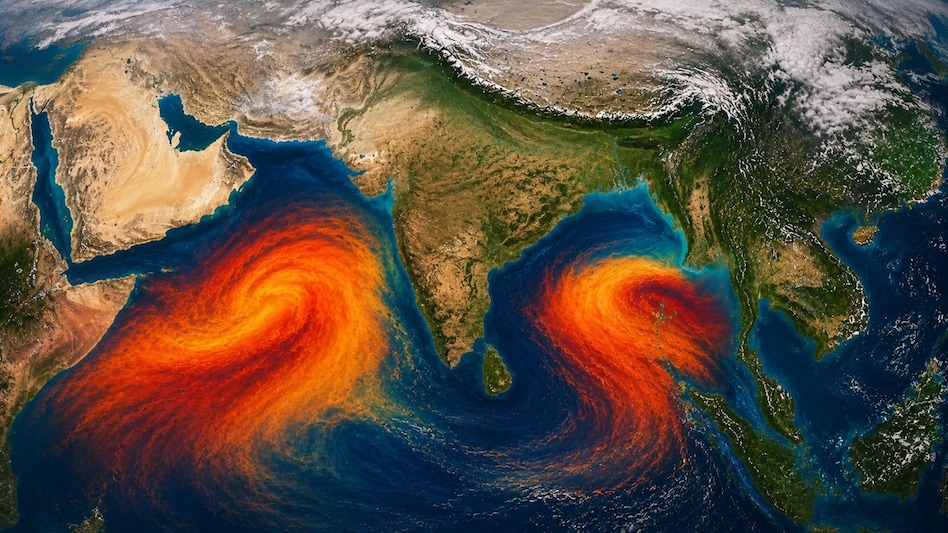
El Niño's influence on the Indian monsoon operates through a teleconnection that atmospheric scientists have studied for decades but still struggle to predict with precision. The warming of the Pacific alters the Walker Circulation, a vast atmospheric loop that normally drives moist air from the Indian Ocean toward the subcontinent. During El Niño, this circulation weakens or reverses, suppressing the formation of monsoon depressions and reducing the westward propagation of rain-bearing systems from the Bay of Bengal.
The 2026 event is distinguished by its intensity and its spatial configuration. Sea surface temperature anomalies in the Niño 3.4 region - a critical monitoring zone in the central Pacific - reached 1.8°C above the 1991-2020 average by late May, placing the event in the "strong" category. More ominously, the warming is concentrated in the central Pacific rather than the eastern Pacific, a pattern associated with particularly severe Indian rainfall deficits. The Australian Bureau of Meteorology, which maintains one of the most sophisticated ENSO tracking models, has assigned a 90 percent probability that the event will persist through the northern autumn, ensuring its influence across the entire monsoon cycle.
Indian meteorologists have responded with cautious but clear downward revisions. The India Meteorological Department's second-stage forecast, issued on June 5, projected monsoon rainfall at 88 percent of the long-period average of 87 centimeters, with a model error margin of 4 percent. This places the official forecast squarely in the "deficient" category, defined as rainfall between 90 and 96 percent of average. The private sector has been less restrained. Skymet Weather Services, which supplies risk analytics to Indian insurers and commodity traders, has issued a forecast of 84 percent, while the European Centre for Medium-Range Weather Forecasts ensemble suggests a range of 82-89 percent.
"We are looking at a monsoon that may arrive but not deliver. The onset is normal, but the distribution and intensity through July and August - the critical months for kharif sowing - are where the El Niño impact will be most destructive."
- Director General, India Meteorological Department, Pune
Agricultural Vulnerability: The Kharif Crop at Risk
The kharif, or summer-sown, agricultural season accounts for roughly 55 percent of India's annual foodgrain output and nearly 70 percent of its oilseed production. The crops most exposed to monsoon deficiency are rice, soybean, cotton, sugarcane, and coarse cereals - staples that collectively determine rural incomes, food prices, and export availability. A rainfall deficit of 12-15 percent, consistent with current forecasts, would reduce yields across these categories by an average of 15-20 percent, with localized losses exceeding 40 percent in rain-fed districts of Maharashtra, Karnataka, and Madhya Pradesh.
Rice is the most politically sensitive exposure. India is the world's largest rice exporter, shipping approximately 22 million tonnes annually to markets from West Africa to Southeast Asia. The government has already restricted exports of broken rice and imposed a 20 percent duty on white rice shipments, but a domestic production shortfall would force far more drastic measures. The Food Corporation of India holds buffer stocks of roughly 32 million tonnes, sufficient to meet public distribution requirements for eight months, but these stocks are calibrated to normal consumption patterns. A drought-driven spike in demand, combined with hoarding behavior by private traders, could deplete reserves faster than anticipated.
Soybean and cotton, the principal cash crops of central India, face a different risk profile. Both are cultivated primarily in rain-fed areas with limited irrigation backup. A weak monsoon would not only reduce yields but also delay planting, compressing the growing window and increasing susceptibility to pest outbreaks in the late season. The knock-on effects would ripple through India's edible oil complex, which is already strained by Indonesia's export restrictions and Ukraine's sunflower oil supply disruptions, and through its textile sector, which depends on domestic cotton for roughly two-thirds of mill consumption.
Macroeconomic Consequences: From Farms to the RBI
The transmission mechanism from monsoon failure to macroeconomic instability is well established in Indian economic history, but its contemporary manifestations are more complex than in previous decades. Agriculture's direct contribution to GDP has fallen below 15 percent, yet its indirect influence - through rural demand, employment, and input costs - remains disproportionately large. A deficient monsoon reduces rural consumption expenditure by an estimated 8-12 percent, depresses two-wheeler and FMCG sales in non-urban markets, and triggers migration flows that strain urban infrastructure and wage structures.
The inflation channel is the most immediate concern for policymakers. Food items account for 46 percent of India's consumer price index basket, and cereals, vegetables, and pulses are the most volatile components. A drought-driven supply shock in rice, pulses, and vegetables could push headline CPI inflation above 7 percent, well beyond the Reserve Bank of India's 4 percent target and its 6 percent tolerance threshold. The RBI, which had signaled a pivot toward rate cuts in the second half of 2026, would almost certainly postpone monetary easing until the inflation trajectory clarifies, keeping borrowing costs elevated for corporates and consumers alike.
The fiscal implications are equally significant. The central government has already activated the National Disaster Response Fund and directed states to prepare contingency plans under the National Disaster Management Act. Drought relief, including input subsidies, fodder provision, and employment guarantees through the MGNREGA rural work program, could add 0.3-0.5 percent of GDP to the fiscal deficit. With the government committed to deficit reduction targets agreed with international rating agencies, this additional spending would force either cuts in capital expenditure or recourse to off-budget financing mechanisms that obscure the true fiscal position.
Water, Power, and the Urban Crisis
The monsoon's significance extends beyond agriculture into the critical infrastructure domains of water storage and power generation. India's reservoir system, managed by the Central Water Commission, entered the 2026 monsoon season at 65 percent of live storage capacity - below the ten-year average of 74 percent - due to an exceptionally hot and dry pre-monsoon period. The shortfall is concentrated in the southern and western peninsular states, where reservoir levels in Karnataka, Tamil Nadu, and Maharashtra are at 50-year lows.
The power sector is caught in a particularly acute bind. Hydropower generation, which provides 11 percent of India's installed capacity and critical peaking power during evening demand surges, is already running 25 percent below normal. The shortfall has been partially compensated by increased coal-fired generation, but thermal plants are themselves facing coal inventory shortages due to transportation bottlenecks and the diversion of rail capacity to grain movement. A weak monsoon would simultaneously reduce hydropower output and increase agricultural pump demand for groundwater irrigation, creating a supply-demand mismatch that could force load shedding in rural and semi-urban areas during the peak summer months of 2027.
Urban water security, already precarious in cities like Bengaluru, Chennai, and Hyderabad, faces an existential test. These cities depend on reservoirs and groundwater recharge that are replenished almost entirely by monsoon rainfall. The 2019 Chennai water crisis, which required emergency tanker shipments and desalination plant expansion, offers a template for what could unfold across multiple metropolitan areas if the 2026 monsoon fails to restore depleted aquifers.
| Impact Sector | Normal Monsoon Baseline | El Niño Deficit Scenario | Economic Exposure |
|---|---|---|---|
| Kharif Rice Output | 112 million tonnes | 94-98 million tonnes (-12 to -16%) | Export restrictions; buffer stock depletion; price spike. |
| Soybean Production | 13 million tonnes | 10-11 million tonnes (-15 to -23%) | Edible oil import surge; inflation in cooking oil prices. |
| Hydropower Generation | 165 billion kWh annually | 120-130 billion kWh (-21 to -27%) | Coal import increase; thermal plant strain; rural load shedding. |
| Reservoir Live Storage | 125 billion cubic meters | 95-105 billion cubic meters (-16 to -24%) | Urban water rationing; irrigation curtailment; groundwater crisis. |
| Rural Consumption | 6.2% annual growth | 2.5-3.8% growth | FMCG demand compression; two-wheeler sales decline. |
Policy Response: Between Relief and Resilience
The Indian government's response to the emerging monsoon threat has unfolded along two tracks: immediate relief and long-term resilience. On the relief side, the Agriculture Ministry has directed states to accelerate the distribution of drought-resistant seed varieties, expand the coverage of the Pradhan Mantri Fasal Bima Yojana crop insurance program, and prepare fodder depots in livestock-dependent districts. The Food Ministry has suspended fresh rice export allocations and is reviewing wheat stock releases to stabilize open market prices. And the Jal Shakti Ministry has initiated emergency water conservation measures, including the rationing of reservoir releases and the enforcement of groundwater extraction limits in overexploited blocks.
The resilience track is more ambitious and more contested. The National Mission for Sustainable Agriculture, launched in 2020, has promoted micro-irrigation, crop diversification, and climate-resilient cultivars, but its implementation remains patchy. Only 14 percent of India's net sown area is under any form of irrigation beyond monsoon dependence, and the pace of drip and sprinkler adoption has slowed due to subsidy delays and supply chain constraints. The government's push for crop diversification - away from water-intensive rice in Punjab and Haryana toward millets, pulses, and oilseeds - is politically sensitive, given the entrenched subsidy and procurement structures that favor cereal cultivation.
Perhaps the most significant policy shift is the growing emphasis on climate risk transfer mechanisms. The India Climate Risk Insurance Facility, a public-private partnership launched in 2024, is piloting parametric insurance products that pay out automatically based on rainfall thresholds rather than assessed crop damage. The 2026 monsoon will be the first major test of this model, and its success or failure will determine whether private capital can be mobilized at scale to absorb agricultural climate risk that the government has historically borne alone.
The Global Dimension: India's Monsoon and World Markets
The international consequences of an Indian monsoon failure are no longer theoretical. India is the world's largest exporter of rice, the second-largest producer of wheat, and a significant player in cotton, sugar, and spice markets. A supply disruption in any of these commodities triggers immediate price adjustments in global food markets, with disproportionate impact on import-dependent developing nations in sub-Saharan Africa and South Asia.
The rice market is the most exposed. Global rice prices, already elevated by Indonesia's export restrictions and Pakistan's production shortfalls, would spike further if India withdrew from export markets entirely. Countries like Senegal, Benin, and Nigeria, which depend on Indian broken rice for staple consumption, would face acute food security crises. The World Food Programme has already flagged the 2026 monsoon as a high-risk scenario in its global supply chain monitoring, and is pre-positioning strategic reserves in East African ports.
For the international climate community, the 2026 El Niño is also a test of early warning system efficacy. The Global Framework for Climate Services, coordinated by the World Meteorological Organization, has invested heavily in monsoon prediction capacity for South Asia. The accuracy of these forecasts, and the speed with which they translate into actionable policy, will be evaluated against the human and economic costs that unfold through the summer and autumn. A successful mitigation of El Niño's impact would validate decades of climate science investment; a catastrophic failure would expose the persistent gap between prediction and protection.
The Path Forward: Living with Climate Volatility
As June progresses and the monsoon establishes its rhythm across the peninsula, the question occupying policymakers, farmers, and traders is not whether El Niño will influence the season - it already has - but whether its influence can be managed sufficiently to prevent systemic crisis. The answer will emerge gradually, through the distribution of rainfall in July and August, the progress of kharif sowing, and the behavior of reservoir inflows. But the structural reality is that India is now operating in a climate regime where monsoon volatility is the baseline, not the exception.
The 2026 season, regardless of its outcome, will accelerate several transitions that have been underway for years. The expansion of irrigation infrastructure, long stalled by funding constraints and inter-state water disputes, will receive renewed political urgency. The diversification of cropping patterns away from water-intensive cereals will gain momentum, propelled by both economic necessity and environmental regulation. And the integration of climate risk into financial planning - from crop insurance to municipal bond ratings - will become standard practice rather than experimental innovation.
For the 120 million farming households whose livelihoods depend on the next four months of rainfall, these structural shifts are distant abstractions. Their immediate reality is the daily anxiety of watching the sky, measuring the soil moisture, and calculating whether the planting investment can be justified when the monsoon promise is so uncertain. The El Niño wildcard has dealt them a difficult hand. How they, and the nation they sustain, play it will define the economic and social contours of 2026 and beyond.
Nexuswild welcomes factual corrections. Email [email protected] with evidence and the article URL.