
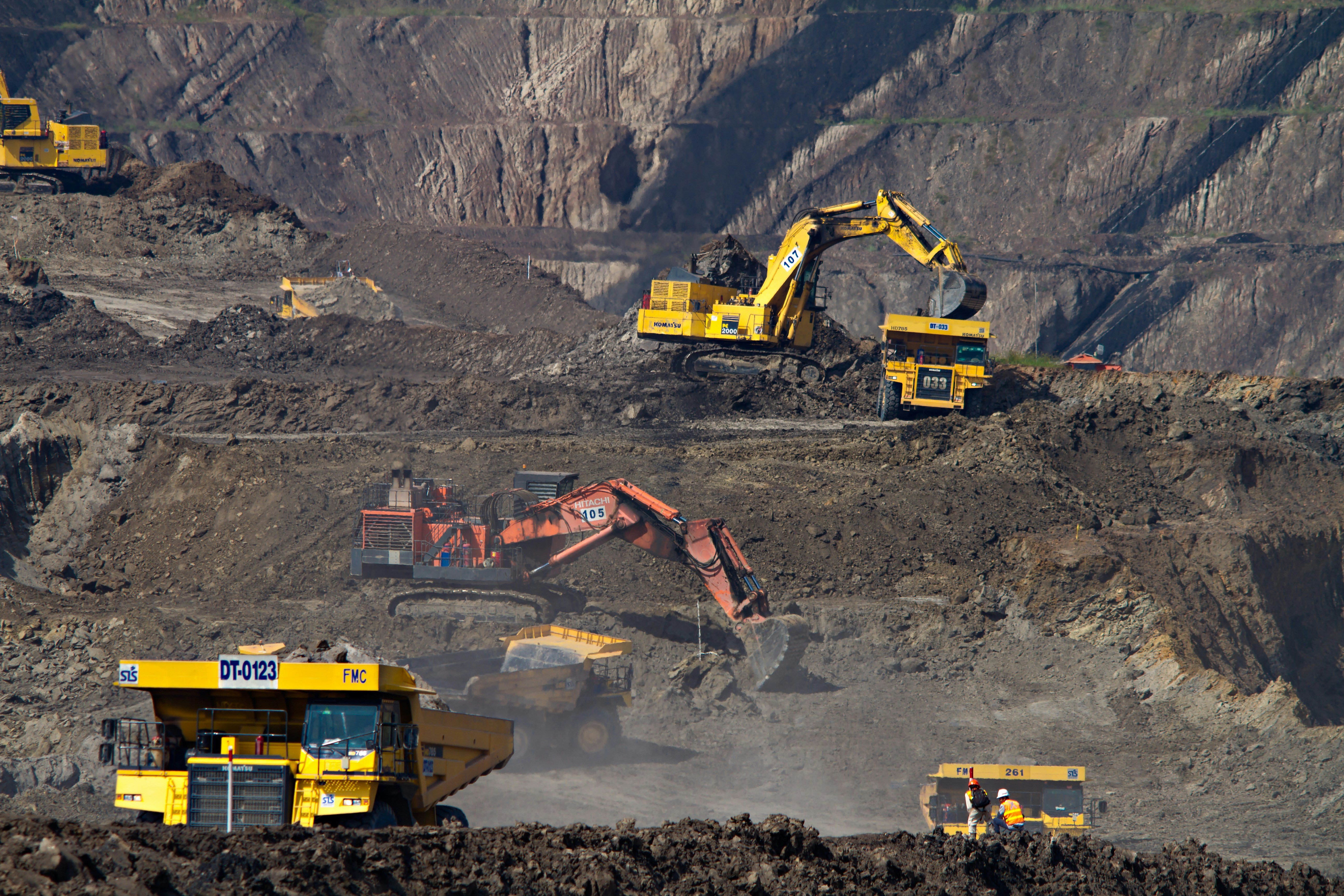
Executive Summary
- Market Concentration: The top 50 mining companies by market capitalization control an estimated 65 percent of global diversified mining output, with Australian and Canadian firms dominating equity listings.
- Copper is King: BHP's $49 billion acquisition of Anglo American in late 2025 cemented copper as the strategic commodity of the decade, with the combined entity controlling roughly 10 percent of global refined copper supply.
- Lithium Reset: After the price collapse of 2023–2024, the lithium sector has consolidated dramatically; Albemarle, Ganfeng, and SQM now control over 50 percent of global lithium chemical production.
- Chinese State Presence: Chinese state-owned enterprises account for 12 of the top 50 by revenue, though Western listings and transparency standards exclude many from market-cap rankings.
- ESG as Cost: Scope 3 emissions reporting, tailings dam standards, and biodiversity offset mandates have added 8–15 percent to capital expenditure budgets across the top tier.
The global mining industry entered 2026 at an inflection point that would have been unrecognizable to the sector even a decade ago. The post-pandemic supercycle in energy transition metals—copper, lithium, nickel, cobalt, and the rare earth elements—has fundamentally reordered the hierarchy of value. Coal, once the engine of mining profitability, is now a stranded asset in the portfolios of most Western majors, while copper deposits in the Atacama and lithium brines in the Andes command valuations that dwarf traditional iron ore assets.
For investors, policymakers, and industrial consumers, understanding the top 50 mining companies is no longer an exercise in commodity diversification. It is a map of the chokepoints through which the energy transition must pass. If these companies cannot expand production fast enough, the electrification of transport and the decarbonization of power grids will stall.
The Tier-One Giants: BHP, Rio Tinto, and the New Copper Cartel
BHP Group, headquartered in Melbourne, remains the world's largest mining company by market capitalization, with a valuation exceeding $160 billion as of Q1 2026. Its dominance is no longer built on iron ore alone—though the Pilbara operations in Western Australia still generate the bulk of revenue—but on a strategic pivot toward copper. The 2025 acquisition of Anglo American's copper assets, combined with BHP's existing Spence and Escondida holdings in Chile, gives the company an unrivaled position in the metal that Goldman Sachs has termed "the new oil."
Rio Tinto, BHP's perennial rival, holds second place with a market cap near $130 billion. Its 2026 portfolio reflects a similar transition. The Oyu Tolgoi underground copper-gold mine in Mongolia, fully ramped up after years of delays, now accounts for nearly 20 percent of Rio's earnings. The company's Simandou iron ore project in Guinea, developed in partnership with Chinese consortia, represents one of the last great untapped high-grade iron ore deposits—but also a geopolitical tightrope.
Vale, the Brazilian iron ore and nickel giant, occupies third place despite lingering reputational damage from the Brumadinho tailings dam disaster of 2019. Its nickel operations in Indonesia, developed through a joint venture with China's Huayou Cobalt, have positioned Vale as a critical supplier to the electric vehicle battery supply chain. However, the company's dependence on Brazilian political stability and its exposure to environmental litigation remain persistent risks.
Glencore, the Swiss-based trader and miner, presents a more complex profile. Its market cap of roughly $65 billion understates its influence; Glencore is the world's largest commodity trader, handling around 3 percent of global oil and 60 percent of traded cobalt. Its 2026 strategy has leaned into recycling and secondary materials, acquiring European battery recycling facilities to hedge against primary mining constraints.
The Energy Transition Miners: Lithium, Nickel, and Rare Earths
The most dramatic reordering in the 2026 rankings has occurred outside the traditional diversified majors. The lithium sector, after a brutal price correction in 2023 and 2024 that bankrupted junior explorers and idled marginal Australian spodumene operations, has consolidated into a tight oligopoly. Albemarle Corporation, based in Charlotte, North Carolina, remains the Western world's largest lithium producer, with operations in Chile's Atacama salt flat, Silver Peak in Nevada, and the recently acquired Liontown Resources assets in Western Australia.
China's Ganfeng Lithium and Tianqi Lithium, alongside Chile's SQM, complete the top tier of lithium chemical production. Together, these four companies control over half of global lithium carbonate and hydroxide output. This concentration has triggered alarm in Washington, Brussels, and Tokyo, prompting a scramble to develop domestic lithium supply chains in the US, Canada, and Europe—projects that remain years from commercial production.
Nickel tells a different story. Indonesia, which banned raw nickel ore exports in 2020, has successfully built a domestic processing industry that now supplies the majority of global battery-grade nickel. Chinese-backed operations, led by Tsingshan Holding Group and Huayou Cobalt, dominate this landscape. Tsingshan, though privately held and thus absent from market-cap rankings, is arguably the most influential nickel producer on Earth, having pioneered the conversion of low-grade laterite ore into battery-grade material via high-pressure acid leaching.
"We are witnessing the mineral equivalent of the oil shocks of the 1970s. The countries that control refining and processing—not just extraction—will dictate the pace of the energy transition."
Geographic Concentration and Political Risk
A striking feature of the 2026 top 50 is the dominance of companies domiciled in just five jurisdictions: Australia, Canada, China, the United States, and South Africa. Australian firms—BHP, Rio Tinto, Fortescue, South32, and a host of mid-tier lithium and gold producers—account for roughly 30 percent of the combined market capitalization of the top 50. Canada's presence is equally outsized relative to its population, reflecting the Toronto Stock Exchange's role as the global listing venue for junior and mid-tier miners.
China's state-owned miners present a methodological challenge. Companies such as China Shenhua Energy, Zijin Mining Group, and China Minmetals generate revenues that would place them in the top 20 globally, but their state ownership, opaque governance structures, and limited free floats complicate market-cap comparisons. Zijin, the most internationally aggressive of the Chinese majors, has built a global portfolio spanning the Democratic Republic of Congo, Argentina, and Serbia, often securing assets that Western companies could not acquire due to ESG constraints or geopolitical sensitivities.
| Rank | Company | Headquarters | Est. Market Cap (USD) | Primary Commodities |
|---|---|---|---|---|
| 1 | BHP Group | Australia | $162B | Copper, Iron Ore, Coal |
| 2 | Rio Tinto | UK / Australia | $128B | Iron Ore, Copper, Aluminium |
| 3 | Vale | Brazil | $85B | Iron Ore, Nickel, Copper |
| 4 | Glencore | Switzerland | $67B | Diversified, Cobalt, Zinc |
| 5 | Freeport-McMoRan | USA | $62B | Copper, Gold |
| 6 | Anglo American | UK | $48B | Platinum, Diamonds, Copper |
| 7 | Newmont | USA | $52B | Gold, Copper |
| 8 | Albemarle | USA | $28B | Lithium |
| 9 | Zijin Mining | China | $55B | Gold, Copper, Zinc |
| 10 | South32 | Australia | $22B | Alumina, Manganese, Silver |
The Gold Resurgence and Safe-Haven Flows
While energy transition metals have captured the strategic spotlight, gold mining has experienced a quiet renaissance. Newmont Corporation, the world's largest gold miner, and Barrick Gold have both outperformed broader equity indices in 2025–2026 as central bank purchasing and retail investment in physical gold drove prices above $2,400 per ounce. Newmont's acquisition of Newcrest Mining in 2024 created a behemoth with operations across Nevada, Ontario, Ghana, and Papua New Guinea.
The gold sector's consolidation reflects a broader trend: the low-hanging fruit of global mining has been picked. New discoveries are deeper, lower-grade, and located in more challenging jurisdictions. The average lead time from discovery to production for a major gold mine now exceeds 15 years, compared to roughly 8 years in the 1990s. This scarcity premium benefits incumbent producers with established reserves.
ESG, Decarbonization, and the Cost of Compliance
No analysis of the 2026 mining landscape is complete without addressing the structural cost increases imposed by environmental, social, and governance mandates. The Global Industry Standard on Tailings Management, established after the Brumadinho and Mount Polley disasters, has required the top 50 companies to commit an estimated $35 billion collectively to tailings dam remediation and monitoring over the next decade.
Scope 3 emissions reporting—covering the downstream use of mined products, particularly coal and iron ore—has forced miners to confront their role in industrial carbon footprints. BHP and Rio Tinto have both set net-zero targets for 2050, but their progress is constrained by the emissions profiles of their customers, particularly Chinese steel mills. The development of green hydrogen-based direct reduced iron, which could decarbonize steelmaking, remains at pilot scale and requires massive new renewable energy capacity in mining regions.
Social license to operate has become an equally pressing constraint. In Peru, Las Bambas and Antapaccay—both critical copper assets—have faced recurrent blockades by indigenous communities demanding revenue sharing and environmental remediation. In the DRC, artisanal mining in the cobalt belt continues to generate reputational risk for major producers, despite industry-led initiatives to formalize supply chains.
| Commodity | 2026 Demand Driver | Supply Constraint | Price Outlook |
|---|---|---|---|
| Copper | EVs, grid infrastructure, data centers | Grade decline, permitting delays | Structural deficit; $10,000+/t sustained |
| Lithium | EV battery cathodes | Concentration in Chile, Australia | Volatile; oversupply risk by 2028 |
| Nickel | Stainless steel, EV batteries | Indonesian processing dominance | Pressure from Chinese oversupply |
| Iron Ore | Steel production (China, India) | Simandou delays, Pilbara depletion | Stable; Chinese demand plateau |
| Gold | Central banks, retail investment | Discovery scarcity, depth | Elevated; safe-haven premium |
The Path Forward: Resilience Through Vertical Integration
As the decade progresses, the most successful mining companies will be those that control not just extraction, but processing and logistics. The energy transition demands metals in refined forms—battery-grade lithium hydroxide, cathode-active nickel sulfate, high-purity rare earth oxides—that require capital-intensive downstream investment. Companies that integrate from mine to refined product will capture margin that pure exporters leave on the table.
Geographic diversification will also separate winners from losers. The top 50 of 2026 are heavily concentrated in jurisdictions that are politically stable today but may not remain so. Chile's constitutional debates over mining royalties, Peru's social unrest, and Indonesia's increasingly assertive resource nationalism all demonstrate that the geological endowment is only one variable in the investment equation.
The mining industry is often caricatured as a relic of the industrial past. In 2026, nothing could be further from the truth. The top 50 mining companies are the gatekeepers of the energy transition, the arbiters of commodity scarcity, and the primary actors in a geopolitical contest over who controls the metals that will power the twenty-first century. Their decisions over the next five years will shape industrial policy, climate outcomes, and the balance of economic power between nations.