
A sourcing decision with a dollar figure
The story that moved through the business press on 27 November was unusually specific for a supply-chain report. Several publications, citing a Reuters account, described global fashion brands shifting hundreds of millions of dollars in garment orders from Bangladesh to India. The most repeated figure was about $254 million, or roughly Rs 2,360 crore, and the brands named included Zara, H&M and Marks & Spencer. That combination of named companies and a quantified order book gave the report a clarity that broad statements about "supply-chain diversification" usually lack.
The immediate context was unrest in Bangladesh, the world's second-largest apparel exporter after China. Buyers who depend on predictable factory calendars and shipping windows reassess risk quickly when the operating environment becomes less certain. The reported move should therefore be read as a sourcing decision under pressure, not as a verdict on Bangladesh's long-term competitiveness. It is a reallocation of specific orders at a particular moment, taken by companies that must keep shelves filled and delivery dates intact.
For India, the development arrived as a useful validation of a long-running policy ambition. Textile industry representatives promptly urged the government to extend support so that the country could convert a short-term opening into lasting capacity. That response is revealing. Indian apparel manufacturers have often argued that they can win more global orders if procedural friction, infrastructure gaps and input costs are addressed. The latest shift gives those arguments a concrete example, but it does not by itself prove that the structural constraints have been solved.
What the reporting establishes
The core reported facts are narrow enough to state precisely. Global brands shifted some orders from Bangladesh to India amid unrest, according to accounts published on 27 November 2026 and carried into the next news cycle. Multiple outlets repeated the $254 million figure, and several named the same three brands. The Reuters original was described as an exclusive, which means other outlets were responding to that reporting rather than independently assembling the same dataset. Readers should keep that attribution chain visible.
Industry representation in India also entered the record. The Clothing Manufacturers Association of India and related trade bodies were cited as seeking government support, including quicker clearances and better infrastructure for textile clusters. That detail matters because it shows how the news was received on the ground: as an opportunity that could be lost if domestic suppliers cannot respond at speed. The request for support is not evidence that support was granted, and it should not be read as a policy announcement.
What the reporting does not establish is equally important. No source reviewed here supports the claim that the named brands have abandoned Bangladesh permanently. Nor does the available coverage establish that every shifted order will remain in India beyond the current production cycle. Apparel sourcing is iterative. A brand can move an order for one season, return it later, or split future volumes across several countries. The accurate formulation is that a defined set of orders moved, and that the reasons given centre on disruption risk and reliability.
Why Bangladesh still matters to global apparel
Any assessment of the shift has to begin with the scale of Bangladesh's role in the industry. The country is not a marginal supplier that can be replaced without consequence. It built a garment sector around deep sourcing networks, large factories, a experienced workforce and preferential access to major consumer markets. Those advantages took decades to assemble. They do not disappear because of one period of unrest, even when individual buyers decide that a portion of their order book needs to be placed elsewhere in the short term.
The same scale explains why buyers rarely make abrupt, total exits from a sourcing hub. Factory relationships involve sampling, pattern approval, fabric procurement, quality control and production scheduling. Moving a full programme from one country to another can take months and carry significant transition costs. A brand that redirects $254 million of orders is making a meaningful adjustment, but it is still a bounded one relative to the overall volume that moves through the Bangladeshi apparel system each year.
This is why the phrase "shift orders" is more accurate than "leave Bangladesh." The reporting describes a tactical response to instability. It also reflects the ordinary practice of dual sourcing, in which large buyers keep alternatives warm precisely so that they can rebalance when one node becomes less reliable. India's gain may be real, but it arrives inside a system that is designed to keep multiple options available rather than toフォロー a single winner.
What India offers, and what it must prove
India's apparel industry has several advantages that become relevant when buyers look for alternatives. It has a large domestic textile base, including spinning, weaving and processing capacity that can support garment production. It has a vast labour pool and a growing set of modern factories capable of meeting international compliance standards. It also has a large domestic market, which gives suppliers a base of demand that some smaller exporting countries lack. These are genuine strengths, and they help explain why India appears on shortlists when buyers reassess risk.
Yet the industry has long faced constraints that prevent those strengths from translating into a larger share of global fast-fashion orders. Lead times can be longer than buyers expect. Fragmented suppliers can make it harder to place large, standardised orders with a single counterparty. Logistics and port handling can add days to a schedule. Industry groups have repeatedly argued that faster clearances and better cluster infrastructure would make a material difference. The current report gives those arguments fresh relevance but does not resolve them.
The practical test will be delivery performance. A brand that moves orders because Bangladesh looks uncertain will not keep them in India if Indian factories miss windows or fail quality checks. The first few production cycles are therefore decisive. If suppliers meet the expected standards on time, the shifted work could become the beginning of a longer relationship. If they do not, the same flexibility that brought the orders to India can return them to Bangladesh or send them to Vietnam, Cambodia or Turkey.
The unrest factor in buyer decisions
Unrest affects sourcing decisions through a very practical channel: uncertainty about continuity. Apparel buyers do not need a factory to close permanently before they act. They need only conclude that the probability of disruption has risen enough to justify a change in order placement. That threshold can be crossed by strikes, transport interruptions, port congestion, policy uncertainty or concerns about worker safety. In this case, the reports tied the reallocation to unrest in Bangladesh without presenting a detailed operational ledger of every disruption.
That distinction matters for readers trying to judge how durable the shift will be. A buyer responding to a transient political episode may reverse course when conditions stabilise. A buyer responding to repeated, structural instability may keep diversifying for years. The available reporting supports the first interpretation more strongly than the second. It describes orders moving amid unrest, not a wholesale reassessment of Bangladesh's place in the global supply chain.
There is also a reputational dimension. Large fashion groups are sensitive to questions about labour conditions and production continuity. When unrest in a major sourcing country becomes a visible news story, procurement teams face pressure to show that they have contingency plans. Moving a portion of orders is one way to demonstrate that. That motivation can be as important as pure cost calculation, and it helps explain why the shift was disclosed through industry channels rather than framed as a routine commercial decision.
The numbers behind the shift
The $254 million figure deserves careful handling. It is a reported value of orders shifted, not a measure of new investment, factory output or long-term contracts. It also appears in multiple forms across coverage: as a dollar amount, as a rupee equivalent and as a broad "hundreds of millions" description in the original account. Readers should treat the more precise figure as the version that circulated through subsequent reporting, and the broader wording as the underlying source description.
The rupee conversion, about Rs 2,360 crore, is useful for an Indian audience because it makes the order size legible in domestic terms. But currency conversion can fluctuate, and the underlying commercial figure is the dollar value. The number should not be read as annual revenue for Indian factories. It reflects a set of orders that moved at a point in time, with no published breakdown of how many factories, workers or product categories were involved.
No source reviewed here provides a full list of the affected products or production windows. That gap limits what can be said about employment effects. A large order value can be spread across many garments and many facilities, or concentrated in a smaller number of high-volume programmes. Without that detail, the safest conclusion is that the shift is commercially meaningful but not yet quantifiable in terms of jobs, capacity utilisation or export growth.
Suppliers, workers and lead times
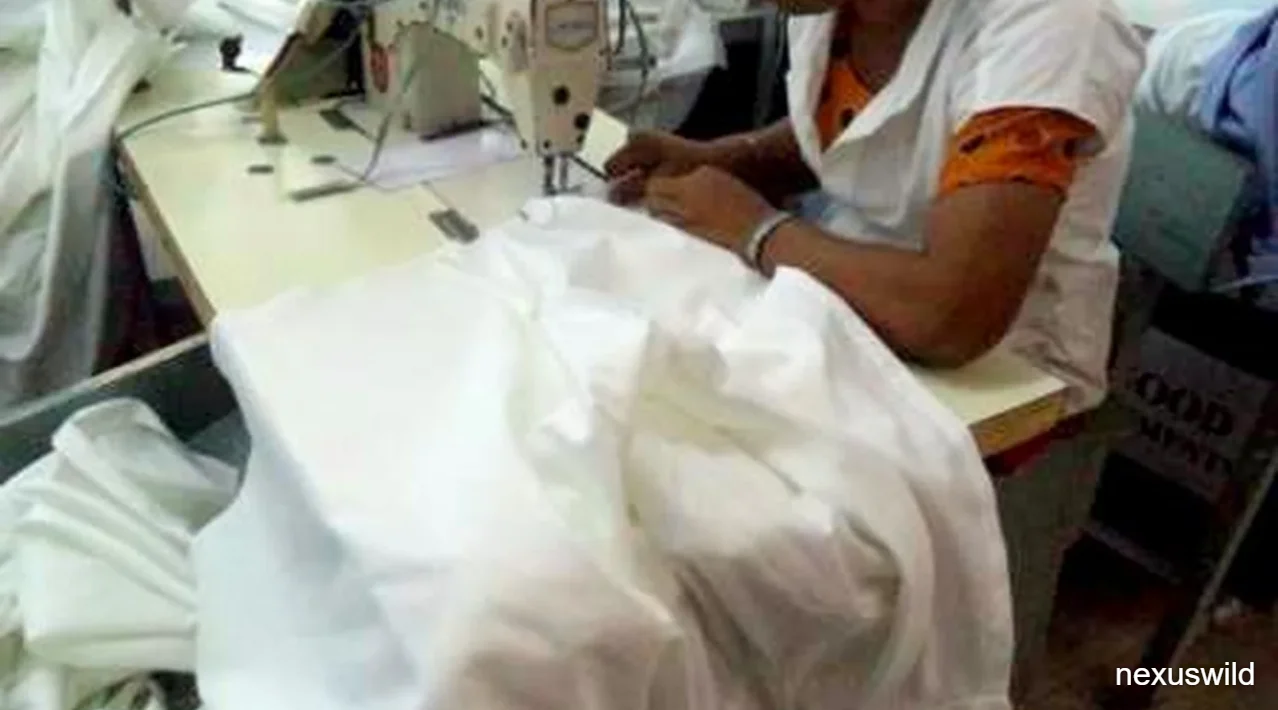
Behind every order shift are decisions taken by sourcing managers and factory owners. A garment order is not a abstract number. It involves fabric approvals, cuts, stitching, finishing, labelling and shipment. Each stage has a calendar, and a late input can compromise an entire delivery window. When buyers move work quickly, they ask suppliers to absorb some of that coordination cost. Indian factories that won the reported orders therefore took on both an opportunity and a demanding test.
Workers are also part of the equation. A new order book can add shifts and overtime at factories that have the capacity to absorb it. It can also create pressure if deadlines are tight. The reporting did not include detailed accounts from workers at the facilities involved, so it would be speculative to describe the labour outcome in either direction. What can be said is that order movement of this size eventually translates into shop-floor activity somewhere, and that the quality of that activity depends on local management and compliance standards.
Lead time is the metric that buyers will watch most closely. Fast-fashion and mid-market chains increasingly compete on speed as much as price. If Indian suppliers can meet shorter windows reliably, the shifted orders could open the door to more work. If they cannot, the buyers have already demonstrated that they are willing to move. That willingness cuts both ways, and it is the most important commercial lesson in the entire episode.
Investor reaction and policy pressure
The market response to the report was immediate in India. Textile and apparel stocks drew attention as investors looked for companies that could benefit from a redistribution of global orders. That reaction is understandable, but it should not be confused with confirmed earnings. A share-price move reflects expectations about future order flow, not a finished financial result. The companies that actually receive the work may see revenue only after production and shipment, and margins will depend on execution.
Policy pressure followed a similar logic. Industry bodies used the news to renew calls for support, including faster approvals, better logistics and assistance for textile clusters. Those demands are familiar, but the report gave them a new urgency. The argument is straightforward: if global buyers are already testing India as an alternative, the government can either make the country easier to do business with or watch the opportunity pass. That argument is persuasive, though the coverage does not establish any new policy commitment.
For investors, the key distinction is between a news-driven re-rating and a durable change in order books. A stock can rise on the headline and still give back the gain if subsequent results disappoint. Conversely, a company that quietly wins repeated orders may see little immediate attention. The sensible approach is to wait for disclosures, export data and management commentary before treating the shift as a financial trend.
What remains unconfirmed
Several plausible claims sit just outside the available evidence. It would be easy to say that Bangladesh is losing its apparel crown, or that India is poised to become the next China of garment manufacturing. Neither claim is supported by the reporting reviewed here. The documented event is a defined shift in orders by a handful of large brands. That is a meaningful data point, but it is not a wholesale reordering of global apparel capacity.
The identity and location of the Indian factories involved also remain unconfirmed in the public coverage. Without that information, it is impossible to judge whether the work went to established export houses, newer units or a mix of both. It is likewise unclear whether the orders were placed with suppliers who already served these brands elsewhere or with entirely new counterparties. Those details would materially affect the likelihood of repeat business.
Finally, the duration of the arrangement is unknown. Some orders may be for a single season. Others could become part of a longer-term dual-source arrangement. The reporting does not say. NexusWild has therefore kept the language deliberately bounded: orders shifted, reasons cited, opportunities identified, outcomes unverified. That discipline is more useful than a dramatic conclusion that the facts cannot support.
Regional consequences for Asia's garment map
The shift belongs to a wider pattern in which apparel buyers maintain a portfolio of sourcing countries rather than relying on one. China remains the largest exporter, Bangladesh is a central second node, and countries such as Vietnam, India, Cambodia and Turkey compete for different segments. Within that structure, order movement is common. What makes the latest report notable is the combination of unrest, named global brands and a quantified value.
For India, the regional implication is that the competition is not only with Bangladesh. Even if the country converts this opening into repeat orders, it will be competing against established alternatives that already have deep buyer relationships. Vietnam, for example, has built a strong position in certain categories, while Bangladesh retains advantages in basic knitwear at scale. India's opportunity is therefore specific: it can win work where its strengths match the buyer's needs, rather than replacing any single country across the board.
For Bangladesh, the risk is reputational as much as commercial. A single shift of this size will not redefine the country's export position. But if similar announcements accumulate, buyers may begin to price a higher risk premium into sourcing decisions. That would be a slower and more consequential change than the order shift itself. The coming months will show whether the reported move was an isolated reaction or the first visible sign of a broader reallocation.
The signals to watch next
The clearest evidence of a durable shift would be repeat orders. If the same brands place additional volumes with Indian suppliers in subsequent seasons, the initial move becomes part of a pattern. Public confirmation from the companies involved would also help, though fashion groups rarely discuss individual supplier decisions in detail. Export data from India and Bangladesh, broken down by garment categories, may offer a more reliable indirect signal.
Policy implementation is another marker to watch. If industry requests for faster clearances or cluster support are followed by concrete measures, India's ability to retain the work would improve. If the responses remain rhetorical, the structural constraints identified by trade bodies will continue to matter. Investors should also watch company disclosures and order-book commentary rather than relying solely on headline-driven share moves.
The final signal is stability in Bangladesh. If conditions normalise and production schedules recover, some buyers may restore previous order patterns. If disruption persists, diversification is likely to continue. The reported shift should therefore be followed, not filed as a settled story. Its importance lies less in the $254 million figure alone than in what that figure reveals about how quickly global fashion supply chains can adjust when reliability comes into question.
Nexuswild welcomes factual corrections. Email contact@nexuswild.com with evidence and the article URL.