
Finnable Raises ₹405 Crore in Series C Led by Bharat Value Fund as AUM Crosses ₹4,600 Crore
Bengaluru-based digital lender Finnable has announced a ₹405 crore Series C funding round led by Bharat Value Fund, adding fresh institutional capital as the company expands its retail lending operations across India. Bharat Value Fund, managed by The Wealth Company Alternates and part of the Pantomath Group, contributed ₹150 crore to the round.
The investment brings in new backers Pratithi Investments, associated with Infosys co-founder Kris Gopalakrishnan's family, and NKSquared, the investment vehicle of Zerodha co-founders Nithin and Nikhil Kamath. Existing investors TVS Capital and Claypond Capital also participated, according to funding reports.
The fundraise arrives as Finnable reports assets under management (AUM) of more than ₹4,600 crore in October 2026. The company also reported ₹51 crore in profit after tax (PAT) for the first half of FY2026–27, exceeding the approximately ₹46 crore it recorded for the entire previous financial year.
The funding announcement is subject to an important qualification: the ₹405 crore figure is provisional pending final allotments and completion of regulatory filings, according to the company's release as reported by YourStory.
Bharat Value Fund Leads the ₹405 Crore Investment
Bharat Value Fund's ₹150 crore investment represents the largest individually disclosed commitment in the round. The fund is managed by The Wealth Company Alternates, which is part of the Pantomath Group.
The investment is also reported to be Bharat Value Fund's first in the fintech and non-banking financial company (NBFC) segment. Its entry gives Finnable a new institutional backer at a time when regulated lenders are competing to expand their retail credit portfolios while managing funding costs and borrower risk.
The round also brings in two investors with prominent technology-sector associations.
Pratithi Investments is linked to Infosys co-founder Kris Gopalakrishnan's family, while NKSquared is the investment vehicle of Zerodha co-founders Nithin and Nikhil Kamath. Their participation adds investors with experience and exposure across India's technology and financial-services ecosystem.
TVS Capital and Claypond Capital are among the existing investors reported to have participated. Claypond Capital is associated with Manipal Group chairman Ranjan Pai. Z47 was a lead investor in Finnable's November 2025 equity raise, but its participation in the latest Series C should not be assumed without confirmation.
AUM Crosses ₹4,600 Crore as Profitability Improves
Finnable's latest funding round follows a period of substantial expansion in its lending operations.
The company said its AUM crossed ₹4,600 crore in October 2026. That compares with approximately ₹3,000 crore around its previous ₹500 crore equity raise announced in November 2025.
Its profitability has also strengthened. Finnable reported ₹51 crore in PAT for April–September 2026, exceeding the ₹45.9 crore consolidated PAT recorded for FY2026, according to CRISIL's September 2026 rating rationale.
The earlier financial trajectory was less established. Entrackr reported consolidated revenue of ₹278.49 crore and PAT of ₹6.74 crore in FY2025, compared with revenue of ₹181.7 crore and a loss of ₹5.88 crore in FY2024.
These figures indicate that the lender has moved from relatively modest earnings to a more substantial reported profit base. However, one half-year result does not establish that the same earnings trajectory will continue. Sustained profitability will depend on funding costs, operating expenses, loan recoveries and credit losses as the portfolio grows.
Three Lending Businesses Form the Expansion Strategy
Finnable's business is no longer limited to unsecured personal loans. Its lending operations include three broad product areas:
- Personal loans
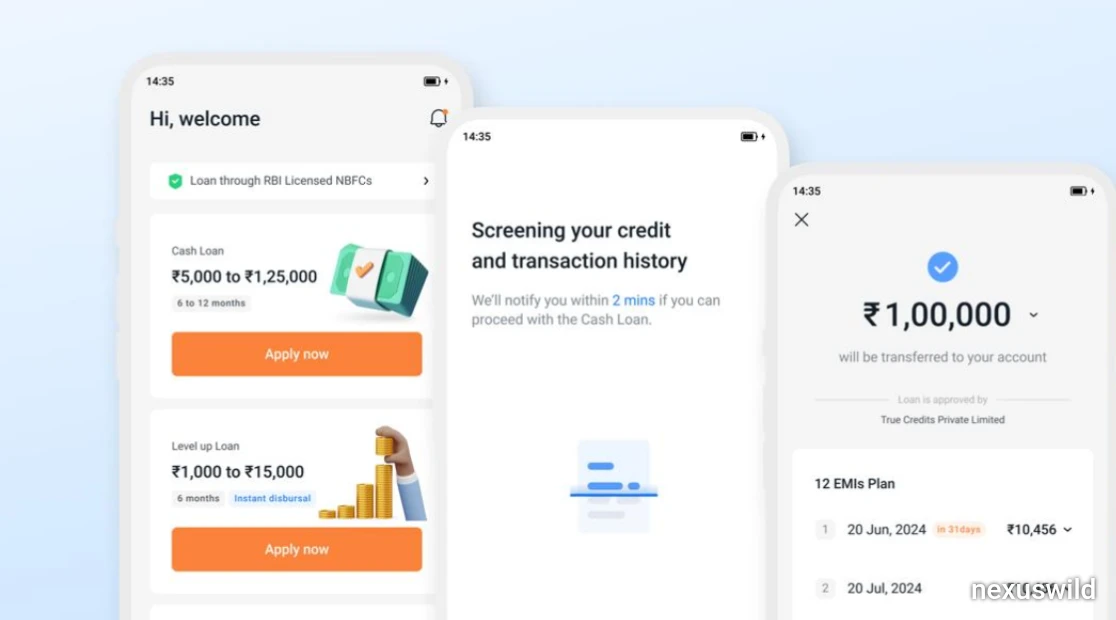
The company's established lending business focuses on salaried professionals, particularly borrowers seeking relatively quick access to unsecured credit through digital application and underwriting processes.
- Loans against property
Finnable began offering loans against property in June 2025. This secured lending product allows eligible borrowers, including small-business owners, to obtain credit against property collateral.
The product creates an opportunity to diversify the portfolio beyond unsecured personal loans. However, CRISIL described the LAP portfolio as nascent in its September 2026 assessment, meaning it should not yet be treated as a mature or proven earnings engine.
- Consumer finance
Finnable also operates a consumer-finance business that provides checkout-linked credit through e-commerce partnerships. Its October 2026 partnership with Flipkart Finance is one example of its effort to expand distribution through digital commerce channels.
Together, these product lines give the company access to different borrower segments and lending channels. They also create additional operational requirements around underwriting, partner management, collections and risk monitoring.
AI and Technology Become Important Investment Priorities
Finnable plans to use the fresh capital to expand its on-book loan portfolio, strengthen its technology infrastructure and deepen partnerships with banks and other financial institutions.
Artificial intelligence is expected to become a larger part of its lending operations. The company's stated priorities include applying AI across underwriting and other lending workflows, including areas such as fraud detection, collections and customer service.
In lending, technology can help process borrower information, identify potential inconsistencies, support credit decisions and improve operational efficiency. But automated underwriting does not eliminate credit risk. Its effectiveness depends on the quality of the underlying data, model governance, monitoring and the ability to identify changes in borrower behaviour.
The company is also looking to expand co-lending partnerships. Under such arrangements, an NBFC and a bank or another regulated financial institution participate in financing eligible loans under agreed structures.
For Finnable, partnerships can help broaden loan distribution and diversify funding channels. They may also allow the company to grow its customer base without relying exclusively on its own balance sheet. The precise economics and risk-sharing arrangements depend on each partnership.
Asset Quality Remains a Critical Test
Finnable's reported growth and profitability are important, but they do not remove the risks associated with retail lending.
The company reported a PAR 90 at six months on book of 0.24%, a metric that tracks loans more than 90 days overdue within a defined loan-age cohort. It also reported collection efficiency of 99.3% in the second quarter of FY2027 in investor-related disclosures.
These indicators are encouraging, but they should be interpreted in context. The 0.24% figure is not the same as the overall portfolio's 90-plus days-past-due ratio.
CRISIL's September 28, 2026 rating rationale provides a broader perspective. It reported adjusted 90-plus days-past-due of 2.1% for the consolidated group as of June 30, 2026, after accounting for trailing 12-month write-offs. It also noted that the portfolio remained exposed to risks inherent in unsecured personal lending.
The rating agency highlighted the need for Finnable to sustain improvements in earnings and asset quality as the business expands. Its assessment also noted that the LAP portfolio was still at an early stage.
This distinction matters: rapid AUM expansion and positive earnings are meaningful milestones, but long-term lending performance depends on how well a lender manages delinquencies, recoveries, provisioning and borrower affordability through different economic conditions.
What the Funding Means for India's Digital Lending Market
Finnable's Series C is another example of institutional investors backing technology-enabled lenders that have established regulated lending operations and demonstrated profitability.
The investment also reflects a broader shift in how digital lending businesses are positioning themselves. Rather than relying only on unsecured personal loans and rapid customer acquisition, lenders are increasingly exploring secured credit, consumer-finance partnerships and co-lending arrangements.
For investors, the appeal is the possibility of combining technology-led distribution with a diversified lending portfolio. However, the model is capital-intensive and remains sensitive to interest rates, credit costs, regulatory requirements and the quality of underwriting.
Finnable's ability to expand its secured lending business while maintaining the performance of its established personal-loan portfolio will therefore be an important measure of execution.
What Comes Next for Finnable?
The immediate priorities following the fundraise are likely to be expansion of the loan book, wider distribution of loans against property, deeper consumer-finance partnerships and continued investment in technology.
The company will also need to demonstrate that its reported profitability can be maintained as lending volumes increase. Investors and credit-rating agencies will be watching portfolio quality, capitalisation, funding diversification and returns on managed assets.
The ₹405 crore announcement gives Finnable additional growth capital and brings in a new group of institutional investors. But the next stage will be judged less by the size of the funding round and more by whether the lender can convert its expanding portfolio into durable earnings without weakening credit discipline.
For India's digital lending sector, Finnable's Series C is a notable growth-financing development. Its longer-term significance will depend on the quality of the loans it originates, not simply the speed at which its AUM increases.
Nexuswild welcomes factual corrections. Email contact@nexuswild.com with evidence and the article URL.