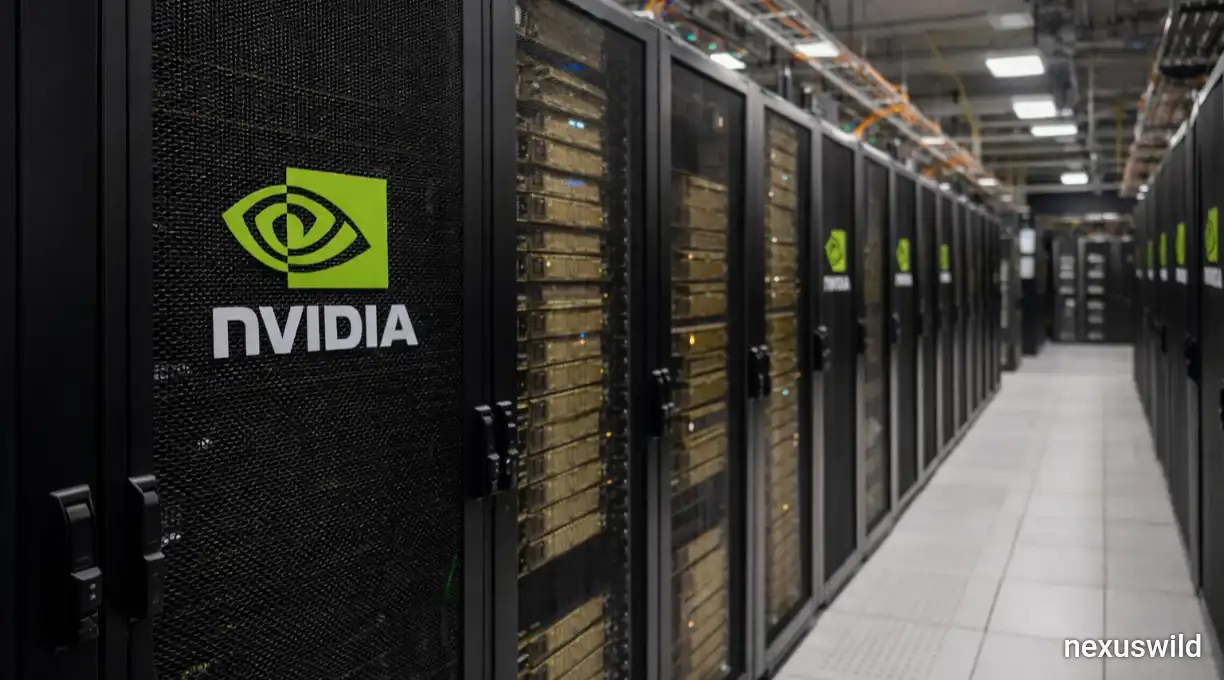

Global Semiconductor Stocks Tumble as AI Valuation Concerns Overshadow South Korea’s Record Chip Exports
Global technology and semiconductor stocks came under renewed selling pressure on November 24–25, 2026, as investors reassessed the valuations of artificial intelligence hardware companies and questioned whether the enormous spending on AI infrastructure will generate sufficiently strong long-term returns.
The downturn spread across major technology markets in the United States and Asia. South Korea's KOSPI plunged 6.16% on Wednesday, November 25, while Taiwan's Taiex declined 4.80% and Japan's Nikkei 225 fell 2.78%. Semiconductor manufacturers, memory-chip suppliers and companies connected to AI infrastructure were among the most heavily affected.
The sell-off was particularly striking because South Korea had just reported record semiconductor export performance. Chip exports reached approximately $38.5 billion during the first 20 days of November, increasing 294.4% compared with the same period a year earlier.
The contrast between strong export data and falling share prices illustrates an important change in investor sentiment: markets are increasingly evaluating not only how much semiconductor demand exists today, but also how much future growth is already reflected in company valuations.
Wall Street's Technology-Led Decline Sets the Tone
The latest regional losses followed a weak US trading session on Tuesday, November 24.
The Nasdaq Composite declined 1.48% to close at 23,733.54, while the S&P 500 fell 0.50% to 7,201.09. The Dow Jones Industrial Average moved in the opposite direction, gaining 0.85% to finish at 50,018.70.
The difference between the technology-heavy Nasdaq and the Dow highlighted the concentration of selling pressure in technology and AI-related shares.
The Philadelphia Semiconductor Index also dropped approximately 7.88% on Tuesday, reflecting weakness across the chip industry.
In Wednesday's pre-market trading, Nasdaq 100 futures fell approximately 2.38%, according to Reuters. Nvidia and several other semiconductor companies continued to trade lower as investors reassessed the prospects for AI-related investment.
The figures represent different trading periods: Tuesday's US index closes and Wednesday's pre-market futures. They should not be interpreted as simultaneous closing returns.
Nvidia and Semiconductor Companies Face Renewed Selling
Nvidia remained at the centre of the technology sell-off. The company's shares fell approximately 5.86% during Tuesday's regular US session, reversing part of the sharp rally recorded earlier in the week.
Other semiconductor and technology-linked companies also experienced selling pressure.
Micron Technology, a major memory-chip supplier, recorded a substantial decline. Dell Technologies and other companies exposed to AI server and data-centre spending also faced pressure as investors questioned the sustainability of current investment expectations.
Wednesday's pre-market reports showed additional declines in several major technology names. Reuters reported Nvidia down approximately 5.1%, while Micron and other chipmakers also traded lower.
These individual stock movements need to be read with their respective timestamps. Pre-market prices can change considerably before the regular session opens, and they should not be combined with previous-day closing returns as if they were identical measurements.
The broader concern extends beyond one company. Semiconductor manufacturers, memory suppliers, server makers and data-centre infrastructure providers have all benefited from expectations of continued AI investment. When investors question those expectations, selling can spread across the entire supply chain.
Asian Semiconductor Markets Experience Sharp Losses
The pressure intensified across Asia on November 25, with South Korea, Taiwan and Japan recording substantial declines.
South Korea: KOSPI Falls 6.16%
South Korea's KOSPI closed at 4,697.51, down 308.52 points or 6.16%.
Major semiconductor companies led the decline. SK Hynix fell 11.05%, while Samsung Electronics declined 9.87%.
The market's weakness reflected a combination of pressure from US technology shares, concerns about the sustainability of AI-related demand and renewed uncertainty surrounding potential US trade tariffs.
The scale of the decline was significant because South Korea is a major global supplier of memory chips, including high-bandwidth memory used in advanced AI computing systems.
Taiwan: Taiex Drops 4.80%
Taiwan's Taiex fell 1,926.92 points, or 4.80%, to close at 38,195.43.
The decline followed heavy losses in US semiconductor shares and selling across AI-linked companies. Taiwan is particularly important to the global semiconductor supply chain because of its concentration of advanced chip manufacturing and related technology businesses.
The market recovered some losses from its intraday low, but the closing decline remained substantial.
Japan: Nikkei 225 Falls 2.78%
Japan's Nikkei 225 declined 2.78% to finish at 57,011.62.
Technology and semiconductor-related companies contributed to the weakness. Shares of major chipmaking equipment and technology businesses also came under pressure.
The simultaneous declines across these markets demonstrate how closely connected global semiconductor valuations have become. A reassessment of AI investment expectations in the United States can quickly influence suppliers, manufacturers and technology investors throughout Asia.
South Korea's Record Semiconductor Exports Tell a Different Story
One of the most important developments behind this market story is the strength of South Korea's actual semiconductor trade.
According to provisional Korea Customs Service data reported on November 23, semiconductor exports reached approximately $38.5 billion between November 1 and November 20.
That represented year-on-year growth of 294.4%, setting a record for the first 20 days of a month.
Total South Korean exports during the same period reached $77.4 billion, increasing 101.5% year-on-year. Semiconductors accounted for approximately 49.7% of total exports.
The export figures indicate that demand and shipments across the semiconductor supply chain remained exceptionally strong during the reported period.
However, export growth and stock-market performance measure different things.
Export statistics record the value of goods shipped over a particular period. Equity valuations reflect expectations about future earnings, profit margins, competition, capital requirements and the risks investors are willing to accept.
A company can report strong shipments while its share price declines if investors believe that its future growth has already been priced in or that current profitability may not continue at the same pace.
This distinction is central to understanding the November sell-off.
Why Strong Chip Demand Is Not Protecting Semiconductor Stocks
The latest market movements suggest that investors are looking beyond immediate demand for chips.
- Questions About AI Infrastructure Returns
Hyperscale cloud companies and technology groups have committed enormous resources to data centres, AI accelerators, networking equipment and advanced memory.
These investments have created substantial demand for semiconductor products.
But investors increasingly want evidence that this infrastructure spending will translate into sustainable revenue and profits. If AI services do not generate sufficient returns relative to their infrastructure costs, companies may eventually slow or reprioritise spending.
That possibility can affect semiconductor valuations before actual orders decline.
- High Expectations Leave Less Room for Disappointment
Companies associated with AI have attracted substantial investor interest because of expectations of long-term growth.
However, high valuations can make shares more sensitive to disappointing forecasts, weaker guidance or changes in interest-rate expectations.
When a large part of a company's perceived future value depends on growth several years ahead, even a modest change in assumptions can produce a significant valuation adjustment.
- Memory-Cycle and Supply Concerns
Memory-chip demand has benefited from AI servers and high-performance computing systems.
Nevertheless, semiconductor markets remain cyclical. Capacity expansion, new production facilities and changes in customer purchasing patterns can affect future supply-demand conditions.
Investors may therefore be considering whether today's exceptional pricing and demand conditions can persist as additional capacity enters the market.
This is a forward-looking concern, not evidence that a semiconductor downturn has already begun.
- Trade and Interest-Rate Uncertainty
Reports of possible new US tariffs on imports from multiple trading partners added another source of uncertainty.
Higher tariffs can affect supply-chain costs, trade flows and company investment decisions. Meanwhile, higher interest rates can reduce the attractiveness of expensive growth stocks by increasing the discount applied to future earnings.
These factors may amplify volatility in technology shares, particularly when valuations already depend heavily on expectations of future growth.
What the Sell-Off Means for the Global AI Supply Chain
The decline matters because the semiconductor industry is deeply interconnected.
Nvidia and other chip designers depend on advanced manufacturing and packaging capacity. Foundries rely on specialised equipment and materials. Memory suppliers provide components needed by AI servers, while companies such as Dell participate in the infrastructure layer that brings these systems into enterprise and cloud environments.
A decline in semiconductor stocks does not automatically mean that orders are being cancelled or that production is slowing.
Instead, the market reaction may indicate that investors are becoming more selective about which businesses can convert AI demand into durable profits.
Companies with strong technology positions, long-term customer relationships, pricing power and disciplined capital expenditure may be better positioned than businesses whose valuations rely primarily on rapid expansion.
For South Korea and Taiwan, the market volatility also demonstrates the risks associated with their significant exposure to the global technology cycle. Strong exports can support economic activity, but concentrated dependence on semiconductor demand can increase sensitivity to changes in global investment sentiment.
What Investors Should Watch Next
The next phase of the semiconductor market correction will depend on whether the concerns driving share-price declines begin to appear in company fundamentals.
Several indicators deserve attention:
- Hyperscaler capital expenditure: Whether major cloud providers maintain, increase or revise their AI infrastructure investment plans.
- Memory-chip pricing: Whether high-bandwidth memory and conventional DRAM pricing remain supportive as manufacturers expand capacity.
- Semiconductor company guidance: Whether Nvidia, SK Hynix, Samsung and other major suppliers maintain their revenue and margin expectations.
- AI monetisation: Whether enterprise customers and consumers generate enough revenue for AI services to justify continued infrastructure spending.
- US trade policy: Whether proposed tariffs become concrete measures and how they affect semiconductor supply chains.
- Interest-rate expectations: Whether inflation and central-bank decisions change the valuation environment for high-growth technology stocks.
These developments will help determine whether the latest decline is primarily a correction in market expectations or the beginning of a deeper deterioration in the semiconductor industry's earnings outlook.
The Bigger Picture: AI Demand Remains Strong, but Valuations Face a Test
The November 24–25 market decline reveals a growing distinction between the physical demand for AI infrastructure and the prices investors are willing to pay for companies supplying it.
South Korea's record semiconductor exports provide evidence of strong current trade activity. At the same time, the sharp falls in the KOSPI, Taiex and Nikkei show that strong operating demand does not guarantee rising equity prices.
The semiconductor industry may continue to benefit from AI adoption, but investors are increasingly demanding proof that infrastructure spending can produce sustainable commercial returns.
For now, the market is not simply questioning whether AI needs more chips. It is questioning how much those chips will ultimately earn for the companies producing them.
Editorial takeaway: The latest sell-off should be viewed as a reassessment of AI-linked valuations and future profitability, not as definitive evidence that global semiconductor demand has collapsed.
Nexuswild welcomes factual corrections. Email contact@nexuswild.com with evidence and the article URL.