
India has approved an ₹11,000 crore industrial incentive programme aimed at expanding domestic manufacturing of advanced construction and infrastructure equipment, including tunnel boring machines, hydraulic excavators, ship-to-shore cranes and off-highway trucks.
The Union Cabinet, chaired by Prime Minister Narendra Modi, approved the Scheme for Enhancement of Construction and Infrastructure Equipment (CIE) Manufacturing Ecosystem on November 25, 2026. The Ministry of Heavy Industries will implement the programme over eight financial years, from FY2026–27 to FY2033–34.
The initiative combines sales-linked incentives for eligible original equipment manufacturers (OEMs) and component manufacturers with financial support for a dedicated national testing facility. Its central objective is to deepen domestic manufacturing capabilities in equipment segments where India remains reliant on imported machinery and critical components.
According to the government, the programme is intended to strengthen supply-chain security, improve industrial competitiveness and support the country's expanding infrastructure requirements.
How the ₹11,000 Crore Scheme Will Work
The approved programme has two principal components.
The first is a sales-linked incentive mechanism for approved manufacturers of eligible construction and infrastructure equipment and components. Incentives will be calculated on incremental sales value, with graded rates ranging from 13% to 8% over a five-year disbursement period.
The scheme covers two applicant categories: eligible equipment OEMs and component manufacturers. This structure is important because domestic production of complex machinery depends not only on final assembly but also on the availability of locally manufactured engines, transmission systems, hydraulic components and other precision parts.
The second component provides a grant of up to ₹375 crore, structured as viability-gap funding, to establish a dedicated construction and infrastructure equipment testing facility in India.
Such infrastructure is intended to support equipment testing and validation. It could help manufacturers access specialised testing capabilities within the country, although the eventual impact will depend on the facility's technical scope, capacity, accreditation and operating arrangements.
The detailed eligibility conditions, product classifications and application procedures will determine which manufacturers can receive support.
Eight-Year Implementation Timeline
The government has structured the scheme around a two-year manufacturing preparation period, a five-year incentive window and a final settlement year.
- FY2026–27 to FY2027–28: Two-year gestation period for companies to establish and commission manufacturing facilities.
- FY2028–29 to FY2032–33: Five-year period for sales-linked incentive disbursements based on eligible incremental sales.
- FY2033–34: Final settlement of incentives linked to incremental sales recorded in FY2032–33.
The phased structure gives companies time to establish manufacturing capacity before the incentive period begins. It also means the scheme's industrial impact will take time to become visible: the approval itself does not immediately translate into new factories, production volumes or lower imports.
Machinery and Components in Focus
The programme targets technologically advanced equipment used in major infrastructure and industrial projects.
The government's announcement specifically identifies ship-to-shore cranes, tunnel boring machines, hydraulic excavators and off-highway trucks. Other reporting on the Cabinet decision identifies a wider coverage of seven equipment categories and five component categories, including engines and transmission systems.
These products are strategically significant because they are used across sectors such as metro rail, highways, ports, mining, hydropower and large-scale construction.
Tunnel boring machines are particularly important for underground infrastructure. They are used to excavate tunnels for metro systems, road links, water-transfer projects and other underground works. Their design and manufacture require specialised engineering, precision components, control systems and extensive testing.
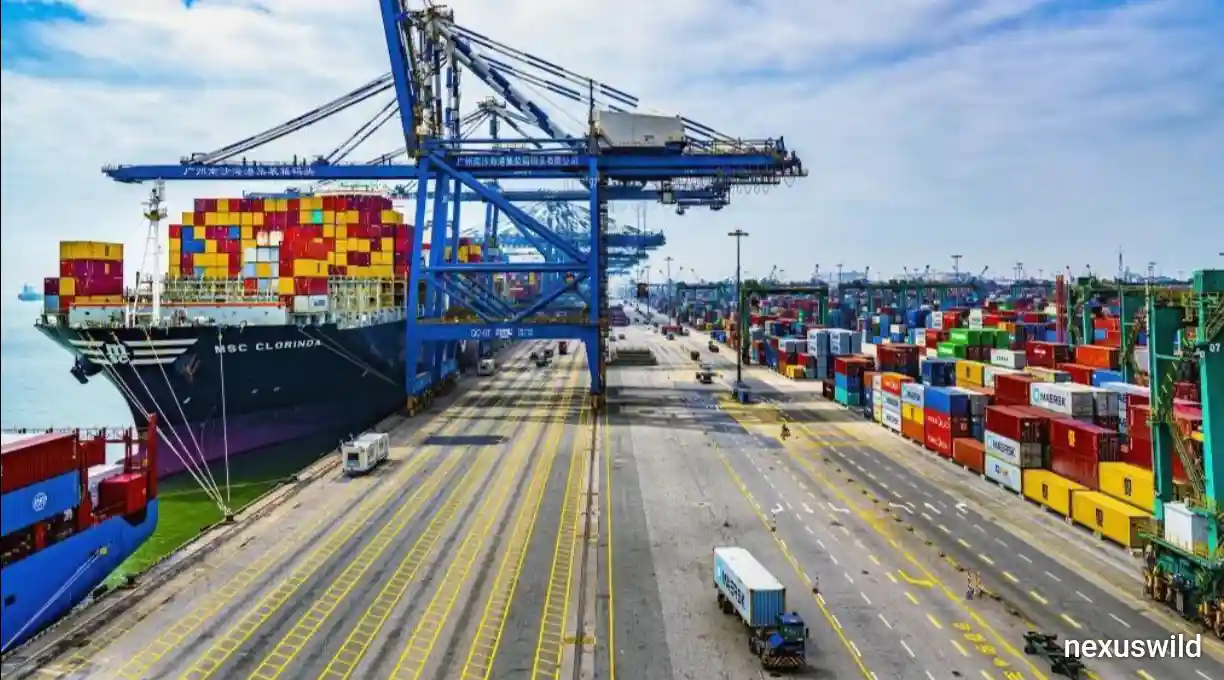
Hydraulic excavators and off-highway trucks are central to construction and mining operations. Ship-to-shore cranes support container handling at major ports, where equipment reliability and lifting capacity are critical to cargo operations.
The scheme's inclusion of component manufacturers is therefore a significant feature. Localising only the final assembly of a machine would leave manufacturers exposed to imported parts and overseas supply-chain disruptions. Incentivising component production could support deeper domestic value addition, provided the final scheme guidelines establish meaningful localisation and quality requirements.
Why India Wants to Reduce Import Dependence
India has one of the world's largest construction and infrastructure equipment markets. The government estimates that the domestic market was worth approximately ₹97,500 crore in FY2024–25, making it the third-largest globally after China and the United States.
It projects the market will more than double to around ₹2,28,100 crore by FY2029–30, supported by infrastructure development, roads, ports and housing.
However, the country continues to depend on imported equipment in several advanced machinery segments. Reuters reported that imports meet around 45% of domestic demand, citing Information and Broadcasting Minister Ashwini Vaishnaw.
The dependence is especially relevant for high-value machinery and specialised components. If domestic infrastructure projects rely heavily on overseas suppliers, equipment availability, delivery schedules, maintenance support and access to replacement parts can become exposed to external disruptions.
The issue has gained additional attention following China's export controls on tunnel boring machines and related equipment, which took effect on November 18, 2026, according to Reuters.
The new scheme is intended to encourage manufacturers to build domestic production capabilities in these strategically important segments rather than relying predominantly on imported machinery.
Investment and Import-Substitution Targets
The government expects the incentive programme to attract approximately ₹21,000 crore in fresh investment and support import substitution worth around ₹22,500 crore over its lifecycle.
These figures should be understood as projected policy outcomes, not investments already committed or imports already replaced.
Actual results will depend on several factors, including the number of approved applicants, manufacturing capacity created, domestic component availability, product quality, project execution and the competitiveness of locally produced equipment.
The scheme's effectiveness will also depend on whether domestic manufacturers can achieve the performance, reliability and lifecycle costs required by infrastructure developers and equipment operators.
Potential Implications for Equipment Manufacturers
The programme could create opportunities for established global manufacturers operating in India, domestic engineering companies and specialised component suppliers.
Companies such as JCB, Caterpillar and Hitachi are among the manufacturers identified in reporting on the scheme. Their mention does not mean they have already been approved for incentives or confirmed as beneficiaries. Participation will depend on the final eligibility rules and approval process.
Domestic manufacturers and suppliers could also benefit if they can scale production in eligible product categories and meet the required technical and localisation conditions.
For component manufacturers, the incentive framework could encourage investment in areas such as engines, transmissions and precision engineering systems. A stronger local supplier base could reduce exposure to overseas procurement and create opportunities for Indian companies to move into more technically demanding manufacturing segments.
However, the programme's impact should not be judged only by the number of factories announced. The more meaningful indicators will be domestic value addition, product quality, production volumes, export competitiveness and the share of locally manufactured components used in finished equipment.
Testing Infrastructure Could Be a Critical Enabler
The proposed ₹375 crore testing-facility grant addresses a less visible but important part of industrial development.
Manufacturing advanced construction equipment requires more than access to production facilities. Machinery must undergo engineering validation and testing under demanding operating conditions. Testing requirements can include structural performance, hydraulic systems, endurance, safety and equipment reliability, depending on the product.
A dedicated facility could help improve access to specialised testing infrastructure and support manufacturers in validating products before commercial deployment.
Its effectiveness will depend on the equipment and testing capabilities it provides, the standards it follows, its accreditation and the time required to complete testing. The grant announcement alone does not establish that the facility is already operational or that it will automatically provide every form of international certification.
What Could Determine the Scheme's Success?
The programme has a clear industrial-policy objective, but its success will depend on execution.
First, the government will need to define transparent eligibility criteria and ensure that incentives reward genuine incremental domestic manufacturing rather than simply shifting assembly operations.
Second, component localisation will be essential. If manufacturers continue importing the most technologically demanding parts, the country may increase domestic assembly without building a sufficiently resilient industrial ecosystem.
Third, testing infrastructure must be technically capable and accessible to manufacturers of different sizes. Small and medium-sized component suppliers may particularly benefit from shared testing facilities if access costs and turnaround times are reasonable.
Finally, domestic equipment must compete on reliability, productivity, maintenance costs and lifecycle performance. Infrastructure developers will continue to evaluate machinery based on its ability to perform in demanding operating environments.
Outlook: A Long-Term Push for Heavy Engineering Self-Reliance
The ₹11,000 crore CIE manufacturing scheme represents a substantial policy push to strengthen India's heavy engineering and capital-goods base.
Its eight-year design recognises that advanced equipment manufacturing requires long investment cycles, specialised engineering capabilities and supporting component supply chains. The combination of sales-linked incentives and testing infrastructure is intended to address both production economics and technical validation.
The programme's projected investment and import-substitution figures are ambitious, but they remain targets. The first meaningful assessment will come from manufacturing facilities commissioned during the gestation period, followed by measurable growth in eligible domestic production during the incentive years.
For now, the Cabinet approval establishes the policy framework. Whether it translates into globally competitive Indian-made construction equipment will depend on the detailed scheme rules, private-sector investment and the ability of domestic manufacturers to deliver reliable machinery at competitive costs.
Nexuswild welcomes factual corrections. Email contact@nexuswild.com with evidence and the article URL.