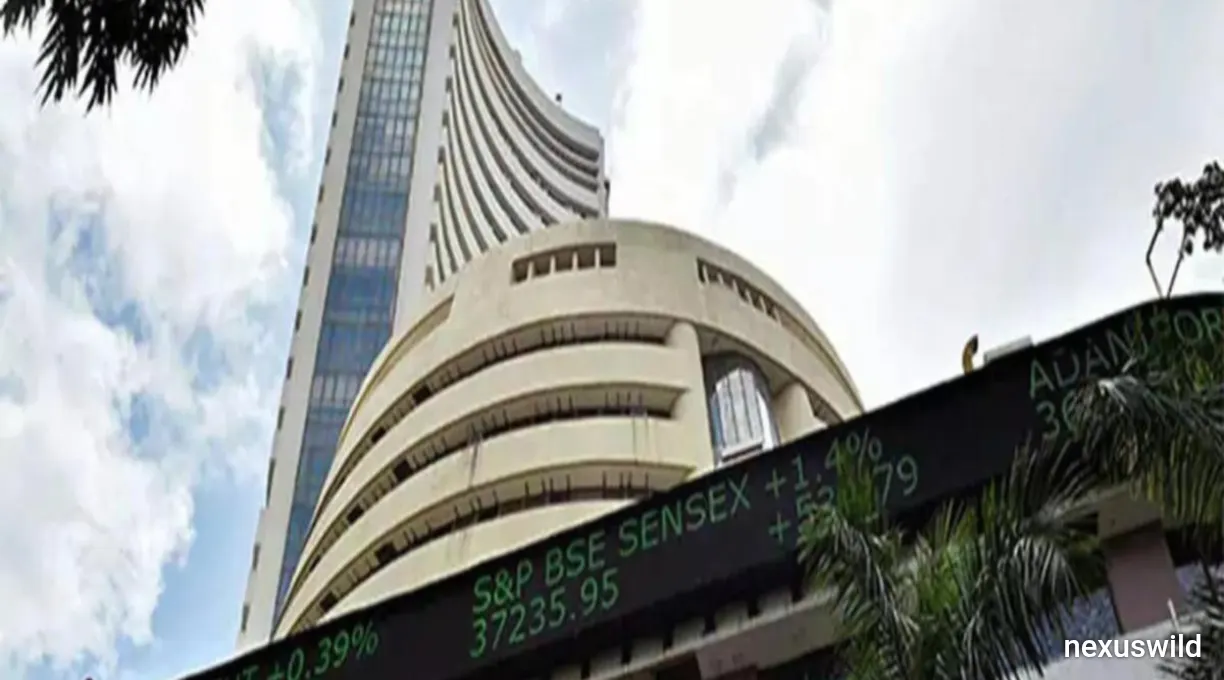

Indian benchmark equity indices closed higher for a second consecutive session on Thursday, November 26, 2026, as gains in information technology shares and sustained foreign portfolio investment supported market sentiment. The advance came despite continuing uncertainty over proposed US trade measures affecting India and other major trading partners.
The BSE Sensex rose 390.31 points, or 0.46%, to finish at 84,328.59. The NSE Nifty 50 advanced 65.25 points, or 0.25%, to close at 25,884.50. Both indices extended Wednesday's sharp rebound, although Thursday's gains were considerably more moderate.
IT stocks lead the day's advance
Information technology shares were among the strongest performers. On the BSE, HCL Technologies gained 6.28%, Tata Consultancy Services advanced 4.97%, and Infosys rose 4.70%. Tech Mahindra also recorded a gain of 3.33%.
Reuters reported that the Nifty IT index advanced 3.7%, with all ten of its constituents finishing higher. Its market report also recorded gains of approximately 6.4% for HCLTech, 4.9% for TCS and 4.7% for Infosys.
Banking and metal stocks provided additional support. HDFC Bank rose 2.70% and Tata Steel gained 2.67% in the BSE figures supplied for the session. However, the broader market was not uniformly positive: consumer-facing shares and selected financial stocks faced selling pressure.
Foreign portfolio buying supports market sentiment
Foreign portfolio investment was a major feature of November's rally. Reuters reported that foreign investors had purchased approximately $15.16 billion of Indian equities during the month up to its November 26 report.
The inflows have helped lift benchmark performance. By November 26, the Nifty 50 had gained approximately 12.3% during November, while the Sensex had advanced around 13.3%, according to Reuters. The indices were on course for their strongest monthly performance since April 2020.
Exchange flow data separately showed foreign institutional investors as net buyers of ₹4,479.08 crore in Indian equities on Wednesday, November 25. That is a previous-session figure and should not be confused with Thursday's institutional activity.
The scale of the buying reflects several factors identified by market participants, including improving earnings expectations, valuations that some investors consider attractive, and changing global portfolio allocations. Reuters also highlighted a broader unwind in AI-related trades as investors reassessed the near-term returns expected from large artificial-intelligence investments.
Financial stocks attracted the largest share of November's foreign inflows, according to Reuters. The financial sector had gained approximately 16.2% during the month at the time of its report.
US Section 301 proposals remain a trade risk
The rally unfolded against a fresh trade-policy concern. On November 25, the Office of the United States Trade Representative announced determinations and proposed actions under 14 Section 301 investigations, including one involving India.
The USTR's India proposal says the United States may consider additional tariffs of up to 25% on Indian goods, subject to specified exemptions and adjustments. It also says the proposed rate could be adjusted to 17% if India reaches an Agreement on Reciprocal Trade with the United States that addresses the issues identified in the investigation.
These figures should not be described as tariffs already imposed under this new proposal. The USTR announcement sets out proposed action and invites public comment. The eventual outcome will depend on the process and the course of bilateral negotiations.
For Indian exporters, the distinction matters. A higher eventual tariff burden could affect the competitiveness of some goods in the US market, while an agreement could alter the proposed treatment. The potential impact will vary by product, existing duties and any exemptions.
November's rally is strong, but not risk-free
The indices' consecutive gains and substantial foreign buying indicate a significant improvement in market sentiment. The IT sector's advance also suggests that the rally was not limited to one or two heavyweight stocks.
However, a sharp monthly rise does not by itself establish a durable change in the market trend. Investors still face questions around global technology valuations, the sustainability of earnings growth, trade negotiations and movements in crude oil and the rupee.
Reuters noted that both benchmark indices remained approximately 2% below their respective record highs. It also quoted market strategists cautioning that some consolidation would not be surprising after the speed and scale of the recent advance.
What investors will watch next
The next phase of the rally will depend on whether foreign buying continues, whether corporate earnings validate higher valuations, and how the US-India trade discussions develop. Investors will also monitor global technology-sector sentiment and the performance of domestic financial and IT companies.
For now, the November 26 session reinforces the strength of India's recent equity rebound. But the proposed Section 301 measures and the possibility of a pause after a rapid rally remain important risks.
Market takeaway: Indian equities extended their recovery on November 26, supported by IT-sector gains and substantial foreign portfolio buying. The rally is notable, but its durability will depend on earnings, global capital flows and the eventual outcome of US-India trade negotiations.
Nexuswild welcomes factual corrections. Email contact@nexuswild.com with evidence and the article URL.