
Indian logistics company Shadowfax Technologies Limited has agreed to acquire selected business assets, technology and intellectual-property rights associated with WeFast (Borzo India) for approximately ₹23.3 crore. The transaction marks Shadowfax's entry into on-demand intra-city goods transportation, expanding its services beyond express parcel deliveries and existing hyperlocal fulfilment operations.
The company disclosed the transaction through a regulatory filing dated November 24, 2026, followed by a press release outlining its strategic rationale. The proposed deal involves agreements with Cyprus-based Incrin Limited and India's Wefast India Private Limited. It is expected to be completed by March 31, 2027, subject to applicable requirements and customary conditions precedent.
The acquisition is structured as an asset and intellectual-property transaction rather than a purchase of Wefast India's shares. Shadowfax is seeking to obtain the India-related technology and software rights, trademarks and selected operating assets that support the WeFast intra-city delivery platform.
Breaking down the ₹23.3 crore transaction
The disclosed consideration totals approximately US$2.5 million, converted at the exchange rate of ₹93.29 per US dollar.
The transaction has two principal components:
- Technology, software and intellectual-property rights — US$2.05 million
Shadowfax has agreed to pay Incrin Limited US$2 million for India-related technology, software and associated intellectual-property rights, along with a licence arrangement for technology retained by Incrin. The transaction also includes the BORZO trademark in India.
The IP and trademark arrangements additionally include the rupee equivalent of US$50,000 payable to Wefast India for the WeFast trademark. The filing specifies that the US$2.05 million component includes the US$2 million payable to Incrin and the separate US$50,000 trademark payment to Wefast India.
- Identified business assets — US$450,000
Shadowfax Logistics Private Limited, a wholly owned subsidiary of Shadowfax Technologies, will purchase identified business assets from Wefast India for the rupee equivalent of US$450,000.
These assets include identified contracts, equipment, the domain name, databases and related technology. The arrangement also provides for the transfer of identified employees.
The two components together bring the disclosed transaction value to approximately ₹23.3 crore. The agreements do not involve acquiring shares or control of either Incrin or Wefast India.
Why Shadowfax is entering intra-city goods transportation
Shadowfax has built its business around technology-enabled logistics, including express parcel deliveries, reverse pickups, quick-commerce fulfilment and on-demand hyperlocal services.
The WeFast transaction extends this model into a different customer requirement: moving goods directly within a city.
Unlike conventional e-commerce parcel deliveries, intra-city freight can involve urgent movement of inventory, supplies, equipment, commercial goods and personal items. Customers may need to arrange a vehicle for a single delivery rather than rely on a standard parcel network.
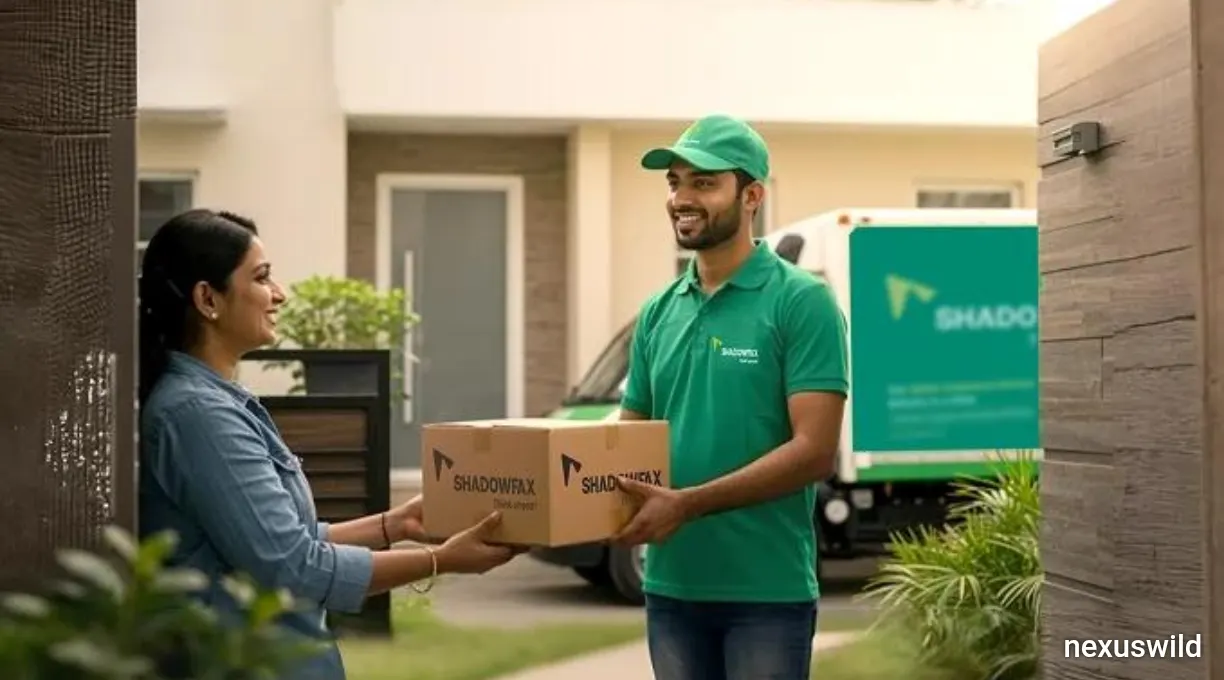
WeFast's platform allows shop owners, distributors and individual users to book two-, three- and four-wheelers for local deliveries. The service includes upfront pricing and real-time tracking, according to Shadowfax's announcement.
The acquisition therefore gives Shadowfax an operating platform and an established service proposition in a segment that complements its existing logistics network.
WeFast's operating network and business footprint
Founded in Mumbai in 2016, WeFast operates across more than five cities. Shadowfax says the platform has a network of over 32,000 delivery partners and completes more than 1.2 crore deliveries annually.
The company's established presence among small businesses and individual customers is a central part of the acquisition rationale. Rather than building an intra-city delivery platform entirely from the ground up, Shadowfax intends to combine the acquired assets and technology with its existing logistics infrastructure.
The company has also cited approximately ₹200 crore in adjusted revenue for WeFast in calendar year 2025. This figure needs to be distinguished from the statutory turnover of Wefast India Private Limited disclosed in the regulatory filing.
The filing reports the Indian entity's turnover as:
Financial year| Wefast India turnover FY24| ₹52.46 crore FY25| ₹46.02 crore FY26| ₹46.10 crore
The FY26 figure was broadly unchanged from FY25 and lower than FY24. The approximately ₹200 crore adjusted-revenue figure for CY2025 is a separate company-reported measure. Shadowfax has not provided a detailed reconciliation between the adjusted-revenue figure and the Indian legal entity's statutory turnover in the material reviewed. They should not be treated as directly comparable.
Shadowfax brings a much larger logistics network
Shadowfax intends to use its existing delivery infrastructure and technology capabilities to support the acquired business.
The company reported a network of more than 3.8 lakh delivery partners across over 16,000 pin codes. This provides a substantially broader geographic footprint than WeFast's reported five-plus-city operating presence.
The strategic opportunity is to connect WeFast's intra-city goods movement capabilities with Shadowfax's larger logistics ecosystem. Potential benefits include access to a wider delivery-partner base, operational capabilities, technology infrastructure and business relationships.
However, a larger network does not automatically translate into immediate operational integration. The companies will need to manage platform integration, partner onboarding, service quality, pricing, customer retention and local vehicle availability.
The actual benefits will depend on how effectively Shadowfax combines the businesses after the transaction closes.
Hyperlocal growth provides the strategic backdrop
The acquisition comes as Shadowfax's existing hyperlocal business is expanding.
In its Q2 FY27 disclosures, the company reported hyperlocal revenue of ₹341 crore, representing year-on-year growth of 87.7%. Hyperlocal order volumes reached 5.4 crore during the quarter, up 62.7% from the corresponding period a year earlier.
This growth provides context for Shadowfax's interest in adjacent local-delivery services. The company is looking to serve a broader range of goods-movement requirements rather than depending exclusively on conventional parcel shipping.
It is important, however, to distinguish existing hyperlocal performance from the future contribution of WeFast. The ₹341 crore revenue figure relates to Shadowfax's existing hyperlocal segment, not the acquired platform.
India's intra-city logistics market remains fragmented
The acquisition targets a large but fragmented part of India's logistics economy.
Redseer Strategy Consultants estimates the Indian intra-city logistics market at approximately US$15 billion, with around 70% of activity still handled by unorganised operators such as local drivers, small fleet owners and neighbourhood transport brokers.
The research also identifies trust, pricing transparency and service reliability as important barriers to wider adoption of digital platforms among small and medium businesses.
For small businesses, arranging local transportation can still involve telephone calls, informal driver networks and negotiated prices. Digital platforms aim to make this process more predictable through online booking, vehicle availability, tracking and clearer pricing.
WeFast's existing customer base and operating model give Shadowfax an opportunity to address these needs through a technology-enabled service.
Nevertheless, the market estimate should not be mistaken for Shadowfax's immediately addressable revenue. The broader market includes different vehicle types, delivery requirements, customer categories and informal operating models. Capturing demand will require competitive pricing, sufficient vehicle availability and reliable service.
Competition and the challenge of scaling
Shadowfax's move places it in a competitive market that includes established intra-city transportation and logistics platforms such as Porter, alongside regional operators and traditional local transport providers.
Competition is not limited to app features. Businesses choosing an intra-city logistics provider often care about vehicle availability, delivery time, load capacity, reliability, price consistency and the ability to handle recurring commercial requirements.
Shadowfax will need to establish how the acquired WeFast platform can differentiate itself and whether its larger network can improve service economics without compromising delivery-partner earnings or customer experience.
The company may also need to adapt its operating model to different city-level conditions. Vehicle requirements and demand patterns can vary significantly between dense metropolitan markets and smaller urban centres.
The acquisition creates an opportunity to expand, but it does not guarantee that WeFast will achieve national scale or gain market share from existing competitors.
What the acquisition means for SMEs and individual customers
For small and medium enterprises, on-demand intra-city transportation can support inventory transfers, shop replenishment, distributor deliveries and urgent movement of commercial goods.
For individual customers, the platform can offer an alternative to informal arrangements when moving personal goods within a city.
By bringing the service into Shadowfax's wider logistics ecosystem, the company aims to extend technology-enabled delivery capabilities to customers who may not use conventional e-commerce parcel services.
The opportunity is particularly relevant for businesses that need flexible vehicle options rather than a standard parcel-delivery product. The platform's ability to support different vehicle categories can make it suitable for a broader range of local transportation needs.
The eventual customer impact will depend on the availability, pricing and reliability of services following integration.
What happens before the transaction closes?
Shadowfax expects the transaction to be completed by March 31, 2027.
Before completion, the parties must fulfil the applicable statutory and regulatory requirements and customary conditions precedent contained in the definitive agreements. The transaction also involves identified asset and employee transfers.
The closing process will be followed by the operational work of integrating the technology, customer relationships, business assets and delivery-partner operations into Shadowfax's broader network.
Investors will be watching for further disclosures on integration, customer retention, operating performance and the financial contribution of the acquired business.
What to watch next
The acquisition's success will depend on more than the initial purchase price. Several developments will matter:
- Completion: Whether the asset and IP transactions close by the expected March 31, 2027 date.
- Platform integration: How Shadowfax combines WeFast's software and operating capabilities with its existing logistics technology.
- Delivery-partner network: Whether the company can expand reliable vehicle availability while maintaining service quality.
- SME and C2C adoption: Whether the platform attracts recurring business customers and individual senders.
- Revenue transparency: Whether Shadowfax provides clearer disclosures on the difference between WeFast India's statutory turnover and the adjusted-revenue figure.
- Unit economics: Whether the expanded intra-city business can grow while maintaining sustainable delivery costs and contribution margins.
Shadowfax's agreement to acquire WeFast's Indian assets and related technology marks a strategic expansion into on-demand intra-city goods transportation. The ₹23.3 crore transaction gives the company access to an established platform and operating network, while its larger logistics infrastructure offers a potential route to expansion.
The opportunity is substantial, but execution will determine whether this asset acquisition becomes a meaningful new growth engine.
Nexuswild welcomes factual corrections. Email contact@nexuswild.com with evidence and the article URL.