
Indian nuclear technology startup SUK-M has secured its first institutional pre-seed funding round, co-led by deep-tech venture capital firms Speciale Invest and Navam Capital. BYT Capital and two angel investors also participated. The financial size of the round has not been disclosed.
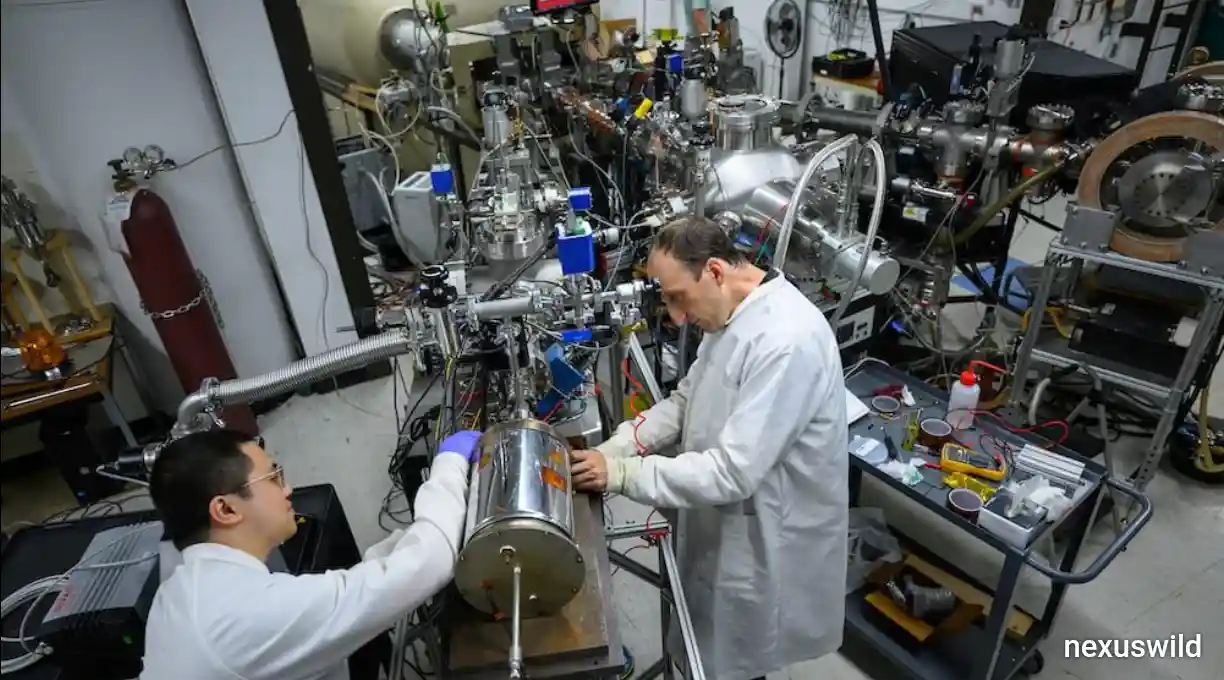
The Bengaluru-linked nuclear technology venture, developed under IYNS TechSolutions LLP, plans to use the capital to move beyond founder-funded research and initial computer simulations towards physical laboratory measurements and experimental testing. Its immediate priorities include establishing a dedicated testing facility in India and recruiting nuclear scientists and engineers.
SUK-M is developing a proposed Generation IV molten-salt micro-modular reactor using a uranium-thorium fuel system. The company describes its broader technology ambition as Indian Nuclear Programme 2.0, with the objective of bringing elements of India's long-term thorium strategy into a compact reactor architecture.
The funding is an early-stage investment in nuclear technology research. It does not mean that SUK-M has built, tested, licensed or commercially deployed a working reactor.
Speciale Invest and Navam Capital co-lead the funding round
Speciale Invest and Navam Capital co-led the pre-seed investment, with participation from BYT Capital and two angel investors.
The round represents SUK-M's first institutional funding and provides capital for the company to expand its technical team and establish experimental infrastructure. The investors are backing a project that requires scientific research, engineering development and regulatory engagement before any potential commercial reactor deployment.
Unlike software startups, nuclear technology ventures typically face long development timelines. Their progress depends on multiple technical and institutional milestones, including validating reactor concepts, demonstrating material compatibility, assessing safety characteristics, establishing fuel-cycle arrangements and meeting regulatory requirements.
The undisclosed funding amount also means that the round cannot yet be assessed against the company's future capital requirements or the likely cost of developing a commercial reactor.
What SUK-M is developing
Founded in April 2021 by Dr. Nitendra Singh and Dr. Samyak Munot, SUK-M is working on a compact reactor based on Generation IV molten-salt reactor technology.
The proposed architecture uses a uranium-thorium fuel system and aims to integrate elements of India's three-stage nuclear power programme into a single reactor design. The company says this approach could help bring thorium into use earlier than conventional fuel-cycle development pathways.
Its proposed reactor is intended to supply either:
- 10 megawatts electric (MWe): The targeted electrical output.
- 30 megawatts thermal (MWth): The targeted thermal output for industrial applications.
The company also intends the units to be transportable by road or rail, potentially allowing deployment closer to industrial users that need reliable electricity or high-temperature heat.
These figures describe the proposed design. They are not results from an operating reactor or independently validated hardware tests. SUK-M's next stated step is to establish laboratory capabilities and assess key elements of the design and its safety characteristics.
Why molten-salt reactor technology matters
Molten-salt reactors are part of the broader Generation IV nuclear technology landscape. In these reactor concepts, molten salt is used as a coolant, and in some designs it can also serve as the medium in which nuclear fuel is dissolved.
The technology is being explored internationally because it offers different engineering possibilities from conventional water-cooled reactor systems. Depending on the specific design, these may include high-temperature heat delivery, alternative fuel configurations and different approaches to reactor operation.
However, the term molten-salt reactor covers several distinct designs. Their engineering challenges vary depending on whether the fuel is dissolved in the salt, the operating temperature, the reactor materials, the coolant system and the chosen safety architecture.
For SUK-M, the important question is not simply whether molten-salt technology is promising in principle. It is whether the company's specific reactor design can be engineered, experimentally validated, manufactured and licensed.
The planned experimental facility is therefore an important development step. It can help the team move from theoretical models towards physical measurements and identify where the proposed design needs refinement.
Thorium ambition and India's nuclear programme
India has long pursued a three-stage nuclear power programme intended to make better use of its limited uranium resources and substantial thorium-bearing mineral resources.
Thorium-232 is a fertile material, not a fissile fuel that can independently sustain a conventional nuclear chain reaction. It must be converted into fissile uranium-233 through irradiation in a reactor. The resulting material then requires appropriate fuel processing and handling before it can be used in a nuclear system.
This distinction is important because India's thorium resources do not automatically translate into immediately available nuclear fuel. A viable thorium-based energy system requires the supporting reactor technology, fuel-cycle infrastructure, materials engineering and regulatory arrangements.
The Department of Atomic Energy continues to pursue thorium utilisation as part of India's long-term nuclear strategy. Government disclosures have also documented substantial thorium oxide resources contained in monazite deposits.
SUK-M's proposed uranium-thorium architecture is an attempt to explore a different reactor pathway within this broader national context. However, it should not be presented as a replacement for India's established three-stage programme or as proof that commercial thorium power generation is imminent.
Potential industrial applications: data centres, steel and hydrogen
SUK-M is targeting industries that may require dependable electricity and high-temperature process heat.
Its potential customer segments include:
Data centres: Large computing facilities require continuous electricity for servers, cooling and supporting infrastructure. A compact nuclear power system could eventually be relevant to locations where reliable power availability and energy costs are major operating considerations. However, SUK-M has not demonstrated a reactor capable of serving a data centre.
Steel manufacturing: Steel production includes energy-intensive processes that require substantial electricity and heat. Advanced nuclear systems are being explored as possible sources of low-carbon industrial energy, although their suitability depends on temperature requirements, economics, integration and safety.
Hydrogen production: Some hydrogen-production pathways require substantial electricity or high-temperature heat. A reactor designed to supply both could potentially support industrial hydrogen systems, subject to technical and economic validation.
Hard-to-abate industries: Industrial sites with continuous energy requirements may be potential customers for compact nuclear systems if they can meet strict requirements for safety, reliability, cost and regulatory compliance.
These are target applications, not signed customer deployments. Business Standard reported that SUK-M is in discussions with prospective industrial users to understand their electricity and heat requirements. Such discussions can help shape the design, but they do not establish commercial orders or customer commitments.
From computer simulations to laboratory testing
The most immediate milestone for SUK-M is its planned transition from simulation-based development to experimental work.
The company has completed initial computer simulations, according to reporting on the funding announcement. Its next phase involves establishing a dedicated experimental facility, recruiting specialised technical personnel and carrying out physical measurements.
That transition is important because computer simulations are only one part of reactor development. Models depend on assumptions about materials, operating conditions and physical behaviour. Experimental testing helps determine whether those assumptions are supported by measurements.
For a molten-salt reactor concept, areas requiring careful investigation can include:
- Compatibility between molten salts and structural materials.
- Corrosion and material degradation under operating conditions.
- Thermal behaviour and heat-transfer performance.
- Fuel and coolant system behaviour.
- Instrumentation, monitoring and control systems.
- Safety analysis and accident-management provisions.
This list describes general engineering challenges for the technology class; it should not be read as a disclosure of SUK-M's completed test programme.
The company will need to demonstrate that its design works under controlled experimental conditions before making stronger claims about reactor performance.
India's nuclear policy creates a changing investment environment
SUK-M's fundraising comes as India is attempting to expand domestic nuclear technology development and attract greater private-sector participation.
The government's Nuclear Energy Mission has set two prominent objectives: operationalising at least five indigenously developed Small Modular Reactors by 2033 and reaching 100 gigawatts of nuclear power capacity by 2047.
The mission also includes a ₹20,000 crore allocation for research and development of small modular reactor technologies. Government statements identify designs being developed by the Bhabha Atomic Research Centre, including the 220 MWe Bharat Small Modular Reactor, the 55 MWe SMR-55 and a high-temperature gas-cooled reactor for hydrogen production.
The policy environment has also changed through the Sustainable Harnessing and Advancement of Nuclear Energy for Transforming India (SHANTI) Act, 2025. The legislation provides a framework for private-sector participation in nuclear facilities and related activities, subject to government licensing and regulatory safety authorisation.
However, the existence of a new legal framework does not mean that a startup can independently build and operate a nuclear reactor without approvals. Government disclosures in July 2026 stated that rules under the SHANTI Act were still in the drafting process and that applications for licences from private parties would be considered after the relevant rules and regulations were notified.
For SUK-M, regulatory clarity and the requirements applicable to its particular technology will be central to its development pathway.
The gap between a microreactor concept and commercial deployment
The proposed 10 MWe or 30 MWth reactor is an ambitious engineering objective. But nuclear projects face a series of challenges that extend well beyond designing a compact power system.
SUK-M will need to demonstrate its reactor concept experimentally, establish a credible safety case, address fuel-cycle requirements, identify suitable materials and manufacturing processes, and engage with the relevant regulatory authorities.
The eventual economics will also matter. A microreactor intended for industrial users must compete with alternatives such as grid electricity, renewable energy combined with storage, conventional captive power and other low-carbon industrial heat technologies.
Transportability presents another engineering and regulatory question. Designing a reactor module to be movable by road or rail is not the same as demonstrating that a complete nuclear system can be transported under applicable safety and security requirements.
The capital requirements are likely to extend well beyond an initial pre-seed round. Nuclear hardware development can require substantial funding for research facilities, specialist equipment, testing, engineering, licensing preparation and eventual demonstration infrastructure.
For investors, this makes the company's technical milestones and its ability to secure long-term financing at least as important as the initial funding announcement.
What to watch next
Several milestones will help determine whether SUK-M can progress from an early-stage research venture towards a credible reactor-development programme:
- Experimental facility: Whether the company establishes its planned laboratory and testing infrastructure.
- Technical recruitment: Whether it builds a specialised team covering reactor engineering, materials science, nuclear safety and experimental research.
- Experimental evidence: Whether physical measurements support important assumptions in its simulation-based design.
- Safety and regulatory engagement: Whether the company establishes a clear pathway for regulatory review and the necessary authorisations.
- Industrial validation: Whether discussions with data-centre operators, steel manufacturers and hydrogen producers develop into formal technical partnerships or customer commitments.
- Follow-on funding: Whether the company can attract the substantially larger pools of capital that may be required for demonstration and subsequent development stages.
SUK-M's pre-seed round is an early institutional bet on India's domestic nuclear technology ambitions. The funding gives the company an opportunity to build its research capabilities and begin experimental validation.
But the distinction between a promising reactor concept and a commercially deployable nuclear system remains substantial. The company's next achievement will not be the publication of a larger output target; it will be credible experimental evidence that moves the technology beyond simulations.
Nexuswild welcomes factual corrections. Email contact@nexuswild.com with evidence and the article URL.