
The decision that pulled robotaxis off the highway
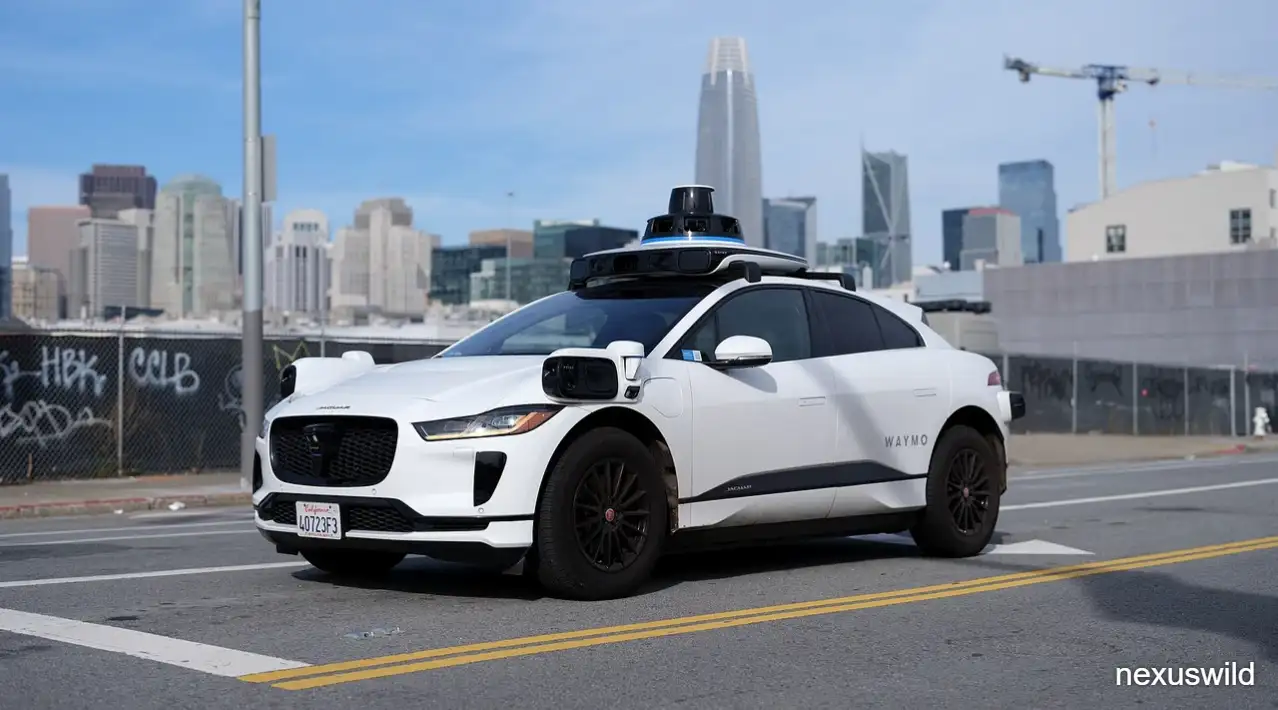
California's DMV has ordered Waymo to stop driverless operations and testing on state freeways. Waymo, in turn, has paused commercial freeway rides in every market where it offered that service. The two moves happened together, but they were not the same kind of action. California imposed a restriction on Waymo's permits. The broader commercial pause was a voluntary company decision.
That distinction is central to understanding the story. A California permit restriction does not, by itself, govern roads in Arizona, Texas or Florida. Yet Waymo said it temporarily restricted commercial freeway rides wherever that service existed. The Guardian, citing Associated Press reporting, described the result as a nationwide withdrawal from freeway rides. The company also said freeway testing continued with trained autonomous specialists behind the wheel.
The reason for the action was safety. The DMV said Waymo's driverless freeway operations posed an “imminent hazard to public safety.” No end date was announced. No standalone formal order has been located in the public record reviewed for this article. What is clear from the available statements is narrower: California restricted driverless freeway operation and testing on its own roads, and Waymo chose to stop paid freeway rides in all the markets where it had launched them.
A seven-day chronology
The sequence began on November 5, 2026, when three driverless Waymo vehicles entered a construction zone. The Guardian and Fortune both report the event; Fortune places it at an active U.S. 101 closure near Burlingame. On November 6, a separate incident involved a Waymo vehicle and a California Highway Patrol traffic break in San Francisco. UPI identifies the roadway as Interstate 280.
Those two episodes became the stated basis for the DMV's action. The restriction was imposed on November 11. Patch, which obtained a statement from the agency, reported that it affected both Waymo's deployment permit and its driverless-testing permit. Waymo told The Guardian that it implemented its own pause the same day.
Public disclosure came later. Patch published the DMV confirmation on November 17. The Guardian, UPI, Fortune and The Independent all reported the story on November 18. Their accounts broadly aligned on the sequence: two early-November incidents, a November 11 restriction, a company pause beyond California, and no announced date for commercial freeway service to resume.
The timing matters because the restriction was not an abstract rulemaking event. It followed specific roadway episodes by six days and came after a year in which Waymo had already interrupted freeway service once. Fortune reported that the earlier pause was followed by a gradual return beginning in late July 2026. The DMV, according to Patch, said the problems persisted despite those previous restrictions and corrective measures.
What the DMV actually ordered
The most precise public description comes from Patch. The DMV confirmed that the November 11 action restricts Waymo's deployment and driverless-testing permits, prohibiting the company from operating or testing vehicles without human drivers on all California freeways. That is a permit restriction, not a general statute and not a nationwide federal order.
The agency's stated rationale was unusually blunt. The DMV determined that Waymo's driverless freeway operations posed an “imminent hazard to public safety.” The Guardian quoted spokesperson Jonathan Groveman citing recurring incursions into active construction zones where workers, vehicles and equipment were present. The agency also cited similar incidents on May 18, 2026.
The restriction has a conditional exit. According to The Guardian, freeway operations may resume only after Waymo demonstrates to the department that it has taken effective corrective action addressing the deficiencies that prompted the restriction. Patch reported the DMV said it would review evidence of corrective measures before deciding whether freeway operations could safely resume.
Several details remain outside the public record reviewed for this article. No standalone November 11 DMV order or formal title was located. The exact legal document, its full findings and the complete evidentiary record were not available. That limits how precisely the action can be characterized. It is accurate to say California ordered a permit restriction. It is less precise to imply that a fully public formal order has been examined.
Why this was more than a California story
California's legal authority stopped at its border. Waymo's business response did not. The company said it “temporarily restricted commercial freeway rides in all markets where we operate that service.” That wording matters: it did not say it had suspended every autonomous vehicle operation in every city. It said the pause applied to markets where commercial freeway rides existed.
The Guardian reported that freeway rides had been offered in the San Francisco Bay Area, Los Angeles, Phoenix, Miami and Austin. The Independent corroborated that the commercial pause extended beyond California. Surface-street rides in Las Vegas, Dallas, Denver and other markets were unaffected, according to The Guardian.
Waymo also said freeway testing continued with trained autonomous specialists behind the wheel. That separates two activities that can easily be blurred: paying riders using driverless freeway service, and staffed testing on the same kind of roadway. The commercial service stopped. The testing did not.
Waymo's own November 2025 blog had described the launch of rider freeway service in the Bay Area, Phoenix and Los Angeles, with expansion planned for Austin and Atlanta. The company said the expansion followed millions of freeway miles logged with employees and guests. A year later, the same service had become the focus of a regulatory withdrawal and a company-wide commercial pause.
Waymo's launch blog also said the Peninsula expansion reached San Jose and included curbside service at San Jose Mineta International Airport (SJC). That detail shows how freeway access and geographic expansion were presented as part of the same service growth before the withdrawal.
Inside the work-zone problem
Construction zones are not static environments. Lane markings change, cones define temporary paths, closures move with the work, and signs may direct vehicles into unusual movements. The outline of the November problem, however, is narrower than the general challenge.
Those conditions matter because the NHTSA filing later described vehicles driving past ramp-closure signs and between cones. The November sources do not provide the same level of mechanical detail, so the general work-zone challenge should not be treated as a complete explanation of either November episode.
On November 5, three driverless Waymo vehicles entered a construction zone. Fortune identified the location as an active U.S. 101 closure near Burlingame. Waymo later said the recent U.S. 101 encounters involved no injuries or collisions. That statement came from the company; the DMV's public finding emphasized the hazard of recurring incursions into active work areas.
The November 6 episode was different. A Waymo vehicle was involved in an incident with a CHP traffic break in San Francisco, and UPI identified the roadway as Interstate 280. The public sources reviewed here did not establish every vehicle movement or conclusively describe all interaction with the officer. It is therefore safer to describe it as a CHP traffic-break incident than to reconstruct details those sources do not provide.
The DMV's concern was not simply that a vehicle took a wrong lane. Groveman's statement pointed to active construction zones containing workers, vehicles and equipment. Those are environments where a navigation error can place a vehicle into a protected work area. That is why the agency treated the pattern as an imminent hazard rather than an ordinary operational issue.
The June recall as a warning sign
The November incidents came after an earlier 2026 safety episode. NHTSA's Part 573 recall report, campaign 26E035000, covered 3,871 Waymo fifth-generation automated-driving systems. CNBC reported the recall as affecting about 3,900 robotaxis. The federal filing is the more precise source for the number.
The NHTSA report describes a defect in which the system could enter and drive at speed in freeway construction zones. According to the filing, that could happen because the system inappropriately prioritized avoidance of other freeway hazards, failed to recognize the construction zone, or both.
The chronology in the filing is specific. Waymo reviewed one event from April 11 and five from April 19 in which vehicles drove past ramp-closure signs into planned construction zones in Phoenix. On May 18, seven Waymo vehicles entered active construction lanes in the San Francisco Bay Area by driving between cones that marked a lane closure in the adjacent lane. Waymo's Safety Board decided to conduct a recall on June 8.
The remedy included software improvements to detect construction zones and avoid entering them, along with additional operational protocols. Fortune reported that the earlier suspension was followed by a gradual return to freeway operations in late July.
What the public record does not establish is causation between that defect and the November incidents. The NHTSA filing documents the April and May events and the June recall decision. It does not say the November U.S. 101 or CHP episodes resulted from the same defect or from an incomplete fix. The earlier recall is relevant context, not a verified explanation for what happened in November.
Waymo's safety record: strong headline numbers, narrow comparison
Waymo presents an extensive safety record, but the scope of that record must be stated carefully. The company's Safety Impact dashboard reports 271.3 million rider-only miles through June 2026. It breaks those miles down to 92.121 million in Phoenix, 82.421 million in the San Francisco Bay Area, 67.098 million in Los Angeles, 21.064 million in Austin and 8.624 million in Atlanta.
The dashboard additionally reports lower cyclist-injury and motorcycle-injury crash rates than its human benchmarks. Like the other comparisons, those figures are Waymo's and are part of a surface-street analysis.
The dashboard also reports large reductions compared with human benchmarks: 95% fewer serious-injury-or-worse crashes, 82% fewer airbag-deployment crashes, 82% fewer injury crashes and 93% fewer pedestrian-injury crashes, among other measures. These are company-reported figures. Waymo says it uses public crash reports submitted under NHTSA's Standing General Order and draws on best practices in safety-impact analysis.
That context does not resolve the freeway question. The Safety Impact dashboard focuses on surface streets. It is not a freeway-specific safety record. The figures can inform a discussion about Waymo's overall operating experience, but they do not demonstrate that the system reliably handles temporary freeway construction zones.
Fortune's Bryan Reimer offered a useful caution. He argued that the sheer number of vehicles and miles makes eventual incidents a matter of probability. He also warned against presenting a still-evolving technology as something consumers should trust without hesitation. Those comments speak to the gap between aggregate safety claims and public confidence. A fleet can compile millions of miles and still face a narrow, high-consequence failure mode that regulators treat as unacceptable.
What safety experts say the incidents reveal
The experts quoted in the reporting focused on two themes: regulatory firmness and speed.
Philip Koopman told UPI that pulling Waymo back from freeways represented a firmer response than regulators had previously shown, and he described that as appropriate given the concerning incidents. His point was not that autonomous freeway operation should never return. It was that repeated incursions warranted a stronger signal.
Matthew Wansley emphasized the operating environment. At highway speeds, he said, the margin for error is much lower. The implication is straightforward: a navigation mistake on a surface street and a navigation mistake in a freeway work zone are not equivalent events. The same perception or planning failure can have far different consequences when vehicles are moving quickly.
Reimer's comments to Fortune point in the same direction. He described the technology as highly automated rather than fully autonomous and stressed the human components behind the system. He also called trust a coveted commodity. That helps explain why the incident's safety record and its public meaning are separate questions. Waymo said there were no injuries or collisions in the U.S. 101 encounters. Regulators nonetheless acted because the pattern involved vehicles entering protected work areas at freeway speeds.
Rider and business consequences
For many riders, the practical effect was limited. Waymo's surface-street service continued in affected markets, and The Guardian reported that service in places such as Las Vegas, Dallas and Denver was untouched. Fortune reported that Waymo provides more than 500,000 surface-street rides each week.
Freeway removal still changes the product. Highways can make longer trips and airport journeys more direct. The launch blog framed freeway access as a step that would make trips faster and more convenient, which helps explain why its removal matters even though ordinary rides remain available.
Waymo's November 2025 blog presented freeway access as a way to make rides more convenient and efficient, including for airport travel. The withdrawal does not end the ride-hailing service, but it narrows where the driverless version can go.
The business stakes are tied to trust. Waymo built its public launch around expanding service safely, citing millions of freeway miles with employees and guests and close collaboration with safety officials. A regulator's imminent-hazard finding cuts against that narrative, even when the company disputes no injuries or collisions in the November roadway encounters.
There is also an operational cost. The company said freeway testing continued with specialists behind the wheel. That allows continued data collection, but it is not the same as driverless commercial service. Paying passengers are not receiving the product Waymo had begun advertising a year earlier.
California's new AV enforcement regime
California's action fits a regulatory framework adopted in April 2026. The California DMV announced the new autonomous-vehicle regulations on April 28, saying they strengthened safety requirements, oversight and enforcement.
Among the relevant provisions, the regulations authorize DMV to impose targeted operational restrictions on AV manufacturers when necessary for public safety. Those restrictions can involve fleet size, location, speed and weather. The rules also allow law enforcement to cite AV companies for moving violations committed by their vehicles, require AV companies to respond to first-responder calls within 30 seconds, and let local emergency officials issue electronic geofencing directives to clear AVs from active emergency zones.
That framework helps explain the form of the Waymo action. Rather than revoking the company's ability to operate everywhere, California restricted a specific part of the operational design domain: freeways. The restriction applied to both deployment and driverless testing, according to Patch. It was targeted by road type and permit function.
The regulations also provide a route back. Patch reported that the DMV said Waymo must demonstrate that its vehicles can safely detect and respond to construction zones, emergency vehicles and other road conditions before regulators would consider allowing freeway operations to resume. No timeline accompanied that requirement.
What comes next
Several questions remain unresolved.
First, the formal record is incomplete in public. No standalone November 11 DMV order or formal title was located. The available evidence consists of agency statements to reporters, permit-scope descriptions and the broader April regulatory framework. That is enough to establish the basic action, but not enough to reproduce the agency's full reasoning.
Second, the two November episodes are not fully documented in the fetched sources. Three vehicles entered a U.S. 101 work zone on November 5. A separate CHP traffic-break incident occurred on November 6. Reports do not establish every movement in the CHP episode, and the DMV's public statements did not provide a complete reconstruction.
Third, no causal link has been established between the June recall defect and the November incidents. The recall involved documented April and May construction-zone events. The November action followed later incidents after Waymo had returned to freeways. The public record reviewed here does not connect the two as cause and effect.
Fourth, Waymo's safety data cannot answer the specific question raised by the restriction. The company's comparisons are company-reported and focused on surface streets. They do not establish freeway work-zone performance.
The record also leaves open whether any additional incidents occurred during the staffed testing that continued after the pause. The available sources say only that such testing continued.
What is known is narrower but still significant. California ordered a permit restriction covering driverless freeway operation and testing on state roads. Waymo voluntarily paused commercial freeway rides in all markets where that service existed. The DMV cited recurring construction-zone incursions and an imminent hazard to public safety. The company said the pause was temporary, but no end date was announced. Whether Waymo can produce evidence sufficient to lift the restriction, and whether it will restore commercial freeway rides elsewhere, remains unknown.
Nexuswild welcomes factual corrections. Email contact@nexuswild.com with evidence and the article URL.