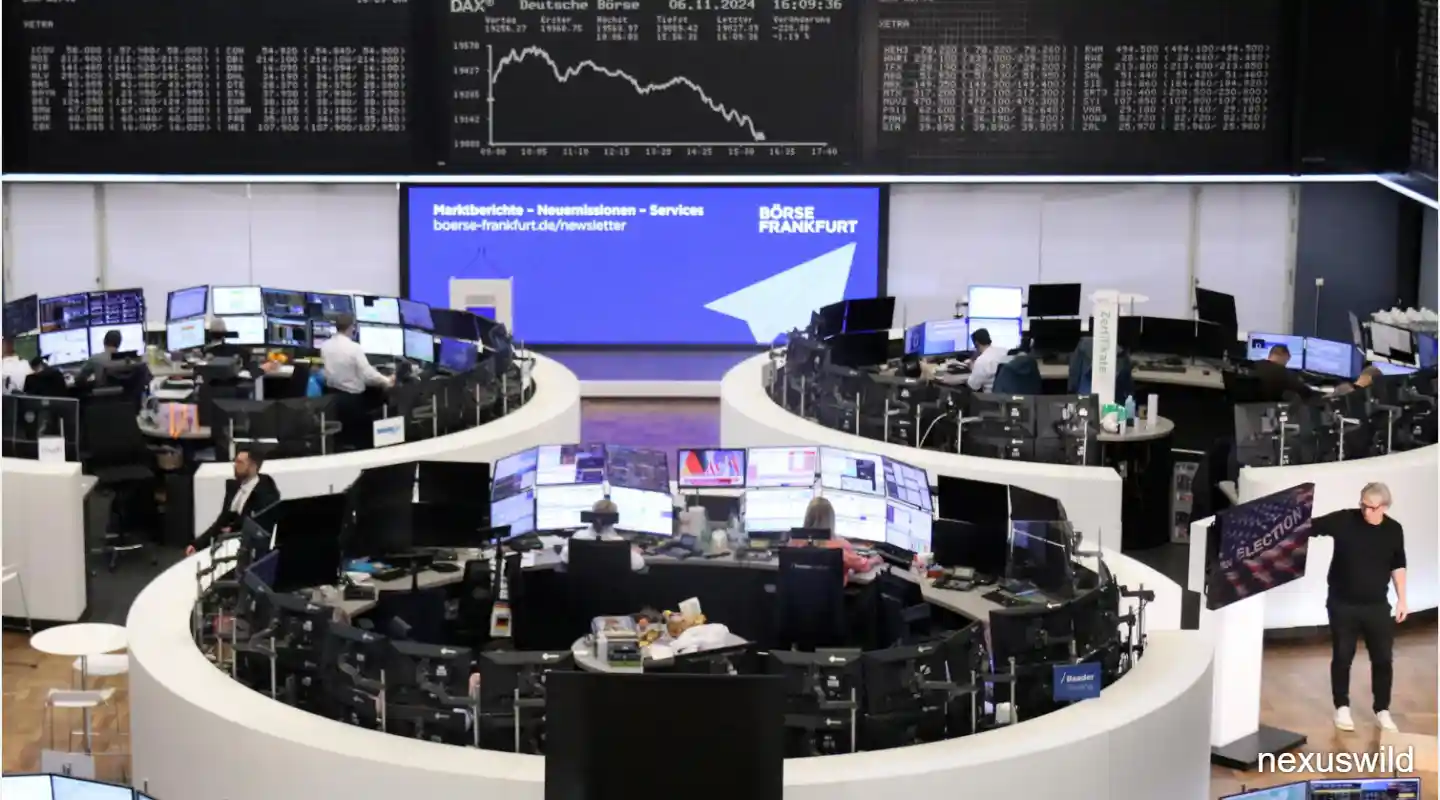

European stocks advanced in morning trading on Monday, October 12, as gains in banking shares and a decline in crude oil prices helped support sentiment ahead of a busy week of corporate earnings.
The pan-European STOXX 600 index rose 0.43% to 634.25 points by 0709 GMT, according to Reuters. Spain’s IBEX 35 climbed 1.3%, outperforming other major regional benchmarks during the morning session. Investors were weighing the potential relief from lower energy prices against geopolitical uncertainty and the prospect of continued pressure from borrowing costs.
The early gains offered some support to European equities as investors looked for fresh signals about corporate performance and the economic outlook. However, the advance at that point in the session did not establish how markets would finish the day.
Banks help drive the advance
Banking shares were among the main contributors to the market’s morning gains. Spain’s IBEX 35, which has significant exposure to financial companies, rose 1.3%, making it the strongest performer among the regional indexes cited in the Reuters report.
Financial stocks can respond to changes in government bond yields, expectations for interest rates and assessments of borrowers’ financial health. The relationship is not always straightforward: higher rates can support lending margins in some circumstances, but they can also increase funding costs and make it harder for households and businesses to service debt.
On Monday morning, eurozone bond yields eased, adding to the improvement in investor sentiment. The combination of stronger bank shares and lower yields helped European markets move higher, although the longer-term direction will depend on economic data, central-bank decisions and company results.
The rise in equities should not be interpreted as evidence that the region’s economic risks have disappeared. Investors remain sensitive to geopolitical developments, financing conditions and signs that higher costs could weaken business activity or consumer demand.
Oil prices provide some relief
Crude prices slipped during the morning as markets assessed reports of a possible pause in attacks on Russian and Ukrainian energy facilities. Reuters reported that expectations of additional Russian oil supplies also contributed to the move. The geopolitical situation remained uncertain, meaning any relief for energy markets could prove temporary.
Lower oil prices can benefit companies that consume substantial amounts of fuel or rely on energy-intensive production. Airlines, logistics operators and some manufacturers may face less cost pressure when fuel and energy prices fall, although the size of any benefit depends on contracts, hedging arrangements and other operating expenses.
The impact is not uniform across the market. Energy producers may face weaker revenue expectations when crude prices decline, while companies in other sectors can benefit from reduced input costs. For investors, the important question is whether lower prices persist long enough to affect earnings forecasts.
Europe’s exposure to imported energy makes oil-price movements particularly relevant to assessments of inflation, industrial competitiveness and household purchasing power. Yet a single session’s decline is not sufficient to establish a sustained improvement in the region’s energy outlook.
Nordex orders signal continued wind-turbine demand
Nordex was another notable stock mover. The German wind-turbine manufacturer’s shares rose about 2.5% in morning trading after the company reported stronger project order intake for the third quarter.
Nordex said it received orders for 2,810 megawatts of projects between July and September, excluding its service business. That represented a 29.5% increase from 2,170 MW in the same period of 2025. The company said demand was driven mainly by Türkiye, Germany and the United States.
For the first nine months of 2026, Nordex’s project order intake reached 7,733 MW, up 16.1% from 6,661 MW a year earlier. The figures provide evidence of demand for its wind-turbine projects, but order intake is not the same as recognized revenue or profit. Deliveries, project execution, pricing and costs will influence how much of that demand translates into financial performance.
Nordex reported an average selling price of €0.90 million per megawatt for its projects in the third quarter, compared with €0.93 million per megawatt in the same quarter last year. That detail underlines why order growth alone cannot determine the company’s eventual profitability.
The results nevertheless provide a useful indicator for investors following renewable-energy equipment and infrastructure investment. Demand for wind projects can be affected by electricity prices, financing costs, government policy, permitting and the pace at which developers move projects into construction.
Corporate earnings move into focus
Investors were also preparing for a series of corporate updates that could provide a clearer picture of demand across European industries.
Luxury group LVMH was scheduled to report its third-quarter results after European markets closed on October 12, while semiconductor-equipment maker ASML was due to report later in the week. Investors were looking for information on sales trends, order demand and management expectations amid an uncertain global economic environment.
LVMH’s results could offer insight into spending on luxury goods, including demand from important consumer markets. ASML, meanwhile, is closely watched because its semiconductor manufacturing equipment serves an industry shaped by chip investment, advanced computing and artificial-intelligence infrastructure.
Earnings reports can move individual shares and influence wider indexes when companies are major market constituents or provide important signals about their sectors. Guidance for future quarters may be just as important as reported revenue and profit, particularly where investors are concerned about slowing demand or elevated costs.
What investors will watch next
The immediate focus is whether the early advance in European equities can hold as companies release results and geopolitical developments continue to influence energy prices. Investors will also monitor bond yields and new evidence about the strength of corporate demand.
Nordex’s order figures provide a positive signal for its project pipeline, while the wider market’s performance reflects a combination of banking strength, energy-price movements and expectations for earnings. Neither development removes the risks facing European businesses.
For now, the October 12 morning session showed investors willing to add to European equities as oil prices eased and financial shares gained. The next major test will come from corporate results and whether companies can demonstrate that demand and profitability remain resilient in a volatile economic environment.
Nexuswild welcomes factual corrections. Email contact@nexuswild.com with evidence and the article URL.