
UK AI Chip Startup Fractile Raises $720 Million at $7 Billion Valuation to Develop Next-Generation Inference Processors
British artificial intelligence semiconductor startup Fractile has raised seven hundred twenty million dollars in a Series C funding round. The round values Fractile at about seven billion dollars. This is an investment in the growing market for special AI computing hardware.
Fractile, which is based in London and Bristol is building processors that are made for AI inference. AI inference is the stage where trained AI models give answers, process data and carry out tasks.
The funding round was announced on November 11 2026. It was led by Thrive Capital, Founders Fund, Lightspeed Venture Partners and Redpoint. Other investors were CapitalG, BlackRock, DST Global, Elad Gil, Balderton, Britains Sovereign AI Fund and the British Business Bank.
This investment shows growing interest in options that're not conventional AI accelerators. Demand for large‑scale inference infrastructure is on the rise.
Fractile was founded in 2022 by Walter Goodwin. Fractile is trying to solve a core problem in AI computing: moving big amounts of data between processors and memory quickly and well.
Why AI Inference Hardware Is Attracting Major Investment
The AI industry is entering a time when running trained models at scale is becoming more and more important.
During model training computing systems work on data sets to build and fine‑tune AI models. Inference starts after training. That is when the models are used to answer questions create content write code and do jobs.
As businesses put AI assistants coding agents and automated enterprise systems into use the number of inference operations keeps going up.
These workloads can need a lot of computing power. This is especially true when models handle conversations, big documents or long chains of reasoning.
One big technical limit is memory bandwidth.
Memory bandwidth tells how fast data can travel between a processor and its memory. If an AI accelerator cannot fetch the data it needs enough its computing units may sit idle while waiting for data.
This can slow response speed, lower throughput and change the economics of running AI systems.
Fractile believes that changing how memory and processing parts talk to each other can solve this limit.
Fractiles Memory-First Processor Architecture
Fractile is making AI inference accelerators that use a new way to integrate memory.
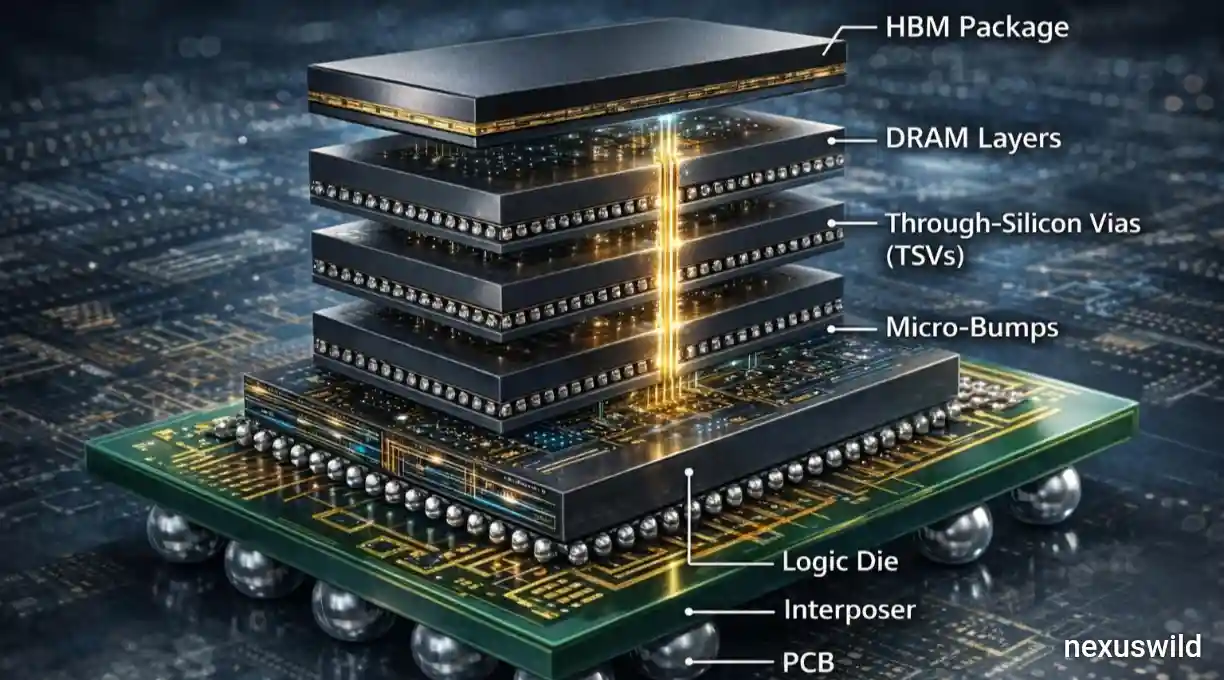
Of using the usual set‑up where memory and processing parts are linked by separate paths Fractile designs processors with DRAM stacked directly on top of the logic.
The design is meant to shorten the distance that data must travel and to let more information move between memory and processing parts.
This approach is very useful for AI inference. Making responses from models needs repeated access to model weights and context data.
Fractile says its architecture can give higher memory bandwidth and more memory capacity than some current processor designs.
Fractile also expects this approach to make computing more efficient and to cut the energy needed to run AI models.
However these performance gains are still targets and technical claims from Fractile.
Independent tests on hardware will be needed before customers can see how these processors compare with established AI accelerators.
$720 Million Funding Round Strengthens Fractiles Development Plans
The seven hundred twenty million dollar Series C is a capital boost for Fractile.
Thrive Capital, Founders Fund, Lightspeed Venture Partners and Redpoint co‑led the financing.
Other investors were CapitalG, BlackRock, DST Global, Elad Gil, Balderton, SV Angel, Britains Sovereign AI Fund and the British Business Bank.
Reuters said Fractile is worth about seven billion dollars. The British government said the value is than five billion pounds.
This new value is a jump from Fractile’s earlier fundraising in May 2026 when the company was worth about one point one billion dollars.
The fact that British government‑backed investment groups took part shows the country’s interest in building semiconductor skills.
For Fractile this new money will help expand engineering work push chip development forward and move toward hardware launch.
It also shows that investors trust the idea that special AI inference processors could become a part of future computing infrastructure.
Britains Ambition to Strengthen Its AI Semiconductor Industry
Fractile’s fundraising has effects on the United Kingdom’s technology strategy.
The country has built a research base, in artificial intelligence and semiconductor design.. It still relies on foreign suppliers for most of the advanced hardware that modern AI infrastructure needs.
Government backed investment in companies such as Fractile shows a desire to keep more technology expertise, intellectual property and economic value inside the domestic technology ecosystem.
The company’s London and Bristol operations also give chances to grow engineering, chip design and advanced computing skills in Britain.
Its development strategy goes beyond the processor alone. Fractile is following a hardware and software plan that covers inference accelerators, integrated systems and machine learning compiler technology.
This full stack strategy aims to make AI models run better on Fractile hardware of looking at chip performance alone.
If this approach works it could help British companies secure a place in the worldwide AI infrastructure market.
Still creating semiconductor products needs a lot of engineering work, special manufacturing partners and thorough testing.
How Fractile Could Challenge Established AI Hardware Suppliers
Nvidia is now the player in the market for advanced AI accelerators thanks to its hardware range, software ecosystem and ties with major cloud providers.
However the rising cost of running AI systems has pushed companies to look for alternatives.
Many semiconductor startups are building processors made for AI tasks instead of trying to copy the power of general purpose GPUs.
Fractile is carving out a spot in this market by concentrating on inference performance and memory design.
Fractile’s method is different from accelerators because it stresses moving and having data ready instead of just boosting raw processing power.
This could become very important as AI systems deal with contexts produce more tokens and carry out more complex tasks.
Fractile has not yet sent a production chip to market. Fractile’s chance to compete with established suppliers will rely on hardware performance, software fit, manufacturing trustworthiness and customer use.
So the company should be seen as an up‑coming semiconductor challenger of a set commercial rival to Nvidia.
Commercial Rollout Planned for 2027
Fractile intends to send its commercial chips and integrated systems to market in 2027.
The next development phase is crucial because the company has to shift from building architecture and prototypes to for-production hardware.
Many factors will decide if Fractile can reach this goal.
Manufacturing readiness: Making advanced processors needs access to semiconductor manufacturing and packaging skills.
Performance validation: Outside testing must prove memory bandwidth, inference speed, power use and reliability.
Software compatibility: Developers and business customers will need compilers, tools and software help to run models well.
Customer adoption: Fractile must show that its processors give economic and performance benefits over current solutions.
Competition: Big semiconductor suppliers and other AI hardware startups are also putting a lot of money into inference tech.
These challenges make 2027 a key test to see if Fractile can turn its funding and technical goals into a marketable semiconductor business.
Business and Market Implications
Fractile’s funding round shows changes in the worldwide AI economy.
Specialized AI hardware investment: Venture capital is going more into processors made for tasks, such as inference, long context reasoning and autonomous AI systems.
Memory technology innovation: The need for memory is pushing semiconductor firms to explore new packaging and memory integration designs.
AI infrastructure economics: Quicker and more power‑efficient inference could cut the running costs of AI deployments if the promised gains show up in commercial systems.
UK technology investment: Government backed involvement shows Britain’s goal to grow home skills in AI and semiconductor fields.
Competition in AI computing: New processor designs could slowly broaden the hardware choices for cloud providers AI developers and business customers.
The funding does not promise that Fractile will hit its performance goals or replace suppliers.
A Major Bet on the Future of AI Inference
Fractile’s $720 million Series C funding round is a bet on the next wave of AI hardware.
By concentrating on stacked DRAM and special inference processors the British startup is trying to fix a key problem that hinders large‑scale AI computing.
Its $7 billion valuation also shows that investors and government backed bodies are ready to back semiconductor firms before their first commercial products hit the market.
The next step is harder, than raising money. Fractile has to prove that its design can give performance gains work reliably at big scale and win customers in a very tough industry.
So Fractile’s planned 2027 launch will be a test to see if the company’s memory‑focused way can become a real alternative in the worldwide AI infrastructure market.
Nexuswild welcomes factual corrections. Email contact@nexuswild.com with evidence and the article URL.