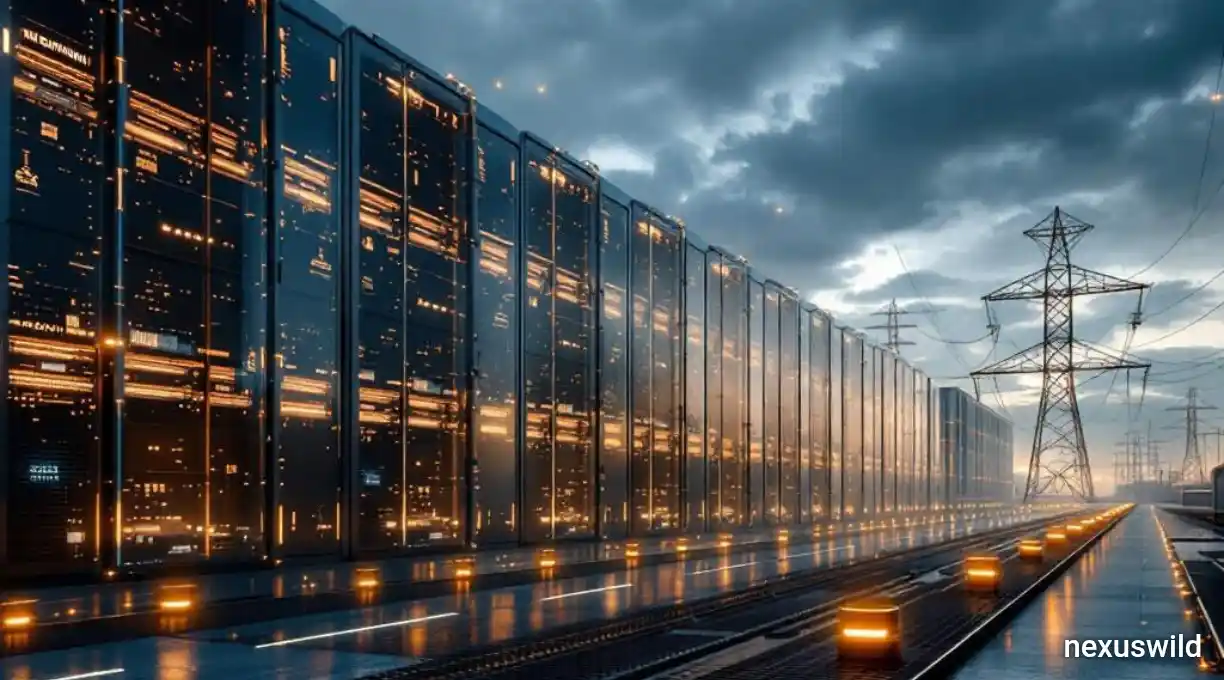

Global tech stocks bounced back on Wall Street on November 6. The recovery was limited and came amid growing concerns about the future of artificial intelligence investment. The International Monetary Fund has issued a warning that a sharp reversal in AI spending could slash economic output by as much as 1.1% by 2028. This adds a layer of risk to the already volatile technology markets.
The week started with a drop in US tech stocks driven by worries over rising costs, uncertain returns and possible regulatory changes. On Friday the Nasdaq Composite rose about 1.1% to close at 24,579.42. The S&P 500 gained 0.3% to 7,376.86 while the Dow Jones Industrial Average slipped 0.5% to 51,285.73. Despite the rebound the overall weekly performance was weak. The Nasdaq dropped 3.4% the S&P 500 fell 2.7% and the Dow declined 0.9%. These mixed results show that while some investors took advantage of prices confidence remains fragile. One strong day doesn’t mean the correction is over.
The selling pressure spread to Asia on the day. Japan’s Nikkei 225 and South Korea’s KOSPI both plunged 6%. Taiwan’s tech sector also struggled. Its semiconductor industry is crucial to global AI development. Any shift in expectations about chip demand or data-centre expansion sends shockwaves. Companies in these regions have done well during the AI boom. They’re now at risk if investor sentiment changes. Even if their current business keeps generating income falling valuations can hurt their stock prices.
European markets also felt the strain. Investors were looking at how weaker tech sentiment and uncertainty around regulation might affect growth. These regional declines show how connected global equity markets have become through the technology supply chain. A downturn in one area can quickly ripple across continents.
The IMF’s latest report, the October 2026 World Economic Outlook lays out a scenario. If AI investment slows asset prices fall and financial conditions tighten global GDP could be reduced by 0.4% from the direct effects.. The impact could grow larger. If falling stock prices reduce household wealth and consumer confidence or if borrowing costs rise the total damage could reach 1.1% by 2028. The United States could see its output fall by 1.8% under the same conditions. These are not forecasts but warnings— risks if things go wrong not predictions of what will happen.
AI infrastructure needs investment. Companies are building data centres buying chips expanding cloud networks and upgrading power systems. This spending creates demand in areas—semiconductors, construction, power generation, telecoms. If the pace of investment slows the effects go beyond tech companies. For example a drop in data-centre construction could hurt suppliers of cooling systems and electrical equipment. Semiconductor makers may see orders if cloud providers delay purchases. The impact will vary by company and region. The IMF sees AI investment as a broader economic force, not just a stock market theme.
Another concern is how this infrastructure is being funded. Traditionally big tech companies used their cash to grow. Now they’re relying more on debt. The IMF noted that hyperscalers’ share of investment-grade bond issuance jumped from than 1% to about 10% between 2024 and 2026. Free cash flows are falling as spending continues. This doesn’t mean trouble for all firms. It does mean they are more dependent on capital markets. If AI revenues don’t meet expectations companies may struggle to justify projects or pay back debt. That could push up borrowing costs for smaller players with higher debt and lower profits.
Power and infrastructure are also limits. Building data centres requires electricity, cooling and network access. In places grid connections are slow to come permits are hard to get and construction takes time. Energy prices matter higher electricity costs hurt margins. A company might announce a data centre but it can’t build it without the right power, financing and demand. These real-world constraints mean that investment plans don’t always turn into projects. Investors are starting to pay attention to how viable and profitable these projects really are.
Now market valuations are being rechecked. AI has attracted interest because of hopes that it will boost productivity and create new income.. The speed and scale of spending are making people ask if the returns will come fast enough. Can AI services grow fast to cover the cost of data centres, chips and energy? The IMF’s warning shows that if investor confidence shifts the drop in valuations could have effects—lower stock prices, less wealth, weaker spending, tighter credit. That could spread the pain beyond tech companies.
Looking ahead investors and businesses will watch earnings, capital spending plans and signs that AI is driving revenue. They’ll also track semiconductor demand, data-centre builds and power availability. Central banks and regulators may pay attention to how tech investment ties into broader financial risks. For companies, in the AI supply chain the challenge is to balance long-term goals with revenue, costs and financing. The market rebound on November 6 showed that prices can bounce after a fall. The economic risks remain. The IMF’s 1.1% GDP drop scenario reminds us that the real question isn’t whether AI investment will continue but whether its returns will be big enough to support the scale of what’s being built.
Nexuswild welcomes factual corrections. Email contact@nexuswild.com with evidence and the article URL.