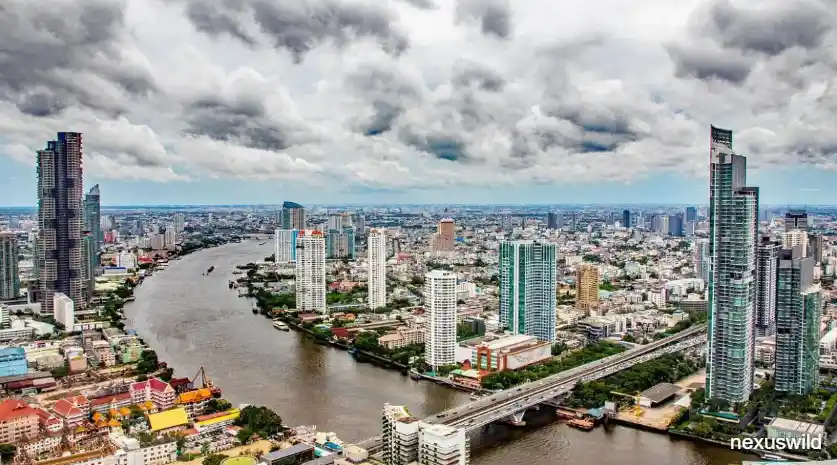

The International Monetary Fund (IMF) and World Bank Group will bring finance ministers, central bankers and economic policymakers together in Bangkok from October 12 to 18 as rising public debt, higher energy costs and geopolitical tensions put pressure on the global economy.
The 2026 Annual Meetings come at a challenging time for governments already dealing with borrowing costs, inflation risks and uneven economic growth. The ongoing conflict involving Iran and the resulting disruption to energy supplies have added another layer of uncertainty, particularly for countries that depend heavily on imported fuel and fertilisers.
The meetings will provide an opportunity for policymakers to discuss the global economic outlook, financial stability, development financing and ways to support countries facing economic shocks. The IMF and World Bank are also expected to address the challenges confronting developing economies, including limited fiscal resources and rising debt-servicing obligations. <Cite refs={["turn644782search0","turn644782news3"]} />
Global Debt Puts Government Budgets Under Pressure
Public debt is one of the central concerns confronting policymakers. Governments have borrowed heavily to respond to economic disruptions, finance public services and support investment. However, higher interest rates can increase the cost of refinancing existing debt and leave less money available for development priorities.
The pressure is particularly serious for lower-income and developing countries, where debt repayments compete with spending on healthcare, education, infrastructure and social protection.
According to reporting ahead of the meetings, developing economies face substantial external debt repayments in 2026. The World Bank has also been discussing potential crisis assistance with dozens of countries facing renewed economic pressures.
For governments, the challenge is to maintain financial stability without cutting essential services or undermining investment needed for future growth.
Debt restructuring, stronger domestic revenue collection and more effective use of development financing are likely to remain important policy issues. However, negotiations over debt relief can be difficult when governments, private creditors and official lenders have different priorities.
Energy Costs Add to Inflation Risks
Energy markets are another major focus. The conflict involving Iran and disruption around the Strait of Hormuz have threatened supplies of oil and other commodities, contributing to higher energy costs and uncertainty in international markets.
Higher fuel prices can affect transport, manufacturing, electricity generation and food distribution. Fertiliser costs can also increase agricultural expenses, potentially adding to food-price pressures.
For energy-importing economies, a sustained increase in oil prices can raise import bills, weaken trade balances and put pressure on currencies. Governments may face difficult decisions over fuel subsidies, public spending and efforts to protect households from rising living costs.
Central banks must also consider whether higher energy prices could feed into broader inflation. If price pressures persist, interest rates may remain elevated for longer, making borrowing more expensive for households, businesses and governments.
The impact will differ across countries. Energy exporters may benefit from higher prices in some circumstances, while import-dependent economies can face greater financial strain.
Global Growth Faces New Uncertainty
The combination of expensive energy, high borrowing costs and geopolitical instability threatens to slow economic activity.
The IMF's pre-meeting outlook has placed global growth at around 3% for 2026, while warning that worsening conditions could lead to a weaker outlook. The final assessment will depend on developments in energy markets, the duration of geopolitical disruptions and the response of governments and central banks. <Cite refs={["turn644782news3","turn644782news6"]} />
Slower growth would have consequences for employment, investment and government revenues. Businesses facing higher input costs may delay expansion, while consumers could reduce discretionary spending as household budgets come under pressure.
Developing economies may be especially exposed when higher energy import bills coincide with expensive external borrowing. Such pressures can limit governments' ability to invest in infrastructure, education and programmes intended to create jobs.
Policymakers will therefore need to balance inflation control with measures that preserve economic activity and protect vulnerable households.
World Bank Considers Support for Countries Facing Shocks
The World Bank is discussing possible crisis assistance with approximately 30 to 40 countries affected by energy and price pressures, according to remarks by World Bank President Ajay Banga reported ahead of the meetings.
The institution had made a $25 billion crisis fund available earlier in the year, although initial demand was limited. More recent increases in diesel and fertiliser prices have renewed concern about the financial pressures facing vulnerable economies.
The World Bank has indicated that support could be expanded if circumstances require it. Countries may also seek to redirect existing development projects rather than request entirely new emergency financing.
Any additional assistance will raise questions about how funding should be allocated, how quickly it can reach affected communities and how countries can avoid accumulating unsustainable debt while responding to immediate crises. <Cite refs={["turn644782news4"]} />
Bangkok Meetings Will Also Address Development and Investment
Beyond immediate economic risks, the Annual Meetings are expected to cover longer-term development priorities, private investment, employment and the effects of artificial intelligence on economies and labour markets.
The World Bank has highlighted private capital mobilisation as an important part of financing development, while the IMF's programme includes discussions on financial stability, fiscal policy and the changing global economy.
For developing countries, attracting investment can help expand productive capacity and create jobs. Yet high borrowing costs, uncertain trade conditions and geopolitical tensions can make investment decisions more difficult.
The meetings also provide a platform for governments and international institutions to discuss how economic reforms can strengthen resilience without placing disproportionate burdens on lower-income households.
What to Watch During the Meetings
The updated IMF World Economic Outlook, scheduled for release on October 13, will be an important indicator of how the institution assesses the combined effects of geopolitical conflict, energy prices and financial conditions.
Other key issues include the availability of emergency financing, progress on debt-related initiatives and the policy choices governments make to manage inflation while supporting growth.
The meetings will not automatically resolve the pressures facing the global economy. Their significance will depend on whether participating countries can turn discussions into practical steps on debt sustainability, crisis assistance and investment.
As policymakers gather in Bangkok, the central challenge is to protect economic stability while ensuring that countries with the fewest financial resources are not left carrying the heaviest burden of global shocks.
Nexuswild welcomes factual corrections. Email contact@nexuswild.com with evidence and the article URL.