
A lamp that listens to movement in the dark
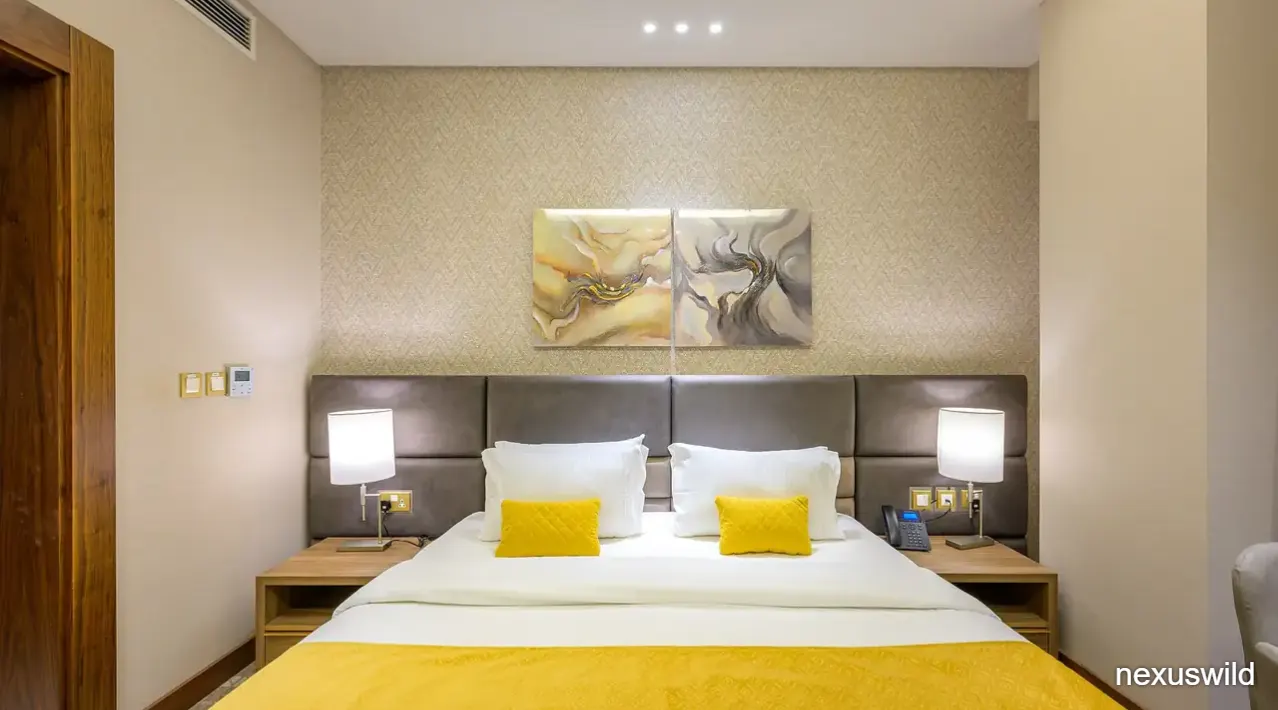
Lisbon-based Lampsy Health drew attention in reporting published on 27 and 28 November 2026, when coverage confirmed that the company had raised €1.1 million to prepare a commercial launch of a bedside lamp built to spot suspected epileptic seizures during sleep. The device looks like an ordinary light fixture, but contains an infrared camera and on-device computer vision that analyse movement patterns associated with tonic-clonic seizures. When the system judges that a pattern matches what it has been trained to recognise, it calls contacts chosen by the user and sends an alert through a companion app. There is no wearable sensor, no strap and no electrode to attach before bed.
That design choice is the story's centre of gravity. Night-time seizures are difficult for a sleeping person to report and difficult for a partner to notice reliably, and the company cites an often-repeated estimate that a large majority of seizures occurring at night go unnoticed. It also points to the World Health Organization's estimate of roughly 50 million people living with epilepsy worldwide. Both figures are context cited by the company and its backers rather than measurements of the lamp's effect. Nothing in the funding reports establishes that the device improves outcomes, and the product should be understood as an alerting tool rather than a diagnostic service or a substitute for medical advice.
The promise is modest in clinical language but ambitious in product terms: put a camera where a person already keeps a lamp, let software watch for characteristic movement, and make sure somebody else is told quickly. Whether that arrangement works outside monitored settings is a question the next stage of commercial and clinical work has to answer.
Where the €1.1 million round came from
Coverage of the financing was consistent about the headline figure and its purpose. The €1.1 million was described as an early-stage round intended to fund commercial launch and distribution in Europe and the UK. Fundação Ageas and Portugal Ventures were named as the lead investors, with Angels Way, Phira Ventures, named business angels and support from the European Innovation Council Pre-Accelerator also listed. That mix matters because it combines domestic Portuguese capital, specialist venture money and a European programme aimed at technology companies in countries with lower innovation investment. A separate European Commission announcement recorded that seventy companies were selected in the relevant Pre-Accelerator call, drawn from twenty-two countries, with Portugal among the better represented national groups.
Some reporting compared the new round with a much smaller raise announced in April 2025, describing the latest financing as several times larger. That comparison is useful for understanding momentum, but it should not be read as evidence of revenue or of demand being converted into sales. The same reporting said the company had been selected from more than a thousand applicants in the European scheme and that the grant-backed project carried a working title pointing toward a CE-ready Class IIa standard and hospital and home pilots. The funding therefore sits alongside a development programme, not at the end of one.
Investor interest in a contactless monitor is not the same as clinical endorsement. None of the coverage reviewed here reported an outcome trial showing that the lamp changes the way epilepsy is managed at home. The money buys engineering, regulatory work, manufacturing preparation and market entry, and the commercial question remains open.
Why the bedside form factor matters
Lampsy Health was founded in 2024 by Vicente Mayer Garção, Leonor Pereira and Joana Pinto, and has been described as a spin-off of Instituto de Telecomunicações and Instituto Superior Técnico. The project is said to have begun after a clinical team at Hospital de Santa Maria asked whether patients could be monitored at night without being attached to equipment. That origin explains the emphasis on an object that is already present in a bedroom rather than a device that has to be worn or installed as a medical system.
The reasoning has a social dimension as well as a practical one. Work describing the device's research origins uses the word invisible to explain the intention: a sensor embedded in an ordinary household object may carry less stigma than a visible wearable. For people who already manage a long-term condition, the difference between a lamp and a medical appliance is not trivial. It affects whether a person keeps the device beside the bed, whether visitors notice it and whether the person feels constantly defined by monitoring.
The same choice creates engineering constraints. A lamp has a fixed position, a limited field of view and a power supply designed for lighting rather than continuous sensing. Infrared illumination allows imaging in darkness without disturbing sleep, but it also means that software must interpret silhouettes and motion rather than clear daylight video.
Designing for the bedroom therefore means designing for imperfect conditions. The company's answer has been to keep processing on the device and to narrow the detection task to particular movement patterns. That is a coherent product decision, but it also defines the limits of what the system can be expected to notice.
Inside the contactless detection pipeline
The lamp's sensing stack is described consistently across the coverage. An infrared camera captures movement in low light, while computer vision running on the device looks for patterns associated with tonic-clonic seizures. The company says processing happens locally rather than in a remote data centre. On detection, the system calls a designated contact and pushes an app alert. The workflow is deliberately simple: no sensor is attached to the body, and the person monitored does not have to initiate anything during an event.
A company page describing the underlying research paper gives more technical detail about an earlier research configuration, including a light fixture with a camera, infrared light sources and a small single-board computer. It reports that an earlier optical-flow approach produced high sensitivity and specificity on a small set of tonic-clonic seizures, and that an optimised real-time version ran at thirty frames per second with similarly high figures without calibration. Those numbers belong to a specific paper and a specific dataset. They describe research performance under defined conditions, not the measured accuracy of a retail product in an unmonitored bedroom.
The distinction between a research pipeline and a shipping device is important. Real-time video analysis must cope with blankets, partial occlusion, changes in room layout, pets and people who move unusually in their sleep. Narrowing the target to tonic-clonic movement makes the task tractable, but it also means that other seizure types may not be detected. Any claim about the lamp's usefulness should be tied to the events it was designed and tested to recognise.
What the reported validation figures show
The most repeated number in the coverage is a company-reported detection accuracy above ninety-seven per cent. It appears alongside a claim of eighteen times fewer false alarms and, in several accounts, testing on more than 9,200 hours of hospital data. Another account describes validation with epilepsy monitoring units at Santa Maria and Egas Moniz hospitals in a study of more than 2,200 hours of video published in IEEE Access, again with accuracy above ninety-seven per cent and fewer false alarms. The figures are not identical in scope, and the reporting does not always explain how the datasets relate to one another.
These are company-reported results, not independent proof of clinical performance. A high percentage on curated hospital video can coexist with poor performance in a home, where lighting, camera angle and background movement are less controlled. False alarms matter as much as missed events: a system that cries wolf too often will be switched off, while one that stays silent when it should alert creates a different kind of harm. A single summary figure does not convey that trade-off.
The right reading of the numbers is that they justify further testing. They suggest that the underlying approach has enough promise to carry into commercial development and that the team has access to clinical video for evaluation. They do not establish that the lamp prevents injury, reduces anxiety, shortens response times or works across the full range of seizures that people with epilepsy experience. Those are outcome questions, and they require a different kind of study from the one that produced the headline percentage.
The hospital corridor into home use
Until the financing was announced, the lamp had been available only to medical teams through a partnership covering public hospitals in the Lisbon Metropolitan Area that monitor epilepsy. That detail gives the story a useful sense of proportion. The device has been used in a monitored clinical context, where staff can interpret what it reports and where video review can check the software's judgement. Moving from that setting to an unsupervised bedroom changes the responsibilities of the product.
In hospital, a false alert is an event for a technician or clinician to assess. At home, it becomes a phone call in the night to a relative or carer who may be exhausted and who cannot see the source video unless the system provides it. A missed detection in hospital may be caught by other observation; at home, the lamp may be the only mechanism for summoning help. The same algorithm therefore sits inside a very different safety system.
The company's plan is to sell into Europe and the UK rather than to remain a pilot tool for clinicians. That expansion will require training, support and clear guidance about who should receive alerts and what they should do when one arrives. It will also require honesty about the boundaries of the device. An alerting lamp can prompt a person to check on someone; it cannot interpret the event, treat it or replace an emergency plan agreed with a clinician.
Designing alerts for the people nearby
The alert pathway is central to the product's value. Coverage says the lamp calls user-designated contacts and sends a notification through an app, which means the system's effectiveness depends on human availability as much as on detection accuracy. A call to somebody who is asleep, away from their phone or unable to respond does not, by itself, make the bedroom safer. The design therefore has to account for contact lists, escalation and the practical reality of night-time responsiveness.
The company reports a very low rate of false alarms per day, which speaks to the engineering effort put into filtering movement. Yet a low average is not the same as a guarantee for an individual night. Families considering such a device need to know how often alerts occur, how quickly they arrive and what the system does when a contact does not answer. Those details are not settled by the funding announcement, and they are likely to matter more in day-to-day use than the headline accuracy figure.
There is also a question of consent. The person monitored chooses who is notified, but those contacts are being drawn into a monitoring relationship with obligations they may not have anticipated. Clear configuration and straightforward documentation can reduce confusion. So can an explicit statement that the system flags suspected movement patterns rather than delivering a medical diagnosis. The language used aroundAlerts shapes expectations, and expectations shape whether people trust the device appropriately.
Privacy in a room that is never off camera
A camera in a bedroom raises questions that do not arise with a wearable sensor. Lampsy Health has said that processing occurs on the device and that privacy modes are included, and the research framing emphasises preserving privacy while monitoring. On-device analysis reduces the amount of imagery that needs to leave the room, which is a meaningful design choice. It does not remove the need to explain what is stored, what is transmitted and who can access either.
The reporting mentions a companion app and alert calls, so some data must travel beyond the lamp. What is not clear from the coverage is the precise retention policy for video snippets, the default settings for privacy modes, or the way households are told about the camera's field of view. Those questions are especially sensitive because a bedroom is shared with partners, children, visitors and carers who may not be the person being monitored.
A credible consumer health product needs to answer them before launch. That means plain-language documentation, visible indicators when the camera is active, and controls that are intelligible to someone who is not technically confident. It also means recognising that monitoring can affect relationships as well as routines. A lamp that alerts a contact during a suspected seizure is useful only if everyone in the room understands what it is doing and has agreed to its presence.
Pricing, geography and the waiting list
Reporting on the commercial plan gives a hardware price in the region of a few hundred euros plus a monthly membership, although published figures differ between accounts. One report put the device at €349.90 with membership starting at €19.90 a month; another, written in Portuguese, cited an initial cost of €274.90 plus a subscription. The discrepancy is a reminder that launch pricing can change with market, timing and reporting source. What is consistent is the intention to pair hardware with an ongoing service rather than sell a one-off lamp.
Demand figures were also repeated. Coverage said more than 7,500 people in twenty countries had joined a waiting list, with one Portuguese account noting growth from roughly 5,000 people in July. Again, a waiting list indicates interest, not paying customers or verified need. It is a useful signal for investors and for planning distribution, but it should not be treated as evidence that the product has been accepted by people with epilepsy or by the clinicians who support them.
The target market is Europe and the UK, with the first quarter of 2027 given as the intended launch window. Distribution details remain thin in the reporting, and the company has discussed manufacturing arrangements that split electronics and final assembly in Portugal from plastic parts moulded elsewhere. That structure is plausible for a small hardware company, but it adds another layer of execution risk to a launch that must satisfy consumer expectations and health-sector scrutiny at the same time.
What independent research requires next
The strongest caution in the source material comes from peer-reviewed work on contactless seizure detection rather than from the company. A validation study of a different audio-video system monitored 191 participants across more than four thousand night-time hours. It detected a high proportion of major motor seizures, including every tonic-clonic event in that dataset, but performed poorly for minor motor seizures and recorded a measurable false-detection rate and periods of device deficiency. The authors noted that clinical guidance recommends clinically validated wearable devices for unsupervised tonic-clonic seizures and that, at the time, validated systems were obtrusive.
That comparison shows both the opportunity and the burden of proof. An off-the-person device could remove a source of stigma and daily friction, but it has to demonstrate performance across seizure types, nights and home environments. It also has to show that alerts lead to useful action. A study design capable of doing that would need clear definitions of events, independent review of video, careful accounting of false alerts and an explicit account of what participants and contacts were asked to do.
None of this means the Lampsy approach is unsound. It means the current evidence is at the stage where claims should be attributed to the company and interpreted accordingly. Reporting that repeats a percentage without describing the dataset does a disservice to readers and to the people who might buy the device. The meaningful question is not whether a number is impressive, but whether the system can be trusted in the specific circumstances in which it will be used.
The commercial test facing a contactless monitor
The funding round gives Lampsy Health a chance to convert a clinical prototype into a consumer-facing product. That transition is where many health hardware companies encounter their hardest test. Engineering a lamp that detects movement is one task; manufacturing it consistently, supporting it after sale and communicating its limits are others. The company has said it wants to reach families in Europe and the UK, which means navigating different expectations about medical devices, data protection and reimbursement in each market.
Competitive context matters too. Most established approaches to seizure alerting rely on wearables, and clinical guidance has historically favoured devices that have undergone formal validation. A contactless alternative could appeal to people who dislike wearing sensors, but it must earn confidence through evidence rather than through novelty. The company's own research framing acknowledges that invisibility is a social advantage; the next phase must show that it is also a reliable one.
For now, the record is clear on a few points. A Lisbon company raised €1.1 million in late November 2026. It is building a bedside lamp with an infrared camera and on-device software that alerts designated contacts to suspected tonic-clonic movement during sleep. It aims to begin sales in the first quarter of 2027 and reports substantial waiting-list interest. Everything beyond those facts, including real-world accuracy and the effect on people's lives, remains to be demonstrated.
Nexuswild welcomes factual corrections. Email contact@nexuswild.com with evidence and the article URL.