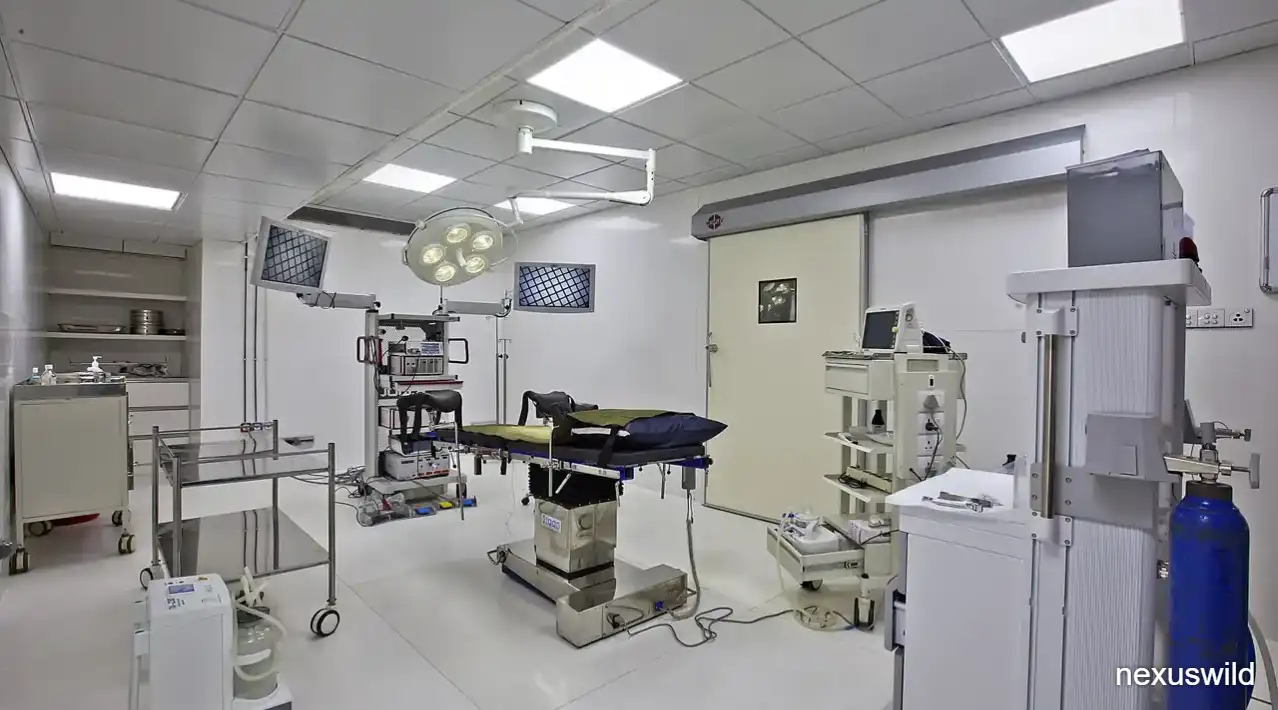

The days-long wait after tumour removal
A surgical team can remove a tumour, close the wound and still not know for several days whether the operation achieved what it set out to achieve. The answer comes from a pathologist who examines the excised tissue, slices it and looks for cancer cells at its edge. If cells are found at that margin, the patient may be recalled for another operation or offered additional treatment. The delay is built into the workflow, and it is familiar to patients as a period of uncertainty after an apparently completed procedure.
Dutch startup SPCTR is trying to compress that interval. Coverage published around 28 November 2026 reported that the company had raised €2.8 million to advance SPCTRone, a system designed to help assess the margin of excised tissue while the operation is still under way. The device combines optical imaging with artificial intelligence and is intended to give surgeons information about whether tumour cells are present at the edge of the removed sample. The aim is to allow additional tissue to be taken in the same operation if it is needed, rather than waiting for pathology to deliver the verdict later.
The funding report is a statement of intent, not a record of established practice. Both the company and the University of Groningen confirmed the work and the financing, and both were careful about its status. SPCTRone remains in development and is available only within clinical research. It is not yet an established clinical solution, and the new money is directed toward the studies and regulatory steps that would be required before that could change.
What a positive margin means for patients
A margin is the boundary of tissue removed during an operation. Surgeons aim to take the tumour together with a rim of healthy tissue, so that no cancer cells are left behind. When a pathology report finds tumour cells at or very near the cut edge, the result is described as a positive or close margin. That finding can change the treatment plan, even when the operation appeared straightforward at the time.
The University of Groningen put a number on the problem in its announcement. It said tumour cells are found at the surgical margin in 10.8 per cent of breast-conserving operations in the Netherlands. Other reports using the company's material repeated the same figure. For the patients in that group, the consequence may be a second operation, further treatment or a period of anxious waiting while the result is confirmed. The statistic describes a frequency; it does not by itself describe how many patients require reoperation, which depends on clinical decisions that follow.
Peer-reviewed context suggests the scale of the challenge should not be underestimated. A systematic review and meta-analysis of sixty-one studies estimated that roughly one in five patients undergoing breast-conserving surgery require reoperation because of positive or close margins. That figure comes from a broader evidence base and should not be mixed with the Dutch single-country statistic, but the direction is the same: margin status is a common source of additional procedures and uncertainty.
This is why the timing of information matters. A result delivered days later cannot change an operation that has already ended. A result delivered during the operation could, in principle, change what the surgeon does next.
How SPCTRone reads excised tissue
The technical idea behind SPCTRone is to analyse light reflected from removed tissue and use a trained model to identify patterns associated with tumour cells. Dealroom described the system as optical imaging with artificial intelligence trained against pathology, while the company's own material frames it as bringing margin assessment into the operating room. In both accounts, the reference standard is the pathologist's later judgement: the device is being trained and tested to anticipate what conventional pathology will eventually report.
That choice defines both the appeal and the difficulty. Optical methods can, in theory, produce an answer quickly enough to influence a decision while the patient is still in theatre. But a trained model is only as reliable as the cases it has seen and the rigour with which its output is compared with final histopathology. Differences in tissue type, tumour subtype, blood, lighting and handling can all affect what an optical sensor sees.
The device is initially associated with breast cancer surgery, which is where the reported patient studies have concentrated. Coverage notes that the longer-term ambition extends to other cancer types. That expansion should be treated as a direction rather than a present capability: evidence gathered in breast surgery does not automatically transfer to a different organ or a different tumour biology.
The most important point for readers is that SPCTRone is designed to support a surgeon's assessment, not to replace the pathologist or to make a standalone diagnosis. The information it produces is intended to prompt a decision about additional excision in the same operation. Whether it does so safely and accurately is exactly what the follow-up work is meant to establish.
The €2.8 million backing and who provided it
The financing was reported as €2.8 million and was described as a seed round by the company and several outlets. The investor list was consistent across the University of Groningen announcement, the company's release, a Dutch cooperative's statement and later coverage. VGZ Voorop in Zorg, Future Tech Ventures, NOM, business angels and the European Just Transition Fund were named as supporters. RUG Ventures, the investment company linked to the University of Groningen, is part of Future Tech Ventures, which explains the university-connected participation noted in the reporting.
The presence of a healthcare insurer and of regional investment bodies gives the round a distinctive shape. VGZ's representative was quoted saying that if SPCTRone reduces reoperations and follow-up treatment, it could help accessibility, affordability and sustainability of healthcare. That is a payer's argument: the value of faster information is not only clinical but also economic, because avoidable procedures consume theatre time and staff capacity. It remains a conditional claim, expressed with an if, and the funding does not make it true.
The money has three stated destinations. It will support a multi-hospital follow-up study, construction of a first series of devices and the next steps toward CE marking. That allocation is telling. The company is not spending the round on a sales force, because there is no product for sale. It is buying evidence, hardware maturity and regulatory progress, in that order.
For a startup founded in 2025 and based in Utrecht and Groningen, with a small team reported at eight employees, the round is a substantial step. It also brings obligations. Investors in regulated medical technology need proof that the clinical problem is real, the device can be built repeatedly and the evidence will satisfy reviewers rather than only supporters.
From more than 200 patients to multicentre work
The first study involved more than 200 patients at UMC Utrecht and the Academic Breast Center Groningen, which the university described as a collaboration between Martini Hospital and the University Medical Center Groningen. That detail matters because the two sites provide more than a single-centre perspective. Even so, a study of this kind is an early step. It shows that the system can be used with patients and that data can be gathered, but it does not by itself settle questions of accuracy across hospitals and operators.
A follow-up study is expected from late 2026 at three Dutch hospitals: the Academic Breast Center Groningen, St Antonius Hospital and Isala. The plans are subject to approval by a medical ethics committee and by the participating hospitals. That qualification should not be treated as a footnote. It means the work is prospective and governed, not already running as a routine service. The company's own regulatory language says the system is investigational, not CE-marked under the relevant European regulation, not cleared by the United States regulator and not available for sale.
Multicentre work is valuable because it tests whether a device survives contact with different theatre teams and different patient populations. A model that performs well in one hospital can fail when tissue is prepared slightly differently or when staff use the equipment in a different sequence. The follow-up is therefore as much about reproducibility as it is about raw accuracy.
Reporting on the study is careful about dates and approvals, and that care should be preserved in any retelling. The plan is in place and the funding is in place. The completion, analysis and interpretation of the study are ahead, not behind.
Why the operating room is a hard setting
Theatre is an unforgiving environment for new instruments. Sterility requirements constrain where equipment can sit and how it can be handled. Staff are working to a schedule in which delays have consequences for other patients. Surgeons need information that arrives quickly and is intelligible at a glance; an ambiguous colour, a slow readout or a complicated interface can be worse than no information at all.
SPCTRone's intended role makes those constraints sharper. It is meant to assess the edge of tissue that has just been removed, at a moment when the operation could still be adjusted. A signal that appears too late has no practical value. A signal that is wrong in one direction could prompt unnecessary excision, while a signal that is wrong in the other could leave cancer behind. The acceptable error profile is therefore not symmetric, and it has to be discussed explicitly in validation.
There is also a human factor. A surgeon already integrates clinical judgement, imaging, pathology history and the visible appearance of tissue. An optical device enters that decision as an additional input. It must be clear whether the output is a probability, a classification or an image to interpret, and the team must know how to act on it. Training and workflow design are part of the technology, not an afterthought.
Coverage quotes surgical oncologist Wendy Kelder saying the research aims to reduce the chance of a second operation and give patients clarity sooner. That is a patient-centred goal, but achieving it requires more than a fast measurement. The measurement has to be trusted, and trust in theatre is earned through repeatable evidence rather than through enthusiasm.
The Dutch clinical network behind the study
The project draws on a specific Dutch network rather than an abstract set of partners. UMC Utrecht and the Academic Breast Center Groningen supplied the patients for the first study. The follow-up adds St Antonius Hospital and Isala, broadening the institutional base. The company itself is based across Utrecht and Groningen, and the university's announcement confirms both the academic connection and the involvement of its investment arm through a fund participant.
This geography is not incidental. The Netherlands has a dense network of hospital collaborations and a tradition of shared clinical research, which makes multicentre work feasible for a small company. A device developed in one national system will still need to show that its results transfer beyond the hospitals where it was trained.
The involvement of a health insurer in the round adds another dimension to the clinical network. VGZ's stated interest in accessibility, affordability and sustainability signals that adoption will be judged partly on system value. For hospitals, a device that shortens reoperation rates could free capacity; one that adds cost and complexity without changing outcomes would not. The follow-up study will have to speak to both clinical and organisational questions if the technology is to move beyond research.
What CE marking would and would not establish
CE marking is one of the stated goals of the funding programme, alongside the first device series and the follow-up study. In European terms, it is a regulatory declaration that a product meets applicable requirements. It is not the same as proof of clinical superiority, and it is not a licence for unrestricted use in every setting. Coverage of medtech funding often compresses regulation and evidence into a single idea of approval.
The company's own footer is unusually clear about the current position. SPCTRone is described as investigational, not CE-marked under the In Vitro Diagnostic Regulation, not cleared by the United States Food and Drug Administration and not available for sale. That language places the device firmly in the research category. It also provides a useful baseline against which to judge future announcements: any change in status should be reported with the same precision.
Reaching CE marking would be a significant operational achievement for a young company. It would imply that design controls, documentation and conformity work have been completed to a standard that regulators accept. It would not, on its own, answer whether the device reduces reoperations or improves patient experience. Those claims require comparative clinical evidence, ideally against the pathology result that currently determines margin status.
Readers should therefore treat regulatory progress and clinical validation as separate tracks. The €2.8 million supports both, and both must succeed for SPCTRone to become more than a research instrument. Conflating them would overstate what has happened and what is likely to follow.
Building the first devices
The financing is earmarked partly for the construction of the first series of devices. That phrase carries practical weight. A system used in a research study can be assembled, adjusted and maintained by the engineers who built it. A series intended for several hospitals has to be reproducible, with components that can be sourced consistently and instructions that let staff operate it without the development team present.
Moving from prototype to small series often exposes problems that do not appear in early data. Optical components need alignment and calibration. Sterile drapes, cable runs and the physical layout of a theatre can dictate where a device is placed. Each of these details can affect the quality of the signal and therefore the reliability of the result.
The company has said it will expand its team as part of the programme, which is consistent with the workload implied by a first build and a multicentre study. Hiring for regulatory, quality and clinical roles can be as important as hiring engineers. The ability to document what was built and how it was tested is part of the product in regulated healthcare.
The company's own statement says they are not available for sale. The first series should therefore be understood as hardware for validation and controlled clinical use, not as the opening of a commercial channel.
Optical margin assessment in wider evidence
SPCTRone is not the first attempt to bring faster margin assessment into breast surgery. A systematic review and meta-analysis of sixty-one studies examined several intraoperative methods and found that optical spectroscopy had pooled sensitivity of 0.86 and specificity of 0.92. The review placed that performance behind cytology but described optical approaches as promising. It also estimated that about one in five patients require reoperation after breast-conserving surgery, and concluded that slow turnaround and resource intensity have prevented established methods from being widely adopted.
That evidence is useful in two ways. It shows that the underlying idea is technically plausible, and it shows why novelty alone is insufficient. A new device must match or beat established accuracy while being faster and easier to use. If it is merely faster but less reliable, it does not solve the problem. If it is accurate but awkward in theatre, it will not be used consistently.
The review's figures should not be attached to SPCTRone. They describe a category of techniques across many studies, not this company's system. The same caution applies to the company's own early patient work: promising results in a defined group are a reason to run a stronger study, not a final answer. The peer-reviewed literature makes the standard clear, because accuracy has to be demonstrated against final histopathology.
This context also explains the interest from a payer. If a rapid optical method can reduce reoperations without adding avoidable costs, the system-level benefit could be meaningful. That is a conditional proposition, and it is one the follow-up work is positioned to test.
The path from promising device to routine practice
The story of SPCTR is, at this stage, a story about a funded research programme. The company has a clearly described clinical problem, a technical approach grounded in optical imaging and artificial intelligence, early patient work at two Dutch centres and a plan for broader validation. It has €2.8 million from investors that include a health insurer, regional funds, business angels and a European transition fund. It also has an explicit statement that the device is investigational and not for sale.
The next milestones are legible. A multicentre study must receive approvals, enrol patients and produce results that can be examined. A first series of devices must be built and used reliably outside the developers' own bench. CE-marking work must be completed if the company wants to move beyond research. Each step is ordinary in the sense that other medtech companies have taken it, and difficult in the sense that few take it quickly.
What should be avoided is a leap from funding to clinical routine. Announcements of a raise naturally emphasise potential, and the quoted ambition of reducing second operations is compelling. But the evidence needed to support that ambition has not yet been produced. The University of Groningen and the company were both explicit about the development status, and that clarity is the most useful part of the record.
For patients and clinicians, the practical position is unchanged: margin assessment remains a pathology-led process, and a positive result can still lead to further treatment. For the company, the round buys a chance to test whether an intraoperative optical tool can change that process. Whether it does will depend on data, regulation and the unglamorous work of making a device that behaves the same way in every theatre.
Nexuswild welcomes factual corrections. Email contact@nexuswild.com with evidence and the article URL.