
Global Energy Companies Race to Secure Future LNG Market Share
The liquefied natural gas industry is entering a period of investment as energy companies and countries compete to increase production and get long-term supply agreements. More people want energy security there is uncertainty in politics and the needs of the importers are changing. This is making governments and energy producers look at their investment plans again.
The United States, Qatar and Canada are making their positions stronger in the LNG market by building big infrastructure. At the time projects in Africa, Australia and Latin America are also creating more competition for money and long-term buying agreements.
The International Energy Agency says that than 330 billion cubic metres per year of new LNG export capacity is expected to start working between 2025 and 2030 from projects that had already decided to go ahead and were being built at the start of 2025. This is the increase in LNG production in the history of the industry.
The big plans for growth are making chances for energy companies but also more pressure to get customers handle costs and keep prices low.
United States Strengthens Its Position in Global LNG Exports
The United States is one of the main forces behind the investment in global LNG infrastructure supported by a lot of natural gas, good pipelines and access to shipping markets.
The IEAs Global LNG Capacity Tracker said that US projects made up 55% of the global LNG liquefaction capacity that had final investment decisions between 2019 and October 2026. Qatar had 15% and the other parts were from other regions.
Investment continued in 2026 with big US projects moving
These projects included CP2 LNG Phase 2 Commonwealth LNG and Delfin LNG which had investment decisions during the year.
The projects are meant to increase export capacity and help the country to supply international buyers.
The success of these projects will depend on getting long-term buying agreements handling construction costs getting financing and having enough natural gas.
For US energy companies getting agreements with buyers before making big investments is an important way to manage financial risk.
Canada Expands LNG Infrastructure to Compete for Asian Markets
Canada is also becoming a player in the global LNG export market especially because of its position on the Pacific coast and access to Asian buyers.
A big event happened on September 29 2026 when Shell and its LNG Canada partners made an investment decision for Phase 2 of the LNG Canada project in Kitimat, British Columbia.
The expansion will add two processing units doubling the facilitys production from 14 million tonnes per year to 28 million tonnes per year.
Shell has 40% in the project. Expects to get about 6 million tonnes of more LNG from the expansion. Operations are expected to start in the 2030s.
The partnership also includes PETRONAS, PetroChina, Mitsubishi Corporation and Korea Gas Corporation.
Canadas plan is connected to the growing need for energy in Asia. Shorter routes across the Pacific and the chance for emissions could make it more appealing to buyers in the region.
There is still a lot of competition. Canadian companies need to show that their projects can compete on price, construction time and clear rules.
According to Wood Mackenzie Asian buyers are looking more at affordability, reliable supply and environmental performance of only relying on one source of energy.
Qatar Faces Infrastructure Challenges Amid Global Competition
Qatar is still one of the LNG exporters and plays a big role in global gas markets.
The countrys North Field expansion is meant to increase production and keep its position in global energy.
Political issues have made it harder to plan the infrastructure.
The IEA said that attacks on Qatars Ras Laffan facility in March 2026 made it hard to build the North Field East expansion. The start of the part of the project is now expected to be at least the first half of 2027.
This shows how vulnerable big energy projects are to security issues in the region.
For buyers not knowing about big production sites makes it more important to have different contracts with different countries and routes.
For producers it shows why investment decisions need to think about stability, security and other ways to move gas.
Geopolitical Disruptions Reshape LNG Supply and Pricing
LNG markets had a lot of changes in 2026 because of politics affecting trade routes and exports.
The IEAs Global Gas Security Review 2026 said that LNG shipments from Qatar and the United Arab Emirates dropped by than 60 billion cubic metres year over year from March to October.
More gas from North America and Africa helped to make up some of the loss.
So global LNG production went down by about 6% during that time.
The IEA thinks that global LNG supply will drop by 3% for the full year, which is almost 20 billion cubic metres assuming more issues with trade through the Strait of Hormuz.
These changes have made competition for LNG cargoes more intense especially for European and Asian buyers.
The market issues also show how important it is to have deals. The share of destination- LNG contracts went up from 29% in 2016 to more than 50% in 2025 according to the IEA.
These contracts let buyers and sellers move shipments as needed making it easier for international trade to handle supply problems.
Long-Term Contracts Become Central to Investment Decisions
As more LNG export projects are planned, getting long-term buying agreements is more important for companies and investors.
Big plants need a lot of money front and take years to build. Companies need to know about money before spending billions on building.
Long-term contracts give some certainty by setting up how much gas will be sold, how long the deal lasts and the prices.
These contracts also help countries get energy and avoid problems from short-term market changes.
International buyers are being more careful when making new deals. They look at price flexibility, where the gas can go how reliable the company. The risks from politics.
Price-sensitive areas in South and Southeast Asia are very important because they can't handle energy costs.
So LNG exporters must balance long-term deals with prices that're good and delivery that is reliable.
Infrastructure Investment Extends Beyond Liquefaction Facilities
Expanding LNG exports is also creating chances for investment in the energy transport and transport systems.
New facilities need pipelines, storage, terminals, shipping and special transport tools.
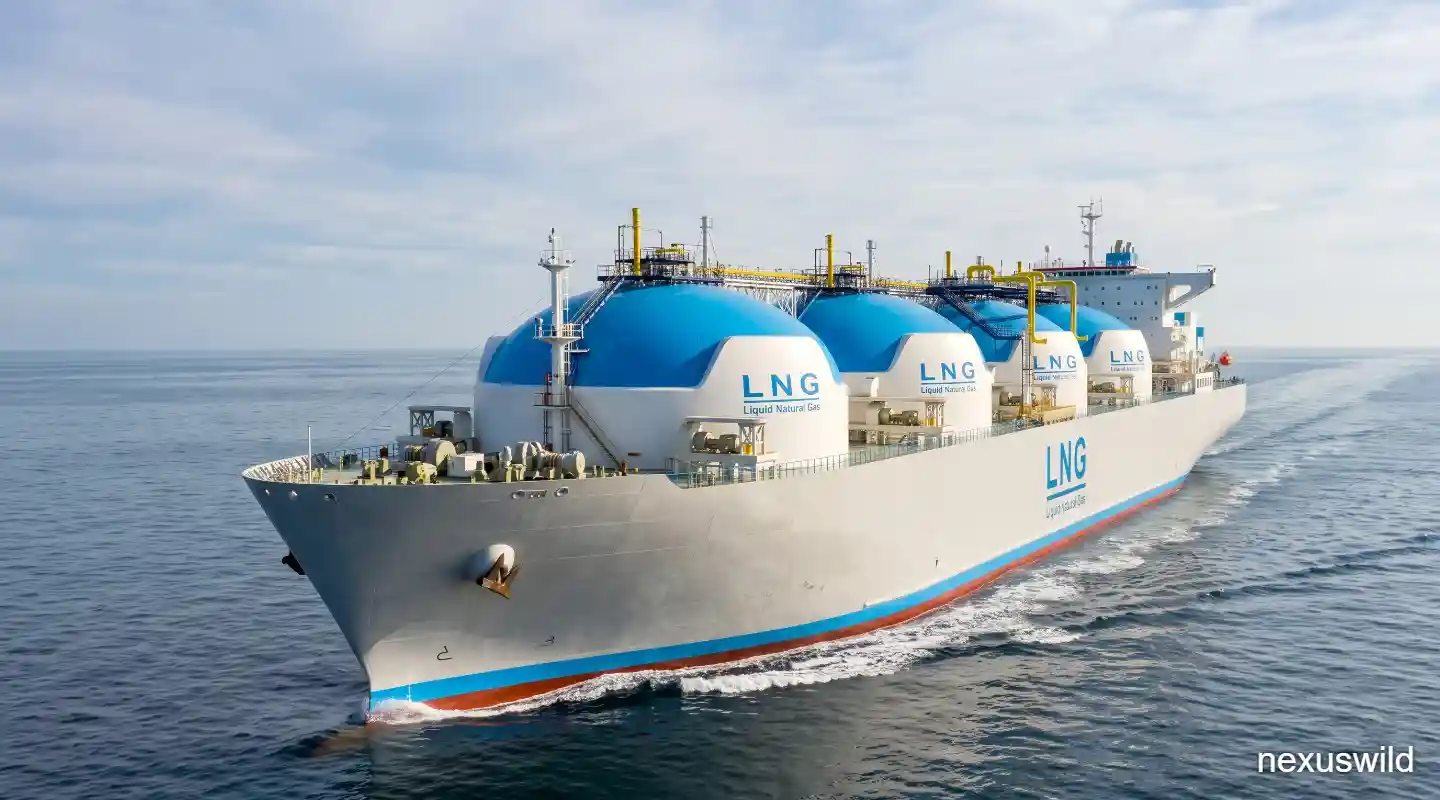
These changes are making demand for LNG ships, marine systems and tools for moving and storing gas.
A French company, GTT said they got 80 orders in the nine months of 2026 including 71 for new LNG ships. Their main list of orders had 299 ships, around 1.8 billion euros.
These numbers show how expanding LNG production is making work outside the companies that get the gas out of the ground.
Investment in infrastructure is also influencing decisions for pipeline companies, builders, port developers and businesses that move energy.
For investors the LNG market is not about more gas production, but also about more transport and infrastructure.
Market Outlook: Balancing Future Supply With Long-Term Demand
The LNG industry has an investment situation. Recent political issues are making available supplies tighter while a lot of export capacity is expected to come online in the next few years.
The difference between what's happening now and what is expected in the future makes it hard for investors to decide on new projects.
If the projects are done on time competition among exporters could get worse as more gas reaches buyers.
At the time delays, politics and changes in energy use could affect the availability and success of planned projects.
Energy companies will have to think about the economics of each project looking at the costs to build how much it will cost to get money, how far the gas has to travel how much it emits and how strong the long-term buyer deals are.
The United States, Qatar and Canada are likely to stay important in this competition while new exporters could offer chances to get gas from different places.
In the end the next part of LNG investment will depend on whether companies can get gas at good prices while handling the risks of long-term projects.
As the worlds energy markets change the competition for LNG exports is becoming a factor, in how people decide to invest how they trade with each other and how they keep their energy safe.
Nexuswild welcomes factual corrections. Email contact@nexuswild.com with evidence and the article URL.