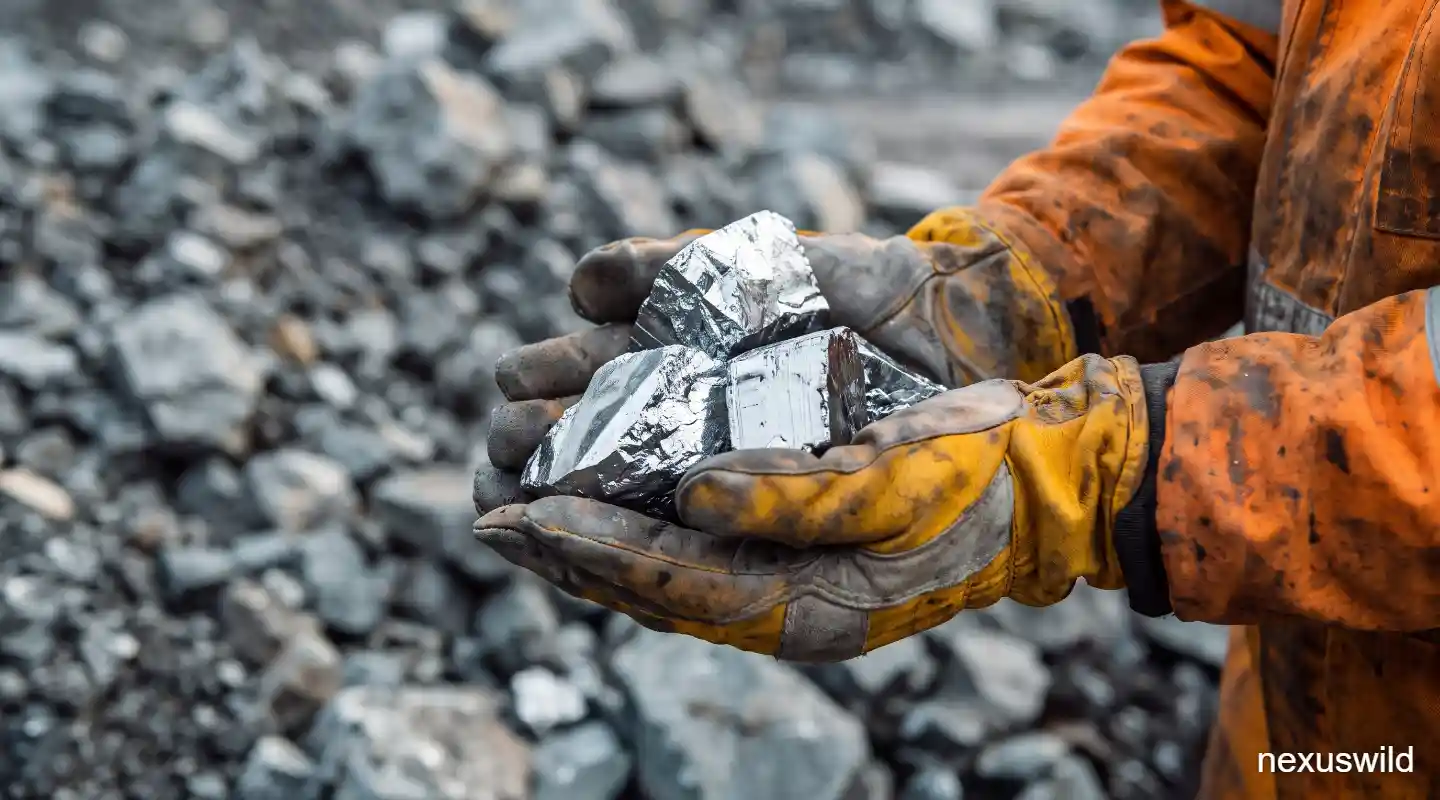

Manufacturers that once bought rare earths and lithium on the open market are now signing long-term supply contracts, taking stakes in miners and backing new processing plants. The reason is concentration: China dominates processing of several critical minerals and has shown it can tighten exports. But many of the recent announcements are non-binding or early-stage, and the supply they promise is years away.
Why supply security has moved up the agenda
China produced about 270,000 tonnes of the estimated 390,000 tonnes of rare earth oxide mined globally in 2025, roughly 69 percent, according to GlobalData figures cited by Mining Technology. It processes up to 90 percent of the world's rare earths, the same report said, which makes processing the main bottleneck rather than mining.
Beijing's export controls remain a live risk. A suspension of its expanded October 2025 controls was due to lapse on November 10, 2026. Treasury Secretary Scott Bessent confirmed the truce now runs to January 10, 2027, according to Startup Fortune, which cited an announcement during Xi Jinping's Washington visit in late September. The same report said the April 2025 licensing requirements for seven medium and heavy rare earths, including terbium, dysprosium and yttrium, stayed in force, and that China added MP Materials and USA Rare Earth to its export control list on June 22. That listing comes from a single source we could not confirm elsewhere. One analysis said the September summit produced no concrete rare earth deal, and Bessent reportedly described the extension as reflecting unresolved issues.
What manufacturers and their suppliers are signing
A review of recent deals by the news site InvestorNews, an opinion column with promotional elements, lists several:
- Lithium. Trafigura signed a binding 10-year agreement to buy 100,000 tonnes of battery-grade lithium from EnergyX, with production targeted for 2028 and 2029. The widely reported $2 billion figure is estimated revenue at current prices, not committed financing.
- Rare earths. Arafura Rare Earths signed a binding five-year offtake for neodymium-praseodymium oxide, rising to 850 tonnes a year at full capacity, with pricing tied to a global seaborne index. The buyer was not named.
- Magnets. Neo Performance Materials was invited to prepare an EU grant agreement of up to €126 million for an Estonian magnet project costing about €400 million. The final investment decision is pending.
- Processing. Phoenix Tailings plans a $375 million separation plant in New York, with a federal loan commitment that remains conditional. Micron announced funding for Indium Corporation to expand refining, with no amount disclosed.
- Tungsten and defence. Elmet bought a 4.99 percent stake in Masan High-Tech Materials, owner of Vietnam's Nui Phao mine, for about $124.8 million, plus long-term supply agreements.
Deals can unravel
Not every arrangement holds. According to the same InvestorNews report, General Motors issued a termination notice on July 1 for its long-term magnet supply agreement with e-VAC Magnetics, which began arbitration a week later. Energy Fuels has agreed to acquire the magnet business, and the purchase price may be adjusted. No dollar figures were given, and the sale is pending. The episode is a reminder that a contract is only as reliable as the plant that has to fulfil it.
Government pressure is rising
The policy backdrop is pushing companies in the same direction. A US defence procurement rule bars Chinese-origin magnets, tantalum and tungsten from weapons systems from January 1, 2027, which affects contractors, not commercial buyers, according to the reports. The report also listed a $19 billion World Bank plan for metals and minerals support for fiscal 2026 to 2030, and a C$8.7 billion Canadian industrial plan, though how much of either reaches critical minerals specifically was not broken out.
What it means for manufacturers
- Longer contracts, more partners. Offtake agreements, equity stakes and joint ventures are replacing spot purchases for the most exposed inputs.
- Index-linked pricing. Several deals tie prices to market indices, which gives suppliers a floor on certainty but not on cost.
- Slow relief. Bloomberg Intelligence forecasts non-Chinese output of neodymium-praseodymium rising 4.4 times from 2024 to 2030 but still projects a 36 percent global shortfall by 2030, as relayed by Mining Technology. GlobalData expects China to keep a dominant role in processing and magnet manufacturing through the decade.
- Execution risk. Many projects depend on grants, loans or permits not yet secured.
What to watch
Whether the truce is extended or replaced before January 10, whether pending projects reach final investment decisions, and whether manufacturers sign binding volumes or stay with exploratory agreements.
SEO Package
SEO Title: Critical Mineral Deals Become a Priority for Manufacturers
Meta Description: Manufacturers are signing long-term offtakes and funding processing plants to secure critical minerals as China keeps its grip. Here is what is changing.
URL Slug: critical-mineral-supply-deals-strategic-priority-global-manufacturers
Primary Keyword: critical mineral supply deals
Secondary Keywords: rare earth supply, lithium offtake agreement, China export controls, magnet supply chain, mineral security, manufacturers
Tags: Critical Minerals, Rare Earths, Lithium, Supply Chain, Manufacturing, China
Key Takeaways
- China mined about 69 percent of rare earths in 2025 and processes up to 90 percent, according to Mining Technology's figures.
- The US-China truce on rare earth controls now runs to January 10, 2027; April 2025 licensing remains.
- Many recent deals are non-binding or early-stage, and GM's termination of an e-VAC magnet agreement shows contracts can unravel.
FAQs
Why are manufacturers signing long-term mineral deals? To reduce exposure to concentrated supply and export controls.
Is the China rare earth truce permanent? No. It runs to January 10, 2027, and licensing for some heavy rare earths remains.
Will these deals end dependence on China? Not soon; forecasts reviewed point to a continuing shortfall by 2030.
Hero Image Suggestion (no text)
A close-up of a rare earth magnet assembly on a factory bench with blurred shipping containers in the background.
Sources
- Mining Technology, China rare earth export pause nears expiry amid persistent supply concentration: https://www.mining-technology.com/news/china-rare-earth-export-pause-nears-expiry-amid-persistent-supply-concentration/
- Startup Fortune, China's rare earth truce runs out January 10, not November: https://startupfortune.com/chinas-rare-earth-truce-runs-out-january-10-not-november/
- InvestorNews, Critical Minerals Report (Oct. 25, 2026): https://investornews.com/market-opinion/critical-minerals-report-10-25-2026-billions-of-dollars-fuel-the-race-to-control-technology-metals/
- InvestorNews, Critical Minerals Report (Oct. 4, 2026): https://investornews.com/critical-minerals-rare-earths/technology-metals-report-10-04-2026-a-summit-without-a-rare-earth-deal-leaves-the-west-buying-its-way-to-supply/
- CommBank, The November deadline hanging over this week's Trump-Xi meeting (Sept. 22, 2026): https://www.commbank.com.au/articles/newsroom/2026/09/trump-xi-summit-rare-earths-november-deadline.html
Nexuswild welcomes factual corrections. Email contact@nexuswild.com with evidence and the article URL.