
The proposed combination of US seasoning manufacturer McCormick and Unilevers global food business faces a regulatory challenge in the United Kingdom.
On November 11 2026 the CMA announced its decision. Identified potential competition concerns about the supply of dry ingredient mixes and dry sauces to retailers across the UK.
The regulator said that merging the two businesses could greatly reduce competition in these markets especially because both companies already hold positions in these product categories.
The McCormick Unilever merger competition concerns companies must propose commitments by November 18 2026 to address the regulators concerns.
If the McCormick Unilever merger competition concerns do not offer remedies the transaction will be sent to a detailed Phase 2 investigation.
This development adds uncertainty to a deal that aims to create a major international business focused on seasonings, sauces, condiments and other food products.
Although the CMAs initial decision does not mean the transaction is finally prohibited it sets a regulatory hurdle that the McCormick Unilever merger competition concerns companies must clear before finishing the combination.
Understanding the McCormick-Unilever Transaction
Unilever announced the proposed combination in March 2026 as part of a strategy to reorganise its business portfolio and focus more heavily on beauty, wellbeing, personal care and home care operations.
Under the agreement McCormick will buy all of Unilevers global food business but some food-related activities will stay with Unilever.
The proposed transaction values Unilever Foods at about $44.8 billion according to the companies announcement.
The agreement uses a Reverse Morris Trust structure, which is meant to give tax efficiencies to Unilever and its shareholders under US tax rules.
Under the proposed arrangement Unilever and its shareholders will receive shares that represent 65% of the diluted equity of the combined company.
Unilever will also get a cash payment of $15.7 billion subject to closing adjustments.
After completion Unilever shareholders are expected to own 55.1% of the company McCormick shareholders will hold 35% and Unilever itself will keep a 9.9% interest.
The transaction intends to merge two established food businesses under McCormicks leadership.
For Unilever the separation will help focus resources on its remaining consumer goods categories.
For McCormick the acquisition offers a chance to grow its presence and strengthen its position in the global flavour and seasoning industry.
Completion is expected by mid-2027 subject to shareholder approval, regulatory clearances and other usual conditions.
Dry Ingredient Mixes Become the Main Competition Issue
The CMAs main concern focuses on dry ingredient mixes used in cooking.
These products include packaged seasoning combinations and meal preparation ingredients used for dishes like chilli con carne.
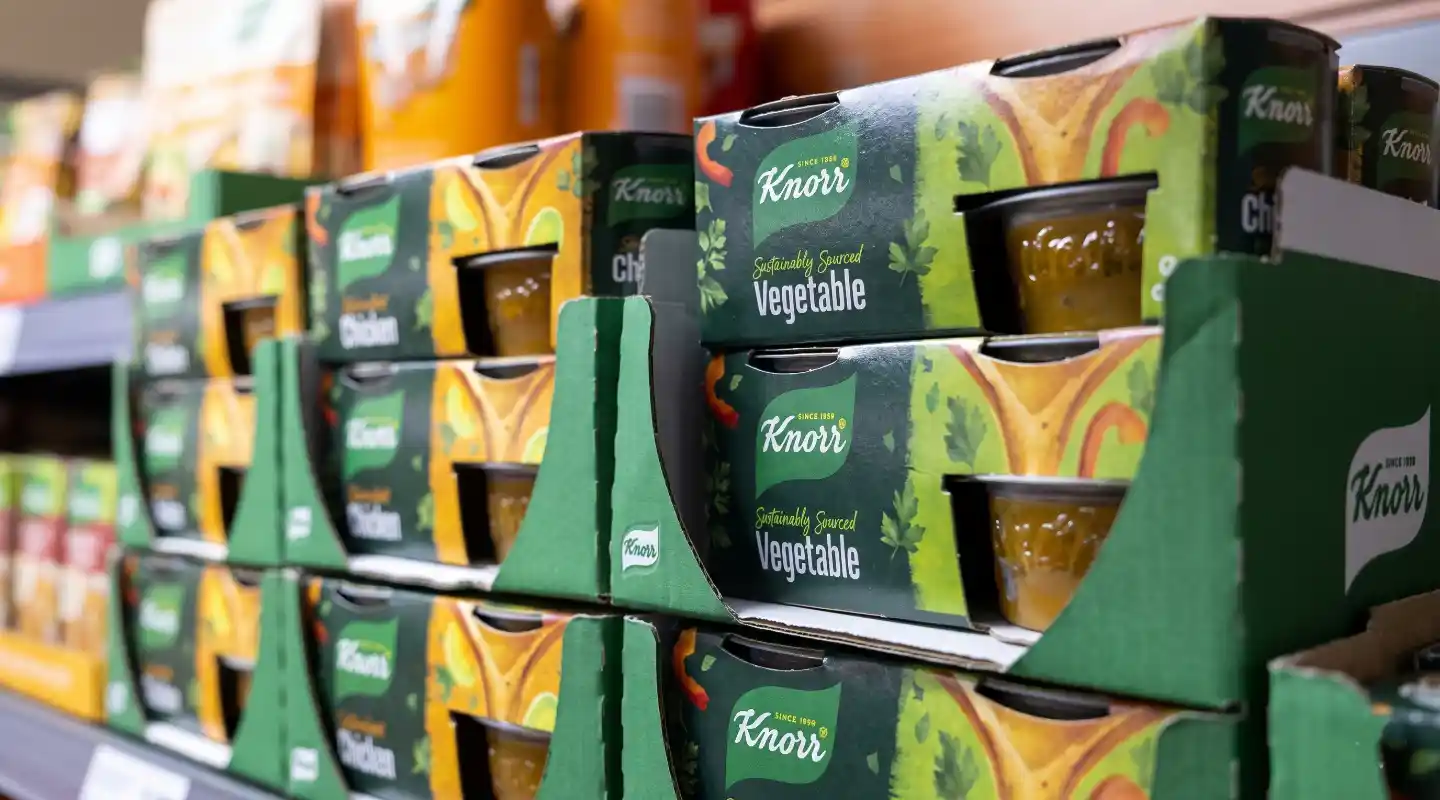
McCormick supplies products in the UK through its Schwartz brand while Unilever competes through food brands such as Knorr and other established lines.
The regulator found that the McCormick Unilever merger competition concerns companies closely compete in this category and are the two branded suppliers.
Combining their operations could therefore create a supplier with a stronger market position.
The CMA also looked at pressure from other manufacturers, such as Nestlés Maggi products and supermarket-owned brands.
However the regulator concluded that these alternatives give limited competitive constraints, on the McCormick Unilever merger competition concerns companies.
The concern is not that the combined company would become larger. The regulator is examining whether retailers would have meaningful alternatives when negotiating with suppliers and selecting products for supermarket shelves.
A reduction in pressure could affect the commercial choices available to retailers and could potentially influence pricing, product development and promotional activity over time.
For the regulator the central question is whether the proposed combination could make it harder for existing competitors to challenge the business.
Dry Sauce Market Faces Regulatory Scrutiny
The second major area of concern involves dry sauces sold to retailers.
These products include packaged sauce mixes and cooking preparations used to make meals.
Unilevers food portfolio includes products associated with Knorr while McCormick has a presence in seasonings and sauces through Schwartz.
According to the CMA the companies are closely competing in this category well.
The combination would bring together the two branded suppliers, potentially creating a business with a substantially stronger position than its remaining competitors.
Although alternative products are available the regulator believes they may not provide competitive pressure to prevent the combined business from gaining increased market power.
The CMAs findings are particularly important because dry sauce mixes occupy a retail category in which shelf space and established brand recognition can influence market access.
If the transaction significantly strengthens the position of the two leading suppliers smaller manufacturers may find it difficult to expand their distribution or attract retailer support.
This has made dry sauces an important part of the regulators assessment alongside cooking ingredient mixes.
Why the Regulator Is Not Concerned About Mustard
Interestingly the CMAs investigation did not identify competition concerns in the mustard market.
The review examined products sold under McCormicks Frenchs brand and Unilevers Colmans and Maille brands.
Although all three brands operate within the broader mustard category the products serve consumer preferences.
McCormick primarily supplies American-style mustard through Frenchs while Unilever sells English-style mustard through Colmans and French-style mustard through Maille.
The CMA found that shoppers generally do not consider these different varieties to be replacements for one another.
Large supermarkets also indicated that they need to stock mustard styles to meet consumer demand.
As a result the regulator treated these products as markets rather than considering them direct competitors.
The conclusion demonstrates how competition investigations examine consumer behaviour rather than relying only on broad product classifications.
Two products may belong to the general food category without necessarily competing closely with each other.
Consequently the proposed transaction did not create the competition concerns in mustard that emerged in dry mixes and dry sauces.
Limited Supermarket Shelf Space Creates Barriers for Competitors
Another important element of the CMAs decision involves barriers to market entry and expansion.
New food manufacturers may find it difficult to compete against established brands because supermarkets have limited shelf space and must decide which products receive distribution.
Retail placement is particularly important for packaged cooking ingredients and dry sauces, where consumer familiarity and brand recognition can influence purchasing decisions.
The CMA found that the established positions of existing suppliers and limited retail shelf availability could make it challenging for new companies to enter or expand in these categories.
The regulator also found evidence that significant market growth would encourage enough new competition to counterbalance the stronger position of the merged business.
These factors increase the importance of maintaining pressure among established suppliers.
If fewer major branded suppliers compete directly retailers could become more dependent on the combined company for categories of packaged cooking products.
The regulators findings therefore extend beyond market shares and consider the broader conditions affecting future competition.
Companies Have Until November 18 to Propose Remedies
The CMA has given McCormick and Unilever until November 18 2026 to offer undertakings that address the identified competition concerns.
These commitments must be sufficient to resolve the issues raised during the assessment.
Potential structural remedies in merger investigations can include selling brands, business units or assets to another independent operator. Other arrangements may also be considered depending on the regulators assessment of whether they provide a solution.
However the exact remedy package acceptable to the CMA has not yet been established.
If the companies fail to submit commitments the transaction will move to a Phase 2 investigation.
A Phase 2 review would involve a detailed examination of the competitive effects of the merger.
Following such an investigation the CMA could clear the transaction approve it subject, to remedies or prohibit it if the identified competition concerns cannot be resolved.
I think the regulators decision represents a stage in the transactions approval process rather than a final determination that the deal cannot proceed.
McCormick and Unilever Maintain Cooperation With Regulators
I see that both McCormick and Unilever have indicated that McCormick and Unilever are working constructively with the CMA to address the concerns.
Unilever has described the development as an expected part of the approval process and confirmed that Unilever is working towards an appropriate remedy.
McCormick has also stated that McCormick is engaging with the regulator.
McCormick and Unilever continue to face the challenge of obtaining competition clearances across the relevant jurisdictions before completing the combination.
The transaction has already received approval under the US Hart-Scott-Rodino antitrust review process according to the records reported on November 11.
Nevertheless clearance in one jurisdiction does not automatically guarantee approval elsewhere.
I believe the UK investigation highlights how large international mergers can face regulatory assessments depending on the market positions of the businesses involved in individual countries.
When a transaction offers good benefits at a global level authorities may examine its potential effects on specific domestic product markets.
I think the proposed combination reflects a trend of consolidation across the international food and consumer goods industry.
Large manufacturers are increasingly looking to expand their portfolios through acquisitions, partnerships and business restructuring.
Bringing together established brands can give companies distribution networks, stronger purchasing power, international market access and chances for product innovation.
For McCormick acquiring Unilever Foods could strengthen McCormicks presence in cooking ingredients, sauces and condiments while expanding McCormicks reach.
The proposed combination also identifies $600 million in expected annual run-rate cost synergies, net of growth reinvestments with the full value targeted by the end of the third year following completion.
An additional $100 million of cost and revenue synergies is expected to be reinvested to support business growth.
However the CMAs intervention illustrates the risks associated with large-scale consolidation.
If McCormick and Unilever become suppliers in specific product categories regulators may require McCormick and Unilever to sell assets or make other commitments to preserve effective competition.
These conditions can influence the transactions structure, integration plans and expected commercial benefits.
For food manufacturers the case provides an example of how brand ownership and retail distribution positions can become central issues during major merger reviews.
The regulatory challenge introduces a consideration for investors monitoring McCormick and Unilever.
A prolonged investigation could delay the completion date and increase transaction-related costs.
Any required asset disposals could also affect the portfolio. Expected financial benefits of the combined company.
At the time the final regulatory outcome will determine how much of the proposed business combination can proceed under its original structure.
Unilevers strategy involves simplifying its portfolio and directing resources towards its remaining growth categories.
McCormicks strategy meanwhile is centred on expanding its food business through a larger portfolio of established brands.
The success of the transaction will therefore depend not on regulatory clearance but also on McCormick and Unilevers ability to integrate operations retain customer relationships and achieve projected synergies.
The November 18 deadline is the significant milestone.
Any acceptable commitments submitted by McCormick and Unilever could help prevent a Phase 2 investigation.
If the regulator considers the proposals insufficient a deeper review would create uncertainty around the timeline and conditions of completion.
The proposed McCormick-Unilever food business combination is facing a competition challenge in the United Kingdom with the CMA identifying potential reductions in competition across dry ingredient mixes and dry sauces.
The regulators concerns reflect the market positions of McCormick and Unilever and the limited competitive pressure from alternative branded and supermarket-owned products.
However the investigation has not identified concerns in mustard demonstrating that the competitive impact differs across individual product categories.
With November 18 2026 set as the deadline for proposed remedies the coming days will be important for determining whether McCormick and Unilever can address the regulators concerns without entering a Phase 2 investigation.
The outcome could influence not the future of this major corporate transaction but also the wider approach to consolidation, in the global food manufacturing industry.
Nexuswild welcomes factual corrections. Email contact@nexuswild.com with evidence and the article URL.