
Oister Global has launched a deep‑tech investment vehicle aimed at Indian technology businesses that have moved beyond research and development and are ready for larger‑scale commercial operations. Oister Deep Tech Fund will target a base corpus of ₹400 crore with a ₹200 crore greenshoe option that could bring its potential size to ₹600 crore.
The launch, announced on November 16 2026 places Oister among private‑market investors who want to solve a financing problem in India’s frontier‑technology ecosystem: the difficulty of getting growth capital after a company shows its technology works but before it reaches the scale, revenue profile or operating maturity that larger institutional investors expect.
The fund is registered as Oister Global Scheme II, a Securities and Exchange Board of India (SEBI) Category II Alternative Investment Fund. Oister plans to build a portfolio of about eight to ten companies instead of spreading money across many early‑stage ventures.
The difference matters. Oister is not offering a seed fund for scientific ideas. Oister focuses on companies that have proven technology proprietary intellectual property and existing revenue streams. Oister’s plan is to help these businesses grow production finish orders, boost use and chase opportunities in domestic and international markets.
The ₹600 crore figure should be seen as Oister’s target size. Oister’s announced structure consists of a ₹400 crore base corpus and a further ₹200 crore greenshoe option; this does not mean the whole amount has already been raised or committed.
Why growth‑stage capital matters for deep technology
Deep‑tech businesses often follow a path from software‑led startups. A software company can reach customers. Grow distribution without building factories or managing complex physical supply chains. A semiconductor, aerospace, defence or advanced‑materials company may need years of research, testing and engineering before its product is ready for use.
Even after a technology is validated the money needed can rise sharply. A company may need manufacturing equipment, production facilities, technical staff, certification, regulatory approvals, quality‑control systems, inventory and long‑term supplier relationships. It may also need to fund customer pilots and fulfil orders before getting the full value of those contracts.
That creates a gap between validation and commercial scale. Early‑stage investors may have funded research, prototypes and initial product development. However the next phase can require money and a longer holding period. Some later‑stage institutions may prefer companies with predictable revenue, proven manufacturing capacity and a clearer path to liquidity.
Oister’s new fund is meant to operate in this stage. Oister’s strategy is to spot companies that have already crossed technical and commercial milestones but need more capital to grow their operating capacity.
This gap is often called the deep‑tech commercialisation gap or the "valley of death." The phrase refers to the time when a business has spent a lot on developing a technology but has not yet reached the scale needed to bring commercial returns. The problem is not a lack of innovation. It is the difficulty of paying for the shift from a product or engineering programme into a repeatable business.
Fund structure: ₹400 crore base and a ₹200 crore greenshoe option
The Oister Deep Tech Fund has a base corpus target of ₹400 crore. Oister’s additional ₹200 crore greenshoe option gives the chance to raise the fund size to ₹600 crore if the option is exercised and fundraising proceeds.
The vehicle is registered as Oister Global Scheme II under the SEBI Category II AIF framework. Category II AIFs are commonly used for private‑market strategies, including equity and other investment approaches that do not fit the specific regulatory definitions of Category I or Category III funds.
The fund is expected to last six years. It may be extended by, up to two years with investor approval. This structure gives the manager a period to find investments support portfolio companies and pursue exits while allowing some flexibility if the commercial development or liquidity timelines of the underlying businesses need more time.
Moneycontrol reported that Oister expects to invest about ₹70 crore to ₹100 crore in each chosen company. That range matches Oister’s plan to create a portfolio of eight to ten businesses. Still the exact amount for each investment could change based on company needs, valuations, deal structure and Oister’s final size.
Oister’s concentration strategy makes choosing the companies crucial for Oister’s success. A small portfolio lets Oister focus closely on each business. It also raises Oister’s risk exposure for each deal.
A portfolio focused on established technology businesses
Oister has highlighted deep‑tech areas where Oister might invest. Those areas are space technology, defence and aerospace semiconductors and electronics quantum technologies, advanced mobility, materials and energy storage.
These sectors show the range of skills needed to build a smarter industrial and tech base. They also share traits: long product‑development cycles, specialised engineering, high entry barriers and the need for more money after the research stage.
In semiconductors and electronics for example Oister sees that companies often have to move from chip design or prototype work to product qualification, manufacturing partnerships, supply‑chain management and customer integration. Even if a product works technically it can still take a time to reach commercial scale because it must meet strict reliability and performance standards.
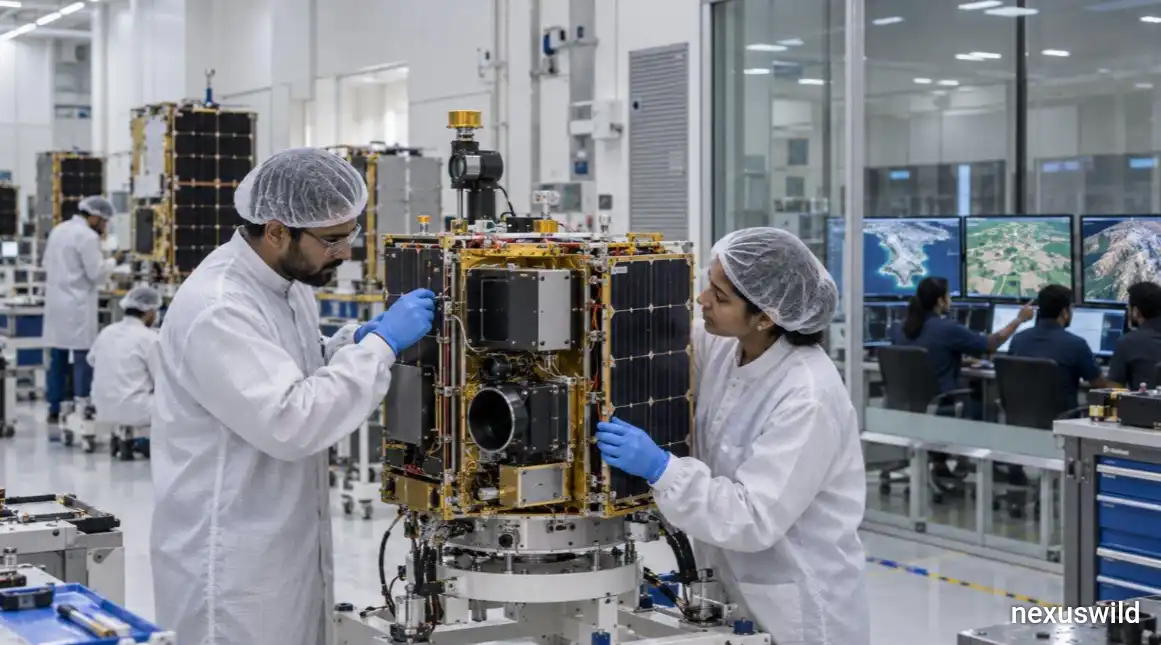
Space technology businesses face complexity. Satellite systems, launch technologies, propulsion, parts and ground infrastructure need testing, special facilities and close coordination with public and private customers. Revenue can be large. Procurement and technical qualification can be slow.
Defence and aerospace companies must navigate certification, procurement rules, security needs and long customer‑evaluation periods. Even if a product is capable the business may still need money to grow production meet delivery dates and prove itself as a supplier.
Quantum technologies and advanced materials are another area where science must turn into products. Adoption depends on equipment, skilled teams educating customers and creating applications that justify the deployment cost.
Mobility and energy storage businesses also struggle with manufacturing and market entry. They must set up production lines prove reliability build service networks and compete with established suppliers.
By focusing on businesses in these segments Oister is placing the fund on technologies that can serve production, strategic infrastructure and niche markets. The wide mandate does not mean every sector gets the money. Oister will allocate capital based on opportunities that meet Oister’s investment criteria.
The investment filter: proven technology, intellectual property and revenue
Oister’s stated approach pairs proof with technical uniqueness. Oister wants to back companies that have proven technologies, proprietary intellectual property and steady revenue streams.
This approach aims to lower Oister’s risk with companies whose value remains mostly theoretical. A prototype or research win is great. It does not guarantee that customers will pay a price that keeps the business alive.
Having paying customers shows that a product meets a market need. Multiple revenue streams suggest a company is not wholly reliant on one customer, contract or use case. Still revenue alone does not prove business quality. Oister must look at margins, repeat orders, customer concentration, working‑capital needs and how steady the demand is.
Intellectual property is another factor. In deep‑tech fields strong patents, know‑how engineering skill and hard‑to‑copy processes can give a competitive edge.. Just owning a patent does not guarantee commercial success. The worth of property depends on whether it protects a useful product or process helps customers adopt it and can be defended in the market.
Oister’s approach puts the company’s standing at the heart of the decision. Oister aims to find businesses that have moved past the uncertain technical phase and are ready to use extra capital to grow.
The manager also said Oister will look at factors like customer traction, management quality, ownership structure and exit options. These matters are important because a growth‑stage investment needs to be judged on both technology strength and the company’s execution ability and its potential to give investors liquidity later.
From prototypes, to production: where Oister’s capital may go
The fund’s intended use of capital is tightly tied to the needs of deep‑tech companies. Oister has pointed out that expanding production carrying out orders and gaining adoption are the main priorities.
Expanding production may mean buying equipment raising factory output boosting yields hiring engineers and operations staff, forming supplier ties and setting up quality‑control systems. For hardware firms these actions decide whether a good product can reach customers reliably and at a price.
Order execution is another stage. A company might win a customer’s interest or an early order. Still require more working capital to buy parts, build products, finish testing and honor delivery promises. Delays can harm customer trust. Put money pressure on the business especially when production takes a long time.
Commercial adoption goes beyond simply delivering the product. Companies must show that their solution works well in settings offer maintenance and technical help fit into customer systems and build repeatable sales routes. In fields like defence, aerospace and semiconductors getting customers approved can be a challenge.
Capital can help meet these needs. Money cannot remove technical or market risk. A production plant might take longer than planned to hit efficiency. A customer might change specs or delay buying. A product might face certification rules that were not fully foreseen. These risks mean that hands‑on experience and careful money use are vital.
The fund’s clear focus on firms that already bring in revenue is therefore important. It shows that Oister wants to back companies that have some proof helping them grow further instead of only covering research.
Why the fund’s concentrated structure matters
A target portfolio of eight to ten companies shows an investment plan. Of supporting many startups with tiny checks Oister wants to focus its money on a few firms that meet its growth and market readiness standards.
A focused portfolio lets the manager do checks and stay close to each company. It also gives money to businesses whose growth plans need more than a small investment round.
Concentration also brings risk. If one or more portfolio firms face production slowdowns, rule problems losing customers or money troubles the effect on the fund can be big. Deep‑tech firms also risk changes in tech rules export limits, government buying plans and worldwide supply lines.
The manager must balance the gains from fast‑growing tech firms with the time and money needed to grow them. The manager also must not overrate the market size. Think that a unique product will instantly beat established suppliers.
The fund’s six‑year life, with a two‑year extension gives a clear time frame.. The business launch of some frontier tech may not fit neatly into that period. Planning exits, secondary sales, strategic buys and public‑market chances may therefore be parts of the investment choices.
A changing private‑markets environment in India
The launch happens while India’s deep‑tech scene gets interest from private investors and policymakers. Startups in this field raised $3 billion in 189 deals in 2025 according to numbers Oister used when talking about the fund.
The headline fundraising number shows more investors are interested. It does not mean the money gap is closed. Money may be pooled in a few firms and early‑stage funds do not always turn into later‑stage factory capacity.
Oister also quoted numbers from the World Intellectual Property Organization’s Global Innovation Index 2026 saying India had 453 deep‑science startups and spin‑offs of which 18 got late‑stage money. The comparison the firm gave put the United States at 12,752 firms and 1,980 late‑stage ventures while China had 3,466 firms and 582 late‑stage ventures.
These numbers should be read with the definitions and data sets used to label deep‑science startups and late‑stage firms. They are not a count of all Indian deep‑tech companies. Still they show the size of the gap that investors like Oister see between making tech ventures and turning them into companies that can run at scale.
India’s industrial goals rely more on skills, in semiconductors, electronics, aerospace, defence systems, advanced materials and energy storage. Building those skills needs research schools, talented founders, patient money, factory partners, steady supply chains and customers ready to try products.
Private investment funds can help by providing money for expansion. Private investment funds cannot on their build the whole ecosystem. Private investment funds need clarity, smooth procurement processes, good infrastructure, skilled technical talent and access to global markets to help companies grow into sustainable suppliers.
Domestic capital and the role of private investors
Mint reported that Oister expects the new fund to have a domestic limited-partner base attracting investors such as family offices and institutions. The final composition of the fund’s investors and the amount of capital committed were not disclosed in the reports reviewed for this article.
A domestic investor base could be useful for deep-tech businesses because some technology investments need development periods and a detailed understanding of local industrial and policy conditions. Family offices and institutional investors may also give capital through private-market structures that're different from conventional public-equity investment.
However domestic fundraising should not be confused with guaranteed capital. Investors will still evaluate expected returns, risk, fund governance, fees, liquidity and the manager’s ability to execute its strategy. A fund’s ability to attract commitments will depend on confidence in both the investment thesis and the people responsible for deploying the capital.
Oister’s move also shows an expansion of its direct-investment activity. The firm has before joined the venture ecosystem through fund investments and other private-market strategies. The new vehicle gives Oister a route to invest directly in growth-stage deep-tech companies instead of relying only on exposure through other venture funds.
That change can give Oister control over company selection and investment decisions. It also places responsibility on the manager to evaluate technology, manufacturing plans, customer contracts and operational risks at the company level.
What the fund means for founders
For deep-tech founders the important feature of the fund may be its focus on businesses that have already built a product and started generating revenue. Companies at this stage often face a set of challenges than those in the research phase.
They may need money for a production run to expand engineering and quality teams to meet the needs of major customers or to enter a new geography. These activities can need capital that's too big for a conventional seed round but may come before a company is ready for a large late-stage private-equity transaction.
A growth-stage investor can give both financing and strategic support. Depending on the investment structure that support may include help with governance, hiring, customer introductions, capital planning and preparation for fundraising or exits.
Founders will still need to show that extra investment can create operating improvements. Investors will likely look at the quality of revenue gross margins order visibility, production economics, customer concentration and how long it takes to turn investment into cash generation.
For hardware and industrial technology businesses the ability to make products consistently can be as important as the technical breakthrough. A company that cannot meet delivery schedules or keep product quality may have trouble turning customer interest into recurring revenue.
The fund’s emphasis on readiness suggests that these operating measures will be central, to the fund’s investment decisions.
Nexuswild welcomes factual corrections. Email contact@nexuswild.com with evidence and the article URL.