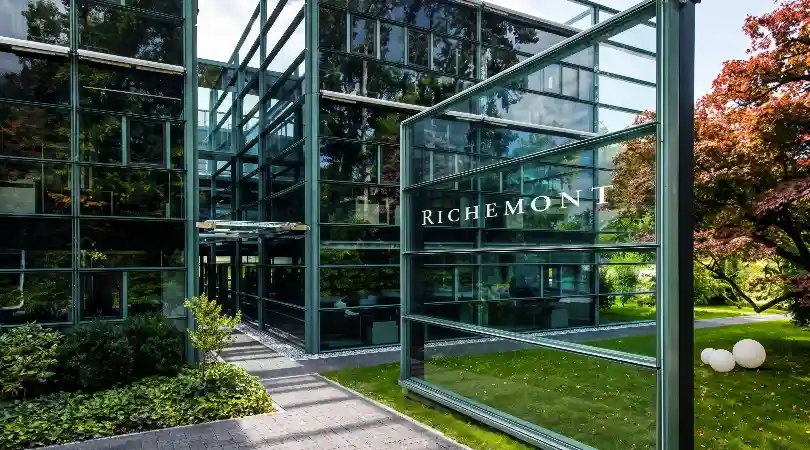

The global luxury goods industry is facing doubts about what wealthy customers will buy. Economic changes, higher prices and uneven spending habits are shaping how affluent shoppers decide what to purchase. Premium jewellery and high‑end watches still draw buyers. The latest earnings of the main luxury groups suggest that growth in the industry is not even.
Compagnie Financière Richemont has become a focus of this discussion after the company released its half‑year financial results on 13 November 2026. The Swiss luxury group reported revenue of €12.28 billion for the six months ended 30 September showing growth of 16 % at exchange rates and 17 % at constant exchange rates.
However the growth rate for the quarter slowed to 13 % at constant exchange rates compared with 20 % in the first quarter. Although Richemont performed better than market expectations the moderation in growth raised investor worries about whether demand will stay strong for the jewellery segment.
Richemonts shares fell after the announcement as investors weighed whether the strong performance of Richemonts jewellery businesses could continue at the pace.
The results give a picture of the luxury market: demand has not vanished, but growth is becoming more selective. Geographic differences, product categories and customer spending habits are increasingly shaping how companies perform.
Richemonts Latest Results Reveal Quarterly Growth
Richemonts second‑quarter sales reached roughly €5.95 billion, a 13 % rise at constant exchange rates compared with the same period last year.
Although Richemonts performance beat analysts expectations of around €5.89 billion the slowdown from quarters 20 % growth rate drew attention from investors.
For the reporting period Richemonts total group sales jumped from €10.62 billion to €12.28 billion. Richemonts operating profit grew 33 % to €3.13 billion while Richemonts profit for the period rose 39 % to €2.53 billion.
Richemont also reported an operating margin of 25.5 % up from 22.2 % in the years corresponding period.
These figures show that Richemont continues to grow even though parts of the luxury market are uncertain.
Yet yearly comparisons need reading. The second quarter was measured against a strong prior‑year baseline, when sales had already risen by 14 %. So a slower year‑on‑year growth does not automatically mean demand is shrinking.
This difference matters because investors are looking closely at the quality and steadiness of luxury sales growth not headline revenue numbers.
Jewellery Business Remains the Primary Growth Driver
Jewellery keeps being Richemonts competitive edge in the luxury goods market. Its portfolio includes known brands such as Cartier, Van Cleef & Arpels Buccellati and Vhernier.
During the half of FY2027 Richemonts Jewellery Maisons earned about €9.1 billion in sales an 18 % increase at actual exchange rates and 19 % at constant exchange rates.
However the growth rate for the quarter slowed to 14 % compared with the higher performance in the previous quarter. Richemonts jewellery sales reached about €4.41 billion during the quarter below market expectations for 16 % growth.
This gap between what happened and what analysts expected was a reason for investor worries.
The slowdown does not necessarily mean demand has collapsed. Instead it hints that the exceptional growth seen by luxury jewellery businesses may become harder to keep up.
The segment still gets support from demand for well‑known collections, new product ideas and purchases by customers. Richemonts management says that jewellery sales growth is being helped by volumes rather than only higher prices.
Yet higher gold and precious material costs put pressure on Richemont. Luxury makers must balance price decisions with what customers can afford while keeping their brand image.
For Richemont keeping the appeal of its jewellery brands without making products too expensive will be a concern for future growth.
Specialist Watchmakers Show Signs of Recovery
The watchmakers part of Richemont includes Swiss brands such as Vacheron Constantin, Jaeger‑LeCoultre IWC Schaffhausen and A. Lange & Söhne.
Richemonts watchmakers made about €1.7 billion in first‑half revenue a 9 % rise at actual exchange rates and 10 % at constant exchange rates.
Richemonts watchmakers second‑quarter sales climbed 12 % reaching, about €833 million.
I observe that the recovery remains uneven. Demand in China continues to be challenging while stronger performances in the Americas, Japan and Europe have helped support sales.
I see that the watchmaking industry faces challenges from the jewellery segment. Luxury watches are often considered purchases making their demand more sensitive to consumer confidence, economic uncertainty and changing purchasing priorities.
I note that established brands continue to benefit from craftsmanship, exclusivity and strong customer loyalty.
For Richemont continued growth in specialist watch sales could provide another source of earnings diversification. Reduce Richemonts dependence on jewellery alone.
Media+1 China Remains a Key Uncertainty for the Luxury Industry I note that China continues to be one of the important markets influencing global luxury industry performance.
For years Chinese consumers have played a significant role in luxury spending through domestic purchases and international shopping. However changing conditions and cautious consumer behaviour have affected demand for premium products.
Richemonts latest results indicate that mainland China remains relatively soft although business conditions in Hong Kong and Macau have improved.
Richemont reported that stronger demand in Hong Kong and Macau helped offset the stable performance in mainland China.
This distinction is important because the Chinese luxury market is not moving uniformly. Different cities and consumer groups are displaying spending patterns.
Japan has delivered a strong performance. Richemonts first-half sales in Japan increased by 18% at exchange rates and 30% at constant exchange rates.
The Americas also remained a growth contributor with sales increasing 23% during the first half. European revenue rose 12% at exchange rates.
Meanwhile sales in the Middle East and Africa declined 2% reflecting tourism-related spending associated with regional conflict.
These geographical differences highlight the importance of diversification for luxury companies.
Brands that depend heavily on a market could face greater risks when consumer confidence weakens in that location. Businesses with international customer bases may be better positioned to manage changing demand conditions.
Media+1 Investor Reaction Highlights Concerns About Future Growth I note that despite reporting revenue and profitability Richemont experienced a negative reaction in the stock market following its results announcement.
Richemonts shares reportedly fell by much as 9% during trading on November 13 before trading approximately 4.7% lower at 10:45 GMT.
The market response demonstrates that strong financial results do not always translate into investor sentiment.
Investors were particularly focused on the second-quarter sales growth and the jewellery divisions performance relative to expectations.
Luxury stocks are often valued on their ability to deliver growth and maintain strong profit margins. When expectations become elevated positive results can trigger selling pressure if certain business segments fail to meet forecasts.
The reaction also reflects uncertainty about the direction of Chinas luxury market and whether strong spending by wealthy consumers can continue supporting the industry.
For Richemont the challenge will be maintaining investor confidence through performance across its jewellery, watchmaking and fashion businesses.
Gold is an important input for jewellery producers. Changes in its market price can influence manufacturing expenses, inventory valuations and product pricing decisions.
Richemont reported that higher raw material costs continued to affect its margin during the first half of FY2027.
The groups gross profit increased 18% to €8.17 billion while its reported gross margin improved to 66.5% from 65.3%.
However the margin comparison includes a €229 million tariff-related one-time benefit.
Excluding this contribution the gross margin declined by 70 basis points compared with the previous year.
This indicates that underlying cost pressures remain relevant as revenue and operating profit increase.
Luxury companies have pricing flexibility than many mass-market retailers because their products often compete through brand reputation, design and exclusivity rather than price alone.
However continuous price increases can eventually affect purchasing decisions among aspirational customers who may postpone purchases when products become significantly more expensive.
Richemonts strategy of maintaining pricing while protecting the perceived value of its brands will therefore remain important.
Media Digital Retail and Direct Customer Relationships Gain Importance Luxury companies are also changing how they interact with customers.
Richemonts latest results highlight the growing importance of, to-consumer distribution, including retail stores and online channels.
During the half of FY2027 retail sales accounted for 72% of group revenue and increased 20% at constant exchange rates.
Online retail sales made up six percent of revenue and grew by seventeen percent.
The combined performance lifted sales to seventy‑eight percent of total group revenue up from seventy‑six percent in the same period last year.
This change gives luxury manufacturers control over how customers experience their products how products are shown and how the brand is positioned.
Direct retail channels also give data about buying habits helping companies see what customers want and react to shifts in demand.
For companies like Richemont, which own well‑known luxury brands keeping a steady customer experience across physical stores and online sites is growing in importance.
Running high‑end retail networks requires large spending on store sites, staff, customer care and brand presentation.
Richemont must weigh these costs against the long‑term benefits of customer ties and better control over sales.
Future Outlook for Richemont and the Luxury Market
Looking forward Richemonts financial position stays fairly solid even though the luxury sector faces uncertainties. I think the outlook is cautious.
The company reported a cash amount of about €7.73 billion on September 30 2026. Cash flow from operating activities reached €2.5 billion in the half.
These numbers give Richemont room to invest in manufacturing expand retail create products and grow the brand. I feel this flexibility will help them stay competitive.
The jewellery line is likely to stay the source of growth while the specialist watchmaking group may bring more opportunities as demand rises slowly.
Still many things will shape results, such as the economic climate in China buying habits in North America and Europe raw material costs and geopolitical events.
The broader luxury market must also handle changing consumer tastes. Younger wealthy shoppers now look for products, fine workmanship, clear brand identity and lasting value when they buy.
At the time aspirational shoppers may pick more carefully as household bills rise and uncertainty in the economy affects how much they spend on extras.
Richemont must keep its premium brand image while drawing customers in markets to keep growth steady.
The company has not set a sales growth target for the rest of the year. Management says that macroeconomic and geopolitical conditions will stay unpredictable.
Conclusion
Richemonts recent financial results show the tricky situation of the worldwide luxury goods business. I see this as a reminder of how complex the market's
Even though the company achieved sales growth, higher operating profit and strong cash flow in the first half of FY2027 the lower momentum in the second quarter has raised doubts about whether luxury demand will stay strong.
Its jewellery division keeps showing performance and specialist watchmakers are starting to recover. Still softer conditions in mainland China higher raw material prices and investor expectations remain challenges.
The market response after the results shows that investors are watching growth rates closely not headline revenue and profit. I notice that the focus has shifted.
For Richemont the next step will be to keep the appeal of its luxury brands, control production costs and adjust to new customer habits in markets, around the world.
The results do not mean that the global luxury market has begun a sales fall. They instead point to a recovery that's uneven and that future growth will depend more on brand strength, market spread and the buying power of wealthy customers. I hope that brands can adapt.
As luxury firms move into the stage of market growth Richemonts performance will stay an important sign of how premium jewellery, watches and fashion brands navigate an increasingly picky customer world.
Nexuswild welcomes factual corrections. Email contact@nexuswild.com with evidence and the article URL.