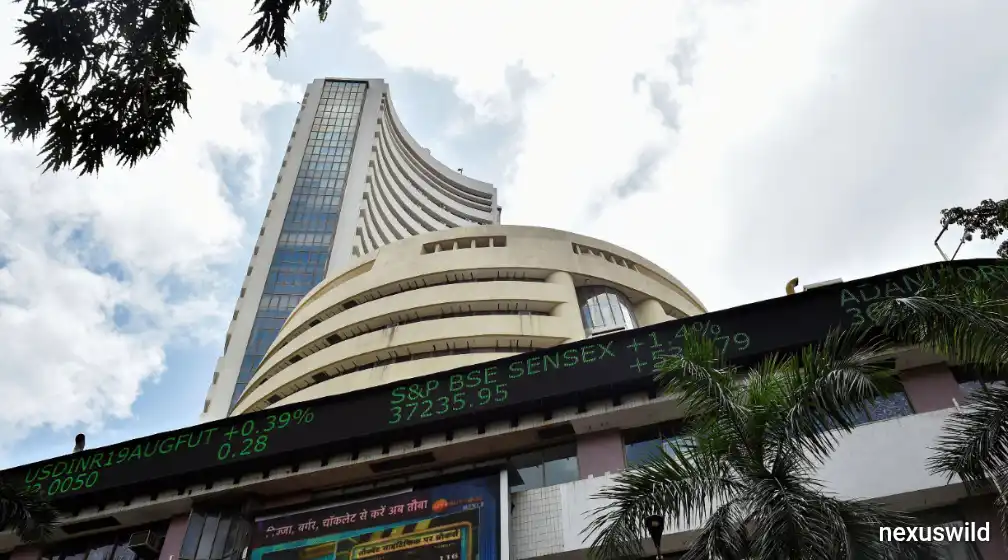

Sensex Surges 8.82% as Global AI Sell-Off Hits Asian Markets Foreign Investors Return to India
I watched Indian equity markets deliver one of their weekly performances in years during November 2–6 2026 even though technology‑heavy stock markets in the United States and parts of Asia were under significant pressure.
The BSE Sensex climbed 8.82% adding about 6,568 points to close at 81,028.02 on November 6. The Nifty 50 rose 8.58% to finish at 25,030.35. Both benchmarks recorded their weekly gains since February 2021 according to Reuters.
The contrast was striking because the global sell‑off focused on technology and semiconductor companies linked to intelligence. Indias relative outperformance caught the eye of investors as foreign institutional investors made substantial net purchases of Indian equities.
However the rally cannot be explained by a factor. Falling crude oil prices, better corporate earnings expectations, foreign capital inflows and changing risk sentiment all pushed the movement.
Why Global Technology Stocks Came Under Pressure
The international sell‑off intensified after the Democratic Partys showing in the November 2026 US midterm elections.
Investors started to assess the possibility that Democrats after gaining influence in Congress and several state governments could impose oversight on artificial intelligence infrastructure and data‑centre development.
These concerns mattered most to companies that invest heavily in AI computing infrastructure. Building data centres needs big capital, electricity, semiconductor equipment and supporting infrastructure. Any regulatory limits or delays could hurt the expected returns on these investments.
Investors also questioned whether technology companies could earn revenue to justify their large AI spending.
On November 5 the Nasdaq Composite fell about 5.5%, the daily decline in 19 months and slipped into correction territory. The S&P 500 fell 4.4% while the Dow Jones Industrial Average lost 3.4%.
Nvidia shares fell 9.3% while AMD dropped around 17.3%. The Philadelphia Semiconductor Index fell 12% showing the intensity of selling across chip‑related companies.
The market reaction did not mean AI demand had vanished. Instead investors were re‑evaluating valuations, financing needs, infrastructure expansion risks and the potential profit of AI investments.
The election outcome raised uncertainty about the environment, especially in regions where public opposition to new data‑centre projects already existed.
Asian Technology Markets Face Pressure
The US sell‑off spread into Asian markets, where many economies depend heavily on semiconductor manufacturing, electronics and technology supply chains.
South Korea and Taiwan were especially vulnerable because of their semiconductor industries and the importance of technology companies to their stock indices.
On November 6 South Koreas Kospi fell 6% after dropping as much as 8.8% intraday and triggering a trading halt. Japans Nikkei 225 also fell 6% while Taiwans Taiex lost around 4.5%.
Technology‑related companies faced selling pressure as investors reevaluated the outlook for semiconductor demand and AI infrastructure investment.
Chinas technology sector also felt pressure although the Chinese and Hong Kong markets did not move the same way as Japan, South Korea and Taiwan. Saying every Asian market crashed would be inaccurate.
The difference between markets matters. Countries that depend on semiconductor manufacturing can see moves when investors cut risk in the global AI supply chain.
Why Indias Stock Market Moved in the Opposite Direction
While global technology markets fell Indian benchmark indices kept gaining.
The Sensex closed at 75,692.78 on November 2. Climbed to 81,028.02 by November 6. The Nifty 50 rose from 23,440.80 to 25,030.35 over the period.
Indias limited exposure to the capital‑intensive AI infrastructure trade was one factor that helped its performance.
Unlike the US market, where a small group of large technology companies drives indices Indias benchmark indices have strong representation from banks, financial services, energy, consumer companies and other sectors.
This does not mean India has no listed technology businesses or no exposure to AI developments. Indian IT services companies, semiconductor‑related businesses and technology suppliers stay connected to markets.
However the structure of Indias indices meant that the quick repricing of expensive AI infrastructure stocks had a different impact on Indian benchmarks.
Reuters also reported that investors responded to earnings expectations, lower crude prices, valuations and Indias relatively low foreign ownership after a long period of overseas selling.
These factors made Indian equities attractive to investors who were rethinking their exposure across emerging markets.
Foreign Investors Return, to Equities
I saw one of the important developments during the week was the return of foreign institutional investors as major buyers.
According to exchange cash‑market figures FIIs recorded the following activity:
Date| Gross purchases| Gross sales| Net purchases
November 2| ₹16,499 crore| ₹13,385 crore| ₹3,115 crore
November 3| ₹20,971 crore| ₹14,134 crore| ₹6,837 crore
November 4| ₹21,607 crore| ₹14,323 crore| ₹7,284 crore
November 5| ₹31,798 crore| ₹16,823 crore| ₹14,975 crore
November 6| ₹30,456 crore| ₹16,706 crore| ₹13,750 crore
Five-session total| ₹1,21,331 crore| ₹75,371 crore| ₹45,960 crore
I think the distinction between gross purchases and net purchases is important.
I note that the circulated figure of approximately ₹1.21 lakh crore represents gross purchases, not the amount of fresh net money that entered the market. After subtracting sales the net purchases were approximately ₹45,960 crore across the five sessions.
I note that the scale of buying was nevertheless significant. On November 5 Reuters reported that foreign investors purchased ₹14,796 crore in Indian shares on a net basis describing it as the largest single‑day inflow in nearly six years.
I see that the data suggests that international investors were increasing their exposure to equities after months of substantial selling.
I believe these figures represent activity in the cash equity market. They should not be interpreted as a measure of all foreign investment, which can also include debt, derivatives and primary‑market transactions.
Domestic Investors Were Not Buying Alongside FIIs
I want to correct the claim that both foreign and domestic institutional investors were buying equities.
The provisional exchange cash‑market figures show a pattern.
I observed that domestic institutional investors were sellers during all five sessions between November 2 and November 6.
Their cumulative net selling was ₹24,197 crore during the period.
This means the weeks institutional buying was primarily driven by investors while domestic institutions were reducing their net cash‑market exposure.
I think the distinction matters because foreign and domestic institutions can respond differently to market conditions. Domestic mutual funds, insurance companies and other institutions have their investment, redemption and portfolio‑management requirements.
The markets overall direction also depends on participation from investors proprietary traders, mutual funds and other market participants. FII and DII figures alone do not explain every transaction behind an index rally.
Falling Crude Oil Prices Provide Another Tailwind
Oil prices were another part of Indias market story.
India imports a share of its crude oil requirements making international energy prices an important influence on its import bill, inflation outlook, currency stability and corporate costs.
I saw that crude prices declined significantly from the levels seen in late October. Brent crude moved below the $100‑per‑barrel level during the period although it also experienced rebounds.
Reuters identified falling prices as one of the factors supporting Indias equity rally.
Lower oil prices can benefit parts of the Indian economy:
Import costs: Lower crude prices can reduce the cost of Indias energy imports depending on the exchange rate and the prices of refined petroleum products.
Inflation: Reduced energy costs can ease pressure although the effect on consumer prices depends on domestic fuel pricing, taxes and other factors.
Profitability: Airlines, transport businesses, logistics companies and other fuel‑intensive industries may benefit from lower input costs.
External balances: A lower oil import bill can help reduce pressure on Indias account and foreign exchange requirements.
I note that the relationship is not automatic. Oil prices can change rapidly because of developments, supply disruptions and changes in global demand.
A temporary decline does not guarantee lower import costs.
Corporate Earnings Also Support the Rally
I think the markets recovery was not driven exclusively by the AI sell‑off.
I believe corporate earnings and improving expectations for companies were also important factors.
Reuters reported gains across major Indian sectors during the week. Financial stocks were particularly influential, with the financial sector rising 10.4%.
HDFC Bank and ICICI Bank recorded their weekly gains in roughly six years. Reliance Industries also advanced 13.3% after reporting upbeat quarterly results.
These movements helped lift benchmark indices because banks and large companies carry weight in Indias major stock‑market indices.
I observe Indian IT stocks performed well as investors distinguished between companies financing expensive AI infrastructure and companies positioned to benefit from enterprise adoption of AI services.
I think this distinction is important. AI‑related developments do not necessarily. Hurt every technology business in the same way.
Companies that spend billions on data centres encounter risks that differ from those faced by service providers who help customers set up AI systems.
Is India Becoming a Safe Haven for Global Investors?
The recent market performance has raised a question: Is India becoming a safe haven for international capital as global investors rethink their exposure to markets heavy with AI?
There are arguments that support this view.
India has a domestic consumption market, a diversified listed corporate sector and a significant financial‑services industry. Its benchmark indices are less concentrated in the US‑style AI infrastructure companies.
Lower crude prices and improving earnings expectations can also make India’s equities more attractive when global investors reassess their portfolios.
The return of buying after months of significant outflows suggests that some international investors are reconsidering India’s relative value.
However describing India as a confirmed haven would be premature.
India remains exposed to economic conditions, oil prices, currency movements, foreign capital flows and changes in international interest rates.
A prolonged global downturn could still affect companies through weaker exports, lower demand and tighter financial conditions.
Furthermore the Sensex’s sharp rise does not mean every listed company experienced the recovery. Large financial and energy companies played a role in lifting the headline indices.
India’s sustained safe‑haven position would require more than a strong week. India’s position would need foreign inflows, resilient corporate earnings, stable macroeconomic conditions and continued investor confidence.
What Investors Should Watch Next
The next phase of the market will depend on whether the factors that support the rally remain in place.
Several developments deserve attention:
- Foreign investor flows: Investors will watch whether FIIs continue buying equities or return to selling if global conditions deteriorate.
- Crude oil prices: A sustained decline could support India’s inflation and external‑balance outlook. A renewed rise could reverse some of the benefit.
- Corporate earnings: Strong earnings growth would provide a durable foundation for higher valuations than foreign inflows alone.
- US AI regulation: The direction of US policy toward data‑centre development and AI infrastructure could influence global technology valuations and semiconductor demand.
- Market breadth: Whether mid‑cap, small‑cap and broader market stocks participate in gains will help establish whether the rally is broad‑based or concentrated in heavyweight companies.
A Strong Rally, but Not Yet Proof of a Safe Haven
India’s 8.82% Sensex gain during November 2–6 was a striking contrast to the sell‑off affecting US and Asian technology markets.
The combination of institutional buying falling crude oil prices improving earnings expectations and relatively lower exposure to the AI infrastructure investment trade helped Indian equities outperform.
The rally should not be reduced to a simple equation in which an AI sell‑off automatically sends global money into India.
The accurate explanation is that international investors reassessed risks and valuations across markets while India benefited from several favourable domestic and external factors at the same time.
Whether this represents a longer‑term shift, in investment preferences or a temporary rotation will become clearer through subsequent foreign‑flow data, earnings results and market performance.
For now India has demonstrated resilience during a period of global technology‑market uncertainty.
Turning that performance into a sustained safe‑haven reputation will require consistency beyond a week of exceptional gains.
Nexuswild welcomes factual corrections. Email contact@nexuswild.com with evidence and the article URL.