
Saudi Arabia and Aramco are seeking partnerships with other countries to expand their strategic oil stockpile, chief executive Amin Nasser told Al Arabiya Business TV on Thursday 22 October. He said the company expects global oil demand to rise by about 3 million barrels a day after the Iran war ends. No partner countries, volumes or financial terms were disclosed.
What Nasser said
According to Bloomberg, as reported by Oil & Gas Middle East, Nasser said Saudi Arabia is in talks with foreign governments to give Aramco access to their strategic oil storage. He said partners' commercial storage is limited and that the larger capacity sits in government-owned strategic facilities.
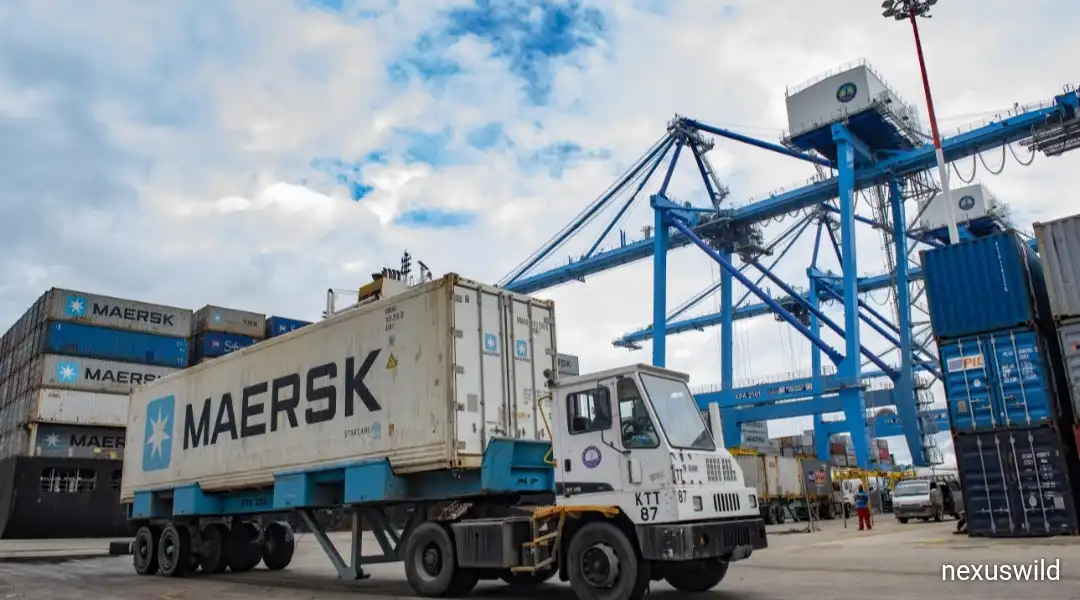
Aramco already holds commercial storage in South Korea, Japan, the Netherlands and Egypt's Sidi Kerir export hub, Bloomberg reported. Egypt Oil & Gas, citing the interview, said Aramco is working with partners to expand that capacity, particularly in Asia. One trade report said Aramco aims to double its overseas capacity; the other accounts reviewed mention no target.
Why storage matters now
The talks follow a severe disruption to Saudi output. Daily production fell below 7 million barrels for most of the first six months of the war, from more than 10 million before it, according to the International Energy Agency, as cited by Reuters. Nasser said output recovered to about 8 million barrels a day in September. He also said Aramco's incident response is now more than six times faster than the industry average.
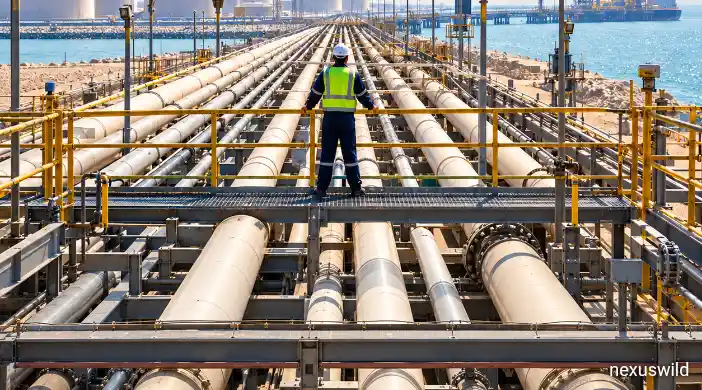
Storage outside the Strait of Hormuz is one answer to that risk. Aramco is also working on export routes. Egypt Oil & Gas reported that the company plans to lift East-West Pipeline capacity from 7 million to 10 million barrels a day, with engineering work starting early in the conflict. Nasser said Aramco is studying further routes beyond the Strait of Hormuz, Bab el-Mandeb and Suez, without elaborating.
Aramco's 2026 capital spending guidance of $50 billion to $55 billion is unchanged, the report said. Nasser also said the company aims to raise gas production by 80% by 2030 from 2021 levels, which would replace liquid fuels in domestic power generation and free about 1 million barrels a day for export.
The Asian model
The approach builds on existing arrangements. In 2023, Aramco agreed with Korea National Oil Corp. (KNOC) to store 5.3 million barrels of Saudi crude in Ulsan, with South Korea holding emergency purchase rights over the barrels, according to a report by Enterprise AM. It said Abu Dhabi's ADNOC and Kuwait have used similar models with KNOC.
South Korea and Aramco's downstream chief discussed expanding joint stockpiling in early June, Edaily reported. The Korean side said the model lets it raise emergency reserves without an immediate financial burden, while Aramco gains a storage hub for supplying East Asia. Saudi Arabia and South Korea have also signed a memorandum of understanding covering energy cooperation, according to the Enterprise AM report, which relied on Arabic press.
On 8 October, officials from Saudi Arabia and the UAE joined a special session of the Asia Zero Emission Community (AZEC) in Manila. Japan's State Minister of Economy, Trade and Industry, Takagi Kei, said both countries expressed willingness to cooperate on strengthening oil stockpiling capacity in Asia, according to Bloomberg, as reported by Gulf News. Nikkei said details would be worked out bilaterally and could include expanded exports or priority supplies in an emergency. Nikkei added that Japan already leases domestic private tanks to state-owned producers, including Saudi Arabia's, under a joint stockpiling scheme.
What is and is not confirmed
Confirmed: Nasser's remarks on partnerships, Aramco's existing storage in four locations, and the 2023 Korea agreement. Not confirmed: which governments are in talks, how many barrels are involved, who pays for the storage, and what supply rights partners would receive. The Aramco remarks come from a TV interview, and the reports reviewed are secondary summaries of Reuters and Bloomberg coverage. Nasser's forecast of a 3 million-barrel-a-day demand increase is a company projection.
What it could mean
This section is analysis, not a reported finding. Deals of this type serve both sides. Importers gain emergency stocks, usually with purchase rights, while the producer positions barrels near customers and outside chokepoints. If agreements follow, they could make some Asian buyers less exposed to a repeat of this year's supply shock. Their effect on prices would depend on how and when stocks are released.
What to watch next
The first signal will be named agreements with specific governments, particularly in Asia, along with volumes and terms. Further detail on Japan's AZEC stockpiling framework is also awaited: Nikkei said Japan planned to share it at an International Energy Forum meeting in Saudi Arabia on 11 October, but the sources reviewed report no outcome. Progress on the East-West Pipeline expansion and whether Saudi output climbs beyond 8 million barrels a day will show how quickly the kingdom is rebuilding supply options.
Nexuswild welcomes factual corrections. Email contact@nexuswild.com with evidence and the article URL.