
Bangladesh’s garment industry is under pressure as workers ask for higher wages while living costs rise and their financial safety feels weak. The government has taken a step by forming a new minimum wage board but the announcement has not stopped demonstrations in major factories.
On November 1 2026 Labour and Employment Minister Ariful Haque Choudhury announced a six‑member wage board. This board will. Set a new minimum wage for garment workers. The decision followed talks with labour representatives and industry organisations.
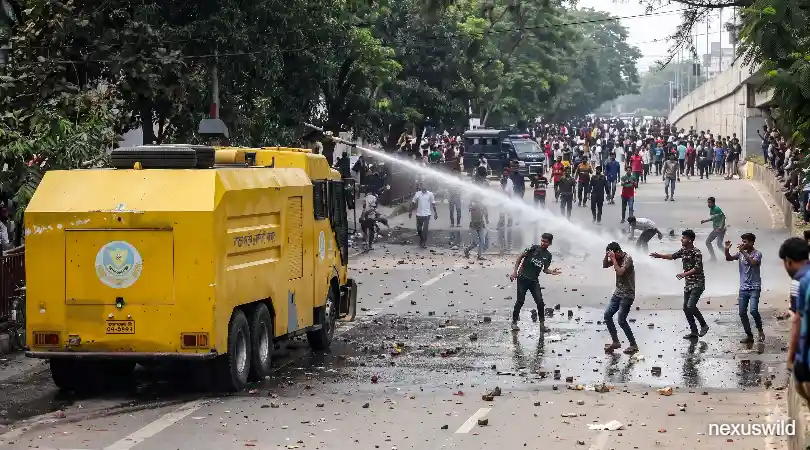
Workers kept marching in Dhaka, Gazipur and other industrial sites. They demanded a minimum wage of Tk30,000. Police used tear gas and water cannon to push back demonstrators in some places. Road blockades stopped traffic. Authorities said about 25 to 30 factories shut down on Sunday.
The dispute comes at a time for Bangladesh’s export economy. The ready‑made garment sector employs about four million people. Supplies more than 80% of the country’s export money.
The wage board gives a way to look at workers’ demands but the money implications are still unclear. Factory owners already face production costs, energy limits and tough international buying prices.
For clothing brands and retailers the situation raises a worry: could labour disruptions hurt production schedules, export shipments and the trust in Bangladeshi suppliers?
A New Wage Board Has Been Formed,. The Final Salary Decision Remains Pending
The government’s decision creates a formal process where workers’ representatives and factory owners can talk about the minimum wage.
Senior District and Sessions Judge Sheikh Ashfakur Rahman is chair of the board. Other members include Professor Mosleh Uddin Ahmed of Dhaka University as the voice, plus representatives of employers and workers.
Employers are represented by Asif Ayub of the Bangladesh Employers’ Federation and ABM Shamsuddin of the Bangladesh Garment Manufacturers and Exporters Association (BGMEA). Workers are represented by Anwar Hossain of Bangladesh Jatiyatabadi Sramik Dal and Babul Akhtar of the Bangladesh Garments and Industrial Workers Federation.
These appointments were made under Bangladesh’s Labour Act, 2006 as amended in 2026. The board must study the wage structure. Decide the minimum pay for garment workers.
The board’s formation does not mean the workers’ proposed Tk30,000 salary is approved. No new minimum wage was announced on November 1.
The board must talk with all members. Do its work before a new wage recommendation is made. The government tells workers to return to work. Protests continue because many still want clear timing and results from the review.
For factories uncertainty matters because wage talks affect production budgets hiring plans and future order prices.
Why Garment Workers Are Demanding Tk30,000 a Month
At the heart of the dispute is the gap between the minimum wage and what workers say they need for daily living.
Bangladesh last changed the garment minimum wage in 2023. The monthly minimum went from Tk8,000 to Tk12,500 starting December 1 of that year.
Workers now ask for Tk30,000 per month— 2.4 times the current minimum. The jump reflects worries about food, housing, transport, health care and other basic costs.
For those earning near the minimum these expenses can take a part of each month’s money. Workers say their wages have not kept up with costs.
The dispute also covers job concerns. Reports from the protests mention wages, job security, firings and other workplace conditions.
The government has set up the wage board. Urged workers to go back to work.. The proposed raise will need to consider factory money limits and the living costs of workers.
This makes negotiation hard. A wage change must help workers while respecting the business reality of factories.
The result could shape talks about wage rules, in other export‑focused sectors.
Factory Closures Are Raising Concerns About Production and Export Deliveries
The continuation of protests has created an operational challenge for Bangladeshs garment manufacturers.
Major industrial areas around Dhaka, including Ashulia, Gazipur and Mirpur experienced demonstrations and road blockades. The disruption affected factory operations and transport while clashes between police and protesters were reported in locations.
According to Reuters 25 to 30 factories were closed on November 1 amid the unrest. Earlier demonstrations had also led to factory closures in Ashulia and other industrial areas.
The impact of disruptions can extend beyond the time factories remain closed.
Garment manufacturing involves connected stages, including fabric procurement, cutting, stitching, finishing, quality inspection, packaging and export preparation. Delays in one production stage can affect delivery schedules across the supply chain.
Factories often operate against deadlines agreed with buyers. Clothing brands typically coordinate manufacturing with collections, retail promotions and inventory planning.
When production is interrupted manufacturers may have to reorganise shifts adjust delivery schedules and negotiate changes with their customers.
Prolonged disruption could also affect payments. Export‑oriented manufacturers depend on completing orders and receiving payments from buyers to meet operating expenses purchase raw materials and pay employees.
Bangladeshs Labour and Employment Minister has warned that extended factory closures could delay exports and payments creating financial difficulties for both businesses and workers.
The challenge is therefore not limited to lost production hours. Continued instability could affect relationships between manufacturers and international customers.
Bangladeshs Garment Industry Is Too Important to Ignore
The wage dispute has become an economic concern because of the garment industrys importance to Bangladesh.
The sector supplies clothing to retailers and fashion companies and has developed an extensive manufacturing ecosystem involving factories, textile suppliers, logistics providers and export businesses.
According to the Bangladesh Garment Manufacturers and Exporters Association ready‑made garment exports reached $38.7 billion in fiscal year 2025‑26. This represented around 80.6 % of Bangladeshs merchandise exports, which stood at approximately $48 billion.
The sector also supports millions of jobs making it an important source of household income and industrial employment.
Its international position has been built through production costs, experienced workers, manufacturing capacity and established relationships with global buyers.
However the industry faces increasing pressure from rising energy expenses, raw‑material costs, financing requirements and competition from apparel‑producing countries.
For manufacturers the challenge is to remain commercially competitive while addressing demands for improved working conditions and wages.
The scale of the industry means that decisions made during the wage review could influence investment, employment and trade performance well beyond individual factories.
Factory Owners Are Facing Their Financial Pressures
While workers are demanding higher pay garment manufacturers are also confronting a difficult operating environment.
Producing clothing for brands requires manufacturers to manage labour costs, electricity, gas, raw materials, equipment, maintenance, transportation and factory financing.
Bangladeshs manufacturing businesses have reported gas and electricity shortages, alongside higher production expenses and uncertainty in energy markets.
These issues can reduce factory productivity. Increase the cost of fulfilling international orders. Manufacturers also operate within purchasing arrangements in which overseas buyers negotiate prices and delivery schedules.
A higher minimum wage would increase labour expenses particularly for factories with large workforces. The overall financial impact would depend on the revised wage structure, the distribution of workers across pay grades and the ability of factories to improve productivity.
However avoiding a wage adjustment could create a business risk. Persistent labour dissatisfaction can increase the likelihood of demonstrations, employee turnover and production interruptions.
For factory owners the long‑term objective must therefore extend beyond managing the wage bill. They need a production model that supports employee retention, reliable operations and sustainable pricing.
The responsibility also extends to buyers. If brands expect factories to provide wages and workplace conditions their purchasing prices and contractual arrangements must allow suppliers to meet those requirements.
Global Fashion Brands Could Face Supply‑Chain Uncertainty
Bangladesh is a sourcing destination, for international clothing companies. Retailers and fashion brands depend on its manufacturing capacity to supply garments across product categories and price segments.
When factory operations become unstable these businesses may face delays in receiving merchandise and maintaining planned inventory levels.
This is particularly important for brands operating retail models. Fashion products are often ordered months before they reach stores with production schedules coordinated around launches and consumer demand.
A manufacturing delay can affect product availability, promotional timing and revenue opportunities.
International buyers may also need to discuss revised delivery timelines with suppliers if the unrest continues. Some companies could consider moving a portion of orders to alternative sourcing locations to reduce dependency on a single production market.
Countries such as India, Vietnam and Cambodia already compete for apparel orders. However shifting quantities of production is not straightforward.
Brands must establish supplier relationships assess factory capacity conduct quality checks and ensure compliance with labour and environmental requirements. Existing manufacturing partnerships and specialised production capabilities also take time to replace.
Consequently an extended disruption could encourage sourcing diversification rather than an immediate withdrawal from Bangladesh.
The longer‑term question is whether Bangladesh can maintain its manufacturing position while improving the economic conditions of its workforce.
International Buyers May Need to Reconsider How Clothing Prices Are Negotiated
The wage dispute also highlights an issue within the global fashion business: the relationship between retail prices and manufacturing costs.
Consumers often compare clothing prices across brands making affordability an important part of competition. Retailers therefore have incentives to control procurement costs and negotiate competitive prices with suppliers.
However manufacturers must operate within those prices while paying employees maintaining factories and meeting delivery commitments.
If the prices agreed with buyers do not provide enough financial room to cover legitimate production expenses factories may find it difficult to improve wages and workplace conditions without damaging their margins.
The International Labour Organization has examined how purchasing practices in supply chains influence working conditions. Its research highlights the importance of buyer pricing order planning and commercial relationships when assessing labour outcomes.
This suggests that responsibility for manufacturing cannot be considered only at factory level.
International brands may need to examine longer‑term contracts, realistic production schedules and pricing arrangements that reflect the costs of responsible production.
Such changes could increase sourcing expenses in the term but they may also help reduce labour disputes and improve supply reliability.
What Happens Next?
The immediate focus will be on the work of the established wage board and whether discussions between workers, factory owners and the government can produce an acceptable salary recommendation.
The first meetings, the timetable for reviewing wage levels and the response from representatives will be important indicators of progress.
Manufacturers will also need to monitor factory attendance production schedules and outstanding payments as they attempt to restore operations.
International buyers are likely to watch developments particularly whether disruptions continue across major manufacturing locations and whether suppliers can maintain agreed export deadlines.
For Bangladesh the broader challenge is to protect the competitiveness of its garment industry while addressing the concerns of millions of workers.
A stable agreement could support both employment and export activity. Prolonged uncertainty by contrast could increase costs for manufacturers complicate sourcing decisions and weaken confidence in the countrys reliability.
Bangladeshs decision to establish a six‑member wage board marks a step towards addressing the continuing garment‑worker dispute but it does not resolve the underlying disagreement.
Workers are demanding a minimum wage of Tk30,000 as the cost of living increases. Factory owners are concerned about production expenses, energy constraints and their ability to remain competitive in markets.
The consequences extend beyond Bangladeshs areas. The countrys garment sector plays a role in global clothing supply chains and continued disruption could affect manufacturers, international retailers and consumers.
The success of the wage negotiations will depend on finding a balance, between workers financial needs and the commercial realities of garment production.
For Bangladesh the real challenge is not simply maintaining clothing production. It is building a garment industry that can remain globally competitive while providing workers with sustainable economic conditions.
Nexuswild welcomes factual corrections. Email contact@nexuswild.com with evidence and the article URL.