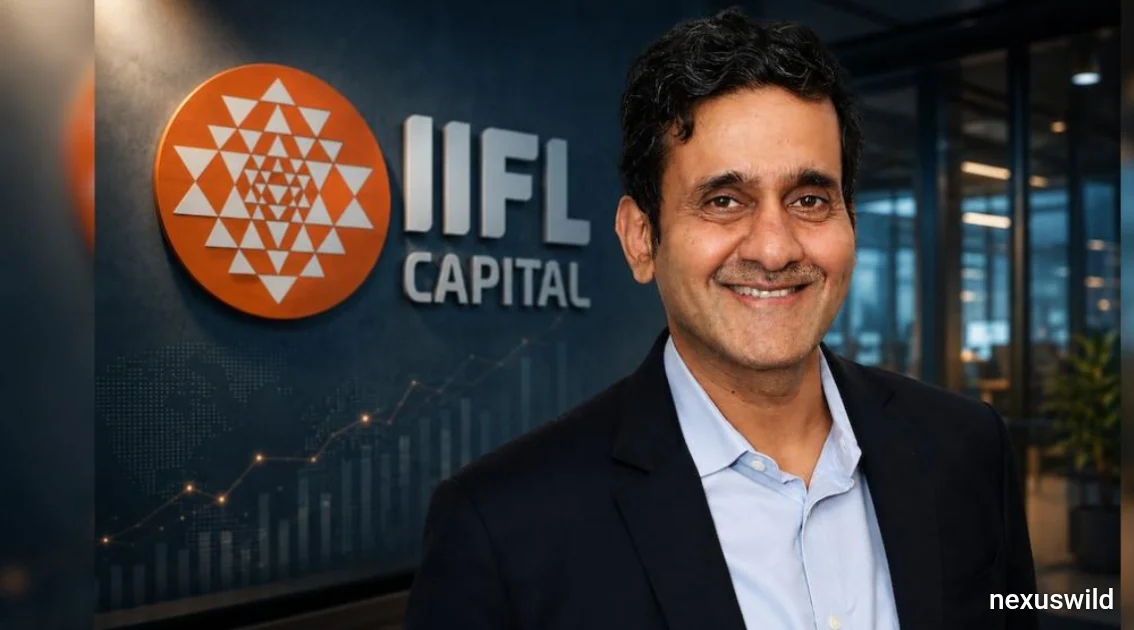

Blackstone Leads ₹6,414 Crore IIFL Finance Capital Raise With ₹5,000 Crore Investment for 15.57% Stake
A institutional investment reshapes IIFL Finances capital position
IIFL Finance has approved a primary capital raise of ₹6,414.20 crore. This raise is led by a ₹5,000 crore investment from funds managed by Blackstone affiliates. IIFL Finance is making this move to strengthen its capital position in the non‑banking financial company sector in India. The board of IIFL Finance approved the transaction on 10 November 2026. IIFL Finance hopes this capital raise will support expansion of secured lending and give IIFL Finance more flexibility to manage its funding needs.
IIFL Finance is structuring the investment through an issue of compulsorily convertible preference shares (CCPS). IIFL Finance will also issue warrants for the promoter group to subscribe. Anchorage Capital will join IIFL Finance through an investment in preference shares.
Blackstones investment vehicle, Ingot SG Pte. Ltd. is linked to funds managed or advised by Blackstone affiliates. Ingot SG Pte. Ltd. Is expected to receive 15.57% of IIFL Finances fully diluted equity after the allotments and conversions.
The investment is important because of its size. Because it gives IIFL Finance a strong capital cushion in India’s secured retail credit market. IIFL Finance focuses on gold finance, housing loans and secured small‑business credit as its growth areas.
The transaction still needs shareholder approval and regulatory clearances. IIFL Finance’s final ownership and governance will depend on the completion of these procedures and on the conversion of the securities.
Breaking down the ₹6,414 crore capital raise
The total preferential issue's worth about ₹6,414.20 crore. It consists of three investment components.
Blackstone-managed funds will contribute about ₹5,000 crore by issuing 8.30 crore compulsorily preference shares. IIFL Finance promoters and a promoter‑group entity will subscribe to warrants about ₹1,264.20 crore. Anchorage Capital will invest ₹150 crore through two of its investment schemes.
IIFL Finance describes the transaction as capital. This means the proceeds will go into IIFL Finance not to existing shareholders as payment for a share sale.
The structure lets IIFL Finance raise an amount of fresh capital and gives investors a clear path to equity ownership. It also allows the promoter group to invest capital together with the incoming institutional investor.
IIFL Finance’s board approval is a milestone but it does not mean the transaction is finished. The proposed securities must still go through allotment, shareholder and regulatory processes.
Blackstones ₹5,000 crore investment and proposed ownership
Blackstone’s ₹5,000 crore contribution is the part of the transaction. IIFL Finance will receive this investment through Ingot SG Pte. Ltd., a vehicle linked to funds managed or advised by Blackstone affiliates.
The proposed CCPS issue price is ₹602 per share. These preference shares will convert into equity shares at the price within 18 months of allotment subject to the issue terms and applicable requirements.
Based on IIFL Finance’s post‑issue calculations Ingot SG Pte. Ltd. Is expected to hold 15.57% of IIFL Finance on a fully diluted basis.
This would make Blackstone a large institutional shareholder in IIFL Finance. However this investment is not an acquisition of control. IIFL Finance’s existing promoters, Nirmal Jain and R. Venkataraman are still participating through the warrant subscription.
Blackstone’s participation shows that global private‑equity firms are interested in India’s retail financial services market. India’s demand for credit especially among households and small businesses creates opportunities for lenders with strong distribution networks and specialised secured‑loan products.
For Blackstone the transaction gives exposure to an established retail lending platform. For IIFL Finance the transaction gives capital and the chance to use Blackstone’s network and operating experience.
Promoter participation signals continued commitment
IIFL Finance’s promoter group is investing about ₹1,264.20 crore through warrants.
The disclosed allocation includes ₹903 crore from founder and Managing Director Nirmal Jain, ₹270.90 crore from co‑promoter R. Venkataraman and ₹90.30 crore from promoter‑group company Ardent Impex Private Limited.
This participation is important because it puts existing promoters with the new institutional investor, in the capital‑raising exercise.
The warrants have an issue price of ₹602 each. Under the disclosed terms 25 percent of the subscription amount is upfront. The remaining 75 percent is payable when the warrant holder exercises the option to subscribe to the equity shares.
The difference between paying upfront and exercising later is important when looking at when the capital comes in. The full amount of the warrant should not be thought of as received away when the board gives its approval.
Promoter participation can also be seen as a sign of management confidence in the companys medium‑term lending strategy.. The final ownership percentages will depend on the completion and conversion of all securities.
Anchorage Capital adds another investor.
Anchorage Capital is contributing ₹150 crore through two investment schemes.
The regulatory filing shows ₹60 crore from Anchorage Capital Scheme II and ₹90 crore from Anchorage Capital Scheme III. Both are described as Category II investment funds registered with the Securities and Exchange Board of India.
Although the contribution is smaller than Blackstones investment it adds another participant to the capital raise.
The transaction therefore brings together a global private equity investor, existing promoters and an additional investment fund. This structure broadens the investor base that supports IIFL Finances proposed balance‑sheet expansion.
The participation of investors also shows that the transaction is not just a bilateral investment between Blackstone and IIFL Finance. It is a primary capital‑raising exercise that involves several proposed allottees and distinct securities.
Capital adequacy is projected to rise to 30%.
One of the important expected effects of the transaction is the improvement in IIFL Finances capital adequacy position.
The company has said that its capital adequacy ratio could rise from about 17% to about 30% on a pro‑forma basis using September 2026 information.
Capital adequacy is a measure for financial institutions because it compares available regulatory capital with risk‑weighted assets. A stronger capital buffer can improve a lenders ability to absorb losses and support additional lending, subject to regulatory requirements and risk management.
The projected increase would give IIFL Finance a capital cushion compared with its lending activities. It could also give the company flexibility when seeking funding from banks, institutional lenders and debt‑market investors.
However the 30% figure is a pro‑forma estimate, not a reported post‑transaction ratio. It assumes the proposed capital raise is completed and shown in the companys capital position.
The distinction is important for investors. The companys actual regulatory capital position will need to be assessed after the transaction is finished and after the financial disclosures are made.
How management plans to deploy the proceeds.
IIFL Finance has indicated that about 70% of the capital proceeds will go to lending while the remaining 30% will be used for debt repayment.
Managing Director Nirmal Jain explained this allocation in an interview with Financial Express. He said the strategy would keep focusing on the companys existing lending segments of entering unrelated businesses.
The proposed allocation has two objectives.
The first objective is to increase the resources for lending. Additional capital can support growth in the companys secured credit businesses. Give the balance‑sheet capacity needed to expand its loan portfolio.
The second objective is to reduce debt and leverage. Repaying a portion of borrowings can strengthen the companys structure and possibly improve its ability to negotiate funding terms with lenders.
The 70:30 allocation is a deployment plan. It should not be read as proof that the funds have already been disbursed or that the final allocation cannot change while it is being implemented.
Gold finance remains a growth engine.
Gold loans are a part of IIFL Finances secured lending strategy.
India has a market for gold‑backed borrowing because households often hold gold jewellery and other eligible assets that can be pledged for short‑term liquidity. Gold finance can give borrowers access to credit without needing the same type of income documentation or unsecured credit profile that may be required for other lending products.
For lenders gold‑backed loans offer support but the business still carries risks related to gold‑price movements loan‑to‑value ratios, operational controls, customer repayment behaviour and the management of pledged assets.
IIFL Finance has built a distribution network for gold finance in both urban and rural markets. Fresh capital could help expand this business by adding lending capacity investing in technology, opening branches and improving risk‑management systems.
The companys strategy is not, about increasing loan volume. It must also keep underwriting standards, collateral valuation processes, secure storage procedures and recovery systems.
The expansion of gold lending will depend on both the capital and the companys ability to keep disciplined credit practices.
Housing. Secured small‑business lending.
Alongside loans IIFL Finance plans to keep growing in housing finance and secured small‑business credit.
Housing loans give households a way to get formal credit. They also offer a lending business that lasts longer than shorter‑term products.
Secured small‑business lending, such as loans against property is another area where IIFL Finance sees chances. Many small businesses need working capital and expansion money. May not have easy access to big‑bank credit.
Loans backed by property or other eligible collateral can give businesses a financing option when they do not qualify easily for unsecured credit.
IIFL Finance management says it does not plan to enter new lending segments because of the capital raise. Instead the extra money is meant to strengthen and grow IIFL Finance existing businesses.
This approach may help IIFL Finance focus resources on products and distribution channels where IIFL Finance already has experience.
Potential reduction in borrowing costs
A capital base could help IIFL Finance get better access to funding and negotiate more favourable borrowing terms over time.
NBFCs rely on a mix of bank facilities, bonds, securitisation, commercial borrowing and other funding channels. The cost and availability of these sources can be affected by leverage, capital adequacy, asset quality, credit ratings and investor confidence.
Nirmal Jain told Financial Express that IIFL Finance borrowing cost was 9.1% and that stronger capital and lower leverage could help reduce it by about 50 basis points in the next 12 to 18 months.
That estimate is management guidance, not a guarantee. Actual borrowing costs will depend on market interest rates IIFL Finance credit performance, rating‑agency assessments and the pricing offered by lenders and investors.
If funding costs fall while lending yields stay the same IIFL Finance could gain net interest margins.. A stronger capital ratio alone does not mean cheaper borrowing.
The quality of IIFL Finance loan book and IIFL Finance ability to keep repayment performance steady will stay central to how creditors assess risk.
Blackstones possible contribution beyond capital
The investment could also give IIFL Finance access to Blackstones network and operating experience.
In its announcement IIFL Finance said it expects to benefit from Blackstones technology, data and artificial intelligence capabilities. These capabilities could help improve loan origination, analytics‑based underwriting, collections and operational efficiency.
Technology has become more important in lending. Financial institutions are putting money into customer onboarding, automated verification, fraud detection, credit assessment and portfolio monitoring.
AI‑supported systems can help lenders analyse amounts of information and spot patterns in customer behaviour. However their use must be backed by controls, data protection and oversight to avoid unfair or unreliable lending decisions.
Blackstones involvement may also help IIFL Finance access relationships and wider financing networks. The real operational help will depend on how the partnership grows after the investment finishes.
Governance and board representation
The proposed transaction includes governance arrangements that are expected to give Blackstone board representation.
IIFL Finance says that appointing Blackstone representatives should strengthen governance and oversight while letting the existing management team and promoters keep leading the business.
This difference matters. Board representation gives a role in corporate oversight but it does not automatically mean that Blackstone will run day‑to‑day operations or replace the existing promoters.
The company has also suggested changes to its Articles of Association and other corporate approvals linked to the issue and investor rights.
These changes need the shareholder and regulatory procedures. The final governance structure should therefore be looked at after the transaction documents and approvals are finished.
December 4 shareholder vote becomes a milestone
IIFL Finance has scheduled an Extraordinary General Meeting for December 4 2026 at 11:00 a.m.
The meeting is meant to get shareholder approval for the issue and related corporate changes, including amendments to IIFL Finance constitutional documents.
The stock‑exchange filing also says that the issue still needs regulatory and governmental approvals.
The EGM is therefore a milestone in the transaction process. Shareholders will be asked to look at the proposed capital structure and the related changes needed to carry out the investment.
Until the necessary approvals and allotments finish the capital raise should keep being described as proposed or board‑approved not as an investment.
What the investment means for Indias NBFC sector
The transaction shows the role of institutional private equity, in Indias non‑bank financial sector.
NBFCs play an important role. They give credit to households, small businesses and other borrowers who are sometimes not served well by banks. The way NBFCs lend is different. They use products, their own distribution networks and underwriting systems that fit particular groups of customers.
At the time NBFCs must keep enough capital control the cost of funding and manage credit risks. When NBFCs can get investment from institutions it can change how much they can grow and how strong they stay when money is tight.
Blackstones investment in IIFL Finance shows that global investors are looking at India’s secured retail lending market as a long‑term chance.
The transaction also shows that institutional investors may like established lenders. They value lenders that already have customers, branch networks and operating platforms. They are not just interested in fintech companies.
Risks that investors should continue monitoring
with the big capital injection that is proposed IIFL Finance will still face the usual risks of retail lending.
Gold finance depends on valuation of collateral keeping an eye on loan‑to‑value ratios and good management of pledged assets. If gold prices drop sharply or if operations fail extra pressure can arise.
Housing lending and secured small‑business lending have their risks. These include changes in borrower income, conditions in the property market and the time needed to recover assets if a borrower defaults.
The future profit of the company will also depend on how well IIFL Finance uses the capital. Growing loans faster is not always good if it hurts underwriting standards or the quality of assets.
Investors should also watch the timing of the allotment the finish of regulatory procedures the exercise of warrants and the final ownership structure after the transaction.
The expected improvement in capital adequacy and the possible drop in funding costs are important.. They must finally lead to sustainable returns and careful lending growth.
What comes next for IIFL Finance
The immediate focus is to get shareholder approval at the December 4 EGM. After that IIFL Finance will finish the required allotment procedures.
After completion IIFL Finance will have to use the capital according to its lending priorities. It will also manage debt repayment. Show that the stronger capital base backs a sustainable expansion plan.
The market will also watch for details of Blackstone’s board participation. It will look at how Blackstone’s technology, data and institutional network help IIFL Finance’s operations.
In the run the most important signals will be loan growth, asset quality, credit costs, funding expenses, profit and capital efficiency.
a balance sheet, with execution now decisive
IIFL Finance’s proposed raise of ₹6,414 crore led by Blackstone’s ₹5,000 crore investment is an important event for India’s NBFC sector. The participation of the promoters and Anchorage Capital creates an institutional and shareholder‑backed funding structure.
The transaction is expected to raise IIFL Finance’s capital adequacy ratio from about 17% to about 30% on a pro‑forma basis for September 2026. Management plans to use the money to grow existing secured lending businesses and to repay part of the existing debt.
The proposed investment also creates a chance for cooperation, with Blackstone. Areas include technology, data, AI and governance.
However the transaction is not yet a completed capital infusion. Shareholder approval, regulatory clearances and other steps are still needed.
Nexuswild welcomes factual corrections. Email contact@nexuswild.com with evidence and the article URL.