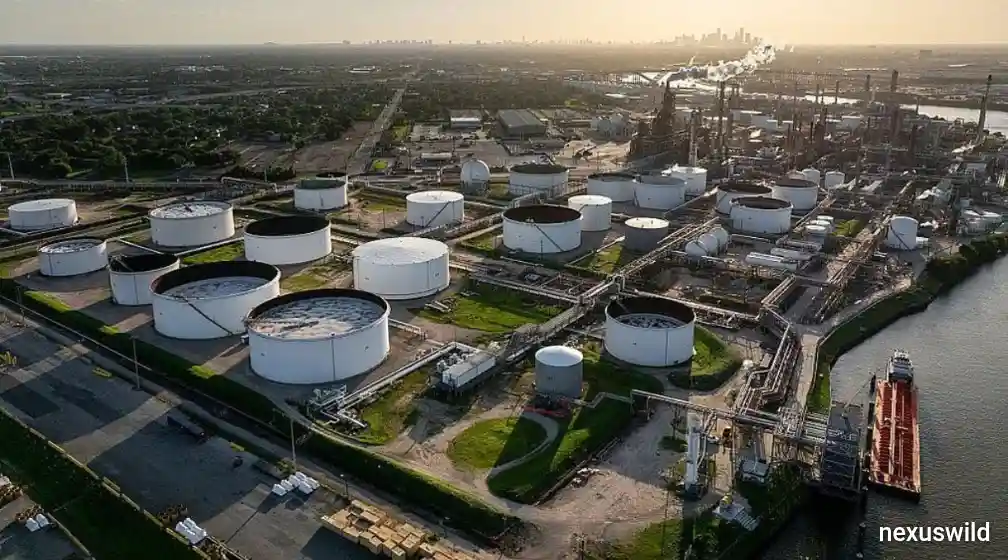

Brent crude futures settled at $116.72 per barrel on Friday, October 23 after climbing 3.14%. This move came as new worries about Middle Eastern energy supplies rattled markets. On Wall Street the Dow Jones Industrial Average dropped 652.82 points or 1.23%. The S&P 500 and Nasdaq Composite also ended the day lower.
Brent crude gained $3.55 during the session. Reached its highest settlement since April 29 according to Reuters. US West Texas Intermediate crude also rose, closing at $103.27 per barrel up 3.8%. Brent ended the week 6% higher adding pressure on countries and businesses that import energy and rely on fuel.
These price moves happened because of renewed fears about security. Reports surfaced that Houthi militants attacked energy facilities sparking concerns that oil production or shipping could be disrupted. The United Arab Emirates also reported an oil spill, which added to worries about the region’s energy network.
Markets were reacting to the risk not to proof that supply had actually been cut off. How prices will move next depends on how damage there is, how long it lasts, how shipments change and how producers and governments respond.
Wall Street closed lower
The Dow ended Friday at 52,215.16 down 652.82 points or 1.2%. The S&P 500 fell 39.75 points or 0.52% to 7,623.68. The Nasdaq Composite dropped 53.52 points or 0.21% to 25,955.34.
These losses followed a week of swings for investors. Even though rising oil prices hurt sentiment tech stocks showed signs of stabilizing after a drop the day before. So the market’s move was driven by factors, not just one.
Energy stocks moved the way. Reuters reported that the S&P 500 energy sector rose 2.5% and hit a record high. Higher crude prices can help oil producers’ earnings. The impact varies by company their production costs and how they manage price risk.
For airlines, logistics companies and other businesses that use a lot of fuel the situation is different. If fuel prices stay high their operating costs could rise. Whether those costs reduce profits depends on how they can cut expenses or pass costs to customers.
Why Eastern supply risks matter
The Middle East is key to global energy markets. It has oil-producing countries and important shipping routes. When security threats affect facilities or ships traders worry that fewer barrels will reach buyers on time.
That fear can push prices higher before any real supply drop is confirmed.. How much prices rise depends on how big the disruption might be how much oil is in storage how much extra oil can be produced and whether shipments can be rerouted.
The recent jump also highlights a difference between settlement price and intraday highs. The $116.72 is the settlement price for Brent futures not the highest point reached during the day. To make comparisons you need to use the same contracts and price measures.
Higher oil prices affect the economy in different ways. Oil-exporting countries and energy producers may earn more.. Oil-importing countries may pay more for fuel. Businesses that use oil-based materials or ship goods over distances may also face higher costs.
Inflation and interest-rate concerns return
If crude prices stay high it could make it harder to bring inflation down. Fuel affects transport, manufacturing, farming and how goods get to stores. How higher oil prices push overall inflation depends on how long they last and how businesses and people react.
Central banks may have to balance inflation pressure against the risk that expensive energy slows down spending and business activity. Higher fuel bills can leave people with money to spend on other things. Companies might delay investments if their costs become harder to plan for.
Bond markets were part of Friday’s picture too. The yield on the US 10-year Treasury note rose to about 4.99% according to the Associated Press. Higher yields can raise borrowing costs. Change how investors value future company earnings adding more pressure on stock markets.
It’s too early to say central banks will stop planning interest-rate cuts. Policymakers usually look at a range of data. Like inflation, jobs and economic growth. Before making decisions.
What investors will watch next
The main question is whether the security concerns actually cause problems in oil production, export sites or shipping. Traders will also keep an eye on statements from authorities changes in oil inventories and whether producers can replace any lost supply.
For stock investors the next few days will show if Friday’s drop is the start of a trend or just a short reaction to geopolitical stress. Corporate earnings reports, bond yields and more news about tech stocks will also shape market direction.
Brent’s settlement above $116 shows how fast geopolitical events can shift energy prices and what investors expect.. The long-term effects on inflation company profits and interest rates will depend on how supply risks evolve and whether high crude prices keep going.
Now verified market data shows oil prices rose sharply and major US stock indexes closed lower.. That alone doesn’t mean a long-term supply crisis or a permanent shift, in inflation is guaranteed.
Nexuswild welcomes factual corrections. Email contact@nexuswild.com with evidence and the article URL.