
Chinas latest corporate earnings reveal different fortunes across China’s industrial economy. China’s mining companies and China’s semiconductor packaging specialists report profit growth. Meanwhile China’s home‑appliance manufacturer Hisense Home Appliances faces a decline.
Zijin Mining, CMOC Group and JCET Group all recorded third‑quarter profits in results released around October 22–24. In contrast Hisense Home Appliances reported a 74% year‑on‑year drop in profit attributable to shareholders. Together the figures show how commodity prices, production volumes, technology demand and company‑specific costs can push earnings in directions even within the same national economy.
Mining companies benefit from metals performance.
Zijin Mining reported third‑quarter profit attributable to shareholders of approximately 18.36 billion yuan up 25.97% from a year earlier. Revenue reached around 89.27 billion yuan, an increase of 3.20%.
For the nine months of 2026 Zijin Mining’s attributable net profit rose approximately 52% to 57.53 billion yuan. Zijin Mining said its performance benefited from prices for its principal metals, increased production from key mines and efforts to control unit costs. Gold, copper and silver markets have been parts of the wider backdrop for the mining sector.
The quarterly figures also show why revenue and profit growth do not always move at the rate. Zijin Mining’s profit increased faster than revenue reflecting changes in margins and the contribution of Zijin Mining’s mining operations. However the reported results alone do not mean every commodity or business line experienced the conditions.
CMOC Group recorded a strong quarter. CMOC Group’s third‑quarter net profit attributable to shareholders rose 40.28% to 7.87 billion yuan while revenue increased 41.92% to 71.97 billion yuan.
CMOC Group reported that copper production reached 208,700 tonnes during the quarter maintaining a level above 200,000 tonnes for a consecutive quarter. CMOC Group’s results also benefited from prices for molybdenum and tungsten products and the consolidation of CMOC Group’s Brazilian gold business.
These factors suggest that CMOC Group’s earnings growth reflects a combination of output, pricing and changes in the scope of CMOC Group’s business. It would be too simplistic to attribute the increase to commodity prices alone.
Semiconductor packaging gains momentum.
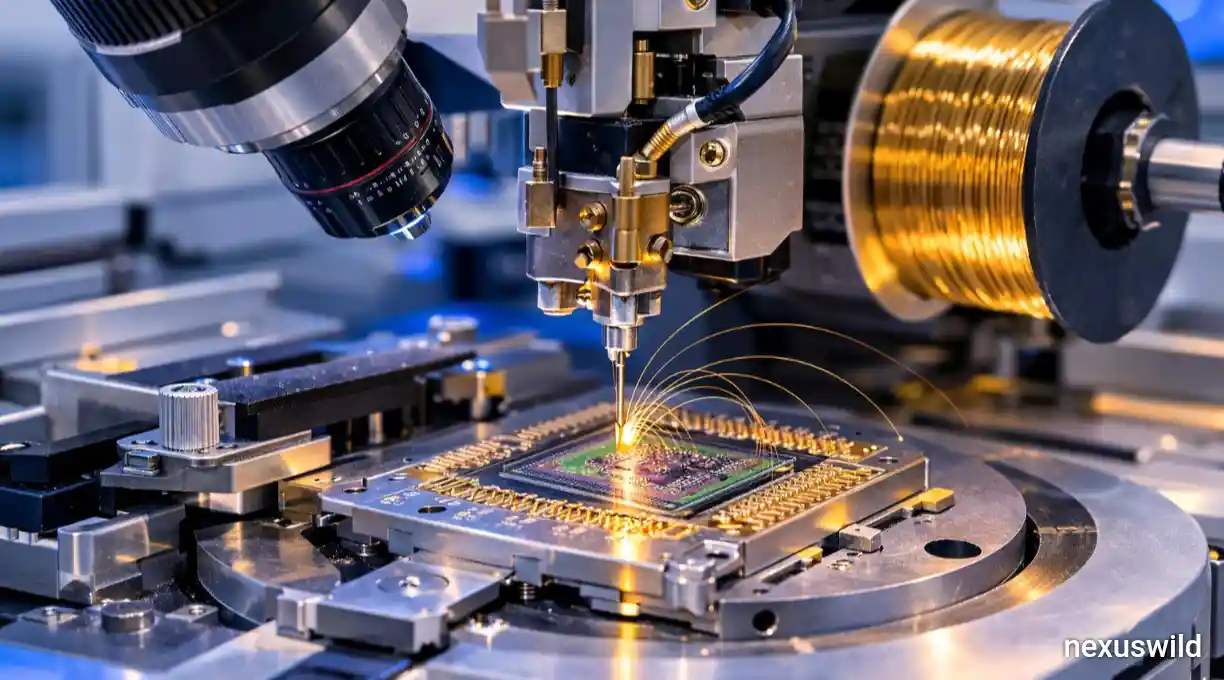
JCET Group, one of China’s integrated‑circuit packaging and testing providers reported third‑quarter revenue of approximately 11.43 billion yuan up 13.5% year on year. JCET Group’s net profit attributable to shareholders reached about 773 million yuan, an increase of 60%.
For the nine months of 2026 JCET Group’s revenue rose around 8% to 30.95 billion yuan while JCET Group’s attributable net profit increased nearly 70% to approximately 1.62 billion yuan.
JCET Group cited semiconductor demand, improved capacity utilisation, a more favourable product mix and cost‑control measures as contributors to JCET Group’s performance. Advanced packaging and testing services are increasingly important as chipmakers develop complex processors and systems for data centres, communications, consumer electronics and artificial intelligence workloads.
AI infrastructure is a source of demand across the semiconductor supply chain. As computing systems become more sophisticated packaging and testing technologies can play a role in performance, integration and manufacturing efficiency. However JCET Group’s published results do not establish that AI demand alone caused JCET Group’s profit increase. Broadly...
The figures nevertheless underline the importance of companies that provide services between chip design and the delivery of finished semiconductor components. These businesses may benefit when customers increase production or shift toward advanced products.
Hisense faces a quarterly decline.
Hisense Home Appliances reported a weaker quarter. Hisense Home Appliances’ revenue fell 8.76% year on year to 20.25 billion yuan while Hisense Home Appliances’ net profit attributable to shareholders declined 74% to around 191.2 million yuan.
Hisense Home Appliances’ adjusted net profit, excluding non‑recurring gains and losses was 16.7 million yuan, down 96.73%. This indicates that the pressure extended beyond the headline profit figure and was particularly severe on the adjusted measure.
Financial expenses rose substantially with Hisense Home Appliances attributing the change to fluctuations in foreign‑exchange gains and losses. That detail is important: the available disclosure does not justify treating borrowing costs as the sole or principal explanation for the profit decline.
The result illustrates how consumer‑facing manufacturers can experience a set of pressures from miners and semiconductor suppliers. Appliance makers depend on consumer demand, pricing, production costs, distribution and competition across product categories. Changes, in revenue and currency‑related expenses can affect margins when Hisense Home Appliances maintains a broad product portfolio.
I see that Hisenses results also show why one quarter alone should not automatically be seen as proof of a lasting downturn. Future reports will help clarify whether the weakness continues and how much of the decline comes from operating conditions versus items that change from one period to another.
What the difference shows about China’s outlook
I notice that the contrast, across these four companies reminds us that China’s economy cannot be judged by just one earnings story. Commodity producers are exposed to metal prices, mining output and operating costs. Semiconductor packaging businesses rely on chip demand how well they use capacity and the mix of products they handle. Appliance manufacturers face a balance of household spending, competitive pricing and financial factors.
For investors and businesses the main question is whether the current results show improvements or conditions that could change quickly. Metal prices can reverse semiconductor demand can fluctuate and manufacturers may see margins recover if sales and costs improve.
The next reporting periods will help determine whether mining profitability stays strong whether semiconductor growth spreads across the supply chain and whether consumer manufacturers can stabilize their margins.
For now the third‑quarter results show an industrial landscape. The best performances came from businesses that benefit from metal market conditions and semiconductor demand while Hisenses decline highlights the vulnerability of consumer‑facing manufacturers to weaker sales and cost pressures.
Nexuswild welcomes factual corrections. Email contact@nexuswild.com with evidence and the article URL.