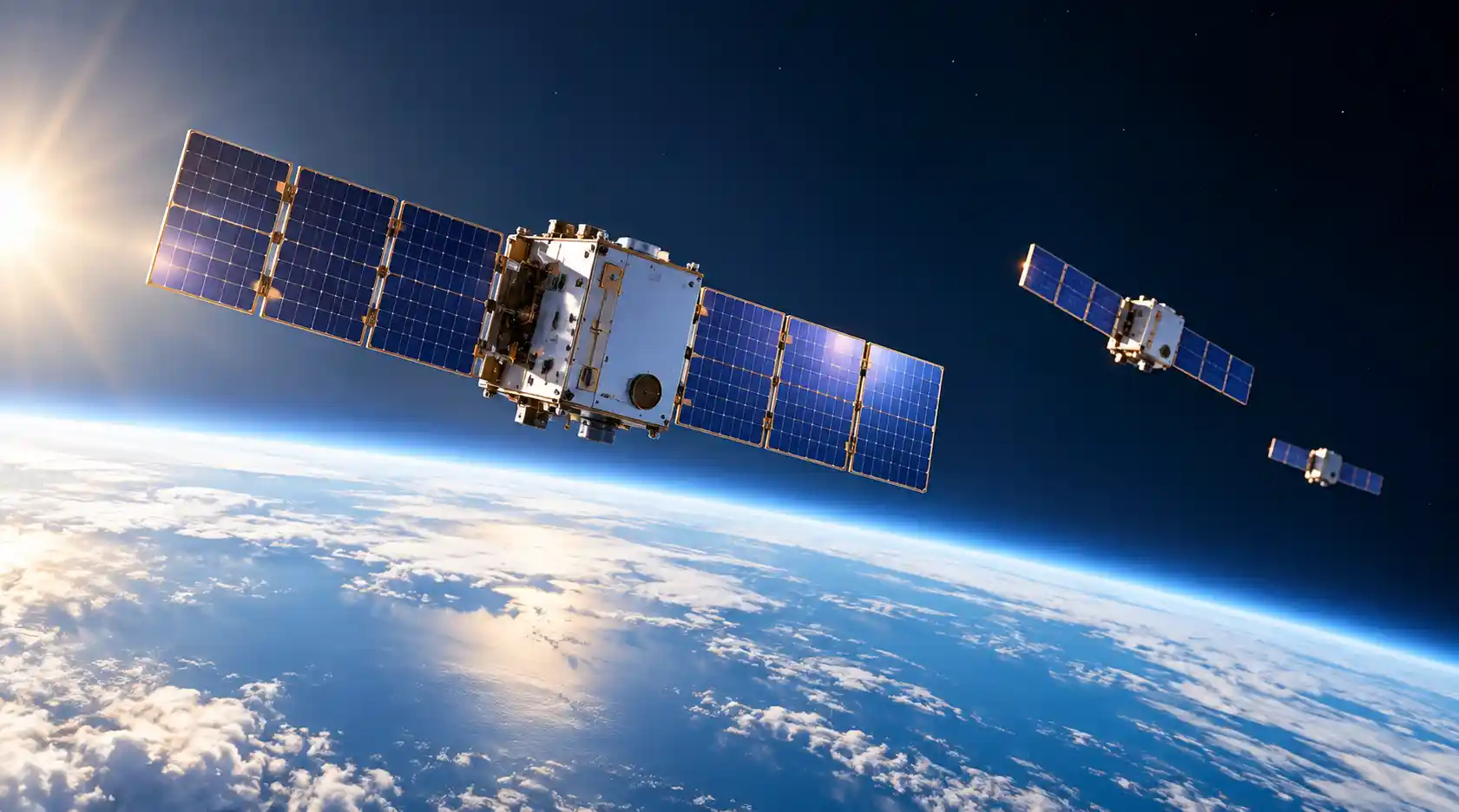

Since the dawn of the Space Age, Earth-observation satellites have essentially functioned as “dumb” cameras. They capture massive amounts of raw imagery and beam terabytes of unfiltered data back to ground stations, where terrestrial supercomputers eventually process it to extract useful information. But as the volume of space data explodes, that traditional pipeline is choking on its own bandwidth.
To solve this, aerospace engineers are increasingly looking to put the brains directly next to the cameras. On September 20, 2026, China achieved a major milestone in this transition. By successfully launching an advanced artificial intelligence satellite into orbit, the country’s commercial space sector took a definitive step toward a future where computing happens at the ultimate edge - in space. While a fully operational “space-based data centre” remains years away, this latest orbital computing test proves that the era of the autonomous, thinking satellite has arrived.
China’s Latest Orbital AI Computing Test
The breakthrough came during a multi-satellite launch from the Dongfeng Commercial Aerospace Innovation Test Zone. A Lijian-1 carrier rocket, operated by the Chinese commercial launch firm CAS Space, successfully delivered nine satellites into their designated orbits.
Among the payload was a highly specialized technology-verification spacecraft named Supercomputing-1, or S-AIDC-1. Developed under the leadership of Super AI Computing (Beijing) Technology Co., Ltd., this satellite was explicitly built to prioritize space computing as its core objective. Instead of just gathering data, it was designed to analyze it in real time, serving as a critical proof-of-concept for China's broader ambitions in orbital AI computing.
What Supercomputing-1 Is Designed to Do
The S-AIDC-1 satellite carries two primary payloads: a high-resolution 4-meter visible light camera and a dedicated on-board AI computing unit.
In a traditional setup, a satellite takes a continuous stream of high-resolution photos and stores them on hard drives until it flies over a designated ground station. S-AIDC-1 operates differently. Using its AI computer, it can autonomously acquire imagery of designated target areas and immediately run ultra-fast image processing and target-extraction algorithms in the vacuum of space.
By identifying exactly what analysts are looking for - whether it is a specific ship, a flooded river, or a damaged bridge - the satellite only needs to transmit the processed, high-value answers back to Earth, rather than sending down gigabytes of blank ocean or cloud-covered useless pixels. According to the developers, this capability drastically reduces data response times from several hours to just a few minutes.
Why Process AI Data in Space?
The drive to put AI data centres in space comes down to a simple mathematical reality: satellite sensors are capturing data faster than radio frequencies can transmit it down to Earth.
Downloading raw optical or radar data requires a direct line-of-sight connection to a ground station, creating a massive data bottleneck. Processing data at the "edge" - right where it is collected in orbit - bypasses this bottleneck. Furthermore, for time-sensitive missions like disaster response or military reconnaissance, waiting hours for a satellite to orbit into range of a ground station, download the data, and run it through a terrestrial AI model is simply too slow.
China’s Growing Space-Computing Network
Supercomputing-1 is not an isolated experiment; it is part of a much larger, coordinated push into China space computing. During the exact same September 2026 launch, the Lijian-1 rocket also deployed the Pengcheng First Satellite (PEGA-SUS1). Jointly developed by GalaxySpace and Peng Cheng Laboratory, this spacecraft integrates a 5G non-terrestrial network (NTN) base station, a core network, and on-board AI computing into a single platform.
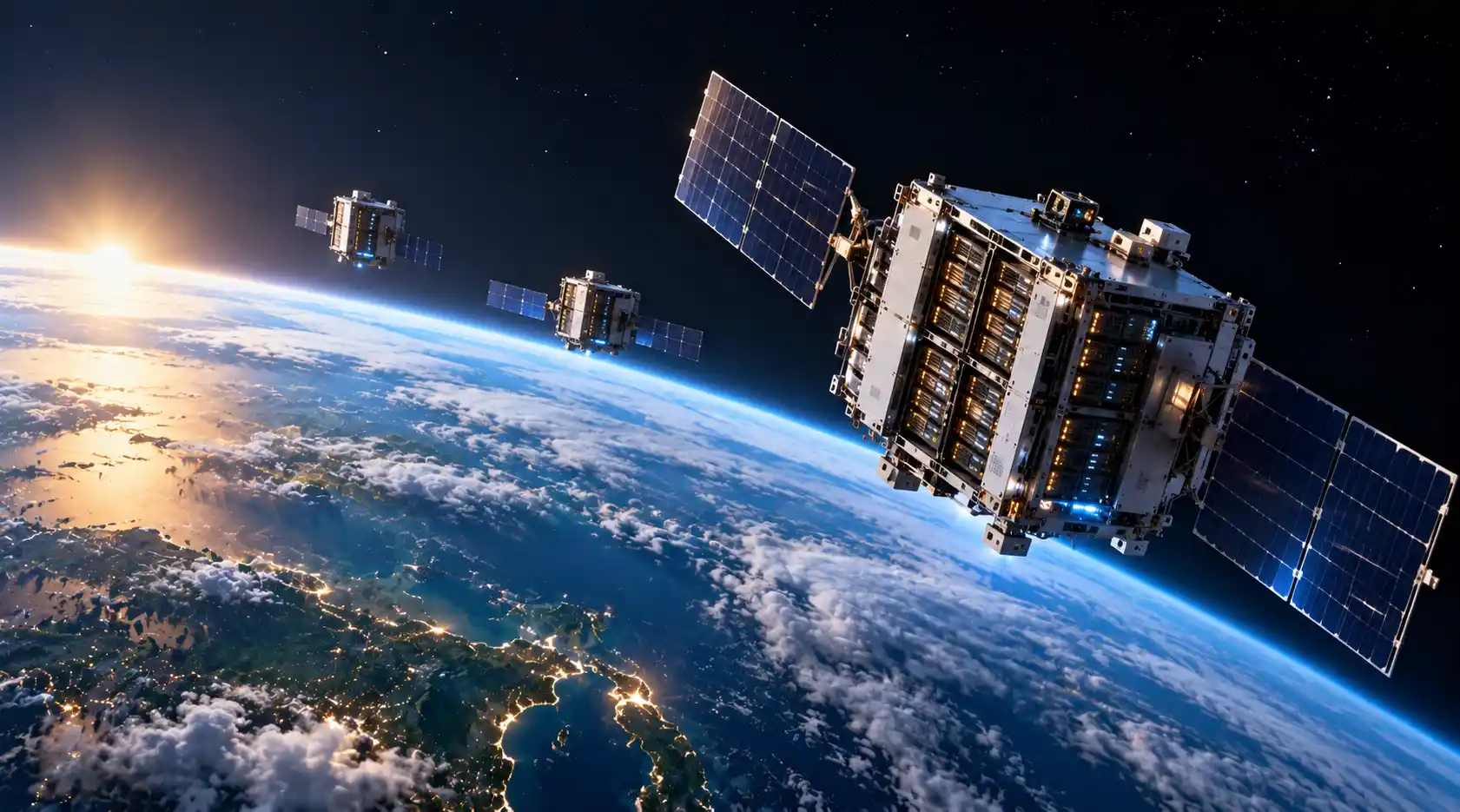
These recent launches build on earlier, highly ambitious orbital computing initiatives. Most notably, the "Three-Body Computing Constellation," developed by Zhejiang Lab and tech startup ADA Space, began deploying its first batch of AI-powered satellites over a year ago. That project ultimately aims to build an interconnected network of thousands of satellites delivering a staggering 1,000 peta operations per second (POPS) of in-orbit computing power.
AI, Satellite Links and Orbital Infrastructure
It is important to clearly distinguish between an AI-computing satellite like S-AIDC-1 and a true "space-based data centre."
Currently, S-AIDC-1 operates as an independent, highly capable edge-computing node. A true orbital data centre requires a network. To achieve this, future satellites must be linked together using high-speed optical laser communications. If one satellite captures an image but lacks the processing power to analyze it quickly, laser inter-satellite links would allow it to instantly beam the data to a larger, dedicated "compute satellite" nearby. This distributed, meshed orbital computing network lays the foundation for what Chinese engineers envision as a space-ground integrated 6G communications architecture.
Potential Real-World Applications
The commercial and civil applications for satellite AI computing are vast. According to the developers behind S-AIDC-1, the immediate focus is on data applications that require rapid decision-making.
In emergency disaster response, an AI satellite can instantly map the boundaries of a wildfire or flood, generating an actionable map for first responders in minutes. For precision agriculture, orbital AI can quickly analyze crop health across vast regions. Maritime monitoring can instantly identify and flag illegal fishing vessels by cross-referencing visual data with maritime tracking systems. In all these scenarios, the end-user receives a concise, processed alert on their screen, rather than a raw, massive image file requiring further terrestrial analysis.
Technical and Commercial Challenges
Despite the successful launch, building reliable space-based AI faces immense engineering hurdles.
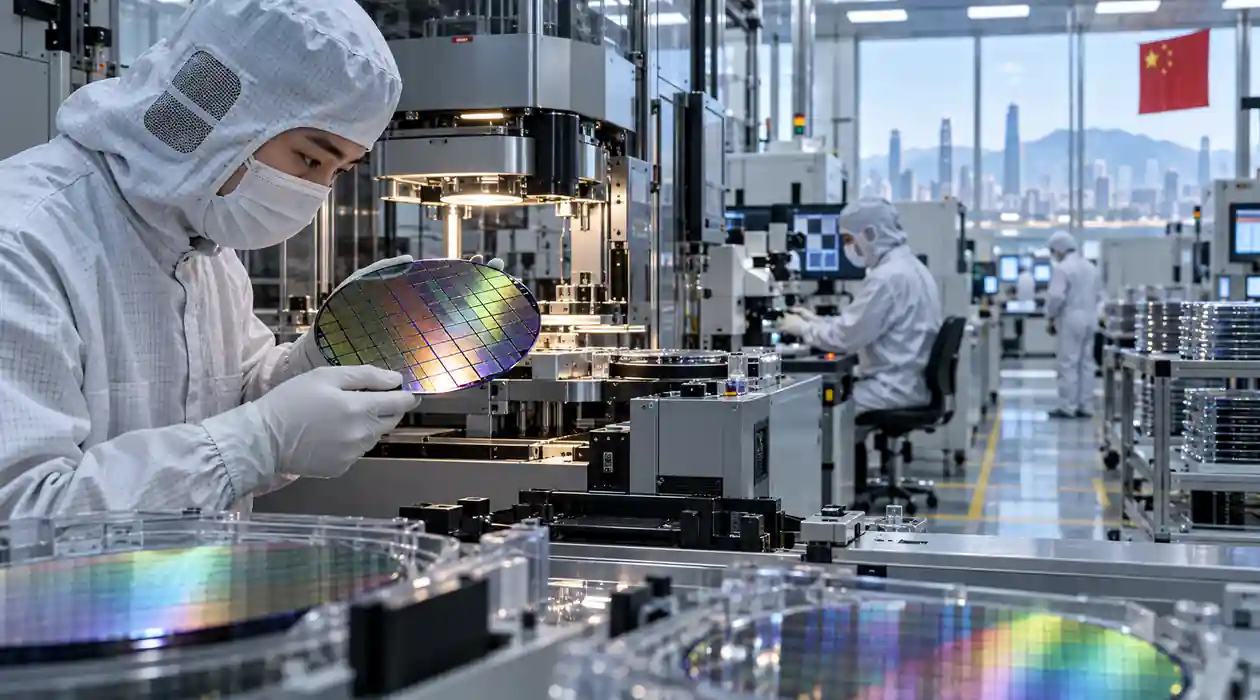
The primary enemy of space computing technology is the environment. Modern AI chips pack billions of microscopic transistors tightly together, making them highly susceptible to cosmic radiation, which can flip bits of data and cause software crashes. Furthermore, computing generates massive amounts of heat. On Earth, data centres use fans and liquid cooling; in the vacuum of space, heat cannot dissipate through convection, requiring complex, heavy thermal management systems to keep the AI processors from melting.
Power supply is another limitation, as satellites rely entirely on the finite energy gathered by solar panels. Finally, commercial viability remains a hurdle. While CAS Space has significantly lowered launch costs - currently boasting a production capacity of 30 Lijian-1 rockets per year - the cost of replacing or upgrading a computing node in orbit remains vastly higher than swapping out a server rack in a terrestrial data centre.
Global Space-Computing Developments
China’s aggressive push into orbital computing mirrors a broader global race. In the United States and Europe, companies are actively experimenting with edge computing in space. Major cloud providers, including Microsoft Azure Space and Amazon Web Services (AWS) Aerospace and Satellite, have partnered with satellite operators to test on-orbit processing and direct-to-cloud downlinks. However, China’s approach - characterized by deep integration between state-backed laboratories like Zhejiang Lab and agile commercial launch providers like CAS Space - shows a coordinated national strategy to claim leadership in the space computing domain.
Expert and Industry Views
The philosophy driving this shift is fundamental. Experts at CAS Space and the developers of the Super AI Computing mission emphasize that space hardware must undergo a paradigm shift.
Industry analysts note that this September 2026 launch demonstrates a new satellite design philosophy: the "multi-purpose single satellite." As the developers noted in official statements, satellites are evolving from single-service data collectors into spatial information super-nodes. By connecting communications, sensing, and intelligent computing on a single platform, satellites are transforming from mere observers into active decision-makers.
What Comes Next
Looking ahead, the commercialization of this technology will depend on launch cadence and constellation networking. CAS Space has indicated that its Lijian-1 launch schedule is heavily booked through the second half of 2027. The company is also preparing to introduce coordinated land-sea launch services off the coast of Guangdong, allowing for high-density, rapid-response launches to deploy larger swarms of AI satellites.
As more of these intelligent nodes reach orbit, the focus will shift from hardware deployment to software integration, allowing users on the ground to interact with space-based AI as seamlessly as they interact with terrestrial cloud servers today.
Conclusion
The launch of the Supercomputing-1 satellite marks a pivotal moment in the evolution of aerospace technology. By proving that AI data processing can be reliably conducted in orbit, China is addressing the massive data bottlenecks that have historically limited Earth-observation capabilities. While the leap from individual smart satellites to a fully networked, commercial space-based data centre will require overcoming severe thermal, radiation, and logistical challenges, the trajectory is clear. The future of global computing is not just expanding across the Earth; it is looking to the stars.
Further reading and useful links
Reader questions
Frequently asked questions
What is the Supercomputing-1 satellite?
Supercomputing-1 (S-AIDC-1) is an advanced technology-verification spacecraft developed by Super AI Computing (Beijing) Technology, launched in September 2026 to perform real-time AI image processing in orbit.
How was the Supercomputing-1 satellite launched into space?
It was launched aboard a Lijian-1 carrier rocket operated by commercial launch firm CAS Space from the Dongfeng Commercial Aerospace Innovation Test Zone.
What are the primary advantages of processing AI data in space?
On-board orbital AI bypasses bandwidth bottlenecks by analyzing data in real time and transmitting only actionable insights back to Earth, cutting response times from hours to minutes.
What are the major engineering challenges facing space-based computing?
Key challenges include protecting sensitive microprocessors from cosmic radiation, managing intense thermal dissipation in the vacuum of space, and maintaining power efficiency.
Nexuswild welcomes factual corrections. Email [email protected] with evidence and the article URL.