
Cosine Robots Raises ₹22.36 Crore to Expand India's Robotic Actuator Manufacturing Capabilities
Bengaluru-based robotics hardware startup Cosine Robots has raised ₹22.36 crore (approximately $2.4 million) in a funding round led by deep-tech investment firm Avaana Capital. WEH Ventures and angel investors also participated in the round, which will support the company's research, product development and manufacturing expansion.
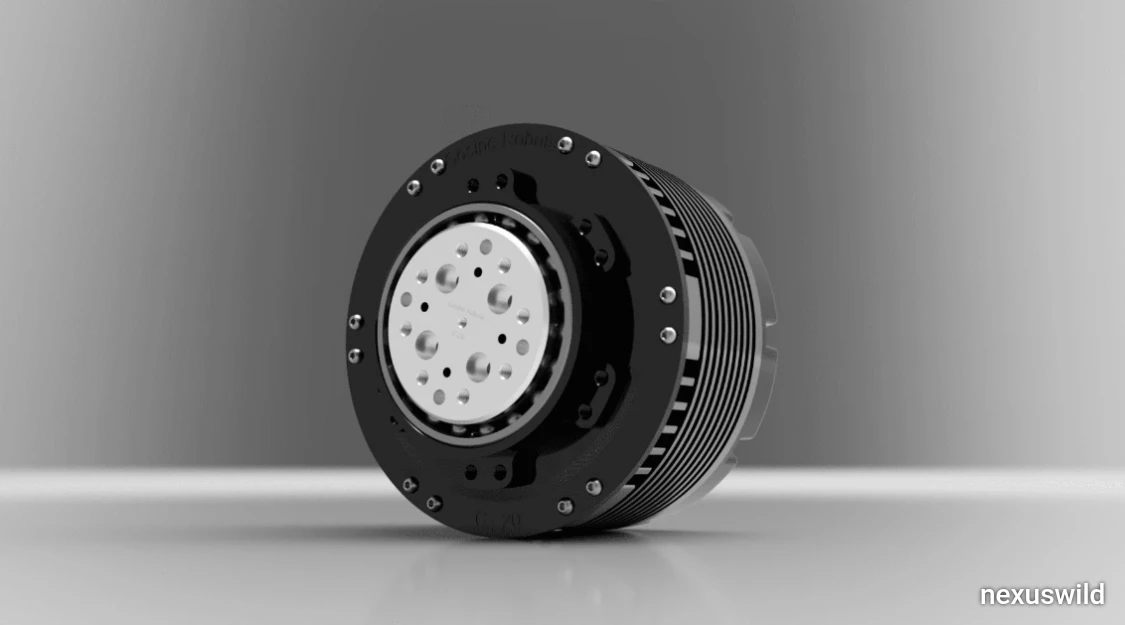
Founded by Kiran Mathew Koshy and Delip Thomas, Cosine Robots develops integrated servo actuators and advanced motion systems for robotic applications. Its products combine precision motors, gearboxes, sensors, electronics and proprietary control software into integrated units designed to control the movement of robotic joints.
The company intends to use the fresh capital to strengthen its Bengaluru-based R&D and production capabilities, expand its actuator portfolio and recruit engineers across multiple disciplines. Its planned facility will bring precision machining, assembly, calibration and endurance testing under one roof.
The funding arrives as robotics manufacturers increasingly look beyond complete robotic platforms towards the specialised components that determine their performance, reliability and manufacturing costs.
A Funding Round Focused on Robotics Hardware
The ₹22.36 crore investment was led by Avaana Capital, with WEH Ventures and angel investors participating. The funding amount was reported by multiple business publications on November 24, 2026.
Cosine has not publicly established through the reports reviewed that the round represents a particular financing stage, nor have the reports disclosed a company valuation. It is therefore more accurate to describe this as a funding round rather than assign it a Series A or another specific stage.
The capital is intended to support three broad priorities: strengthening research and development, establishing production capabilities and accelerating the development of the company's integrated servo actuator portfolio.
The proposed manufacturing setup is expected to include precision machining, assembly, calibration and endurance-testing infrastructure. These capabilities are important because robotic actuators must operate with consistent mechanical tolerances and reliable motion control across repeated operating cycles.
The investment also provides resources for expanding the company's multidisciplinary engineering team.
What Does Cosine Robots Actually Build?
An actuator is a component that converts energy into physical movement. In a robot, actuators help joints rotate, arms extend, grippers operate and other mechanical systems move in controlled ways.
The performance of these components influences how much force a robot can generate, how accurately it can position its joints, how smoothly it moves and how reliably it performs repetitive tasks.
Cosine Robots is developing integrated servo actuators that bring several components together in a single system:
- Precision motors that generate rotational movement.
- Gearboxes that modify torque and rotational speed.
- Sensors that measure position and support feedback control.
- Electronics that manage the actuator's operation.
- Proprietary control software that coordinates movement and torque.
Instead of treating these components as separate elements assembled into a robotic joint, the company is developing them as an integrated motion-control system.
This approach can give an actuator manufacturer greater control over how mechanical and electronic components interact. It may also help optimise the trade-offs between precision, torque response, reliability, size and cost.
However, integration alone does not guarantee superior performance. Actual competitiveness will depend on measurable product specifications, reliability testing, manufacturing consistency, pricing and customer validation.
Cycloidal and Planetary Actuators: Two Approaches to Robotic Motion
Cosine's modular portfolio includes cycloidal and planetary actuator designs. These use different gearbox architectures and can serve different mechanical requirements.
Cycloidal actuators
Cycloidal gear mechanisms use an eccentric-driven disc and specialised contact geometry to transmit motion and torque. Depending on their design, they can offer high reduction ratios, compact packaging and strong resistance to shock loading.
These characteristics can make cycloidal mechanisms useful in robotic joints where substantial torque and precise motion are required.
Their engineering challenges include manufacturing accuracy, friction, vibration, noise and thermal management.
Planetary actuators
Planetary gear systems use a central sun gear, surrounding planet gears and an outer ring gear. Their compact arrangement distributes loads across multiple gears and can provide a useful balance of torque capacity, efficiency and packaging.
Planetary systems are widely used in industrial motion applications because they can be configured for different speed and torque requirements.
The choice between cycloidal and planetary mechanisms depends on the robot's design, operating environment, load requirements, speed, precision targets and cost constraints.
By developing both types, Cosine is targeting a wider range of robotic motion requirements rather than relying on one actuator architecture for every application.
The Company's 25 kHz Motion-Control Architecture
One of the technical features highlighted in the funding announcement is Cosine's proprietary control architecture.
The company says its system combines dual-position sensing with a 25 kHz control loop, corresponding to 25,000 control updates per second.
A control loop repeatedly reads sensor information, evaluates the desired position or movement and adjusts the actuator's operation. A faster control cycle can help a system respond more frequently to changes in movement and load.
Dual-position sensing can provide additional position information within the actuator architecture. Its practical value depends on sensor placement, accuracy, calibration, signal processing and the control strategy.
For robotic applications, responsive feedback can be important when controlling torque, maintaining stability and executing precise movements.
However, a 25 kHz control-loop specification should not be interpreted as proof that the complete robot moves or responds at 25,000 physical actions per second. Control-loop frequency is only one part of system performance. Mechanical bandwidth, communication latency, motor characteristics, sensor quality, thermal limits and software execution also matter.
The company has described the architecture as a way to improve precision and control over movement and torque. Independent comparative benchmarks against established actuator manufacturers were not provided in the funding reports reviewed.
Targeting Industrial Robots, Cobots, Quadrupeds and Humanoids
Cosine is positioning its actuator portfolio for several categories of robotic systems.
Industrial robotic arms
Industrial robotic arms perform tasks such as welding, material handling, assembly, packaging and precision manufacturing. Their joints need to deliver repeatable movement under different load conditions.
Actuator quality can influence positioning accuracy, cycle times, maintenance requirements and the overall economics of an automation installation.
Collaborative robots
Collaborative robots, commonly known as cobots, are designed for applications in which robots and people may work in shared environments under appropriate safety controls.
These systems need predictable motion and carefully controlled force and speed. Actuator performance is one of several factors that contribute to safe operation.
Quadruped robots
Four-legged robots use multiple coordinated joints to maintain balance and move across different surfaces. Their actuators must manage changing loads and respond to continuous adjustments in body position.
Weight, torque density, power consumption, durability and thermal performance are particularly important in these applications.
Humanoid robots
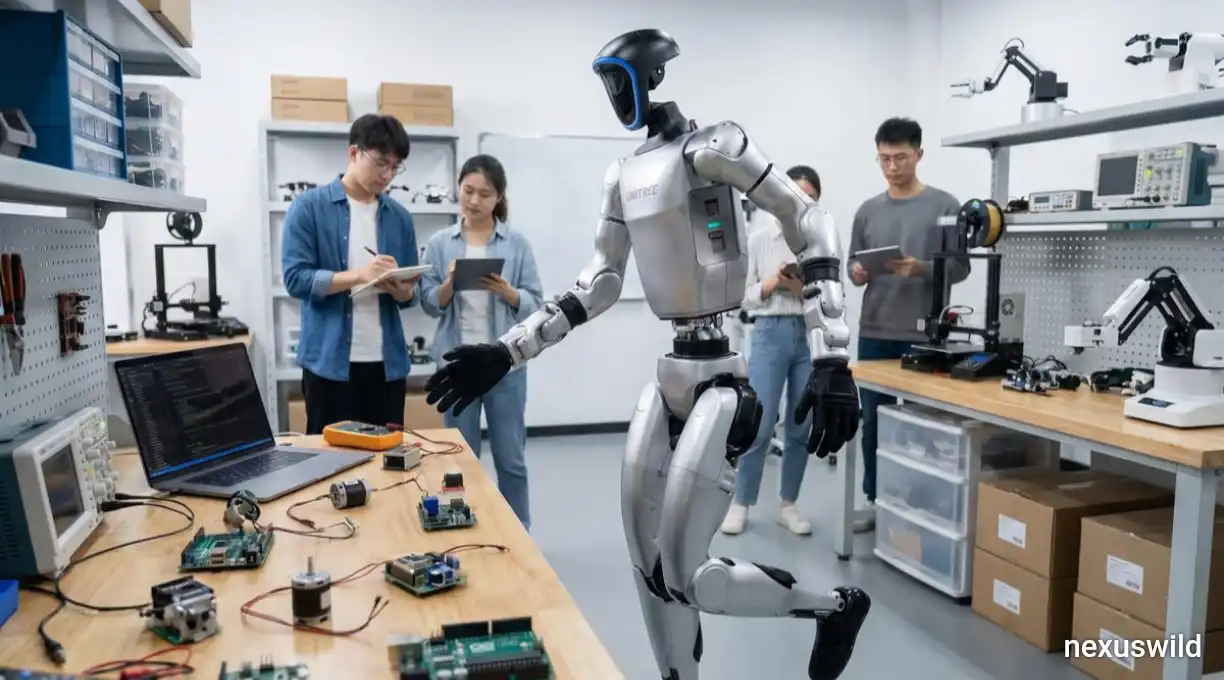
Humanoid platforms require multiple articulated joints to reproduce complex human-like movements. Their designs can involve demanding combinations of compact packaging, high torque, low weight and precise feedback.
The humanoid robotics market has attracted significant attention, but commercial adoption remains dependent on practical deployment economics, reliability, safety and useful real-world applications.
Cosine's actuator technology is intended to address the underlying motion requirements of these platforms. That does not mean the company has already secured supply agreements with leading humanoid manufacturers.
Why Robotic Actuators Matter to India's Manufacturing Ambitions
India's robotics opportunity is not limited to companies building complete robots. A competitive ecosystem also needs suppliers of motors, gearboxes, sensors, controllers, precision mechanical components and other specialised subsystems.
Actuators are particularly important because they sit at the interface between a robot's control system and its physical movement.
A poorly performing actuator can affect the accuracy, speed, stability and reliability of an entire robotic platform. Its price and durability can also influence whether a robot is commercially viable.
Developing domestic actuator suppliers could create several potential benefits:
- More locally accessible motion-control components for Indian robot manufacturers.
- Greater opportunities to customise actuators for specific applications.
- Shorter engineering feedback loops between component suppliers and robot OEMs.
- Potential reductions in dependence on imported motion systems.
- Development of specialised manufacturing and testing capabilities in India.
These are potential ecosystem benefits, not outcomes already demonstrated by Cosine's funding announcement.
Import substitution will also require more than local assembly. Manufacturers must compete on component quality, precision, reliability, cost, delivery consistency and after-sales engineering support.
A Growing Global Robotics Market
The funding comes amid increasing global investment in industrial automation and advanced robotics.
The International Federation of Robotics reported that 603,307 industrial robots were installed globally in 2025, an increase of 11% year on year, according to figures cited by Business Standard.
This provides useful context for the demand for industrial motion systems. However, industrial robot installations should not be confused with the total market for humanoid robots, quadrupeds or all robotic actuators.
The demand outlook for individual component suppliers will depend on which robotic segments grow, how quickly manufacturers scale production and how much of the component value chain they source externally.
For Cosine, the opportunity is to serve manufacturers across multiple robot categories instead of relying on the success of one complete robotic platform.
That supplier-focused model can provide access to different customer markets. It also introduces a demanding requirement: products must be compatible with varied mechanical designs, control systems and performance specifications.
Avaana Capital and WEH Ventures Back Domestic Hardware Development
Avaana Capital led the funding round, while WEH Ventures and angel investors also participated.
Avaana's investment reflects interest in deep-tech businesses developing technology and manufacturing capabilities rather than only software-based products.
Cosine's focus on actuator design places it within advanced manufacturing and robotics hardware, where product development can require specialised engineering, prototyping, testing equipment and capital-intensive production infrastructure.
WEH Ventures' participation also adds another institutional investor to the company's funding base.
The investors' backing may help Cosine strengthen its engineering capabilities and move towards a more developed manufacturing operation. The next test will be whether the company can convert this investment into commercially competitive products and recurring customer demand.
The Manufacturing Challenge Ahead
Building a robotic actuator is not simply a matter of combining a motor and a gearbox.
Precision motion components must maintain performance under repeated mechanical loads, changing temperatures, vibration and continuous operating cycles.
For a startup moving towards production, several challenges will matter.
Manufacturing consistency
Precision machining and assembly must produce repeatable results across units. Small variations in mechanical tolerances can affect backlash, friction, noise and positioning accuracy.
Reliability and endurance
Customers need evidence that actuators can operate for long periods without excessive wear, overheating or unexpected failures. Endurance testing is therefore an important part of the planned facility.
Cost competitiveness
Domestic production does not automatically mean lower costs. Imported suppliers may benefit from established production volumes, mature supply chains and years of manufacturing experience.
Cosine will need to demonstrate that its products can compete on total cost of ownership, not simply on the location of manufacturing.
Customer qualification
Robotics OEMs generally need to validate components before integrating them into commercial products. This process can involve engineering samples, compatibility testing, reliability assessments and extended procurement cycles.
The funding reports do not disclose a list of confirmed customers, production contracts or large-volume purchase commitments.
Scaling the supply chain
A reliable actuator business also depends on access to quality motors, sensors, electronics, precision materials and manufacturing equipment. Building a resilient supplier network will be important as production expands.
What to Watch Next
The funding announcement establishes the company's immediate priorities, but several milestones will determine whether Cosine can become a meaningful supplier in the robotics hardware market.
The most important developments to monitor include:
- Facility expansion: Whether the planned Bengaluru R&D and production facility becomes operational and reaches its intended capabilities.
- Product portfolio: Whether the cycloidal and planetary actuator range expands into commercially available products with clearly disclosed specifications.
- Performance validation: Independent evidence on torque density, positioning accuracy, efficiency, thermal performance, backlash and endurance.
- Customer adoption: Announcements of design wins, supply agreements or repeat orders from robot manufacturers.
- Production scale: Evidence of consistent manufacturing volumes and quality control.
- Market reach: Whether Cosine begins supplying customers beyond India and establishes a sustainable export business.
These milestones will provide a more meaningful measure of progress than funding announcements alone.
What the Funding Means for India's Robotics Ecosystem
Cosine Robots' ₹22.36 crore fundraise highlights an important part of the robotics industry that often receives less attention than humanoid demonstrations and artificial intelligence software: the physical components that make machines move.
A robot's intelligence is only one part of its capability. Its usefulness also depends on motors, gear systems, sensors, control electronics and mechanical engineering that can deliver precise movement repeatedly and safely.
By developing integrated servo actuators and expanding its Bengaluru manufacturing capabilities, Cosine is attempting to build a position in this foundational layer of the robotics supply chain.
The investment gives the company additional resources to develop its products and manufacturing infrastructure. But its long-term significance will depend on execution: reliable products, competitive pricing, qualified customers and repeatable production.
For India's deep-tech manufacturing ecosystem, the opportunity is clear. The challenge is turning promising engineering into dependable industrial hardware that customers are willing to buy at scale.
Nexuswild welcomes factual corrections. Email contact@nexuswild.com with evidence and the article URL.