
The global oil and gas industry is experiencing a period of strategic restructuring as energy companies reconsider their geographical priorities, operating costs and long-term investment opportunities. While some producers are expanding into emerging energy markets, others are consolidating their portfolios to focus on assets offering stronger returns and more favourable operating conditions.
British independent energy company EnQuest PLC has announced an agreement to sell its UK upstream oil and gas business and associated infrastructure to NEO NEXT+ for a total consideration of up to US$960 million.
Announced on November 18, 2026, the transaction represents a major turning point for EnQuest as it moves away from its traditional North Sea operations and redirects its attention towards Southeast Asia.
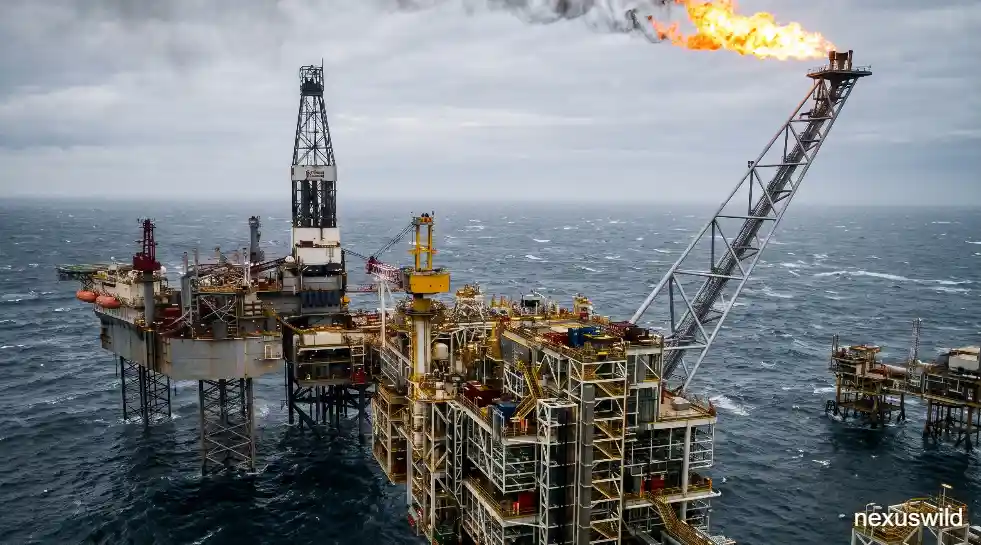
The proposed disposal includes several established offshore oil and gas assets, supporting infrastructure and the employees responsible for operating those businesses. The portfolio includes the Magnus and Kraken fields, the Greater Kittiwake Area, a non-operated interest in Golden Eagle and undeveloped opportunities at Bressay and Bentley.
The transaction comprises US$840 million in upfront cash consideration and up to another US$120 million in contingent payments linked to future oil prices and potential changes to the UK's Energy Profits Levy.
For EnQuest, the sale is intended to release capital, reduce operating costs and improve financial flexibility following its planned acquisitions of additional offshore Malaysian interests.
For NEO NEXT+, the acquisition represents an opportunity to expand its production, reserves and infrastructure portfolio in the UK Continental Shelf.
The agreement also highlights a broader shift in the North Sea energy industry, where established producers are increasingly reviewing their portfolios as ageing fields, fiscal conditions and investment requirements reshape the commercial outlook.
Details of the $960 Million Transaction
Under the agreement, EnQuest Group Holdings Limited will sell all issued shares of EnQuest Britain Limited to NEO NEXT+ Energy Upstream UK Limited.
The transaction has an announced maximum consideration of US$960 million, structured through an upfront payment and additional performance-related consideration.
The principal components are:
| Transaction Component | Amount |
|---|---|
| Upfront cash consideration | US$840 million |
| Maximum contingent consideration | US$120 million |
| Maximum total consideration | US$960 million |
The US$840 million upfront payment will be made upon completion, subject to customary closing adjustments, including working capital.
The additional US$120 million is conditional and may be paid through two mechanisms.
The first is an oil-price-linked payment. EnQuest could receive additional consideration based on actual oil production during 2027, 2028 and 2029 if the average Brent crude price exceeds US$75 per barrel.
Under the agreed calculation, the payment is US$0.20 per barrel of actual oil production for every US dollar above the US$75 threshold, subject to an aggregate cap of US$120 million for contingent consideration.
The second mechanism relates to the UK's Energy Profits Levy (EPL). EnQuest could receive additional payments if the tax is abolished or reduced through legislative changes between January 1, 2027, and December 31, 2029.
The EPL-related component is capped at US$100 million, but the combined maximum payment across both mechanisms cannot exceed US$120 million.
A deposit of US$67.2 million is due from NEO NEXT+ upon signing and will be deducted from the cash consideration at completion.
The agreement has an economic effective date of January 1, 2027, meaning the transaction economics are structured around that date even though legal completion is expected later.
Importantly, the announced maximum value should not be treated as guaranteed proceeds. The contingent component depends on future oil prices and changes in tax legislation.
UK North Sea Assets Included in the Sale
The acquisition covers a substantial portfolio of offshore oil and gas assets together with associated midstream infrastructure.
The principal upstream assets include:
- Magnus field: An established offshore oil field in the northern North Sea.
- Kraken field: A major heavy-oil development operated by EnQuest.
- Greater Kittiwake Area: An operated group of fields including Kittiwake, Mallard, Gadwall, Goosander and Grouse.
- Golden Eagle: A non-operated offshore oil field.
- Bressay: An undeveloped heavy-oil field offering future development potential.
- Bentley: An additional undeveloped heavy-oil discovery.
Beyond its upstream portfolio, EnQuest Britain Limited also holds important UK infrastructure interests.
These include EnQuest's operating interest in the Sullom Voe Terminal, the Northern Leg Gas Pipeline and the Ninian Pipeline system.
The Sullom Voe Terminal is particularly important because it provides storage and handling infrastructure supporting North Sea oil production.
The inclusion of midstream assets makes the transaction broader than a straightforward sale of individual oil fields. It gives NEO NEXT+ control of associated infrastructure that supports production, transportation and handling activities.
The agreement also includes the transfer of employees supporting the UK operations.
For the year ended December 31, 2025, EnQuest's UK upstream business generated average net production of approximately 31,122 barrels of oil equivalent per day.
Its production mix consisted of approximately 92% liquids and 8% gas.
At the same reporting date, the portfolio held approximately 122 million barrels of oil equivalent in proved and probable (2P) reserves and 308 million barrels of oil equivalent in contingent (2C) resources.
These figures demonstrate the scale of the assets being transferred and explain why the transaction represents a substantial strategic decision for both companies.
Why EnQuest Is Exiting Its UK Operations
The decision to sell its UK business reflects EnQuest's changing investment priorities.
The company originally developed its identity as a specialist UK North Sea oil and gas producer. Over time, however, its management increasingly explored opportunities in Southeast Asia, where it sees greater potential for production growth and capital-efficient investment.
According to EnQuest, the UK investment environment has become more uncertain, particularly because of the fiscal framework affecting offshore oil and gas producers.
The Energy Profits Levy has been an important part of this debate.
The additional taxation has influenced investment decisions across the UK North Sea, where producers must balance operating expenses, development costs, production declines and the financial obligations associated with decommissioning.
For EnQuest, selling its UK upstream business offers an opportunity to realise value from established assets rather than continue allocating capital across a portfolio that management considers less attractive for future growth.
The company also believes that its Southeast Asian portfolio provides more opportunities to improve recovery rates, develop existing resources and use established infrastructure.
The proposed disposal therefore represents a deliberate portfolio restructuring strategy.
Rather than simply reducing the size of its business, EnQuest is attempting to redirect capital towards a region it believes can deliver stronger long-term returns.
The decision is also connected to its previously announced Malaysian acquisitions, which are intended to increase production and establish a larger regional operating platform.
Malaysia Acquisitions Drive EnQuest's Southeast Asian Expansion
The UK divestment is closely connected to another major corporate development: EnQuest's proposed acquisition of participating interests in four offshore production-sharing contracts (PSCs) in Malaysia.
On June 10, 2026, the company announced agreements to acquire the interests from PETRONAS Carigali and E&P Malaysia Venture through three separate acquisition packages.
The transaction carries maximum consideration of US$833 million, consisting of US$554 million in upfront payments, US$189 million in deferred consideration and up to US$90 million in contingent payments.
The proposed acquisitions are expected to complete on December 31, 2026, subject to the relevant contractual requirements. EnQuest announced in August that the conditions precedent, including PETRONAS approval and shareholder approval, had been satisfied.
The Malaysian investments are strategically important because they provide access to additional offshore production, reserves and development opportunities.
Combined with its existing operations, these assets could substantially increase the scale of EnQuest's Southeast Asian business.
The company expects its remaining portfolio to produce approximately 70,000 barrels of oil equivalent per day following completion of both the Malaysian acquisitions and the UK disposal.
This would position Southeast Asia as the primary operating region for the company, with production and development interests across Malaysia, Vietnam, Brunei and Indonesia.
The transformation is therefore designed to create a more geographically focused energy business rather than simply reduce EnQuest's exposure to the UK.
Lower Operating Costs Could Improve Profitability
One of the strongest financial arguments behind EnQuest's restructuring strategy is the expected reduction in operating costs.
On a 2025 net participating-interest basis, the company estimates that its post-transaction Southeast Asian business will have unit operating expenditure of approximately US$11 per barrel of oil equivalent.
This compares with group-wide unit operating expenditure of approximately US$25 per barrel of oil equivalent during 2025.
The reduction of approximately 57% could improve the company's cost competitiveness and reduce the price level required to support profitable operations.
EnQuest also expects the remaining business to generate pro forma EBITDA of approximately US$500 million annually.
These projections include the planned Malaysian acquisitions and exclude the UK business being sold.
The company estimates that pro forma net debt to EBITDA could improve to approximately 0.5–0.7 times as of December 31, 2025, compared with a previous pro forma estimate of 1.1 times.
The lower leverage expectation reflects the combined impact of portfolio restructuring, asset additions and the anticipated use of disposal proceeds.
EnQuest has also highlighted that its Southeast Asian investments are focused on production enhancement and recovery improvements, with relatively limited additional infrastructure requirements.
This could provide an advantage over capital-intensive projects requiring the construction of completely new production and transportation systems.
However, the estimated profitability and leverage figures are management projections based on specified assumptions. Actual performance will depend on oil and gas prices, production levels, operating costs and the completion of the proposed transactions.
NEO NEXT+ Strengthens Its Position in the North Sea
While EnQuest is preparing to exit its UK upstream operations, the buyer NEO NEXT+ is pursuing the opposite strategy by increasing its exposure to the British North Sea.
NEO NEXT+ emerged in March 2026 following the merger of TotalEnergies' UK upstream oil and gas business with NEO NEXT, a partnership associated with Repsol and HitecVision.
The combined company is owned by TotalEnergies, HitecVision and Repsol UK, which exercise joint control.
The business has established itself as a significant independent operator in the UK Continental Shelf.
The acquisition of EnQuest's UK portfolio could increase its production, reserves and cash flow while providing access to additional offshore infrastructure.
The Magnus, Kraken and Greater Kittiwake assets add established production operations, while Golden Eagle and the undeveloped Bressay and Bentley opportunities provide additional portfolio exposure.
The inclusion of Sullom Voe Terminal and associated pipelines is also strategically important.
Existing infrastructure can support offshore production and transportation while potentially creating opportunities for operational coordination across nearby fields.
By purchasing an established portfolio, NEO NEXT+ can expand its North Sea presence through an acquisition rather than relying exclusively on new exploration and development projects.
The transaction also offers an opportunity to consolidate technical operations and utilise existing infrastructure more efficiently.
For the UK offshore industry, the deal demonstrates how mature assets are increasingly moving between operators as companies adjust their portfolio strategies.
Decommissioning Liabilities and Financial Considerations
An important aspect of the transaction is the transfer of existing financial and environmental responsibilities associated with the UK assets.
According to EnQuest's disclosure, EnQuest Britain Limited had gross assets with a carrying value of approximately US$3.129 billion as of December 31, 2025.
Its net assets stood at approximately US$171 million after accounting for liabilities and other balance-sheet items.
These included approximately US$2.125 billion in combined decommissioning, lease and other liabilities, which will transfer to NEO NEXT+ as part of the proposed disposal.
Decommissioning obligations are particularly important in the North Sea because offshore oil and gas platforms eventually require removal or abandonment when they reach the end of their commercial lives.
Such activities can involve substantial expenditure, including dismantling facilities, removing subsea equipment and restoring affected sites in accordance with regulatory requirements.
Transferring these obligations could materially reduce EnQuest's future financial exposure to its UK operations.
However, not all of EnQuest's existing debt and intercompany balances will transfer with the business.
The company has specifically stated that UK subsidiary intercompany balances totalling approximately US$833 million, including its US$675 million US dollar high-yield bond, will remain with the continuing EnQuest group.
This distinction is important because the sale transfers the specified operating assets and associated liabilities, rather than eliminating every financial obligation connected with the group's historical UK operations.
EnQuest intends to use the disposal proceeds primarily to repay amounts drawn under its revolving-based lending facility in connection with the Malaysian acquisitions.
It also expects to retain more than US$400 million of undrawn revolving credit facility capacity, providing additional liquidity for future operations and investment.
UK North Sea Consolidation Reflects Wider Industry Challenges
EnQuest's decision comes amid continuing restructuring across the UK North Sea oil and gas industry.
The basin has supported energy production for decades, but many of its established fields are now mature.
Declining production from ageing assets, increasing maintenance requirements and decommissioning costs have encouraged producers to reconsider their long-term investment strategies.
The UK's Energy Profits Levy has added another consideration for companies evaluating future development expenditure.
Several major international producers have already reduced their exposure to the region through asset sales, mergers and portfolio restructuring.
BP has also pursued a strategic review of its UK North Sea operations.
At the same time, buyers such as NEO NEXT+ are seeking opportunities to consolidate established assets and increase production through operational integration.
This creates a changing market structure in which smaller or specialised operators may sell assets while larger independent groups expand their portfolios.
Such transactions can help maintain production from existing fields by transferring assets to companies with different operating strategies, financial resources and infrastructure capabilities.
However, the long-term sustainability of the North Sea industry will also depend on investment conditions, regulatory stability, energy demand and the development of future offshore projects.
EnQuest's sale illustrates how these factors are influencing corporate decisions across the basin.
Future Outlook: EnQuest Prepares for a Southeast Asian Growth Platform
The next stage of EnQuest's transformation will depend on successfully completing both the UK disposal and its Malaysian acquisitions.
The UK sale is expected to close during the first quarter of 2027, subject to several conditions, including regulatory approvals from the North Sea Transition Authority (NSTA), the National Security and Investment Act (NSIA) process and the Competition and Markets Authority (CMA).
Completion also depends on the Malaysian acquisitions progressing as planned, together with lender approvals and the replacement of relevant UK decommissioning security arrangements.
If both transactions are completed, EnQuest will emerge as a more geographically focused energy producer with a substantially larger Southeast Asian portfolio.
The company plans to concentrate on improving recovery rates, developing existing discoveries and pursuing additional acquisitions across the region.
Its future investment strategy will prioritise projects that can generate attractive returns without requiring excessive new infrastructure expenditure.
The company will also retain Veri Energy and associated carbon capture, utilisation and storage interests outside the UK disposal.
For NEO NEXT+, the acquisition will provide a larger production platform and additional opportunities to strengthen its position in the UK offshore energy sector.
Investors will therefore be watching the two transactions closely as they move towards completion in the coming months.
Conclusion
EnQuest's agreement to sell its UK oil and gas business to NEO NEXT+ for up to US$960 million represents a major change in the company's long-term direction.
The transaction provides an opportunity to realise value from established North Sea assets while reducing future operating costs and decommissioning exposure.
For NEO NEXT+, the deal offers access to established offshore fields, important transportation infrastructure and an experienced operational workforce.
More importantly, the sale is closely connected to EnQuest's planned expansion in Malaysia, where additional offshore production interests could transform its regional business.
The company expects its remaining Southeast Asian operations to generate approximately US$500 million in pro forma EBITDA, supported by lower operating costs and increased production scale.
However, the expected benefits depend on successful completion of both transactions, stable operating conditions and disciplined financial management.
As international energy companies continue adjusting their portfolios to reflect changing investment opportunities, EnQuest's strategic shift demonstrates how producers are redirecting capital towards markets they believe offer stronger long-term growth.
The next phase will determine whether the company can successfully turn this major restructuring into sustainable production growth, stronger financial performance and improved shareholder value.
Nexuswild welcomes factual corrections. Email contact@nexuswild.com with evidence and the article URL.