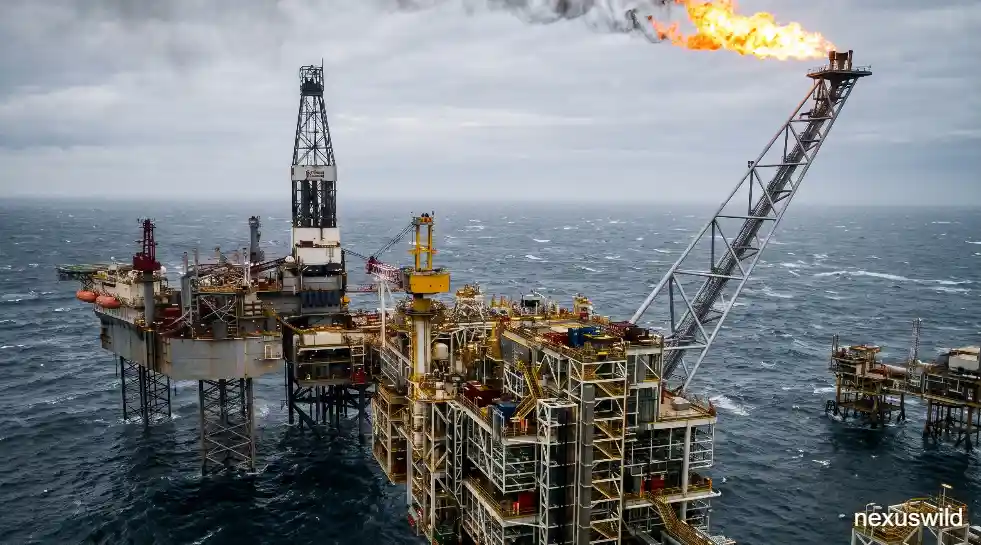

The global energy industry is undergoing a major transformation as governments and businesses increase investment in electricity networks, renewable power generation and infrastructure required to support growing energy consumption. The expansion of electric vehicles, artificial intelligence data centres and industrial electrification is creating additional pressure on existing power systems, encouraging energy companies to accelerate infrastructure development.
Against this backdrop, British energy company SSE plc has reported a significant increase in first-half profitability, supported by higher investment in regulated electricity networks and continued progress across its renewable energy operations.
In its half-year results released on November 18, 2026, SSE reported adjusted operating profit of £1.1 billion for the six months ended September 30, representing a 68% increase compared with £655 million in the same period last year.
Reported operating profit also increased 49% to £946.5 million, while adjusted earnings per share rose 83% to 66.5 pence.
The financial improvement comes as SSE accelerates its five-year £33 billion investment programme, which focuses on expanding electricity transmission and distribution infrastructure, developing offshore wind projects and strengthening flexible power generation.
The company invested a record £2.56 billion during the first half, approximately 63% higher than the £1.57 billion invested during the corresponding period in 2025.
Around 70% of the investment was directed towards regulated electricity networks, highlighting the increasing importance of grid infrastructure in SSE's long-term business strategy.
The results demonstrate how energy companies are adapting their business models to benefit from growing electricity demand while supporting the transition towards a more secure and lower-carbon energy system.
SSE's First-Half Financial Performance Shows Strong Growth
SSE's latest financial results indicate substantial improvements across several important performance measures.
For the six months ended September 30, 2026, adjusted operating profit reached £1,103.4 million, compared with £655 million in the previous year's corresponding period.
Adjusted profit before tax increased to £999.7 million from £523.7 million, representing growth of approximately 91%.
The company also reported adjusted earnings per share of 66.5 pence, compared with 36.3 pence a year earlier.
The difference between adjusted and reported results is important because adjusted figures exclude certain exceptional items and accounting remeasurements to provide a clearer view of underlying business performance.
SSE's reported financial performance also improved. Reported operating profit increased to £946.5 million from £634.2 million, while reported profit after tax reached £706.2 million compared with £434 million.
The company's earnings per share on a reported basis increased to 35.9 pence from 26.4 pence.
The financial improvement was primarily driven by regulated electricity networks, which contributed approximately two-thirds of adjusted operating profit.
The increase reflects higher investment in electricity infrastructure, particularly transmission networks, alongside improved performance from renewable generation and flexible power operations.
SSE also declared an interim dividend of 22.9 pence per share, compared with 21.4 pence in the previous year.
This represents an increase of approximately 7%, demonstrating the company's intention to maintain shareholder distributions while financing a substantial infrastructure development programme.
Record Investment Supports the £33 Billion Infrastructure Programme
One of the most important developments in SSE's latest results is the acceleration of its five-year £33 billion investment strategy.
The programme is designed to expand electricity transmission and distribution capacity, increase renewable generation and strengthen infrastructure needed to support Britain's changing energy requirements.
During the first half of FY2026–27, SSE recorded adjusted investment and capital expenditure of approximately £2.56 billion, compared with £1.57 billion in the same period last year.
Approximately 70% of the investment was directed towards regulated electricity networks.
These investments are particularly important because electricity demand is expected to increase as households, industrial businesses and transportation systems move towards greater electrification.
The existing electricity network must be upgraded to connect new sources of power generation and transport electricity efficiently across different regions.
For example, offshore wind farms located far from major population centres require extensive transmission infrastructure to deliver electricity to consumers.
Similarly, new data centres, manufacturing facilities and electric vehicle charging networks create additional requirements for reliable power distribution.
SSE is investing in these areas through its Scottish and Southern Electricity Networks businesses.
The company expects to invest more than £5 billion during the full 2026–27 financial year as it continues implementing its wider investment programme.
This level of spending demonstrates that infrastructure expansion is becoming a central driver of SSE's long-term business model.
Electricity Networks Become the Main Profit Growth Engine
Regulated electricity networks played the most important role in SSE's first-half earnings improvement.
The company's Networks division generated adjusted operating profit of approximately £716 million, compared with £420 million during the corresponding period in 2025.
This represents an increase of approximately 70%.
The improvement was primarily driven by SSEN Transmission, which almost doubled its adjusted operating profit from £292.1 million to £584 million.
Higher investment in transmission infrastructure has increased the value of the company's regulated asset base, helping support improved earnings.
The regulated asset base represents the value of eligible infrastructure investments on which energy network operators can earn regulated returns.
This model provides companies with a framework for recovering approved investment costs and generating returns over the operating life of electricity infrastructure.
By expanding transmission capacity, SSE aims to connect additional renewable energy projects, reduce electricity network constraints and improve the movement of power across the country.
The company's distribution business also contributed to overall financial performance.
SSEN Distribution reported adjusted operating profit of £132 million, compared with £127.9 million in the previous year.
Although growth was relatively limited, the business maintained stable earnings while continuing to invest in network improvements.
The performance demonstrates the increasing importance of regulated electricity infrastructure within SSE's overall earnings structure.
Major Transmission Projects Move Towards Construction
SSE is progressing several large infrastructure developments across Scotland and other parts of the United Kingdom.
The company confirmed that construction had started in full or in part on all 11 of its major SSEN Transmission projects.
These developments form part of its wider electricity network investment programme, which is expected to increase transmission capacity and support the connection of new renewable electricity sources.
One important project involves the development of high-voltage direct current infrastructure connecting northern Scotland with major electricity consumption centres.
The Spittal-Peterhead transmission project, Lewis Hub and Banniskirk substation are among the developments receiving investment.
These projects are designed to improve electricity transportation and increase the ability of the network to handle growing volumes of renewable generation.
SSE's investment programme is particularly relevant because Scotland has significant offshore and onshore wind resources.
However, generating renewable electricity is only one part of the energy transition. The electricity must also be transported efficiently through an appropriately developed network.
Insufficient transmission capacity can result in renewable energy being constrained or wasted when production exceeds the available network capacity.
By expanding its infrastructure, SSE aims to reduce these limitations and improve the reliability of electricity supply.
For the wider UK energy market, these projects could support new renewable generation, industrial electrification and long-term energy security.
Renewable Energy Operations Deliver Further Growth
Alongside its electricity network investments, SSE reported improved performance across its renewable energy operations.
The company's Renewables division generated adjusted operating profit of £332.1 million during the first half, compared with £275.6 million in the previous year.
This represents growth of approximately 20%.
Renewable electricity generation increased 21% to approximately 6.5 terawatt-hours (TWh), supported by more favourable weather conditions and additional generating capacity.
Its renewable portfolio includes offshore wind, onshore wind, hydroelectric power, solar energy and battery storage.
The improved performance indicates that SSE is benefiting from both existing renewable assets and investment in additional electricity generation capacity.
However, weather conditions remain an important factor influencing output. Wind speeds, rainfall and seasonal conditions can affect electricity generation and therefore influence the financial performance of renewable energy companies.
SSE's strategy is to combine renewable generation with flexible power infrastructure and energy storage to create a more balanced electricity system.
Dogger Bank Offshore Wind Farm Progresses Towards Completion
One of SSE's most important renewable energy projects is the Dogger Bank Wind Farm.
Located in the North Sea, Dogger Bank is being developed in three phases: Dogger Bank A, Dogger Bank B and Dogger Bank C.
The project has a planned total generating capacity of 3.6GW, with SSE holding a 40% interest.
During the November 18 update, SSE reported that approximately 150 turbines had been installed across the project, with around 100 commissioned.
Dogger Bank A has progressed through its commissioning programme, although its full commercial availability has been delayed compared with earlier expectations.
The 1.2GW phase is now expected to become substantially available by the end of the first quarter of 2027, with the remaining capacity expected during final commissioning by the end of the third quarter.
Dogger Bank B is expected to become substantially available during the first half of 2027, while construction and testing work continues across Dogger Bank C.
The project's importance extends beyond SSE's financial performance.
Large offshore wind developments can contribute substantial electricity generation capacity while supporting investment in manufacturing, port infrastructure, installation services and maintenance operations.
However, major offshore developments also involve considerable technical and financial challenges, including turbine installation, cable connections, weather-related delays and the coordination of specialised contractors.
The progress at Dogger Bank therefore represents an important step towards increasing Britain's domestic renewable electricity supply.
Flexible Power Generation Supports Energy Security
Although renewable electricity is becoming a larger part of the energy system, maintaining a reliable supply requires additional sources of flexibility.
Wind and solar generation depend on weather conditions and cannot always produce electricity when demand reaches its highest levels.
SSE addresses this challenge through its Flexible Generation operations, which include thermal power stations, energy trading and storage-related activities.
The division delivered adjusted operating profit of approximately £103.4 million in the first half of FY2026–27, compared with £13.4 million in the previous year.
Its thermal generation operations contributed £77.6 million in adjusted operating profit, reversing a loss of £21.8 million during the corresponding period in 2025.
The company also reported commercial availability of approximately 94% across its thermal fleet.
In Ireland, SSE is developing 470MW of additional flexible generation capacity through projects at Tarbert and Platin.
Construction is progressing towards expected commercial operations in 2027 and 2028 respectively.
These projects are intended to provide additional flexibility to the electricity system as renewable generation expands.
Battery storage and flexible thermal power can help balance supply and demand when wind and solar output changes.
For SSE, maintaining a combination of renewable generation, electricity networks and flexible power operations provides exposure to different parts of the evolving energy market.
Regulatory Framework Creates Opportunities for Long-Term Returns
The UK electricity industry operates under a regulated framework that influences the returns network companies can generate from infrastructure investment.
SSE's growing exposure to regulated electricity networks provides a relatively predictable earnings structure compared with businesses that depend more heavily on wholesale energy prices.
Under this framework, network operators receive regulated revenues for maintaining, improving and expanding approved infrastructure.
As SSE invests in additional transmission and distribution capacity, its regulated asset base can increase, supporting higher future earnings.
This is one of the reasons regulated networks contributed approximately two-thirds of its adjusted operating profit during the first half.
The company is also preparing to submit investment plans for its distribution networks covering the 2028–2033 period.
These plans will require regulatory assessment and approval, but they could provide another opportunity to support long-term infrastructure development.
However, regulated businesses must demonstrate that investment is necessary, efficient and beneficial to electricity consumers.
Cost control, project delivery and regulatory compliance will therefore remain essential.
Financial Outlook and Investment Targets
Following the half-year results, SSE maintained its full-year earnings expectations for 2026–27.
The company continues to expect adjusted earnings per share of between 168 pence and 193 pence.
It also reaffirmed its longer-term adjusted EPS target of 225–250 pence for the 2029–30 financial year.
The company expects full-year investment and capital expenditure to exceed £5 billion.
Its net debt and hybrid capital stood at approximately £11.4 billion on an adjusted basis at the end of September 2026, compared with £11.3 billion at the end of March.
Despite the increase in investment, management expects its balance sheet to remain consistent with strong investment-grade credit ratings.
These targets demonstrate confidence in the company's long-term infrastructure strategy.
However, achieving them will depend on regulatory approvals, construction schedules, renewable energy output, wholesale market conditions and the availability of financing.
The key winter months also remain an important factor in determining SSE's full-year performance.
Risks Facing SSE's Expansion Strategy
Despite the encouraging results, SSE faces several challenges as it increases investment across the UK energy system.
Project execution: Large transmission and offshore wind developments involve complex construction schedules and can face delays caused by weather, equipment availability and technical issues.
Capital requirements: Spending more than £5 billion annually increases financing needs and requires disciplined debt management.
Regulatory uncertainty: Changes to electricity network regulations and permitted investment returns could affect the economics of future projects.
Weather conditions: Renewable generation depends on wind, rainfall and seasonal patterns, creating potential fluctuations in operating performance.
Supply-chain pressure: Offshore wind turbines, specialist cables and electrical equipment require extensive international manufacturing and logistics networks.
Consumer affordability: Infrastructure investment must ultimately support reliable electricity services without placing excessive costs on households and businesses.
SSE's ability to manage these risks will be important in determining whether its investment programme generates the expected long-term financial and operational benefits.
Conclusion
SSE's first-half 2026–27 results highlight the growing financial importance of electricity infrastructure investment within the UK energy industry.
The company reported a 68% increase in adjusted operating profit to £1.1 billion, while record first-half investment reached £2.56 billion.
Regulated electricity networks provided the strongest contribution to earnings, supported by accelerated transmission investment and an expanding regulated asset base.
Progress across offshore wind, renewable generation and flexible power operations also demonstrates the company's strategy of developing an integrated electricity business capable of supporting Britain's changing energy requirements.
Its £33 billion investment programme represents a major commitment to grid expansion, renewable generation and energy security.
However, the success of this strategy will depend on completing large infrastructure projects, maintaining financial discipline and delivering reliable returns from the capital invested.
As electricity consumption increases and the transition towards cleaner energy continues, SSE's performance will provide an important indication of how investment in national power infrastructure can support both corporate earnings and the wider energy economy.
Nexuswild welcomes factual corrections. Email contact@nexuswild.com with evidence and the article URL.