
EU Weighs Energy-Bill Relief as Gas Storage Sits Below Last Year’s Level
European Union energy ministers met in Luxembourg on October 29 to discuss winter energy security and electricity network charges as gas prices and household energy affordability returned to the policy agenda. The discussions came as EU gas storage stood at around 75% of capacity, below the 83% level recorded at the same point in 2025, while wholesale gas prices briefly reached €100 per megawatt-hour.
The meeting of the Transport, Telecommunications and Energy Council (Energy) included an exchange on the outlook for winter 2026–2027 and a policy debate on network charges. Ministers also considered the longer-term energy security outlook. The meeting’s agenda established that these topics were under discussion, but it did not itself mean that new EU-wide tax cuts or tariff reductions had been adopted. "Council agenda" (https://www.consilium.europa.eu/en/meetings/tte/2026/10/29/)
Gas storage remains below last year’s level
The European Union entered the winter season with storage inventories below the level recorded a year earlier. The European Union Agency for the Cooperation of Energy Regulators (ACER) reported that gas storage stood at 75% on October 21, after a slower summer refill and supply disruptions linked to the conflict in the Middle East.
The European Commission’s storage data recorded an 83% filling level on October 1, 2025. The year-on-year comparison points to a smaller buffer entering the colder months, although storage levels alone do not determine whether the EU will experience shortages. Weather, demand, pipeline deliveries, liquefied natural gas (LNG) imports and the ability to move gas between countries will all affect the supply outlook.
ACER said summer 2026 refilling had become more expensive, with the estimated upper bound of the cost reaching €27 billion. The agency also reported that the Middle East conflict added an estimated €18 billion to €33 billion to the EU’s gas import bill for the same quantity of gas, depending on the comparison scenario. These are estimates, not a single audited cost borne uniformly by every European consumer. "ACER gas-market report" (https://www.acer.europa.eu/monitoring/key-developments-european-gas-wholesale-markets-summer-2026)
Wholesale gas prices briefly reached €100/MWh
European benchmark Dutch TTF gas prices briefly touched €100/MWh on October 28, their highest level since December 2022, according to Reuters. The rise was associated with tighter global LNG supply and disruption risks affecting shipping and energy flows amid conflict in the Middle East.
Wholesale prices are not the same as household gas or electricity bills. Retail prices depend on national tax structures, supplier contracts, network charges and how quickly wholesale changes are passed through to customers. The impact can therefore differ across countries and between households on fixed and variable contracts.
Higher gas prices can also affect electricity markets because gas-fired power stations often help set wholesale electricity prices. Energy-intensive industries—including chemicals, fertilisers and steel—may face higher operating costs, although the scale of the impact depends on their energy contracts and ability to pass costs on.
Commission opens dialogue with European refiners
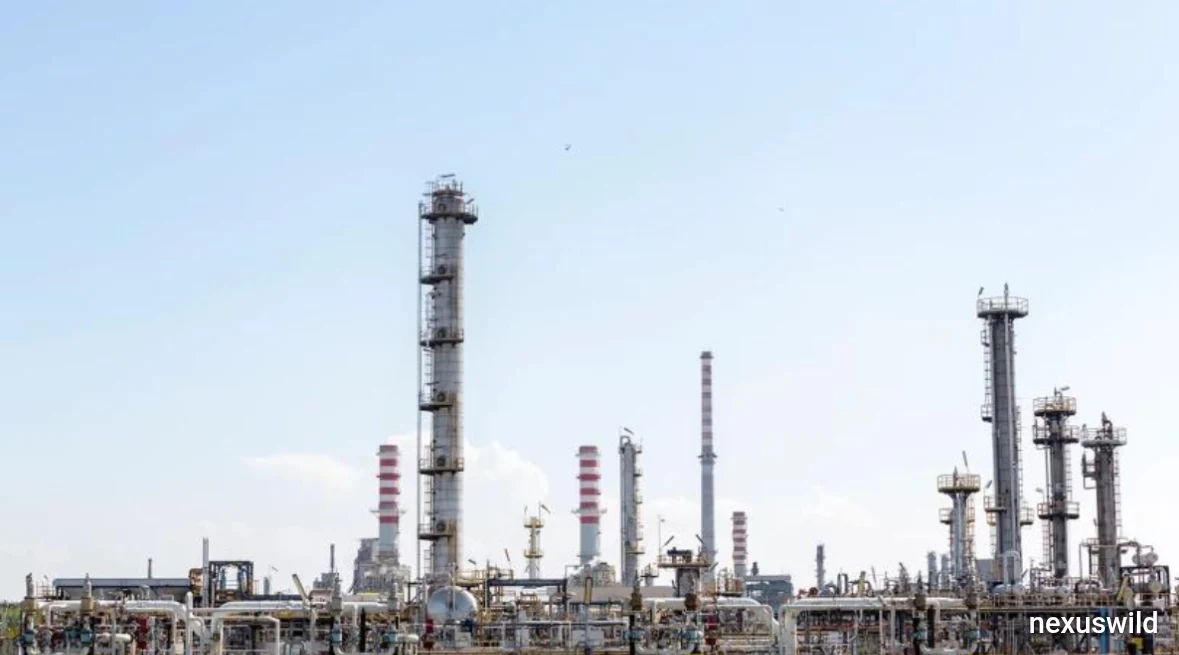
The European Commission separately launched a high-level dialogue with the European oil-refining industry on October 28. The discussions focused on how to optimise existing refining capacity, strengthen fuel supply chains and ensure that production can respond to higher demand or crisis conditions.
The Commission said participants discussed short-term disruption as well as the longer-term competitiveness and transformation of European refineries. Commissioner Dan Jørgensen said the Commission would work with the sector on a joint roadmap and explore how European refining output could be increased.
This initiative is distinct from the ministers’ discussion of network charges. The Commission’s announcement describes a dialogue and work ahead, not a final binding decision requiring refineries to increase output by a specified amount. "European Commission announcement" (https://energy.ec.europa.eu/news/commission-launches-high-level-dialogue-european-oil-refining-sector-2026-10-28_en)
Network charges and affordability remain on the agenda
Electricity network charges were among the policy topics listed for the October 29 council meeting. Such charges help finance the operation and development of electricity grids, including infrastructure needed to connect power generation and deliver electricity to consumers.
Any reduction or restructuring could affect bills, but it would also have implications for network operators’ revenues and future investment. The details matter: network charges are not the same as wholesale electricity prices, and changes to them can involve national regulators, tariff design and EU rules.
The meeting’s agenda also referred to energy security and possible collective action to ensure diesel supply stability. However, the agenda alone does not establish that ministers agreed to suspend fuel excise taxes through early 2027. That claim would require a specific official announcement or policy document.
What the winter outlook means for consumers and industry
The combination of lower storage levels than last year and elevated wholesale prices increases the importance of reliable supply and demand management as winter approaches. A colder-than-expected season could increase heating demand and place additional pressure on inventories. Conversely, milder weather, strong LNG deliveries and lower consumption could ease the market.
For households, the near-term effect will depend on national support measures, retail contracts and how wholesale costs feed into bills. For businesses, sustained energy-price pressure could weigh on margins and investment plans, particularly in sectors that use large amounts of gas or electricity.
The EU discussions show that energy affordability and security remain connected policy priorities. But the next stage will be defined by concrete measures, not by the fact that ministers debated them. Consumers and businesses will need to watch for official decisions on network charges, national support programmes, refinery measures and winter supply coordination.
For now, Europe faces a tighter energy-market backdrop than a year earlier, but the storage figure and price spike should be understood as risk indicators—not proof of an imminent EU-wide shortage or a newly adopted relief package.
Nexuswild welcomes factual corrections. Email contact@nexuswild.com with evidence and the article URL.