
Global logistics companies are facing a complicated operating environment as fluctuations in energy prices begin influencing transportation costs shipping schedules and supply-chain decisions.
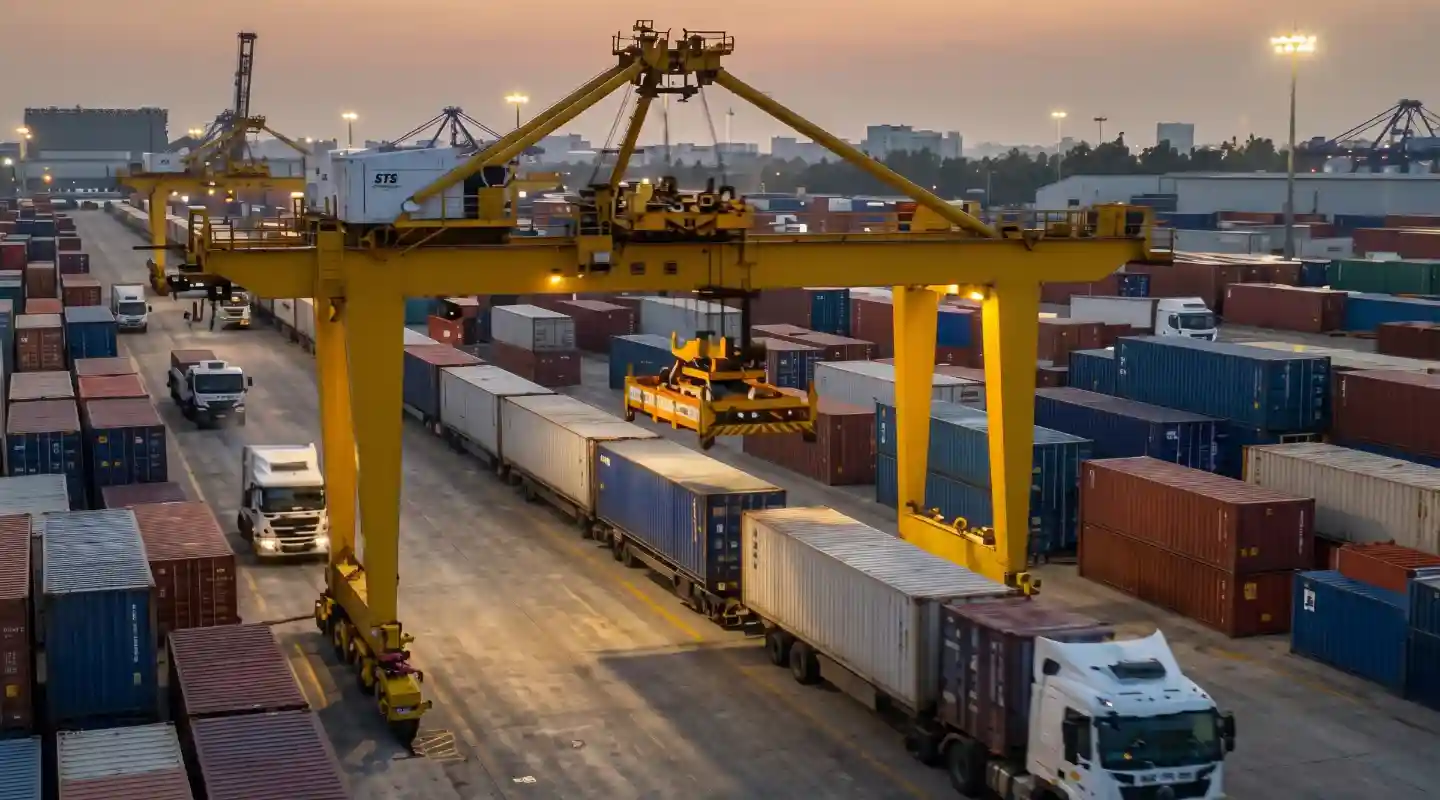
International logistics depends on a network of container vessels oil tankers, cargo aircraft, trucks, ports and distribution facilities. Fuel is essential across every part of this system. When energy prices increase or supplies become difficult to access logistics companies face expenses that can eventually affect manufacturers, retailers and consumers.
The disruption surrounding the Strait of Hormuz has made these challenges more visible during 2026. The escalation of conflict involving Iran has affected shipping activity through an international energy corridor creating uncertainty around fuel availability and maritime operations.
Shipping companies are consequently looking beyond cost-based route planning. They must consider security risks, insurance expenses, bunker fuel availability, port congestion and the reliability of transportation routes.
The effect is not limited to vessels travelling directly through the region. Changes in shipping patterns can influence vessel availability, container positioning and delivery schedules across other trade routes.
According to Drewrys November 2026 Container Shipping Market Signals assessment average global container freight rates reached $4,457 per 40-foot container in October. Although this was 0.5% lower than September average fuel costs increased 6% to $741 in the assessment.
These figures illustrate a distinction: freight rates do not always rise at the same speed as fuel expenses. Shipping companies may face operating costs even when market competition limits their ability to increase customer prices.
The industry is therefore reassessing how to maintain deliveries while protecting profitability.
Strait of Hormuz Disruption Forces Changes to Shipping Networks
The Strait of Hormuz is one of the important maritime passages for international energy trade. Disruptions in the area can affect oil, refined petroleum products and other cargo moving between the Persian Gulf and international markets.
The current security situation has created operational challenges for shipping companies serving Gulf destinations.
Maersk introduced emergency measures in March 2026 after reporting that vessels could not safely transit the Strait of Hormuz. The company announced routing arrangements, emergency freight increases and restrictions on certain new bookings serving Upper Gulf markets.
The affected destinations included the United Arab Emirates, Bahrain, Qatar, Iraq, Kuwait and selected ports in Saudi Arabia.
These arrangements demonstrate how a regional security problem can force logistics providers to modify services across networks.
Foros Middle East logistics update, last revised on November 3 reported that the Strait remained affected by disruption. It also highlighted restrictions on insurance availability in parts of the Persian Gulf and Gulf of Oman.
For logistics providers the problem involves more than finding another route. Alternative gateways may have limited handling capacity, different customs procedures and additional inland transportation requirements.
Companies transporting cargo to Gulf destinations have therefore been using ports and land-based connections to maintain supply flows.
These arrangements can preserve trade continuity. They also increase handling, storage and transportation expenses.
Shipping Companies Introduce Additional Fuel Surcharges
Rising marine fuel expenses have encouraged shipping companies to introduce charges for customers.
These charges are generally applied through bunker adjustment factors, emergency bunker surcharges or fuel recovery mechanisms. They are intended to help carriers recover changes in fuel availability, purchasing costs and fuel quality requirements.
Maersk introduced an Emergency Bunker Surcharge in March 2026 explaining that existing fuel-recovery mechanisms did not fully cover the impact of changing supply conditions and prices.
The company stated that the surcharge would apply across trades with different amounts depending on container type and direction of transportation.
CMA CGM also revised its emergency fuel surcharge in September. Its announcement stated that renewed tensions around the Strait of Hormuz and Bab el-Mandeb had increased bunker prices across regions.
For loading dates from October 1 the carrier announced a surcharge of $265 per twenty-foot unit (TEU) for dry containers on head-haul routes and $320 for refrigerated containers. Lower rates applied to haul and intra-regional movements.
These charges illustrate how carriers are adjusting pricing mechanisms to respond to energy-market uncertainty.
However additional surcharges do not always translate directly into profits. Shipping companies must still pay for fuel, vessel operations, insurance, port services and other expenses.
For importers and exporters the changes create a complicated cost structure. A freight quotation that initially appears competitive may become more expensive after fuel-related and emergency charges are included.
Businesses are therefore paying attention to contract conditions, surcharge review periods and the difference between base freight rates and additional charges.
Alternative Routes Become a Strategic Priority
Route diversification is becoming one of the important responses to shipping disruption.
When a major maritime passage becomes unsafe or unreliable vessels may need to travel distances through alternative routes. The Cape of Good Hope for example has become an alternative for ships avoiding the Red Sea and Suez Canal.
Longer voyages increase fuel consumption. Occupy vessels for additional days. This reduces the amount of capacity available for other shipments even when the total number of ships in the global fleet remains unchanged.
Logistics companies must also consider whether alternative ports can handle the cargo.
Foros November 3 operational update identified Khor Fakkan and Fujairah as gateways for Upper Gulf cargo. However congestion at both ports was creating delays.
As of October 30 average vessel waiting times were seven days at Khor Fakkan and nine days at Fujairah. Transfers from these gateways to Jebel Ali, Sharjah and Abu Dhabi were taking 12 to 15 days compared with around five days previously.
Such changes show why a route that appears shorter may not necessarily provide the fastest or cheapest delivery option.
Companies need to compare vessel transit time, port waiting time, inland transportation, customs handling and cargo insurance before selecting an alternative.
For logistics networks route flexibility is increasingly becoming a core operational capability rather than an emergency measure.
Suez Canal Developments Could Change the Shipping Outlook
The future use of the Suez Canal is another factor influencing international shipping strategies.
The canal provides a connection between Asia and Europe compared with the longer route around the Cape of Good Hope.
During periods of security risk in the Red Sea many shipping companies diverted vessels around southern Africa. Although this offered an alternative to affected waters it increased voyage times, fuel requirements and the number of vessels needed to maintain existing schedules.
Recently shipping activity through the Suez Canal has begun increasing.
Drewry reported on October 29 that 62 vessels had transited the canal during the week the highest weekly figure recorded during 2026 at that point.
However traffic through the Strait of Hormuz remained extremely restricted with two vessels transiting during the same week.
This represents a recovery across different shipping corridors. Improving Suez activity does not mean that the wider Middle East shipping situation has returned to normal.
DHLs third-quarter ocean freight review also highlighted an increase in Suez Canal usage. It reported that the routes share of east-west traffic had increased from approximately 3% in February to around 30% during the third quarter.
A sustained return to the Suez route could reduce journey times between Asia and Europe release shipping capacity and lower fuel consumption per voyage.
However logistics companies must consider security conditions and service reliability before returning to avoided routes.
The decision is therefore likely to depend on economics as well as risk assessments.
Freight Rates and Delivery Reliability Remain Uncertain
Higher operating costs are not the concern facing international logistics companies. Delivery reliability has also become a challenge.
A shipment can be delayed even when sufficient vessel capacity is technically available. Longer routes, port congestion, missed connections and changes in shipping schedules can all affect the time required to move goods.
Drewrys November 2026 market assessment recorded schedule reliability of approximately 40% for September indicating that a substantial proportion of container services continued to operate outside their scheduled arrival windows.
The same assessment projected container shipping demand growth of 3.1% for 2026 while offered capacity was approximately 10% higher year to date compared with the previous year.
This suggests that freight markets are being influenced by both cost pressures and available capacity.
When there are vessels available than the market requires on particular trade routes carriers may struggle to pass every cost increase on to customers.
Some respond by cancelling sailings adjusting schedules or reducing deployed capacity to maintain utilisation.
DHLs October 22 assessment highlighted that global schedule adherence during the quarter had fallen to its lowest level since 2022. It also reported that 3.8 million twenty-foot equivalent units of container capacity had been caught in port congestion during the period.
These operational problems can create expenses for manufacturers and retailers particularly when delayed goods affect production schedules or stock availability.
For logistics businesses maintaining delivery performance is becoming just as important as securing competitive transportation prices.
Air Freight and Road Transport Also Face Higher Costs
Energy market volatility affects more, than shipping.
Air freight companies are exposed to aviation fuel prices while road transportation providers must manage diesel expenses. Both sectors can introduce fuel surcharges. Adjust prices when operating costs change.
Air freight is very important for things that're valuable need to be delivered quickly and can go bad easily. Things like electronics, medicines and special parts might need to be delivered than ships can do.
Air cargo usually costs more than shipping by sea. This makes it hard for companies to use air transport for a lot of goods that usually go by ship.
When big airports in the Middle East have problems there is space for cargo. This can make it harder to move goods between Asia, Europe and Africa.
Road transport also has a problem. When gas prices go up it costs more to move containers from ports to warehouses, centers and factories.
This can get really big when there are problems with shipping. Then goods might stay in storage longer. Need more trips on the road.
For companies that handle shipping managing the trip is very important. A company might find a way to ship by sea but still pay more because of traffic, extra gas costs or delays at places where goods are sorted.
This is making shipping companies try to make plans that use ships, trucks, trains and planes together.
Logistics Companies Are Investing in Supply-Chain Flexibility
The current situation is making logistics companies and their customers think again about how they buy shipping services.
In the past many businesses only cared about the price and used the same routes.. When there are problems cheap shipping doesn't always mean it will arrive on time.
Companies are now looking at ports, different ship companies and more flexible deals.
They are also watching gas costs separately from the shipping cost. They are checking how fast the ships can change prices when the market is unstable.
Technology is helping in this. Systems that track shipments in time and predict problems can help businesses spot delays find other routes and tell customers about changes.
Taking care of inventory is also more important now.
Some makers are keeping supplies on hand for important materials. Others are getting supplies from places to avoid problems with certain roads.
These steps can cost more in the term but they might stop big problems with making products.
Not every company can afford to keep a lot of supplies or use many different ways to ship. Small companies might have a time with higher shipping costs.
Companies that can give clear information have space for goods and use different ways to ship may have an advantage.
What Happens Next for Global Logistics Companies?
The way global shipping moves will depend a lot on how energy costs how safe the sea is and how much reliable transport there is.
If things improve near the Strait of Hormuz there could be pressure on fuel and shipping in the area. Using the Suez Canal more could also make some trips from Asia to Europe shorter. Help ships carry more.
Shipping companies will still check if insurance is available how much gas costs and how good alternative ports are before changing their usual routes.
Prices for shipping will still matter a lot. If gas costs stay high ships might keep using fees.. How much those extra costs can be passed on to customers will depend on how many ships are available and how much people want to use them.
Spending on ways to track routes using different kinds of transport and having more flexible shipping deals will probably stay important.
For makers and stores being able to plan around problems might be more important than getting the cheapest shipping price.
Logistics companies are looking at their shipping plans again as energy prices and problems in politics change how much it costs and how reliable shipping is.
Higher gas costs worries about insurance and problems near the Strait of Hormuz have made ships add charges change routes and use other places to start their trips. At the time more ships going through the Suez Canal could help bring back some shipping space and make trips faster but security issues are still a problem.
This affects all kinds of shipping from ships to planes to trucks. It affects makers those who send and receive goods, stores and people.
The future of shipping will depend on how well companies balance the cost of moving goods how reliable the delivery is and how easy it is to change plans in a world where energy prices are not steady.
Companies that use routes have better ways to see what is happening in the supply chain and have plans that can change may be better, at dealing with future problems.
Nexuswild welcomes factual corrections. Email contact@nexuswild.com with evidence and the article URL.