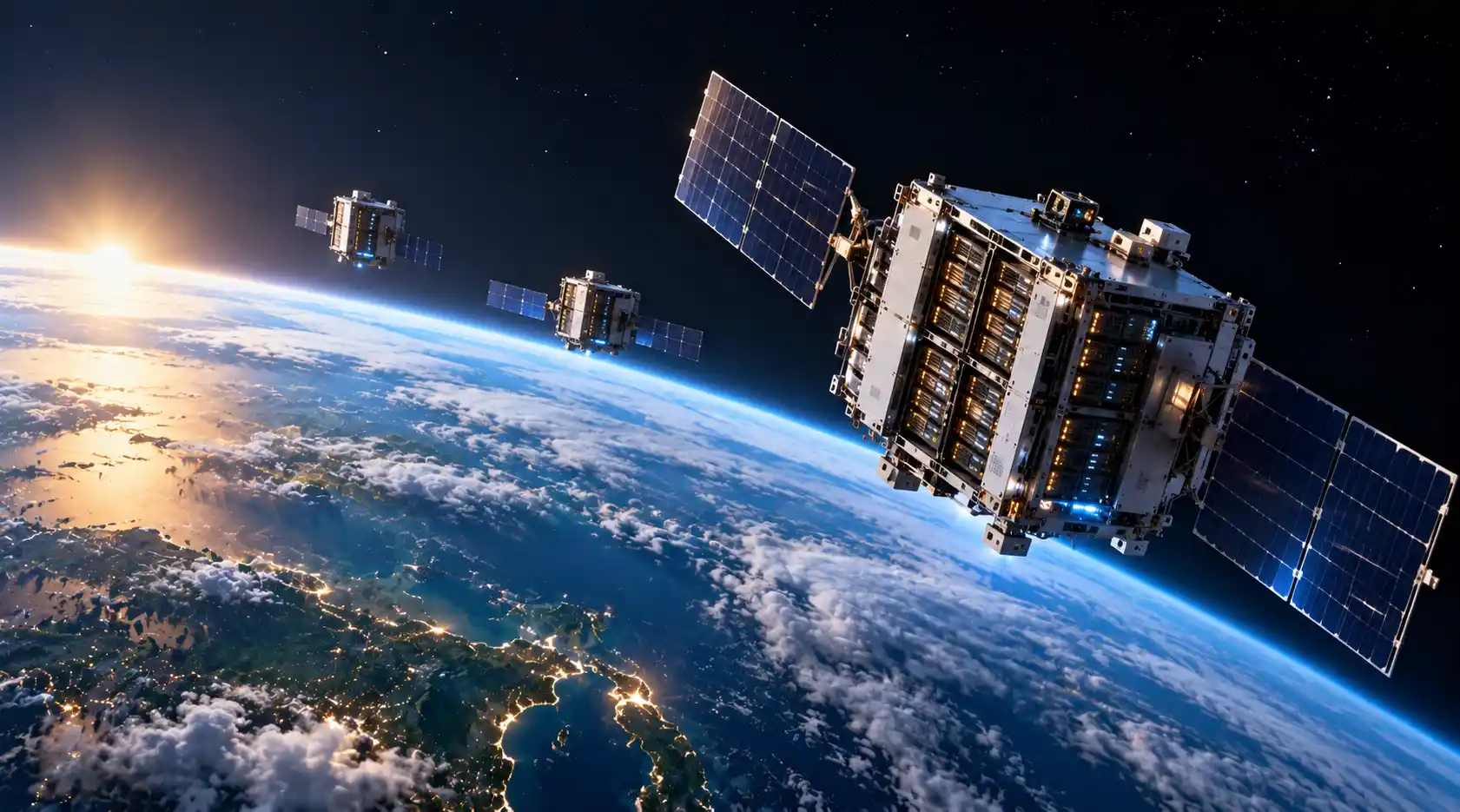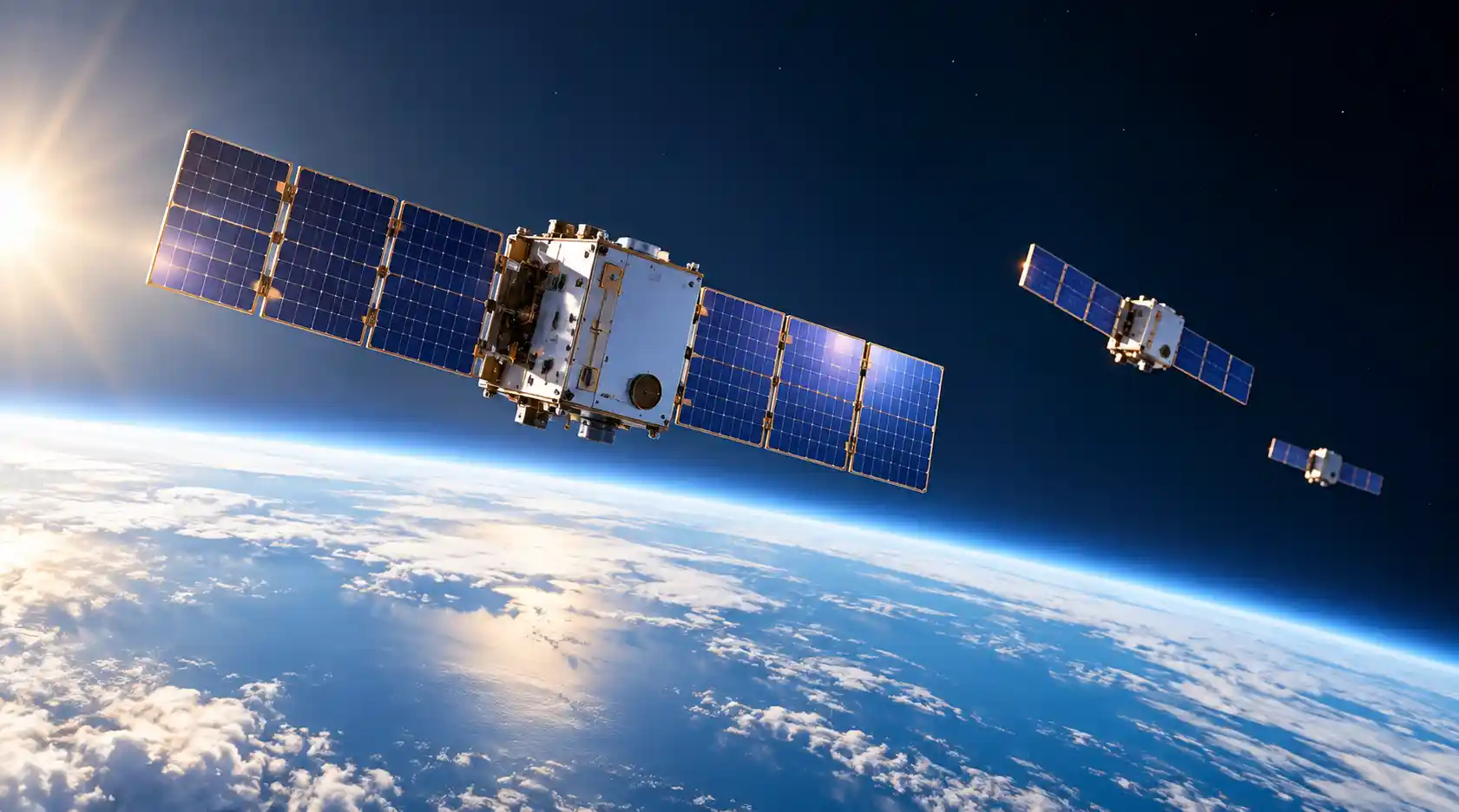

Google is about to find out how its AI chips handle the trip to space. In a blog post published September 24, 2026, the company said it is preparing to launch a prototype satellite carrying its Tensor Processing Units, or TPUs, to test whether the hardware can physically survive and function in orbit. It's an early, deliberately modest step, not the debut of an operational data center above Earth.
What Project Suncatcher Is
Project Suncatcher, first announced in 2025, is Google's long-term research effort exploring whether space could eventually host scalable machine-learning infrastructure. The appeal is mostly about power. In low Earth orbit, satellites can access nearly constant sunlight, and Google says that can generate up to eight times more solar power than an equivalent setup on Earth. The longer-term idea, still very much in research territory, is that clusters of satellites carrying many TPU chips each could eventually work together to handle larger AI workloads in orbit.
The First Orbital Test
This initial mission involves a single prototype satellite flying aboard the upcoming Transporter-18 rideshare launch with SpaceX, developed in partnership with the Earth-imaging company Planet. Google said in its post that the satellite was expected to launch "next week," meaning around early October 2026 based on the blog's publication date. The goal isn't performance benchmarking; it's simpler than that. Google wants in-orbit data on how its TPUs cope with the physical stress of launch and the radiation and thermal extremes of space, confirming or correcting what its engineers have already learned on the ground.
What Ground Testing Has Already Shown
Before committing hardware to an actual launch, Google ran extensive testing on Earth, and it's careful to describe these as its own internal, preliminary results rather than independently verified findings. A rocket ride to low Earth orbit takes roughly ten minutes but subjects a spacecraft to sustained acceleration up to 10 times the force of gravity, with individual components like chips experiencing spikes of 50 to 100 g. Google said it shook a satellite on all three axes to mimic those launch frequencies, and the hardware held up.
Radiation posed a separate concern. Google tested its Trillium TPUs in a proton beam facility at UC Davis's Crocker Nuclear Laboratory while running live AI workloads, watching for errors like bit flips. According to the company, initial results showed the chips held up well, tolerating a radiation dose greater than what they would receive over a five-year space mission. Google is explicit that some things simply can't be fully tested on the ground, which is the whole reason for sending hardware into actual orbit.
Cooling Without Air
Heat management is arguably the trickier problem. TPUs generate substantial heat in a small footprint, and on Earth that heat is usually carried away by airflow. There's no air in space, so heat can only be shed through radiators. Google says it's testing a combination of heat pipes and radiators, already validated inside a thermal vacuum chamber that simulates both the vacuum and temperature extremes of orbit. The upcoming launch will show how that system performs in the real environment it was designed for, with Google expecting to refine the design based on what it learns.
Linking Satellites, and What's Still Ahead
Google's longer-term vision involves satellites carrying dozens of TPUs apiece, communicating with each other through high-bandwidth laser links rather than radio. That's a harder engineering problem than it sounds: existing laser communication systems are generally built for low bandwidth over long distances, while Google needs the opposite, high bandwidth over very short distances, with a level of precision the company compares to hitting a coin-sized target from miles away while both points are moving. That capability won't be tested on this first single-satellite mission. Google says it plans to test satellite-to-satellite laser links with a two-satellite mission in 2027.
Google has been careful to frame all of this as early-stage research rather than a path to a specific product. As the company put it in its own post, this first launch is about seeing what works and identifying points of failure, with those findings feeding into future missions rather than an imminent space-based service.
Further reading and useful links
Reader questions
Frequently asked questions
What is Google's Project Suncatcher?
Project Suncatcher is Google's long-term research initiative exploring whether space can host scalable machine-learning infrastructure powered by abundant solar energy in low Earth orbit.
What hardware is being tested on Google's first orbital mission?
Google is sending a prototype satellite carrying its Tensor Processing Units (TPUs) into space to test how the hardware survives launch stresses, radiation, and thermal extremes.
When and how is the prototype satellite launching?
The prototype satellite, developed in partnership with Planet, is scheduled to launch aboard SpaceX's upcoming Transporter-18 rideshare mission in early October 2026.
What future milestones are planned for Project Suncatcher?
After the initial single-satellite survival test, Google plans to test satellite-to-satellite high-bandwidth laser links using a two-satellite mission in 2027.
Nexuswild welcomes factual corrections. Email [email protected] with evidence and the article URL.