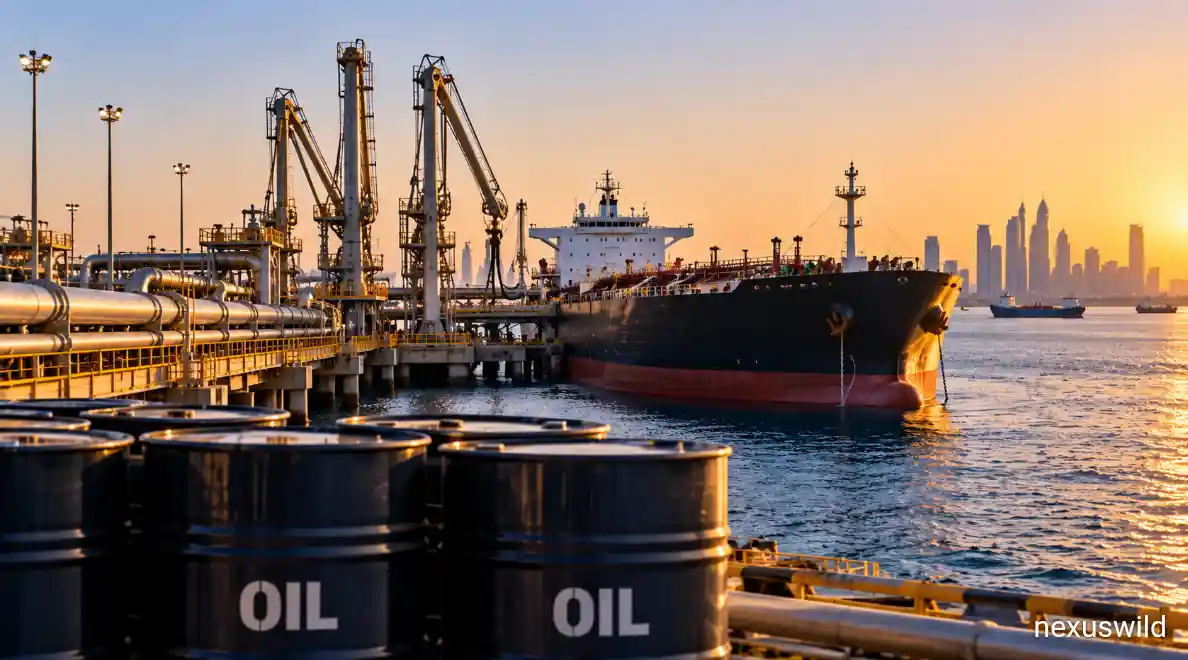

Oil exports from Gulf producers recovered sharply in September, reaching about 81% of their pre-war level, as Saudi Arabia and other exporters restored crude shipments despite continuing security and logistical disruptions across the Middle East.
Exports of crude oil, condensate and refined petroleum products, including liquefied petroleum gas, from Gulf countries excluding Iran averaged roughly 19.2 million barrels per day during September, according to Vortexa data cited in current market reporting.
That compares with about 23.6 million barrels per day before the regional conflict began in February, putting overall flows back above four-fifths of their previous level.
The recovery, however, has not been evenly distributed across the energy market. Crude and condensate exports have returned much more rapidly than shipments of diesel, jet fuel and other refined products, leaving fuel supply considerably tighter than headline oil-flow figures might suggest.
Crude Exports Lead the Recovery
Crude oil and condensate exports from the Gulf recovered to approximately 16.3 million barrels per day in September, equivalent to about 91% of pre-war levels, according to Vortexa data.
Kpler separately estimated Gulf oil exports at about 18.6 million barrels per day for the month, reflecting methodological differences between shipping-data providers.
Saudi Arabia accounted for a significant portion of the improvement.
Kpler data showed Saudi crude and condensate exports increasing sharply in September, while shipments from the United Arab Emirates and Iraq also strengthened.
Reuters reported that Middle Eastern crude exports exceeded pre-war levels on several days late in September as producers adapted to disruptions around the Strait of Hormuz and made greater use of alternative shipping arrangements.
Gulf Producers Have Adapted Their Export Routes
The recovery has been possible partly because exporters have adjusted the way crude reaches international markets.
Saudi Arabia has used both Gulf and Red Sea terminals, while regional producers have increased use of pipelines, alternative loading points and ship-to-ship transfers.
Reuters reported that flows through and around the Strait of Hormuz climbed substantially in September despite continued security threats.
Saudi Aramco had already resumed loading some tankers at terminals inside the Strait in August after earlier disruptions reduced normal shipping activity.
These adaptations have improved crude availability, but they have also increased logistical complexity and costs.
Refined-Fuel Supply Remains Much Weaker
The stronger crude recovery does not mean global fuel markets have returned to normal.
Refined-product exports from the region, including LPG, remained at only about 60% of their pre-war level in September, according to Vortexa data.
Before the conflict, those flows were approximately 7.3 million barrels per day.
Diesel and jet fuel have been particularly affected.
Separate reporting on Strait of Hormuz flows indicated that diesel shipments remained far below their earlier levels even as crude exports recovered, contributing to unusually tight refining margins and higher product prices.
This distinction is important because crude oil and finished fuels serve different parts of the supply chain.
More crude helps refiners obtain feedstock, but it cannot immediately replace lost diesel, gasoline or jet-fuel exports when refinery capacity, transport routes or operating rates remain constrained.
Why Fuel Markets Are Still Tight
Several factors continue to restrict refined-product availability.
Some regional refinery operations have been disrupted by the conflict, while longer shipping routes and higher insurance costs have raised the expense of moving fuel to consuming markets.
Russia has also faced damage to refining infrastructure following attacks, adding pressure to diesel and other middle-distillate markets outside the Gulf.
China’s suspension of most October fuel exports outside Hong Kong and Macau has created an additional constraint for Asian buyers, removing another source of gasoline, diesel and jet fuel from international markets.
The result is a market where crude availability has improved faster than the supply of finished products.
Shipping and Insurance Costs Remain Elevated
Oil-market pressure is increasingly being driven by logistics rather than only by the physical availability of crude.
Reuters analysis reported that tanker costs on some Middle East-to-Asia routes have risen dramatically since the conflict disrupted conventional shipping patterns.
Higher freight rates, war-risk insurance and complex routing increase the delivered cost of oil even when producers are able to maintain export volumes.
That helps explain why benchmark oil prices remain high despite the recovery in Gulf shipments.
The logistical system can move substantial volumes, but doing so is more expensive and less efficient than before the conflict.
Oil Prices Remain Near $100
Brent crude settled at $100.32 a barrel on October 5, down $1.93 on the day as markets reacted to higher Middle Eastern exports and plans by the Group of Seven to release emergency oil stocks.
West Texas Intermediate settled at $89.43 a barrel.
Prices remained elevated compared with pre-conflict levels, reflecting continued geopolitical risk, depleted inventories and constraints in refined-product supply.
On October 6, Brent traded around $99.49 while WTI stood near $88.43 as stronger Gulf exports continued to ease some fears of an immediate crude shortage.
Those prices are market observations, not forecasts of where oil will trade next.
G7 Emergency Stocks Add Short-Term Supply
The Group of Seven has also agreed to release emergency crude and fuel inventories to ease pressure on global markets.
The planned release totals about 100 million barrels, according to Reuters reporting, and includes supplies intended to relieve tight diesel markets.
Emergency stock releases can temporarily increase available supply, but they do not repair refinery capacity or remove shipping bottlenecks.
They also reduce strategic inventories, meaning they are generally considered temporary measures rather than substitutes for stable commercial supply.
Global Oil Inventories Remain Low
Another source of market concern is the level of global inventories.
Saudi Aramco Chief Executive Amin Nasser warned that commercial oil stocks have been heavily depleted during the conflict and could take considerable time to rebuild even if supply conditions normalize.
Low inventories leave markets with less protection against fresh refinery outages, pipeline disruptions or tanker attacks.
This helps explain why prices can remain sensitive to geopolitical developments even as reported export volumes improve.
Security Risks Have Not Disappeared
The Gulf export recovery is taking place in an environment of continuing military and maritime risk.
Reuters reported at least seven tanker attacks around the region in the first week of October, even as September export volumes strengthened.
Attacks on Saudi infrastructure and continued conflict involving Iran and regional forces have also maintained a geopolitical premium in oil prices.
The current export volumes therefore demonstrate that producers and shipping companies have adapted to disruption. They do not indicate that transportation routes have become secure again.
OPEC+ Keeps November Targets Steady
OPEC+ agreed on October 4 to leave its November production targets unchanged.
The decision reflected expectations that producers would avoid another formal change in quotas while actual exports from parts of the Middle East remained constrained by conflict and logistics.
Production targets and actual exports are not the same.
A producer can have permission to pump a certain amount of crude but still struggle to ship it because of damaged infrastructure, tanker availability or security restrictions.
That distinction has become particularly important during the current Middle East disruption.
Crude Recovery Does Not Equal Full Energy-Market Normalization
The headline 81% figure can give an incomplete picture if it is interpreted as evidence that the regional energy market has largely normalized.
Overall Gulf exports have recovered significantly, and crude shipments in particular are close to earlier levels.
But refined-product supply, shipping costs, inventories and security conditions remain materially different from before the conflict.
That is why diesel and jet-fuel markets can stay tight even as crude tankers leave Gulf ports in much larger numbers.
Conclusion
Gulf oil exports staged a strong recovery in September, with shipments of crude, condensate and refined products excluding Iran averaging about 19.2 million barrels per day, or roughly 81% of the pre-war level of 23.6 million bpd.
The improvement has been driven mainly by crude.
Crude and condensate exports recovered to about 91% of pre-war levels, while refined-product shipments remained closer to 60%, leaving diesel, jet fuel and other fuel markets significantly tighter.
Higher tanker costs, refinery disruptions, low global inventories, China's reduction in fuel exports and continuing security risks are preventing the improvement in crude flows from translating into full normalization across energy markets.
The September data therefore show substantial resilience in Gulf oil exports, but not a complete return to pre-war supply conditions.
Nexuswild welcomes factual corrections. Email contact@nexuswild.com with evidence and the article URL.