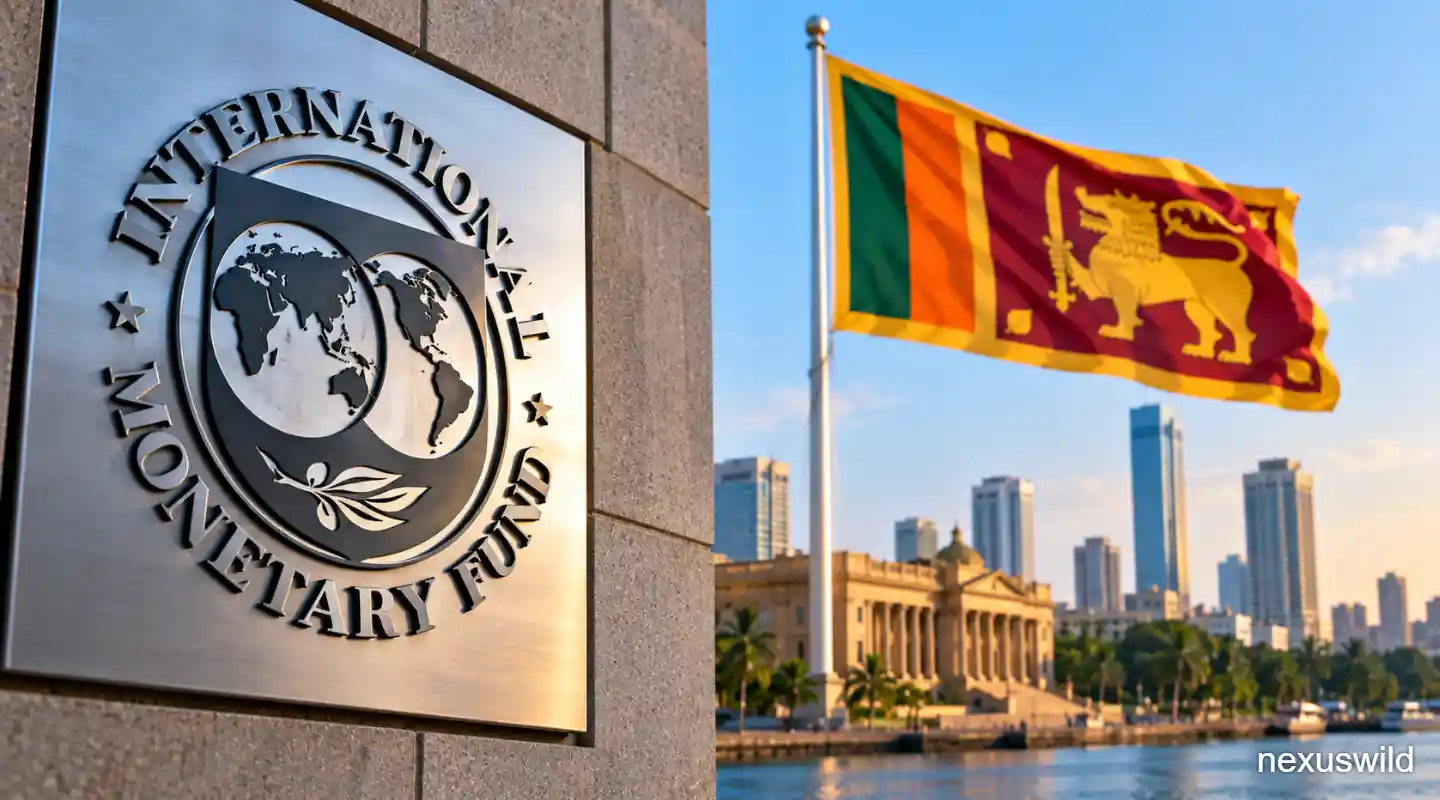

The International Monetary Fund has reached a staff-level agreement with Sri Lanka on the seventh review of the country’s four-year Extended Fund Facility, a step that could make approximately $345 million in new financing available if the IMF Executive Board gives final approval.
The agreement covers SDR 254 million, equivalent to about $345 million at current IMF conversion estimates. If approved, total IMF financial support disbursed under the current programme would rise to approximately SDR 2.032 billion, or about $2.7 billion.
The agreement is not the same as final approval. IMF staff have completed their policy-level negotiations with Sri Lankan authorities, but the Executive Board must still review the programme before the funds can be released.
Board Approval Depends on the 2027 Budget
The IMF said completion of the seventh review is conditional on two major requirements.
First, Sri Lanka’s finance minister must present a 2027 budget to Parliament that is consistent with the parameters of the IMF programme. Second, the Fund must complete a financing-assurances review, which will confirm financing commitments from multilateral partners and assess whether sufficient progress has been made with Sri Lanka’s debt restructuring.
Those conditions mean the $345 million should be described as potential access to financing rather than an approved or completed disbursement.
The IMF-supported programme was originally approved in March 2023 for SDR 2.3 billion, roughly $3 billion, following Sri Lanka’s severe balance-of-payments and sovereign-debt crisis.
Sri Lanka’s Economy Continues to Recover
The IMF said Sri Lanka’s economy has continued to recover despite a series of external shocks.
Economic activity expanded 4.2% year on year in the second quarter of 2026, marking an eleventh consecutive quarter of growth, according to the IMF’s latest review statement. Headline inflation stood at 8% in September, while gross official foreign-exchange reserves had risen to $6.9 billion by the end of August.
The Fund also said Sri Lanka’s banking system remained well capitalized and profitable and described fiscal performance during the first half of 2026 as strong.
These figures show a continued improvement from the conditions that led to the 2022 economic crisis, when severe foreign-currency shortages disrupted imports of fuel, medicine and other essential goods.
The IMF’s assessment, however, remains cautious. Economic recovery does not mean the vulnerabilities that produced the crisis have disappeared.
Debt Restructuring Is Largely Completed
Sri Lanka’s sovereign-debt restructuring has been one of the central requirements of the IMF programme.
The latest IMF statement said the restructuring process is largely completed, following several rounds of negotiations with external creditors and domestic debt holders.
Earlier IMF reviews had described the process as nearing completion, with progress including restructuring of external sovereign obligations and agreements involving bilateral creditors. The Fund has repeatedly linked continued programme support to restoring public debt sustainability.
The financing-assurances review required before the seventh review reaches the Executive Board will again assess whether the remaining debt process is sufficiently advanced and whether Sri Lanka has adequate financing commitments from international partners.
That review is procedural but important because IMF lending rules require reasonable assurance that a programme is adequately financed.
The 2027 Budget Is a Key Test
Fiscal policy remains central to Sri Lanka’s IMF programme.
Previous programme documents set a medium-term primary surplus target of 2.3% of GDP in 2027 and called for the 2027 Appropriation Bill to remain consistent with agreed fiscal parameters.
The government has also committed to strengthening tax administration, maintaining energy pricing that reflects costs and improving public financial management.
The requirement that the 2027 budget comply with programme parameters means the Fund will examine whether planned taxes, spending and financing are consistent with Sri Lanka’s fiscal and debt objectives.
It does not mean that every individual budget policy is prescribed by the IMF. Sri Lankan authorities retain responsibility for designing the budget within the overall targets agreed under the programme.
Middle East Conflict Remains a Major Risk
The IMF identified the continuing conflict in the Middle East as one of the principal downside risks to Sri Lanka’s recovery.
Sri Lanka imports all of its fuel, leaving the economy particularly exposed to disruptions in international energy markets. The Fund said uncertainty over the duration and intensity of the Middle East war could place additional pressure on the economy.
Energy prices remain elevated globally. Brent crude was trading above $100 a barrel in early October as markets continued to assess supply disruptions, shipping risks and conflict across the region.
Higher oil prices can affect Sri Lanka through several channels, including the cost of fuel imports, inflation, transport costs, foreign-exchange demand and the government’s fiscal position.
The IMF has therefore urged Sri Lanka to allow domestic fuel prices to adjust in line with international prices while continuing to protect vulnerable households through targeted support.
Global Trade Uncertainty Adds Another Challenge
The IMF also pointed to global trade-policy uncertainty as a risk to Sri Lanka’s outlook.
That matters because Sri Lanka depends on exports, tourism, remittances and international capital flows for foreign-exchange earnings.
A slowdown in major trading partners, changes in tariffs or weaker global demand could affect industries including apparel and manufacturing, while financial-market volatility could complicate external financing conditions.
The IMF has not said that those risks will necessarily derail the recovery. It has instead described the balance of risks as tilted to the downside and argued that continued reforms are necessary to preserve the progress made since 2022.
Energy Pricing Remains Part of the Programme
Cost-recovery fuel and electricity pricing has been a recurring feature of the IMF programme.
Earlier in 2026, restoring cost-reflective energy pricing was a condition for completion of the combined fifth and sixth reviews.
The policy is intended to reduce the risk that state-owned utilities accumulate large losses when international energy costs rise.
The latest IMF assessment again emphasized the importance of maintaining that approach, particularly while the Middle East conflict is creating uncertainty around oil and fuel prices.
For households, that can mean domestic prices respond more directly to changes in global energy markets, although the programme also calls for targeted protection for lower-income groups.
IMF Funding Would Reach About $2.7 Billion
Sri Lanka has already received approximately $2.4 billion under the programme following completion of the combined fifth and sixth reviews in May 2026.
The additional SDR 254 million associated with the seventh review would raise cumulative disbursements to approximately $2.7 billion.
That would leave a final scheduled review under the four-year arrangement, subject to continued compliance with programme conditions.
IMF financing serves partly to support Sri Lanka’s external reserves and provide confidence while broader economic reforms and debt restructuring continue.
It is not a substitute for sustainable government revenues, export earnings or long-term private investment.
Staff Agreement Is an Intermediate Step
The distinction between a staff-level agreement and final IMF approval is significant.
A staff-level agreement means IMF officials and Sri Lankan authorities have agreed on the policies they believe are sufficient to complete the review.
The IMF Executive Board has not yet approved that assessment.
Before Board consideration, programme conditions must be completed, including presentation of the 2027 budget in line with agreed parameters and completion of the financing-assurances review.
Only after the Board completes the review would Sri Lanka gain access to the additional SDR 254 million.
Conclusion
Sri Lanka has moved closer to receiving another tranche of financing under its IMF-supported economic programme after reaching a staff-level agreement on the seventh EFF review.
The agreement could provide SDR 254 million, or approximately $345 million, taking total programme disbursements to about $2.7 billion if the IMF Executive Board approves the review.
Approval remains conditional on Sri Lanka presenting a 2027 budget consistent with programme parameters and on completion of the IMF’s financing-assurances review, including an assessment of progress in debt restructuring.
Sri Lanka’s economy continues to expand, reserves have recovered and the IMF says debt restructuring is largely complete. At the same time, the country remains exposed to external shocks, particularly global trade uncertainty, the continuing Middle East conflict and elevated energy prices.
The latest agreement therefore marks further progress in Sri Lanka’s recovery programme, but it is an intermediate step. The additional IMF financing has not yet been approved or disbursed.
Nexuswild welcomes factual corrections. Email contact@nexuswild.com with evidence and the article URL.