
Kawasaki Heavy Industries Signs MoU for Up to ₹800 Crore Karnataka Expansion, Targets 600 Manufacturing Jobs
Japan's Kawasaki Heavy Industries has signed a memorandum of understanding with the Karnataka government to invest up to ₹800 crore over 10 years in expanding Wipro Kawasaki Precision Machinery's manufacturing operations. The proposed Harohalli project will produce hydraulic pumps, swing motors and related construction-equipment components, with around 600 manufacturing jobs expected.
Japan's Kawasaki Heavy Industries has announced a major proposed manufacturing expansion in Karnataka, strengthening the state's position as a destination for Japanese industrial investment.
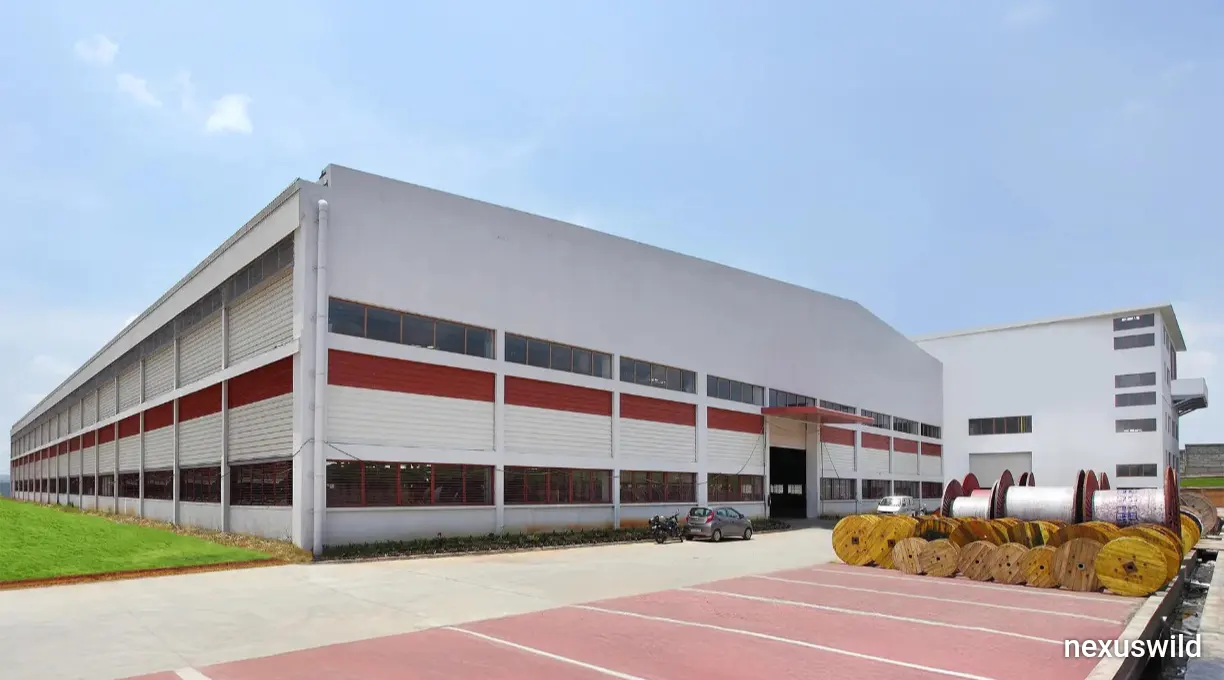
The agreement was signed in Tokyo on November 25, 2026, in the presence of Karnataka Chief Minister D.K. Shivakumar and Industries Minister M.B. Patil. The proposed investment of up to ₹800 crore over the next 10 years will support the expansion of Wipro Kawasaki Precision Machinery Private Limited at the Harohalli Industrial Area near Bengaluru.
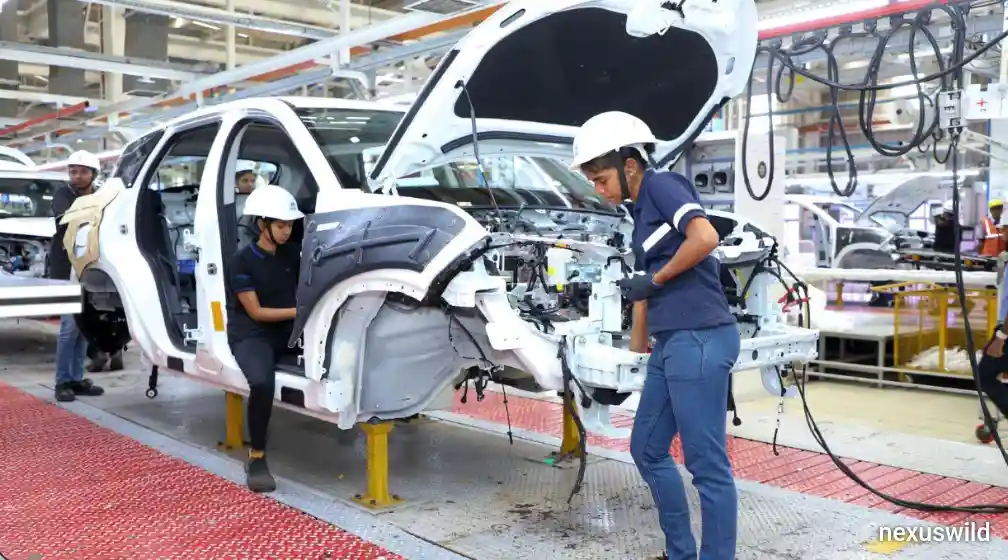
The project is expected to create approximately 600 manufacturing jobs and increase domestic production of hydraulic pumps, swing motors and other precision components used in construction equipment.
The announcement is significant for India's capital-goods supply chain because hydraulic systems are essential components in excavators and other heavy machinery used in infrastructure, mining, construction and industrial operations.
However, the agreement is an MoU and the investment is a long-term commitment. The full capital expenditure, construction schedule, land arrangements and employment generation will depend on subsequent implementation.
What Kawasaki plans to manufacture in Karnataka
The proposed expansion will focus on hydraulic pumps, swing motors and related components for the construction-equipment industry.
Hydraulic pumps are central to the operation of heavy machinery. They convert mechanical energy into hydraulic energy by moving pressurised fluid through a machine's hydraulic circuit. That pressure is used to operate components such as excavator arms, buckets, lifting systems and other equipment.
Swing motors perform a different but complementary function. In an excavator, the swing mechanism allows the upper structure of the machine to rotate relative to its undercarriage. Hydraulic motors help provide the torque required for this movement.
These components must operate under demanding conditions, including high pressure, repeated loading, vibration, temperature changes and exposure to dust and contaminants.
Their manufacturing therefore requires precision engineering, material quality, testing and strict process controls.
By expanding local production, Kawasaki and Wipro Kawasaki Precision Machinery could strengthen the domestic availability of specialised hydraulic components for Indian construction-equipment manufacturers.
The project is also expected to support a broader industrial ecosystem involving precision machining, metal processing, component suppliers, industrial testing and manufacturing services.
Understanding the ₹800 crore investment commitment
The Karnataka government and Kawasaki have described the proposed expansion as a two-phase investment programme extending over 10 years.
The reported investment range for the first phase is ₹200 crore to ₹400 crore, while the second phase has been reported at ₹400 crore to ₹800 crore. The overall announcement, however, places the potential investment ceiling at ₹800 crore.
The published phase ranges do not provide a sufficiently clear breakdown to establish a precise combined allocation. They should therefore not be interpreted as separate amounts that can simply be added together.
The ₹800 crore figure represents the upper limit of the announced commitment, not capital already spent.
The next important steps will include finalising the project site and land arrangements, completing statutory approvals, establishing the construction and equipment schedule, and determining the timing of each investment phase.
The Karnataka government has said it will facilitate land allotment, statutory clearances, approvals and applicable industrial incentives.
For businesses and suppliers evaluating the announcement, these implementation milestones will be more meaningful than the headline investment figure alone.
Wipro Kawasaki Precision Machinery: An established India-Japan joint venture
The proposed expansion builds on an existing industrial partnership between Wipro and Kawasaki.
The joint venture agreement was signed in December 2011 between Wipro's infrastructure engineering business and Kawasaki's precision machinery business. Wipro Kawasaki Precision Machinery Private Limited was incorporated in February 2012 and began production in December 2012.
The company manufactures, sells and services hydraulic products used in construction machinery, particularly excavators.
Kawasaki reported in February 2026 that WiproKPM had achieved 200,000 cumulative shipments of hydraulic pumps and hydraulic motors to Indian domestic customers as of January 30, 2026.
That milestone provides important context for the new investment announcement. The proposed expansion is not an entry into an unfamiliar market; it is intended to build on an operating manufacturing business with an established domestic customer base.
Kawasaki's published corporate information has also identified WiproKPM as a key production, sales and service base for its hydraulic-equipment business in India.
The ownership structure reported by Kawasaki is 51% Kawasaki Heavy Industries and 49% Wipro Enterprises.
This existing relationship combines Japanese precision-machinery technology and manufacturing expertise with Wipro's Indian industrial presence.
Why hydraulic components matter to India's construction-equipment industry
India's infrastructure and construction activity depends on a wide range of capital goods, including excavators, cranes, loaders, road-building equipment and mining machinery.
Hydraulic systems are essential to many of these machines because they provide the force and control required to lift, dig, rotate and move heavy loads.
As construction-equipment manufacturers increase production, demand for dependable hydraulic pumps, motors and precision components can also rise.
For original equipment manufacturers, component availability affects production planning, equipment reliability, maintenance requirements and delivery schedules.
Local manufacturing can potentially improve supply responsiveness and reduce dependence on long international supply chains for selected components.
It can also make it easier for manufacturers to coordinate engineering changes, quality checks, technical support and after-sales service.
However, localisation does not automatically eliminate imports. The extent of domestic value addition will depend on where components, raw materials, specialised parts and manufacturing technologies are sourced.
The actual impact of Kawasaki's expansion will become clearer once the company discloses production capacity, sourcing plans and the extent of local manufacturing.
What the investment could mean for India's capital-goods supply chain
The proposed investment comes at a time when India is seeking to strengthen its domestic manufacturing capabilities across industrial machinery, construction equipment and precision engineering.
High-value components are strategically important because they influence the performance and reliability of complete machines.
Hydraulic pumps and motors are examples of components where engineering precision, durability and quality control matter as much as manufacturing scale.
A stronger domestic manufacturing base could provide several benefits.
First, it may improve the availability of critical components for Indian equipment manufacturers. Shorter supply chains can reduce lead times and make it easier to respond to changing production requirements.
Second, local production can create opportunities for Indian suppliers providing machined parts, castings, seals, bearings, metal treatments, tooling and industrial services.
Third, the expansion could support technical skill development in precision manufacturing, hydraulic systems, industrial maintenance and quality assurance.
Finally, an established Indian production base may provide opportunities for exports to other markets within Kawasaki's wider manufacturing network, although the November 25 announcement does not establish a specific export target for the proposed facility.
The scale of these benefits will depend on actual production volumes and the depth of the local supplier ecosystem.
Approximately 600 manufacturing jobs expected
The proposed expansion is expected to create around 600 manufacturing jobs.
These positions could support production operations, machining, assembly, equipment maintenance, quality assurance, engineering, supply-chain management and other industrial functions.
The announcement does not provide a detailed breakdown of the job categories, hiring schedule or the number of positions that will be filled during each investment phase.
It is therefore important to treat 600 as a projected employment figure rather than a current workforce count or confirmed recruitment target for immediate hiring.
The expansion could also generate indirect employment through suppliers, logistics providers, industrial services and other businesses supporting the manufacturing operation.
For local communities around Harohalli, the potential benefits will depend on how much of the workforce is recruited locally and whether the project creates training pathways for technicians and engineering graduates.
Harohalli and Karnataka's industrial investment strategy
The proposed expansion adds to Karnataka's wider effort to attract manufacturing investment from Japan.
According to figures cited by the state government, Karnataka hosts more than 525 Japanese establishments and has attracted 101 Japanese greenfield projects since 2016.
The state has been promoting its manufacturing ecosystem through investment outreach, infrastructure development and industrial partnerships.
Harohalli, near Bengaluru, is part of Karnataka's industrial development landscape. Its proposed role in the Kawasaki expansion could strengthen the area's presence in precision engineering and construction-equipment component manufacturing.
The project also illustrates how foreign industrial investment can build on existing partnerships rather than relying entirely on new market entries.
For Karnataka, the challenge will be to convert investment commitments into operating facilities, sustained employment and deeper supplier participation.
Japan roadshow and Invest Karnataka 2027
The Kawasaki agreement forms part of Karnataka's investment outreach in Japan.
During the visit, the state's leadership also met representatives of Japanese businesses, including Panasonic Automotive executives, and invited Kawasaki's leadership to participate in the Global Investors Meet, Invest Karnataka 2027.
The event is scheduled to take place in Bengaluru from April 20 to April 22, 2027.
Such investment roadshows are designed to strengthen relationships with international manufacturers and encourage new projects, expansions and technology partnerships.
For Japanese companies, India offers a large domestic industrial market, a growing infrastructure sector and opportunities to build regional manufacturing capabilities.
For Indian states, Japanese investment can provide access to specialised engineering, manufacturing processes, supplier relationships and long-term industrial partnerships.
The effectiveness of these outreach efforts will ultimately be measured by projects reaching financial closure, construction, commercial production and sustained job creation.
The challenges Kawasaki will need to address
Although the proposed investment is significant, the project will face several practical execution requirements.
Land and approvals: The company and state government will need to complete the necessary land arrangements, environmental and industrial approvals, utilities planning and other statutory processes.
Capital deployment: A 10-year investment horizon means the timing and scale of expenditure will depend on market demand, project execution and future expansion decisions.
Supplier localisation: The level of domestic value addition will depend on the availability of qualified suppliers for precision components, materials and specialised manufacturing inputs.
Technical skills: Hydraulic equipment manufacturing requires skilled personnel and strong quality-control processes. Recruitment and technical training will be important to achieve the projected employment outcome.
Demand and capacity utilisation: New manufacturing capacity must be supported by demand from construction-equipment manufacturers and other customers. The company will need to align production expansion with market requirements.
These factors will determine whether the announcement develops into a significant addition to India's domestic capital-goods manufacturing capacity.
What to watch next
The most important indicators over the coming months will be the finalisation of land allocation, project approvals, construction commencement and disclosure of the detailed investment schedule.
Other milestones will include equipment installation, production-capacity additions, local supplier participation and the timing of recruitment.
The 600-job projection should also be tracked against actual hiring announcements rather than treated as an immediate employment gain.
Kawasaki's February 2026 milestone of 200,000 cumulative hydraulic pump and motor shipments demonstrates the established operating base on which the proposed expansion is being planned.
If the new project is implemented successfully, it could strengthen India's domestic hydraulic-component ecosystem and deepen the long-standing industrial partnership between Japan and Karnataka.
For now, the ₹800 crore announcement is an important investment commitment, not a completed manufacturing expansion. Its real economic impact will be determined by how effectively the MoU translates into land, machinery, production, supplier development and jobs.
Nexuswild welcomes factual corrections. Email contact@nexuswild.com with evidence and the article URL.