
PepsiCo Reverses Course on Snack and Beverage Prices
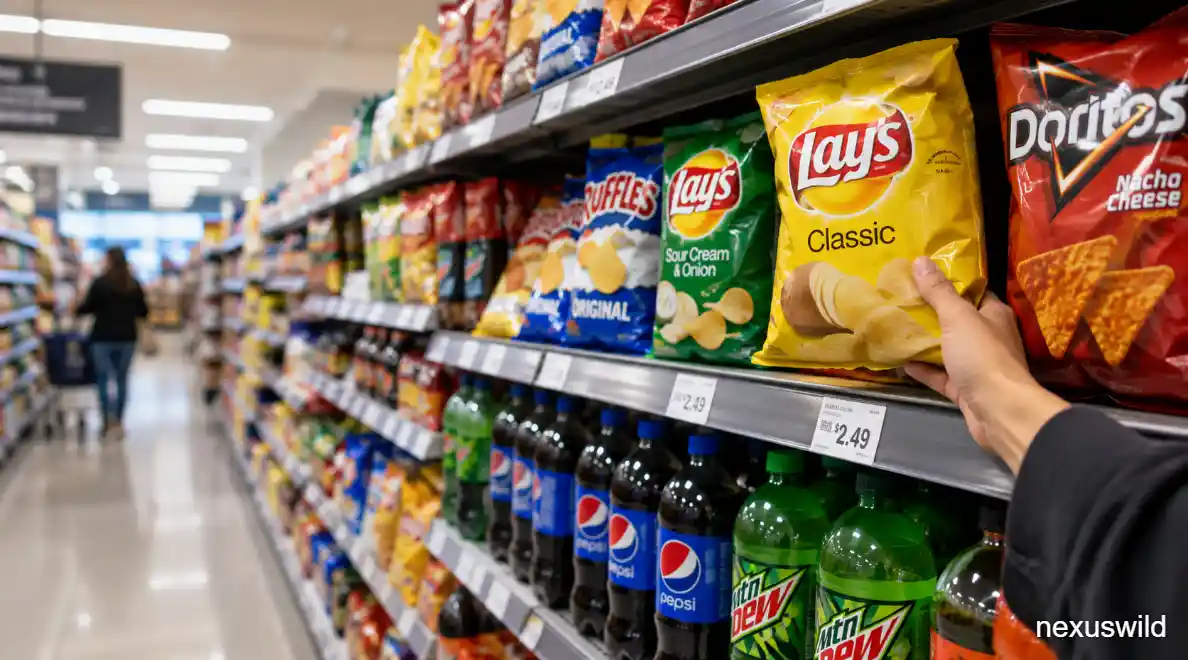
PepsiCo is preparing to raise prices on selected snacks and beverages, including Doritos, Ruffles, SunChips and some soft drinks, reversing part of its recent effort to make its products more affordable for price-conscious consumers.
The increases are expected to fall within the single-digit percentage range. PepsiCo has indicated that the affected products will nevertheless remain cheaper than they were at the beginning of 2026, according to reporting by the Associated Press and The New York Post. (Associated Press coverage; The New York Post)
The decision comes just months after PepsiCo cut prices on selected products by as much as 15% in an effort to win back shoppers who had reduced spending following repeated price increases. That earlier strategy was intended to improve affordability and encourage consumers to buy more frequently.
The renewed increases highlight a difficult balancing act for the food and beverage giant: higher production costs are squeezing profitability, but consumers remain sensitive to prices and have not returned to the company's products as quickly as management had hoped.
Chief Executive Ramon Laguarta addressed the challenges during the company's third-quarter earnings discussions on October 8. While PepsiCo reported revenue growth and stronger international performance, its North American businesses continued to face uneven demand.
For households, the announcement is another reminder that grocery prices can move in both directions as companies respond to production expenses, competition and consumer behaviour. For investors, it raises a different question: whether PepsiCo can improve profitability without undermining the demand it has been trying to rebuild.
Why PepsiCo Is Raising Prices Again
PepsiCo has pointed to rising costs for fuel, aluminum and agricultural commodities as important reasons behind the planned price adjustments.
These inputs affect different parts of its business. Fuel is needed to transport ingredients and finished products through supply chains. Aluminum is used in beverage packaging, including cans. Agricultural commodities are essential to producing many of the company's food products and drinks.
When these expenses increase, manufacturers must decide how much of the additional cost to absorb and how much to pass on to customers. Absorbing the entire increase can pressure profit margins, while raising retail prices risks reducing sales volumes.
PepsiCo's latest decision suggests the company believes selected price increases are necessary to manage its cost base. However, it is not raising every product's price by the same amount, and the precise change at the checkout may vary by product, retailer, package size and location.
The economic and geopolitical environment has added uncertainty to the company's planning. Rising energy and commodity costs associated with the conflict involving Iran have been cited in recent reporting, alongside the effects of tariffs.
These pressures do not affect every product equally. A bag of chips, a multipack of canned soda and a bottled beverage have different ingredient, packaging and distribution requirements. Retailers also have their own pricing decisions, promotions and inventory arrangements.
Consequently, consumers should not assume that every bag of Doritos or every bottle of Pepsi will immediately become more expensive by an identical percentage.
What the Price Increases Mean for Shoppers
The planned increases affect some of PepsiCo's most recognisable consumer brands, making the decision relevant to shoppers who regularly buy packaged snacks and soft drinks.
Doritos, Ruffles and SunChips are part of PepsiCo's Frito-Lay snacks portfolio. Selected beverages, including products in its soda business, are also expected to see price changes.
The company has said the new prices will remain below levels recorded at the beginning of the year. That qualification matters because the latest move follows earlier price reductions rather than representing a straightforward return to the highest prices consumers have faced.
For example, if a retailer previously reduced a product's price, a later increase could partially reverse that reduction without returning the item to its earlier price. The actual outcome depends on the original price, the size of the discount and the new adjustment.
Shoppers will also encounter different prices across supermarkets, convenience stores, online retailers and other outlets. Promotions, loyalty discounts and local competition may influence what customers ultimately pay.
For consumers managing tight budgets, even modest increases across several regularly purchased products can add up over time. The effect may be particularly noticeable for families buying snacks and drinks in larger quantities.
One practical response is to compare unit prices rather than looking only at the sticker price. Checking the cost per ounce, gram or litre can help shoppers compare different package sizes and determine whether a larger pack offers genuine savings.
Consumers can also compare competing brands, choose store-brand alternatives or take advantage of promotions where appropriate. These choices may help offset higher prices without requiring shoppers to eliminate favourite products entirely.
Why Earlier Price Cuts Failed to Deliver a Bigger Recovery
PepsiCo announced price reductions in February 2026 on selected products, including Lay's and Doritos. Some of those cuts reached as much as 15%, according to Reuters reporting at the time.
The strategy followed consumer resistance to previous price increases. By lowering prices, PepsiCo sought to make its snacks more attractive to households that had become increasingly selective about discretionary purchases.
However, affordability was only one part of the problem. Even when prices become more competitive, consumers may not increase their purchases if they are changing eating habits, switching brands or reducing spending overall.
PepsiCo's latest earnings discussions suggest that the recovery in North America has been more complicated than management wanted. Snack volumes have shown signs of improvement in some areas, but the broader performance remains uneven, while the beverage business continues to face challenges.
This creates a difficult commercial trade-off. Lower prices can encourage shoppers to return, but they also reduce the revenue earned on each unit sold unless stronger sales volumes compensate for the reduction. Higher prices may help offset costs, but they can discourage consumers from buying as much.
The company's next challenge is to find a pricing strategy that supports demand while protecting profitability. That may require more than changing shelf prices. Product innovation, distribution, marketing, package formats and competition all influence whether consumers choose a brand.
North American Demand Remains a Concern
PepsiCo's pricing announcement followed its third-quarter results, which showed a contrast between overall company growth and weaker trends in parts of North America.
According to the company's October 8 earnings release, net revenue rose 5.6% year over year to approximately $25.27 billion. Core earnings per share reached $2.34, up from $2.29 a year earlier. The company also reported 3.1% organic revenue growth. (PepsiCo's third-quarter results, filed with the SEC)
However, the headline figures do not tell the entire story. PepsiCo's international businesses provided important support, while demand in North America remained a challenge.
Reporting by the Associated Press indicated that Frito-Lay snack volumes in North America were flat compared with the same period a year earlier, while beverage volumes declined 2%. Those figures point to difficulty generating consistent growth in the company's domestic snacks and soft drinks operations. (Associated Press)
Volume is an important measure because it helps distinguish selling more products from generating higher revenue through price increases, acquisitions or other changes. A company can report revenue growth even when customers are not buying more units.
For PepsiCo, that distinction is central to the current situation. The company needs to manage higher costs while improving the underlying performance of its North American brands.
Laguarta has acknowledged the weakness in the beverage business and signalled an urgent focus on improving performance. The company is also seeking cost savings that can be redirected toward brands and product categories where management sees opportunities for growth.
The challenge is that a pricing adjustment cannot guarantee a sustained recovery in demand. PepsiCo will need to demonstrate that customers continue buying its products at the new prices.
PepsiCo Is Facing Pressure From Changing Consumer Habits
Price sensitivity is not the only challenge facing the company. Consumers' preferences are evolving, and traditional snacks and sugary beverages face competition from a wider range of products.
Some shoppers are prioritising healthier options, reducing their consumption of sugary drinks or looking for snacks with additional nutritional benefits. Others are simply buying fewer discretionary items as household budgets remain under pressure.
The growing use of GLP-1 weight-loss medications has also become a topic of concern for packaged-food companies. Such medications can reduce appetite for some users, potentially affecting consumption patterns. However, their precise impact on PepsiCo's sales is difficult to isolate from other economic and behavioural factors.
Reuters reported on October 7 that PepsiCo was under pressure to improve performance amid changing consumer habits, cost inflation and investor expectations. The report also highlighted the company's efforts to develop products that respond to demand for alternatives to traditional snacks. (Reuters)
PepsiCo has been developing and promoting products intended to broaden its appeal, including offerings associated with protein and fibre. Its portfolio also spans hydration, energy drinks, traditional soft drinks and snacks, giving it several areas in which to pursue growth.
Still, introducing new products does not automatically solve the challenge of maintaining sales in established categories. New offerings must attract customers, earn shelf space and generate enough demand to justify investment.
The company therefore faces a dual task: preserve the strength of its established brands while adapting to consumers who may be more selective about what they eat and drink.
Cost Cuts and Brand Investment Form Part of the Response
Alongside the planned price increases, PepsiCo is looking to reduce costs and direct resources toward areas where it sees greater potential.
According to the Fox Business report, the company's plans include cost reductions and reinvestment in beverages such as Pepsi and Mountain Dew, as well as the Poppi brand.
The approach reflects a broader effort to improve operational efficiency while supporting products that management believes can contribute to future growth.
Cost reductions can help offset higher commodity and distribution expenses, but they also require careful execution. Cutting expenses too aggressively may weaken marketing, product development or other activities needed to maintain market share.
Reinvestment presents a similar challenge. Spending on innovation and promotion can strengthen a brand, but the returns may take time to appear. PepsiCo must decide where additional resources are most likely to improve sales, profitability or customer loyalty.
The company's international performance offers an important source of support. Stronger demand in overseas markets can help offset weakness in North America, although international growth does not eliminate the need to address problems in the United States and Canada.
Investors will be watching whether cost reductions, pricing changes and product initiatives translate into stronger operating performance in coming quarters.
What the Decision Means for PepsiCo Investors
For investors, the price increases reveal the competing pressures affecting PepsiCo's business rather than providing a simple signal that the company is becoming stronger or weaker.
On one side, higher prices may help the company recover some of the costs associated with fuel, packaging and agricultural inputs. If customers continue buying at similar volumes, that could support revenue and margins.
On the other side, additional price increases risk frustrating consumers who have already reacted negatively to higher grocery bills. If demand weakens further, the company could find that higher prices fail to deliver the expected financial benefit.
PepsiCo's third-quarter results also illustrate why investors need to look beyond revenue alone. The company reported growth in net revenue and core earnings per share, but management's concerns about North American performance show that the quality and sustainability of growth remain important questions.
Investors should monitor several indicators:
Sales volumes: Whether customers are buying more, fewer or roughly the same number of products.
Organic revenue growth: Whether the company is generating growth from its existing business rather than relying mainly on acquisitions or currency movements.
Operating margins: Whether pricing and cost reductions are enough to offset higher input expenses.
Brand performance: Whether products such as Pepsi, Mountain Dew, Poppi and Frito-Lay snacks attract new or returning customers.
Full-year guidance: Whether management's updated expectations prove achievable as cost pressures and demand trends evolve.
PepsiCo's share-price performance alone cannot determine whether the strategy will succeed. The longer-term assessment will depend on reported results, consumer response and the company's ability to balance affordability with profitability.
What Consumers Should Watch in the Coming Months
The practical impact of PepsiCo's decision will become clearer as retailers update prices and the company provides more information about its performance.
Consumers should look for changes at the stores where they shop rather than assuming the same adjustment will apply everywhere. Retailers may introduce the increases at different times, and promotional offers could temporarily change the effective price.
It is also worth remembering that the announced increases apply to selected products, not necessarily every item sold by PepsiCo. The company operates a broad portfolio, and the pricing decision does not mean every snack or beverage will be affected.
For households trying to manage food expenses, comparing package sizes, checking promotions and considering alternatives can help limit the effect of higher prices. For retailers, the challenge will be to decide how much of the additional cost to pass on while keeping products attractive to customers.
The next phase will test whether consumers accept the changes or reduce their purchases. If volumes remain weak, PepsiCo may need to rely more heavily on innovation, marketing, cost reductions and other measures to strengthen demand.
Conclusion: PepsiCo Must Balance Affordability With Profitability
PepsiCo's decision to raise prices on selected Doritos, Ruffles, SunChips and soda products underscores the difficulty of managing a consumer business in an environment of rising costs and cautious spending.
The company's earlier price cuts were intended to rebuild demand after consumers pushed back against higher prices. The planned increases now reflect the need to manage fuel, aluminum and agricultural expenses while responding to weaker-than-expected trends in parts of North America.
PepsiCo continues to benefit from its extensive portfolio and international business, but growth across the company does not remove the need to improve performance in its domestic snack and beverage operations.
For consumers, the immediate question is how the changes affect the prices they encounter at the checkout. For investors, the more important issue is whether the company can protect margins without driving shoppers away.
Ultimately, the success of the strategy will depend on more than pricing. PepsiCo must demonstrate that its brands remain competitive, its products match changing preferences and its cost-saving efforts translate into sustainable financial performance.
Nexuswild welcomes factual corrections. Email contact@nexuswild.com with evidence and the article URL.