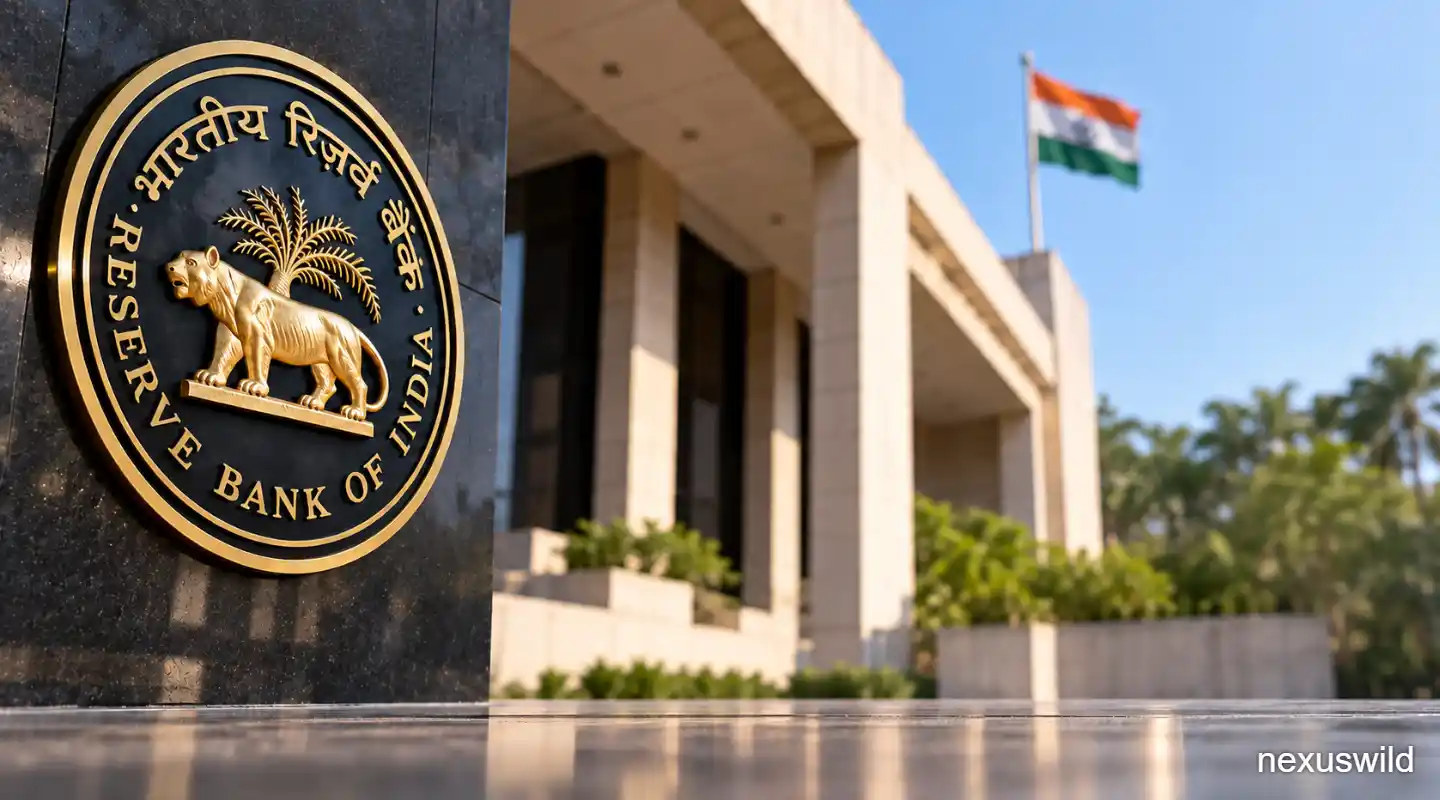

The Reserve Bank of India said on 20 November 2026 that it would hold a four-day variable rate repo auction on 23 November, offering 50,000 crore rupees to banks under its liquidity adjustment facility. The operation is scheduled to run from 9:30 a.m. to 10:00 a.m. on the Monday, with the funds due to be reversed on 27 November. In its press release, the central bank said the decision followed a review of current and evolving liquidity conditions in the near term. It did not announce a change to the policy repo rate and did not say how much of the amount it expected banks to bid. The auction will use the same operating rules as an earlier variable rate repo notification issued in January 2022, meaning banks will submit rate bids electronically and get allotted at their own quoted rates if those rates clear the cut-off. The announcement came on a day when the Reserve Bank was already running two separate three-day repo auctions, both of which are scheduled to reverse on 23 November. Together, the operations show the central bank using short-dated tools to manage cash conditions in the banking system as it approaches its December policy meeting. Money markets had shown substantial absorption of liquidity in the preceding session, with the Reserve Bank's daily statement for 19 November reporting net absorption of 98,479 crore rupees from that day's operations.
What the announcement says
The press release, numbered 2026-2027/1538 and dated 20 November 2026, carries the title "RBI to conduct 4-day Variable Rate Repo (VRR) auction under LAF on November 23, 2026." It sets out a single-row table with four relevant fields. The notified amount is 50,000 crore rupees. The tenor is four days. The bidding window is 9:30 a.m. to 10:00 a.m. The date of reversal is 27 November 2026, a Friday. The release says the auction will be conducted "on a review of current and evolving liquidity conditions in the near term." That is the only explanation offered for the timing and size. The document does not name a specific trigger such as a festival-related cash demand, a government cash balance movement or a change in the cash reserve ratio. It also does not indicate whether the Reserve Bank plans further auctions after this one. The central bank has used similar short-dated variable rate repo operations in recent weeks, and the 20 November release points back to standing operational guidelines rather than creating a new framework. The notified amount is the maximum the Reserve Bank stands ready to inject through this auction. Actual injection can be lower if banks bid for less, because the January 2022 guidelines allow the central bank to inject less than the notified amount without assigning reasons.
The timing and reversal schedule
The four-day tenor means the money provided through the auction will return to the Reserve Bank at the start of day on 27 November. Under the operational guidelines, the reversal happens automatically on the stated date; banks do not need to take a separate action to repay the amount. The one-hour bidding window on 23 November is short and follows the pattern used in the two three-day auctions scheduled for 20 November. The choice of a four-day tenor gives the operation a slightly longer life than the three-day auctions that reverse on the same day it begins. Because the new auction opens on 23 November, the day the earlier operations mature, it can absorb part of the liquidity that would otherwise return to the banking system when those reverse. The Reserve Bank did not describe the new auction as a replacement for the earlier ones, and the two should be treated as separate operations with separate auction dates and reversal dates. The 23 November window coincides with the settlement date for the government securities auction announced on 16 November, although the press release does not link the two events. For banks, the calendar matters because reversal dates affect the amount of collateral tied up and the amount of liquidity available for meeting daily reserve requirements.
How a variable rate repo works
A repo is a short-term loan against collateral. In a repo transaction, a bank sells eligible securities to the Reserve Bank with an agreement to buy them back later at a predetermined price. From the banking system's perspective, the transaction brings in cash for a short period; from the central bank's perspective, it injects liquidity. The "variable rate" label means the interest rate is not fixed in advance by the Reserve Bank. Instead, banks bid the rate at which they are willing to borrow, and the auction determines the cut-off. This differs from a fixed-rate repo, where the central bank sets the rate and banks apply for an amount. The Reserve Bank's liquidity adjustment facility is the umbrella framework through which it manages short-term cash conditions using repo and reverse repo operations. The four-day auction on 23 November is a variable rate repo under that facility, so it adds liquidity rather than absorbing it. The central bank can use variable rate reverse repo auctions to take liquidity out of the system, and variable rate repo auctions to put it in. The direction matters for overnight rates and for the amount of cash banks have available to lend to each other and to the government securities market.
Bidding rules carried over from 2022
The 20 November release says the operational guidelines for the four-day auction are the same as those in Reserve Bank press release 2021-2022/1572, dated 20 January 2022. That earlier notification was issued when the central bank was rebalancing surplus liquidity and shifting activity from a fixed-rate overnight reverse repo window into longer-maturity variable rate reverse repo auctions. The annex to that release sets out the machinery that still applies. The auction is conducted on the Reserve Bank's CBS, or e-Kuber, platform. The minimum bid amount is one crore rupee, and bids must be in multiples of one crore. Banks quote rates in percentage terms up to two decimal places. They may submit multiple bids, which allows a bank to spread its demand across different rate levels rather than making a single all-or-nothing submission. Successful bids are accepted at the respective rates quoted by the banks, not at a single common rate. That feature is important because it means the effective cost of the operation can vary across participants depending on where their bids sit in the order book.
The rate floor and allotment process
The 2022 guidelines state that bids at or below the repo rate will be rejected. That rule creates a floor: banks must be willing to pay more than the policy repo rate to obtain funds through this type of auction. Once the bidding window closes, the Reserve Bank arranges all bids in descending order of the rates quoted. The cut-off rate is the rate corresponding to the notified amount of the auction. Successful bidders are those whose bids sit at or above the cut-off. All bids lower than the cut-off are rejected. If more than one successful bid is placed at the cut-off rate, the Reserve Bank provides for pro-rata allotment, so the available amount is shared among those bidders in proportion to their bids. The central bank retains discretion on the final size: it may inject slightly more than the notified amount because of rounding effects, or it may inject less without giving a reason. These rules mean the notified 50,000 crore rupees is not a guaranteed outcome. It is the amount the auction is designed to allocate if demand and rates line up. Banks that bid aggressively may receive funds at a rate above the cut-off, while those bidding at the margin may receive only part of their requested amount.
Collateral and operational safeguards
The eligible collateral and applicable haircuts for the four-day auction are the same as for regular liquidity adjustment facility operations. That provision matters because a repo is a secured transaction: the Reserve Bank lends against approved securities, and the haircut determines how much can be borrowed against a given face value. The central bank also says that all other terms and conditions applicable to liquidity adjustment facility operations apply to the auction, with the necessary changes. Those terms are subject to periodic review. The reversal is scheduled for the start of day on 27 November, so the collateral should return to the borrowing banks when the transaction matures. The framework is designed to be predictable for banks, which need to know both the cost and the collateral implications before they bid. The Reserve Bank has not published any special collateral arrangement for this particular auction, and the release does not indicate a change in the list of eligible securities. By relying on standing guidelines, the central bank avoids having to spell out the full legal and operational detail in every short-tenor announcement.
The earlier three-day auctions
The four-day auction announced on 20 November follows two three-day variable rate repo auctions that were also scheduled for 20 November. The first, announced on 19 November as press release 2026-2027/1525, had a notified amount of 50,000 crore rupees, a three-day tenor, a bidding window from 9:30 a.m. to 10:00 a.m., and a reversal date of 23 November. The second, announced on 20 November as press release 2026-2027/1530, had a notified amount of 25,000 crore rupees, a three-day tenor, a bidding window from 12:45 p.m. to 1:15 p.m., and the same reversal date of 23 November. Both said they were decided on a review of current and evolving liquidity conditions in the near term, and both pointed to the same January 2022 operational guidelines. Market coverage published on 20 November noted that the new four-day operation would begin on the day the three-day operation reverses. That sequence is consistent with a central bank seeking to smooth the transition between maturities rather than allow a large amount of liquidity to leave the system abruptly. The two three-day auctions together have a notified amount of 75,000 crore rupees, while the four-day auction has a notified amount of 50,000 crore rupees; the Reserve Bank has not described how much of the maturing amount it intends to replace.
What the liquidity data showed
The Reserve Bank's daily money market statement, published on 20 November for operations as on 19 November, provides context for the sequence of auctions. It reported net liquidity absorption of 98,479 crore rupees from that day's operations. The statement showed 1,05,796 crore rupees placed under the standing deposit facility at 5.25%, 18,999 crore rupees availed under the marginal standing facility at 5.75%, and 11,682 crore rupees under a one-day variable rate reverse repo at 5.49%. Net liquidity from outstanding operations was a positive 10,773.26 crore rupees, largely reflecting standing liquidity facility use. The statement also reported net durable liquidity of 7,02,107 crore rupees as on 31 October 2026, measured as a surplus. These figures describe different parts of the liquidity picture: the daily net absorption number reflects that day's transactions, while the durable liquidity figure is a stock measure at the end of the previous month. They do not by themselves explain the decision to hold the four-day auction, and the Reserve Bank's release does not cite them. They do, however, show why short-tenor operations are a regular feature of liquidity management even when the broader system is in surplus. Banks can face uneven cash needs around settlement dates, and the central bank uses auctions to distribute funds where they are needed for a few days at a time.
Why short-tenor operations matter
Short-dated repo auctions are small in political profile but important in daily market functioning. They affect the overnight rate, the cost of carrying government securities and the ability of banks to meet their reserve requirements without disruptive borrowing. A four-day operation that reverses before the end of the following week gives banks a bridge through a specific segment of the calendar. Because the auction is variable rate, the outcome also reveals something about demand: the cut-off rate and the amount bid indicate how urgently banks wanted funds and at what price. If bids are strong, the cut-off may sit well above the repo rate; if demand is weak, the Reserve Bank may accept less than the notified amount. The 2022 rules allow both outcomes. The auction also interacts with the government securities market, since banks often use those securities as collateral. When short-term funding is available against government bonds, dealers can hold positions more cheaply, which can influence secondary-market liquidity. None of that means the four-day auction will necessarily move policy rates. It is an operational tool, not a monetary policy decision, and the central bank has separated the two by keeping the repo rate unchanged in the announcement.
The policy calendar context
The auction arrives shortly before the Reserve Bank's December monetary policy meeting. A report published by Businessline on 10 November cited Jefferies as expecting the Monetary Policy Committee to meet on 4 December 2026 and to consider a repo rate increase of 25 to 50 basis points. That is a brokerage expectation, not a central bank announcement, and it should not be read as a statement of official intent. The same report said the brokerage expected system liquidity surplus to moderate in 2026 as the Reserve Bank absorbed excess liquidity through variable rate reverse repo operations, open market operations and tighter daily cash reserve ratio requirements. The four-day variable rate repo auction announced on 20 November is a liquidity operation rather than a rate decision, but it will be watched for signals about how the central bank is managing cash conditions before the meeting. Market participants often look at the size, tenor and frequency of such operations for clues about the central bank's near-term approach. The Reserve Bank's own release offers no such guidance and confines itself to the liquidity review and the operational parameters. Any inference about policy intent would go beyond the published notice.
What to watch when the auction opens
The first thing to watch on 23 November is the total amount bid relative to the 50,000 crore rupees on offer. Under the standing rules, the Reserve Bank can allot less than the notified amount, so a weak response would show up in the final injection figure. The second is the cut-off rate, which will indicate the price banks were willing to pay above the policy repo rate for four-day funds. The third is the distribution of bids around the cut-off, since pro-rata allotment may be needed if several bids land at the same rate. The reversal on 27 November will close the transaction, and the daily money market statement published around that period will show how the operation sat alongside other liquidity flows. The two three-day auctions that reverse on 23 November will also be part of that picture. For now, the confirmed facts are limited but clear: a four-day variable rate repo auction, a notified amount of 50,000 crore rupees, a one-hour window on 23 November, a reversal on 27 November, and operational rules inherited from the January 2022 framework. The central bank has framed the move as a response to near-term liquidity conditions, and the auction's results will provide the first test of how banks price that four-day funding.
Nexuswild welcomes factual corrections. Email contact@nexuswild.com with evidence and the article URL.