
AstraNu, a New Jersey startup developing a chip-scale optical coherence tomography imaging engine, said on 17 November 2026 that it had closed a $3.5 million seed round led by Celesta Capital. The round included co-investment from the New Jersey Innovation Evergreen Fund, a program of the New Jersey Economic Development Authority. The company said it would use the money to expand its photonics development team, validate the engine with application partners and prepare for volume manufacturing. AstraNu was spun out of Nokia Bell Labs in May 2025 and was the first venture formed through a collaboration between the research organisation and Celesta to commercialise Bell Labs technologies. Its premise is that swept-source optical coherence tomography, which can image faster and deeper than the more common spectral-domain systems, has so far been held back by the size and cost of conventional equipment. AstraNu says it has reproduced that performance in a module more than ten times smaller than traditional swept-source systems and priced close to spectral-domain systems. Those are company claims made in a funding announcement, not independently verified specifications. The round does not by itself establish that the engine has been cleared for clinical use or that any device maker has committed to a product. It does give the company a defined engineering task: move a research result into partner testbeds and then into repeatable production.
The seed round and its participants
The funding announcement said the seed round was led by Celesta Capital, a deep technology venture firm founded in 2013 that has built a portfolio of more than 100 early-stage technology investments. Celesta's stated focus includes semiconductors, intelligent hardware, bio-convergence and industrial technologies. The New Jersey Innovation Evergreen Fund, also called NJIEF, joined as a co-investor. NJIEF is administered by the New Jersey Economic Development Authority and uses the state as an equity investor alongside private venture firms. An October 2026 NJEDA release said the authority had approved a total of $16.5 million for eight startups through the fund since February, with AstraNu among them. The release said AstraNu was approved for an NJIEF investment of up to $1.5 million, matched through Celesta Capital. That approval predates the closing announcement and should be read as a program commitment rather than a separate new cash figure. The NJEDA said the fund can deploy up to $600 million alongside venture capital firms. For AstraNu, the combination gives it an existing deep-tech investor and a state program designed to keep early-stage companies in New Jersey. The company is headquartered in Murray Hill, the same town where Bell Labs has a long research presence.
From Bell Labs to a standalone company
AstraNu's origin is central to the deal. The company said it spun out of Nokia Bell Labs in May 2025 with backing from Celesta. It was described as the first venture created through the wider collaboration between Nokia and Celesta, an arrangement first announced in December 2023. At the time of the 2025 launch, the venture was framed around integrated optical coherence tomography for ear care, with the aim of imaging the middle ear and hearing response in three dimensions. That early description named healthcare technology executive Trevor Hawkins as chief executive and identified Michael Eggleston and Bibek Samanta as co-inventors of the underlying technology. Nokia Bell Labs said it would continue to provide laboratory resources and research expertise. The 2026 funding release presents a broader version of the same business: a chip-scale OCT engine for medical device manufacturers, with ophthalmology as the first commercial target. Kevin Blalock is now described as AstraNu's president and general manager. The shift in emphasis from a single clinical application to a component platform shows how a research spin-out can broaden its addressable market before settling on a first product category.
What optical coherence tomography measures
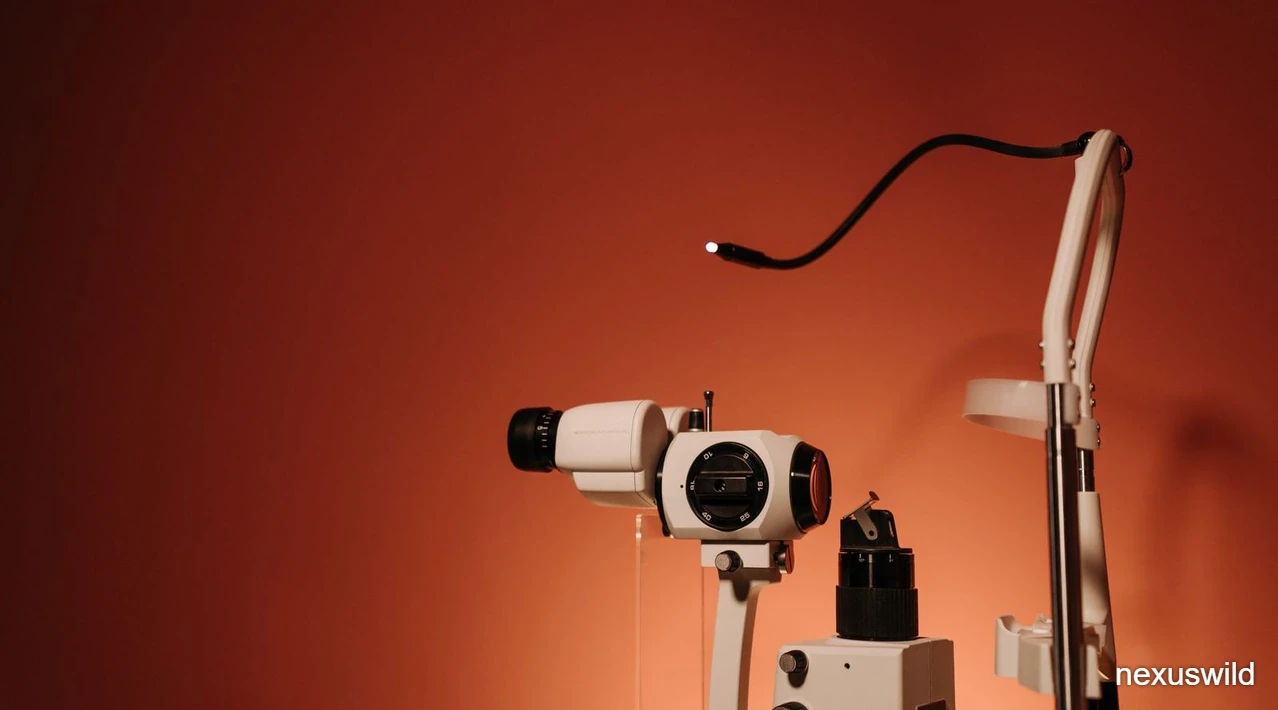
Optical coherence tomography is an imaging method that uses light to build cross-sectional pictures of tissue. Instead of taking a single surface photograph, it compares light returning from a sample with a reference signal and reconstructs depth information from the interference pattern. The technique was introduced in the early 1990s and is now established in eye care, where it is used to examine the retina and the front of the eye without cutting or contact. Peer-reviewed reviews describe its use in identifying changes such as fluid in the retina, corneal thickness and anterior chamber geometry. OCT has also been adapted to measure blood flow by comparing repeated scans, an approach known as OCT angiography. The clinical value comes from producing detailed internal views of tissue at relatively high resolution. The practical limits come from the optics, light source, detector and processing chain needed to produce those views. A full OCT instrument is therefore more than a single chip: it includes illumination, scanning, detection, computation and a clinical interface. AstraNu is entering at the subsystem level, offering the imaging engine that other companies would have to integrate into a finished device. The method is often compared with ultrasound, but it uses light rather than sound and can resolve much finer structures over shorter distances. That trade-off explains why OCT has become a standard tool in the eye, where tissue is accessible to light, while its use in other parts of the body depends on probe design and optical penetration. Image quality is not determined by a single component. It reflects the light source, the stability of the reference path, detector sensitivity and the algorithms that turn raw interference data into an image. A smaller engine must preserve those relationships rather than merely shrinking the package.
Why swept-source imaging is different
The company's technical claim rests on a distinction between two forms of Fourier-domain OCT. Spectral-domain systems use a broadband light source and a spectrometer to measure the interference spectrum. Swept-source systems instead use a laser whose wavelength changes over time, together with a fast single-point detector, to capture the same information in sequence. Published reviews report that swept-source OCT can operate at higher speeds and longer wavelengths than spectral-domain OCT, improving penetration through pigmented tissue and widening the field of view. Those properties have made it valuable in ophthalmology and in research settings. The same reviews note that the cost of swept-source systems has limited wider clinical adoption. The engineering burden includes a tuneable laser, stable optics, precise timing and computation, all of which add size and expense. AstraNu says its engine delivers swept-source performance while avoiding much of that bulk. If true, that would matter most to device makers that want advanced imaging in smaller instruments or in settings where a full hospital-grade system is impractical. The claim remains a company statement until partners publish integration results or independent measurements. Swept-source systems also face practical trade-offs. A faster sweep can improve acquisition speed, but it places demands on laser stability, timing accuracy and data handling. Longer wavelengths can penetrate deeper into tissue, yet they can change how water absorbs light and how detectors respond. Published performance figures often come from research instruments configured for a specific experiment, which are not the same as a manufacturable subsystem. That gap is where AstraNu is trying to operate: keeping the imaging behaviour while reducing the physical assembly that has historically made swept-source OCT expensive.
The chip-scale claim
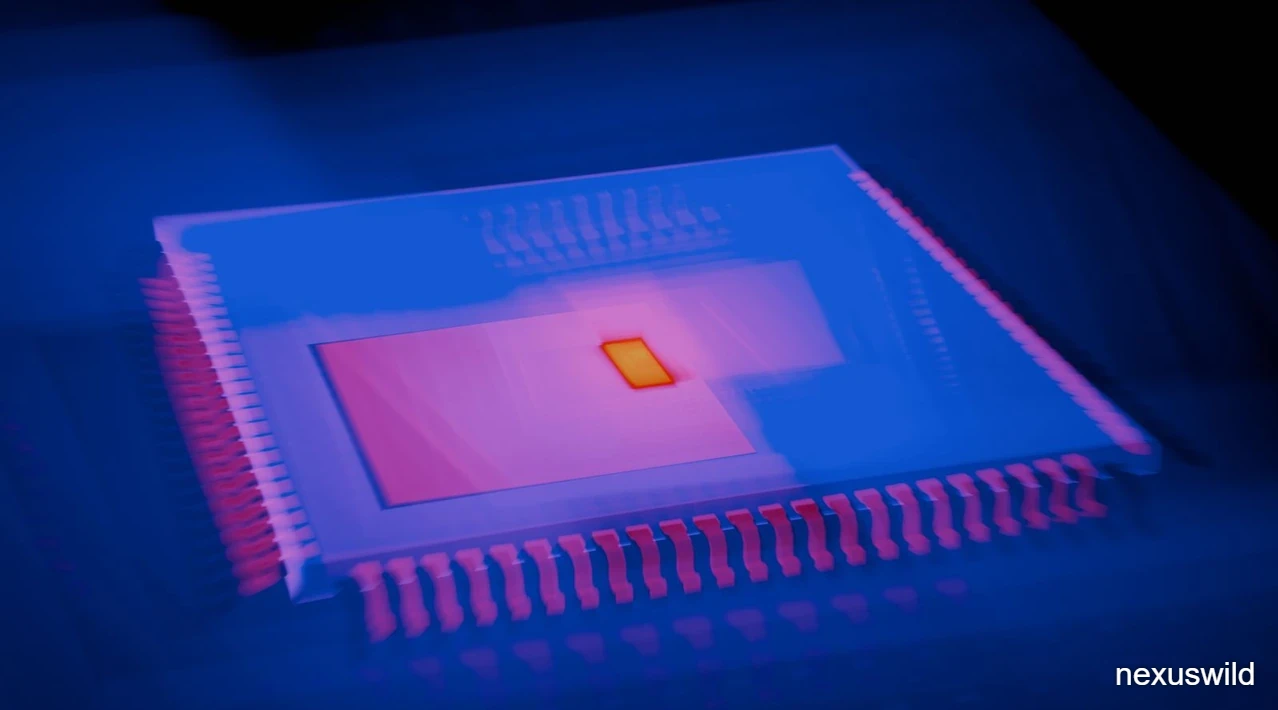
AstraNu describes its product as the first chip-scale OCT imaging engine for the medical device industry. The 2026 release says the company has achieved swept-source OCT performance at chip scale and is ready to demonstrate and validate it with application partners. It says the module is more than ten times smaller and significantly lower in cost than conventional swept-source systems, with performance at price points associated with spectral-domain OCT. Those comparisons are central to the investment case, but the announcement does not provide independently audited dimensions, unit prices, scan speeds or resolution figures. Nor does it report results from clinical studies. The wording is important: the company says it is ready to validate the engine, which implies that partner testing is the next stage rather than a completed milestone. A chip-scale subsystem can still require external optics, control electronics and software before it becomes an imaging instrument. The practical test will be whether the promised size and cost advantages survive integration into products that must meet medical device requirements. The word first in AstraNu's description is also a company assertion. Other research groups and suppliers have worked on compact OCT implementations, and the announcement does not define the benchmark used to make that comparison. What can be said without qualification is that the company claims a substantial reduction in footprint relative to conventional swept-source equipment and is now seeking partners to test that claim. A meaningful validation would compare image quality, scan speed and unit cost under conditions that a device manufacturer would recognise, rather than in a controlled laboratory demonstration.
A component supplier, not a device maker
AstraNu is not planning to sell a finished scanner to clinics. The company says it supplies the imaging engine to established medical device, imaging and optics companies that want to build OCT into their own products. That choice shapes both the opportunity and the risk. Selling a subsystem can let a small team focus on photonics and avoid the cost of clinical sales channels, regulatory submissions for a complete instrument and the need to understand every end-use specialty. At the same time, the value of the engine depends on partners accepting it into their designs. Integration work still includes optical coupling, power management, thermal behaviour, signal acquisition and software. Each partner must validate the resulting instrument for its intended medical use. Industry commentary on the funding has emphasised that no production launch or clinical approval was announced. It has also noted that the company's size and cost comparisons come from AstraNu itself. The component model therefore makes validation with manufacturers the key commercial gate, not the closing of the seed round.
Ophthalmology first, other fields in evaluation
Ophthalmology is AstraNu's initial commercial focus because it is the largest current market for OCT. Eye imaging already has established clinical workflows, trained operators and reimbursement pathways in many health systems, which makes it a natural first target for a new engine. The company also says it is working with developers on applications in ear, nose and throat care, urology and oncology. The earlier Bell Labs description centred on middle-ear imaging, showing that the technology can be considered for tissue beyond the retina. Different specialties will demand different optical designs. Imaging the eye, the middle ear, the urinary tract or tumour margins places different requirements on penetration depth, field of view, probe geometry and sterility. A single engine will not automatically satisfy all of them. The company has not said which partner programmes are closest to a product or whether any have reached clinical evaluation. For now, the named specialties should be read as areas of evaluation rather than confirmed markets.
The funding's operational purpose
The $3.5 million is earmarked for engineering work rather than an immediate product launch. The release says AstraNu will build its photonics development team, validate engine performance and prepare for volume manufacturing. Each item points to a different stage of maturity. Building the team addresses the specialised work of turning a laboratory optical design into something that can be repeated. Validation means placing the engine in partner environments where its output can be measured against the needs of a real instrument. Manufacturing readiness involves process design, component sourcing, production testing and packaging. A company can demonstrate an impressive prototype without yet knowing whether the same performance can be reproduced across hundreds of units. The announcement does not give a timetable for those steps or name the partners that will run the tests. It also does not say how much of the round is allocated to each activity. The practical meaning of the financing is that AstraNu has runway to attempt the transition from demonstrated chip-scale behaviour to a supplyable component. For a hardware spin-out, that transition is often where the technical risk becomes commercial risk. An optical design that works once may need different packaging, alignment tolerances and test equipment when it is made repeatedly. The company will also have to decide which interfaces to expose to partners and which parts of the system to keep inside the module. Those decisions affect how easily the engine can be adopted and how much custom work each customer needs. The next announcements to watch are therefore likely to be engineering milestones rather than sales figures.
New Jersey's innovation funding network
The co-investment fits a wider state strategy. NJEDA's Evergreen program raises capital through the sale of corporate tax credits and then partners with approved venture firms to invest in eligible early-stage New Jersey companies. Celesta is listed among the approved qualified venture firms, and AstraNu appears among the program's approved investments. The NJEDA said in October 2026 that the fund had about $46 million in unallocated capital and had supported 20 companies through direct investments. A separate 2025 announcement described a $25 million state partnership with Nokia Bell Labs to launch a Strategic Innovation Center and a Bell Labs Venture Studio. The venture studio was planned for the Murray Hill campus, while the innovation centre was planned for New Brunswick. Those initiatives are designed to help spin-outs commercialise research developed at Bell Labs and local universities. AstraNu benefits from that environment through its investors and location, though the state programs do not guarantee commercial success. They provide capital, networks and laboratory access rather than customers or regulatory clearance.
The deep-tech commercialisation model
AstraNu is also an example of a longer-term arrangement between a corporate research lab and a venture investor. Nokia and Celesta announced their strategic partnership in December 2023, with the aim of turning technologies developed inside Nokia Bell Labs into independent venture-backed companies. The stated areas included advanced communications, artificial intelligence, next-generation semiconductor fabrication, sensors and quantum computing. The structure included Nokia participating in Celesta funds as a limited partner, ongoing advisory support, shared deal sourcing and collaboration with Celesta's portfolio. AstraNu was the first venture to emerge from that framework. The model gives researchers a route out of a large corporation without leaving the technology behind inside a research organisation. It also gives the investor early access to intellectual property that has already undergone substantial development. For the spin-out, the trade-off is that it must now justify the technology in commercial terms. The seed round is the first external test of whether AstraNu's version of that model can attract both private and public capital.
What remains to be shown
The confirmed facts are narrow. AstraNu raised $3.5 million in seed funding, led by Celesta Capital with NJIEF co-investment, and said it would use the money for photonics staffing, validation and manufacturing preparation. It is a Nokia Bell Labs spin-out from May 2025 and the first venture in the Nokia-Celesta collaboration. It says its OCT engine is more than ten times smaller than conventional swept-source systems and can deliver swept-source performance at spectral-domain price points. What has not been shown publicly is equally important. There are no reported clinical results, no announced regulatory clearance and no named customer that has committed to volume production. There are no independent benchmarks for the size, cost, speed or image quality claims in the funding release. The next useful evidence would come from partner tests, published technical comparisons and a clearer picture of manufacturing yield. Until then, the round should be read as funding for a promising engineering proposition rather than proof that chip-scale OCT has reached the market. AstraNu has capital and a defined path; the outcome depends on whether device makers can turn its engine into products that perform reliably in clinical use.
Nexuswild welcomes factual corrections. Email contact@nexuswild.com with evidence and the article URL.