
The global renewable fuel industry is attracting increased attention as governments, transportation companies and energy producers search for alternatives to conventional petroleum-based fuels. Growing interest in lower-carbon transportation, sustainable aviation fuel (SAF) and domestic energy security is encouraging companies to invest in technologies capable of converting agricultural waste and other renewable feedstocks into commercial fuels.
Against this backdrop, US-based renewable fuel producer XCF Global Inc. has reported a significant improvement in its third-quarter financial performance, supported by the recovery of production at its flagship New Rise Renewables Reno facility in Nevada.
In its financial results announced on November 16, 2026, XCF reported third-quarter revenue of $21.7 million, representing a 127% increase compared with $9.6 million in the corresponding period of 2025. Gross profit also increased 127% to $7.5 million from $3.3 million a year earlier.
The improvement follows the company's successful production restart in July 2026 and the resumption of commercial renewable diesel shipments in August.
The latest results indicate that XCF is making progress in its transition from a facility development and production restart phase towards revenue-generating commercial operations.
The company is also expanding its business through strategic partnerships, acquisitions and the development of additional renewable fuel production technologies.
However, the recovery remains at an early stage. Production at Reno is still below its permitted nameplate capacity, while the company faces financing, operational and Nasdaq listing challenges.
For XCF, the central objective will be converting the recent improvement in revenue into consistent production, stronger cash generation and sustainable profitability.
Third-Quarter Revenue Increases 127%
XCF Global's third-quarter results demonstrate a substantial improvement in its commercial performance.
For the three months ended September 30, 2026, the company reported revenue of $21.7 million, compared with $9.6 million in the third quarter of 2025.
This represents an increase of approximately 127%.
Gross profit increased to $7.5 million from $3.3 million during the previous year's corresponding period.
The improvement reflects the contribution of renewable fuel production and the resumption of product shipments from New Rise Reno.
The company also reported positive adjusted EBITDA of $0.3 million for the third quarter.
Importantly, XCF separately reported adjusted EBITDA of $2.8 million for August and September combined, the two months during which renewable diesel shipments resumed following the facility restart.
The company defines its adjusted EBITDA measure by starting with operating loss and adding depreciation, while excluding $3.6 million in transaction-related professional fees recorded during the quarter.
These are company-defined non-GAAP measures and should be considered alongside conventional financial statements rather than as substitutes for operating income or net profit.
The results suggest that the company's return to production has begun generating commercial value.
Nevertheless, the improvement needs to be evaluated alongside manufacturing costs, operational expenditure and the capital requirements associated with future expansion.
The 127% revenue increase is encouraging, but it does not by itself establish that XCF has achieved sustained profitability.
New Rise Reno Production Recovery Drives Growth
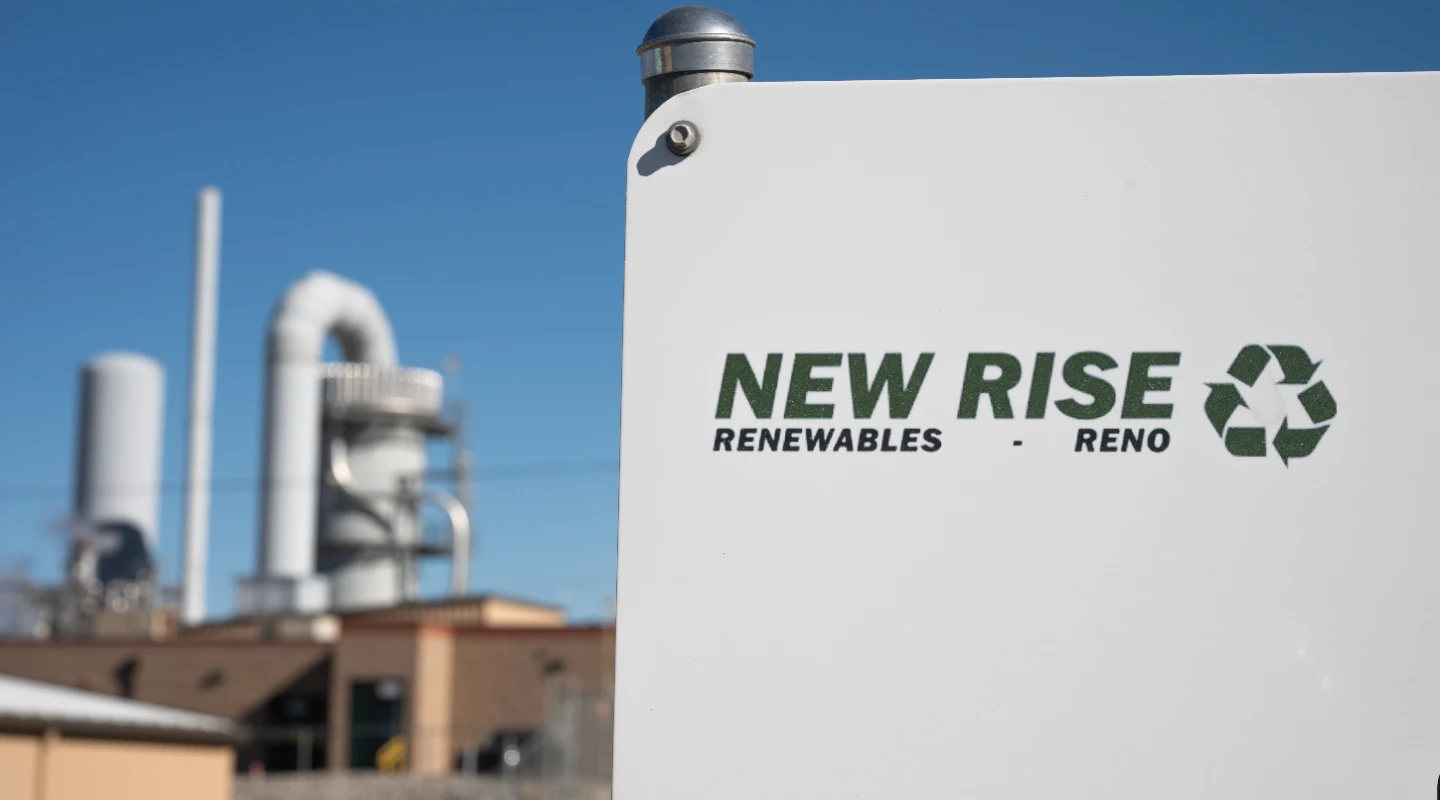
The most important operational development during the third quarter was the restart of the New Rise Renewables Reno facility.
Located in Nevada, the facility is XCF's flagship renewable fuel production operation and has permitted nameplate capacity of approximately 38 million to 40 million gallons annually.
The plant is designed to produce renewable diesel, sustainable aviation fuel and renewable naphtha.
Before the latest recovery, the facility had experienced production interruptions and maintenance-related downtime that delayed its ability to operate consistently.
After completing operational improvements and restart activities, XCF resumed renewable fuel production in July 2026.
Production increased over the following two months:
| Month | Renewable Fuel Production |
|---|---|
| July 2026 | 0.55 million gallons |
| August 2026 | 1.01 million gallons |
| September 2026 | 1.35 million gallons |
September production therefore increased approximately 145% compared with July.
The improvement indicates that the facility is gradually increasing utilisation and moving towards more consistent commercial operations.
However, the monthly output remains below the permitted nameplate level.
At full capacity, New Rise Reno would be expected to produce approximately 3.1 million to 3.3 million gallons per month.
September's production of 1.35 million gallons therefore represented roughly 41% to 44% of the expected monthly nameplate output.
This gap highlights the opportunity for further improvement, but it also demonstrates that the company has not yet reached its full production potential.
The next operational priority will be improving equipment reliability, increasing utilisation and maintaining stable manufacturing performance.
Commercial Shipments Resume Through Strategic Partnership
The production recovery has been supported by renewed commercial fuel deliveries.
XCF began its first commercial shipments following the restart in August 2026.
The company shipped approximately 1.26 million gallons during August, followed by 1.46 million gallons in September, representing a 15.5% monthly increase.
These deliveries demonstrate that renewable fuel production is beginning to translate into customer transactions.
An important part of this commercial strategy is XCF's relationship with BGN INT US, an international energy and commodities group.
Under definitive agreements, BGN is expected to support feedstock procurement and commercialisation of renewable diesel, sustainable aviation fuel and renewable naphtha.
XCF continues to operate the production facility, manage customer relationships, negotiate pricing and coordinate fuel allocation and logistics.
BGN supports feedstock supply, customer credit review, invoicing and commercial distribution.
This arrangement provides XCF with access to established supply-chain and marketing capabilities without requiring the company to develop every part of the commercial infrastructure independently.
The partnership could also support future facilities as XCF expands its renewable fuel production platform, subject to operational readiness and contractual conditions.
For a growing producer, dependable access to feedstocks and customers is essential because manufacturing capacity alone does not guarantee successful fuel sales.
The BGN relationship therefore represents an important part of XCF's strategy to improve commercial execution and establish more predictable operations.
Revenue Model Extends Beyond Physical Fuel Sales Another important aspect of XCF's business model is its ability to generate revenue from environmental attributes and government-supported incentives associated with renewable fuel production.
The company does not rely exclusively on selling physical fuel to transportation customers.
Its commercial revenue streams include:
RINs are tradable compliance credits used by obligated parties under the US Renewable Fuel Standard. Their market value can contribute significantly to the economics of eligible renewable fuel production.
- Renewable diesel and sustainable aviation fuel sales.
- Renewable Identification Numbers (RINs) generated under the US Renewable Fuel Standard.
- Low Carbon Fuel Standard (LCFS) credits.
- Applicable federal, state and local incentives.
- Carbon credits and other environmental attributes.
During August and September, when commercial shipments resumed, XCF reported approximately $7.95 in realised revenue per gallon of renewable fuel sold.
The company also reported approximately $2.74 in gross income per gallon and $1.71 in manufacturing and operating expenses per gallon, excluding transaction-related expenses and depreciation.
These figures provide an indication of the company's expected unit economics under the operating conditions experienced during the two-month shipping period.
However, the realised revenue per gallon includes environmental attributes and incentives, rather than representing only the physical selling price of the fuel.
This distinction is important because credit prices, regulatory eligibility and government incentive structures can change.
Consequently, maintaining attractive per-gallon economics will require effective feedstock procurement, production efficiency and management of environmental credit revenues.
Strategic Business Combination Expands XCF's Technology Portfolio
XCF is also pursuing a broader growth strategy through acquisitions and strategic business combinations.
On October 16, 2026, the company completed its all-stock business combination with Southern Energy Renewables and DevvStream.
Both businesses became wholly owned subsidiaries of XCF Global.
The transaction created a broader alternative energy platform combining renewable fuel production, future biomass conversion technologies and environmental asset management.
Southern Energy Renewables brings additional technology pathways that could allow the company to use lower-cost feedstocks and potentially reduce the carbon intensity of future renewable fuels.
Its capabilities complement XCF's existing hydroprocessed esters and fatty acids (HEFA) production pathway at New Rise Reno.
HEFA technology converts suitable fats, oils and greases into renewable fuels through processing and upgrading operations.
DevvStream brings expertise in managing and monetising environmental assets, including carbon credits and renewable fuel incentives.
This capability is strategically relevant because environmental attributes form an important part of XCF's reported revenue model.
By managing more of these activities internally, the company hopes to strengthen control over the commercial value generated throughout its renewable fuel supply chain.
The combination could also support future products such as renewable methanol and fuels for marine and industrial applications.
However, the transaction closed after September 30, 2026. Therefore, Southern Energy and DevvStream were not included in XCF's reported third-quarter or nine-month operating results.
Their financial contributions will need to be assessed through subsequent reporting periods.
Paramount Refinery Acquisition Could Expand Production Capacity
Another important part of XCF's expansion strategy is its proposed acquisition of a renewable fuel production facility in Paramount, California.
On October 20, 2026, the company announced a definitive agreement to acquire the facility, which has estimated annual production capacity of approximately 50 million gallons.
The location is particularly attractive because it is less than 20 miles south of downtown Los Angeles and relatively close to Los Angeles International Airport (LAX).
The facility includes refining, blending, storage, rail and truck-loading infrastructure, alongside interests in more than 65 miles of pipeline assets.
These facilities could help XCF develop a larger renewable fuel distribution platform serving aviation and transportation customers across the US West Coast.
Management expects to invest approximately $30 million during a planned nine-to-twelve-month restart period, primarily supporting workforce training and operational readiness.
Following a successful restart, the company has outlined preliminary annual targets of approximately $600 million in gross product revenue and $40 million in adjusted EBITDA for the Paramount facility.
These figures are management targets, not guaranteed financial results.
The proposed acquisition remains subject to closing conditions, financing arrangements and operational execution.
If completed and restarted successfully, the Paramount facility could add approximately 50 million gallons of annual capacity to Reno's existing 38-million-to-40-million-gallon platform.
Together, the facilities could provide approximately 90 million gallons of annual renewable fuel production capacity.
The potential expansion would significantly increase XCF's operating scale, but it would also create substantial capital, integration and operational requirements. 2027 Financial Outlook Remains Ambitious Following its third-quarter results, XCF reaffirmed its financial outlook for 2027 from its current operations, excluding the proposed Paramount acquisition.
The company is targeting: Financial Metric 2027 Management Outlook Gross product revenue $650–700 million Adjusted EBITDA $70–75 million
These targets reflect management's expectations for the existing business and are dependent on continued progress in production, sales, commercial relationships and operating efficiency.
The outlook does not include the additional potential contribution from Paramount.
XCF's October business combination announcement had also outlined a 2027 net revenue target of $120 million to $130 million.
It is important to distinguish net revenue from gross product sales or gross product revenue. The latter is a separate company-defined commercial metric and should not be interpreted as conventional GAAP revenue.
The company has also outlined longer-term ambitions for its combined business, including significant growth in sales and EBITDA by 2030.
Achieving these targets will require consistent output from existing facilities, successful integration of acquired businesses and sufficient financing for additional projects.
For investors, the central question is whether XCF can convert its production recovery into a sustained financial performance rather than relying on one strong reporting period.
Expansion Through International Partnerships
Alongside acquisitions, XCF is pursuing international expansion through its New Rise Blueprint licensing programme.
The programme is designed to make the company's renewable fuel production technology available to project developers that finance, construct and operate facilities in their own markets.
Under its first licensing arrangement with Continual Renewable Ventures, XCF is supporting the development of four proposed facilities across Australia and New Zealand.
The company expects to participate through technology licensing fees, technical support, potential equity ownership and commercial partnerships.
This approach could allow XCF to expand internationally without funding every manufacturing facility entirely through its own balance sheet.
However, the four proposed facilities are development projects rather than completed operating plants. Their progress will depend on financing, regulatory approvals, technical feasibility and commercial agreements.
The strategy could provide additional opportunities to expand the company's technology footprint while supporting demand for renewable fuels in international aviation and transportation markets.
Financial and Operational Risks Remain Significant
Despite the latest revenue improvement, XCF faces several challenges that could influence its future performance.
Production reliability: New Rise Reno has experienced previous maintenance-related interruptions. Maintaining consistent production will be necessary to reach its permitted capacity.
Financing requirements: The proposed Paramount acquisition, refinery restart and wider expansion programme require substantial capital. XCF has reported preliminary financing interest, but funding arrangements must still be secured.
Feedstock costs: Renewable fuel production depends on reliable supplies of suitable agricultural waste products, fats, oils and other renewable raw materials. Changes in procurement costs can affect operating margins.
Environmental credits: A portion of the company's business economics depends on RINs, LCFS credits and other environmental incentives. Changes in credit prices or government policies could affect realised revenue.
Integration risks: Combining Southern Energy and DevvStream requires operational coordination and effective management of different technologies and commercial activities.
Nasdaq listing compliance: XCF announced on November 2 that it had withdrawn its proposed reverse stock split. It has until December 7, 2026, to regain compliance with Nasdaq's minimum bid-price requirement. The company has warned that failure to regain compliance could lead to delisting.
The last issue is particularly important because access to capital markets can influence a growing company's ability to finance expansion and meet its financial obligations.
The company must therefore demonstrate progress not only in production and sales but also in financial management and regulatory compliance.
Future Outlook: Can XCF Turn Recovery Into Sustainable Growth?
The next phase of XCF's development will depend on its ability to increase production at Reno, strengthen commercial relationships and execute its planned acquisitions.
Management has identified consistent operations, higher facility utilisation, lower production costs and stronger cash generation as its immediate priorities.
The proposed Paramount acquisition could significantly expand capacity, while Southern Energy and DevvStream provide additional technology and environmental-credit capabilities.
International licensing agreements may offer another source of expansion without requiring the same level of direct capital investment as wholly owned facilities.
However, the company's ambitious 2027 targets will require substantial operational execution and appropriate financing.
Investors and industry participants will be watching monthly production levels, commercial shipment volumes, gross margins and the company's progress towards Nasdaq listing compliance.
The renewable fuel industry offers substantial long-term opportunities, particularly as airlines and transportation companies explore alternatives to conventional petroleum-based fuels.
For XCF, the immediate challenge is demonstrating that its renewed production activity can translate into reliable deliveries, predictable financial performance and sustainable profitability.
Conclusion
XCF Global's 127% third-quarter revenue growth represents an important milestone in its recovery from earlier production difficulties.
The increase to $21.7 million in quarterly revenue, combined with higher gross profit and resumed commercial shipments, demonstrates that New Rise Reno is returning to revenue-generating operations.
The company is also expanding its long-term business strategy through its partnerships with BGN, Southern Energy and DevvStream, while pursuing the proposed acquisition of the Paramount renewable fuel refinery.
These developments could create a more diversified renewable energy platform with greater production capacity and additional revenue opportunities.
Nevertheless, important challenges remain. Reno is still operating below nameplate production capacity, Paramount requires financing and a successful restart, and Nasdaq listing compliance remains unresolved.
The next stage will therefore be defined by execution rather than announcements alone.
If XCF can maintain production reliability, improve capacity utilisation and manage its financial commitments, the latest recovery could provide a foundation for broader expansion in the renewable diesel and sustainable aviation fuel markets.
Nexuswild welcomes factual corrections. Email contact@nexuswild.com with evidence and the article URL.