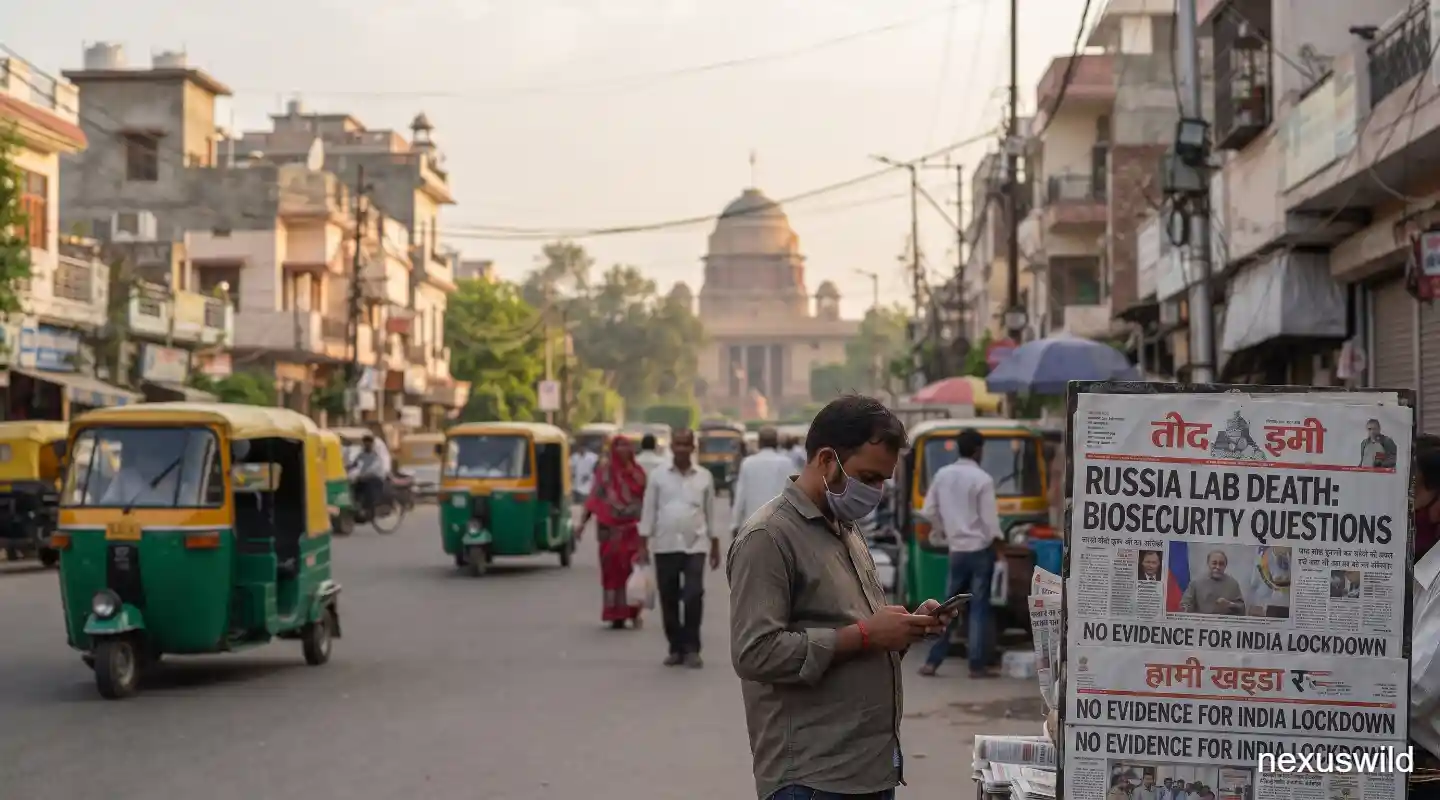

A 28-year-old worker at a Siberian anti-plague institute died on October 2, 2026, and the cause is still publicly unexplained. For readers in India, the practical question is simpler than the scientific one: should anyone expect a lockdown, travel ban or health emergency here? Based on what is documented as of October 12, the answer is no.
What is known about the death
Darya Shipilova worked at the Irkutsk Anti-Plague Research Institute of Siberia in Shelekhov. Russia's health watchdog, Rospotrebnadzor, says she died of pneumonia of unknown origin. It told the World Health Organization that no plague was found in her or in people she had contact with, and it said there is no epidemic risk and that it is winding down its response.
The WHO has asked Russia which pathogen caused the pneumonia. Pneumonic plague, the lung form of the disease, can spread between people through respiratory droplets, which is why the case drew attention. The U.S. Centers for Disease Control and Prevention said it is monitoring "reports of a suspected case of pneumonic plague," while stressing that the circumstances remain unconfirmed.
What is reported but unconfirmed
A regional Russian outlet reported that she may have been exposed on September 25 after breaking a test tube containing the plague pathogen. Russian authorities have not confirmed this. Russian media also reported a second death, which the Kremlin's spokesperson dismissed, saying most media reporting on the situation was "false information." The WHO has urged Moscow to reply formally to its questions, so the picture is incomplete.
What the risk looks like outside Russia
Health security experts told a fact-checking review published October 12 that the case is unlikely to lead to a pandemic. About ten days after her death, no secondary cases had been confirmed. WHO officials have described the risk to people outside Russia as "very low" on the information available. Plague, unlike a novel virus, is a known bacterium that responds to antibiotics when treated early.
What is known about India
I found no credible report or official statement suggesting a lockdown, curfew or travel ban in India linked to this case. The only "lockdown" material that surfaced in searches related to India's 2020 COVID-19 measures, which suggests old pandemic memories may be feeding the speculation.
A news summary published October 6 said there is no evidence of a plague outbreak in India linked to the Russian incident and noted that India has public-health systems at points of entry that can handle surveillance, isolation and testing under the International Health Regulations. I did not find a standalone statement from India's Health Ministry or the National Centre for Disease Control in the sources I reviewed, so this should be treated as a summary, not an official advisory.
Other countries have taken precautions. Indonesia has stepped up screening at airports and seaports, with health declarations and symptom monitoring, partly because of Russian tourist traffic. Kyrgyzstan and Kazakhstan have raised alert levels, and Mongolia has reportedly increased vigilance along its Russian border. These are surveillance measures, not travel bans.
What would change the picture
Three developments would matter: the WHO naming the pathogen, any confirmed second case, and a confirmed case outside the Irkutsk region. If any of those happen, Indian authorities could add screening. None has been reported.
For readers, the sensible approach is to rely on the WHO, India's Health Ministry and the NCDC, and to be cautious about forwarded messages that claim lockdowns or shortages.
Nexuswild welcomes factual corrections. Email contact@nexuswild.com with evidence and the article URL.