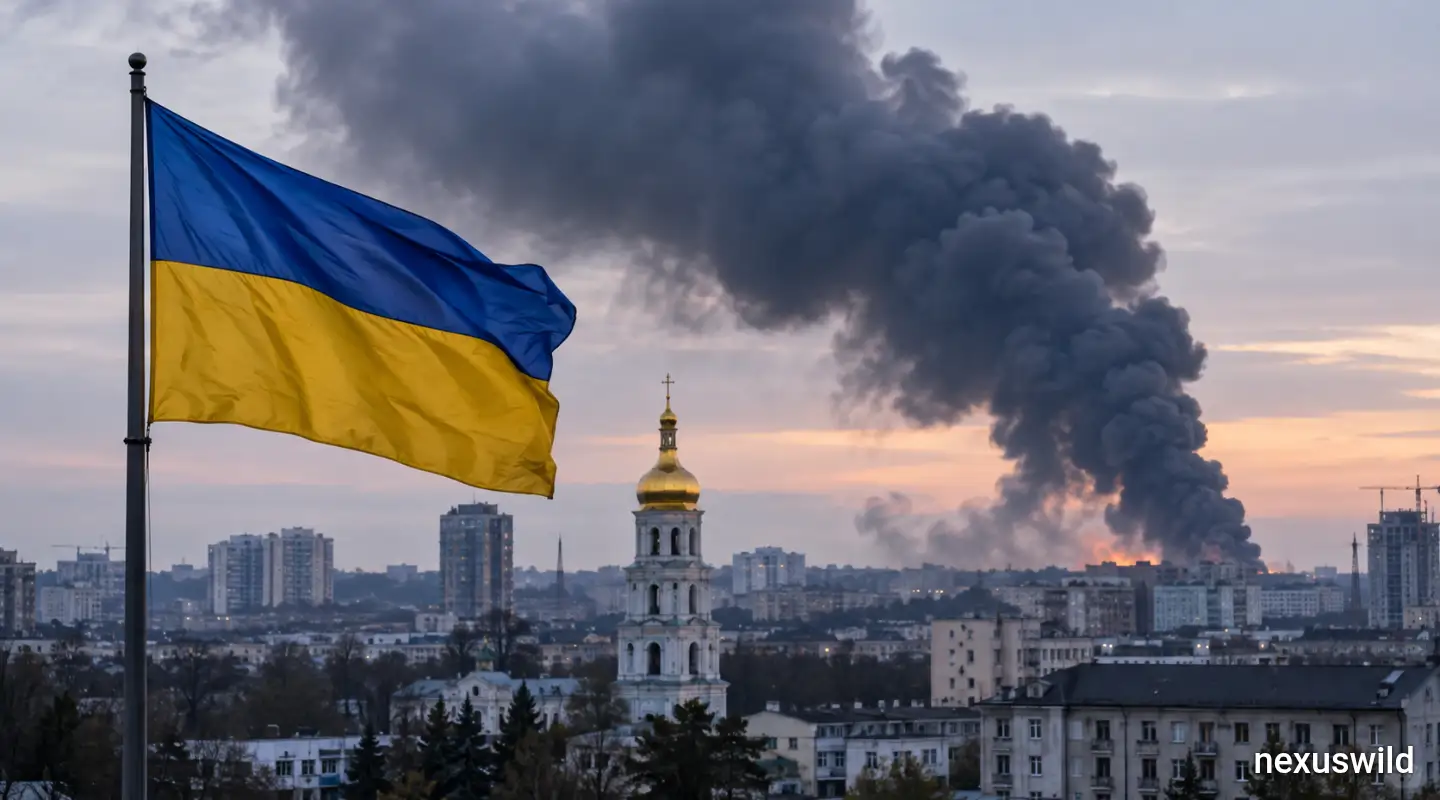

Russian aerial attacks caused hours-long electricity and water disruptions across Kyiv and surrounding regions on November 4, 2026, highlighting the continuing vulnerability of Ukraine's critical infrastructure as winter approaches.
The overnight assault involved 310 Russian drones, according to Ukraine's Air Force. Ukrainian authorities reported that air defence units downed or suppressed 272 of the incoming unmanned aerial vehicles by 8 a.m. local time.
The attacks affected essential services in the capital, prompting emergency power restrictions and temporary interruptions to water supplies. Residents were advised to use public drinking water fountains while municipal authorities and utility workers coordinated restoration efforts.
Kyiv's water utility subsequently reported that supplies had been restored. DTEK, Ukraine's largest private energy company, also announced that emergency electricity shutdowns in the capital had ended after repair teams stabilised the system.
The incident demonstrates how repeated aerial attacks can disrupt civilian services even when a substantial proportion of incoming weapons are intercepted or neutralised.
Ukraine Reports 272 Drones Neutralised Out of 310
According to the Ukrainian Air Force, Russia launched 310 drones during the overnight operation, including 81 jet-powered Shahed-type drones. Other reported aircraft included Gerbera and Parodiya drones, which can serve different operational and decoy purposes.
Ukraine's military reported that 272 drones had been downed or suppressed by 8 a.m. on November 4. This represents approximately 87.7% of the reported total.
However, the figure should be understood as a reported neutralisation rate rather than a verified destruction rate. The Ukrainian military grouped drones that were physically shot down with those suppressed through electronic warfare.
The operation involved several layers of Ukrainian defence, including aviation, anti-aircraft missile units, electronic warfare systems, unmanned platforms and mobile fire groups.
The Air Force also reported impacts at 19 locations and debris from intercepted targets at another 15 locations. More than 20 attack drones remained in Ukrainian airspace at the time of its preliminary morning assessment.
These figures illustrate the complexity of defending a large national airspace against coordinated drone operations. They also show why interception statistics alone cannot establish the full extent of damage caused by an aerial assault.
Energy Infrastructure Faces Repeated Attacks
The November 4 disruptions came amid a broader series of Russian attacks against Ukraine's electricity infrastructure.
On November 3, Russian forces struck power plants and substations across nine Ukrainian regions, according to Ukrainian President Volodymyr Zelenskyy. The state-owned electricity operator Ukrenergo reported more than 20 attacks against energy facilities within 24 hours.
The strikes resulted in electricity disruptions across several areas, including locations in and around Kyiv.
Separately, Russia also struck power stations in the Kyiv and Zhytomyr regions, according to reporting on November 4.
The distinction between these operations is important: the November 3 attacks on energy facilities and the November 4 overnight drone barrage were separate developments within the wider campaign against Ukrainian infrastructure.
Electricity generation facilities, substations and transmission networks are essential to maintaining power supplies for households, hospitals, businesses and public transport. Damage to these interconnected systems can create disruptions extending beyond the immediate strike locations.
For Ukrainian authorities, restoring electricity while protecting infrastructure against further attacks remains a significant operational challenge.
Separate Attack in Komyshuvakha Adds to Humanitarian Crisis
While Kyiv experienced disruptions to essential services, rescue teams in the southern Zaporizhzhia region continued operations following a separate Russian guided-bomb attack on November 2.
The village of Komyshuvakha was struck by guided bombs targeting an area that included a former school building used for humanitarian aid distribution and a neighbouring shelter.
According to Associated Press reporting on November 4, the death toll had risen to 40, with approximately 30 people potentially still trapped beneath the rubble at the time of reporting.
Emergency personnel used heavy machinery to search the damaged site. Rescue operations were complicated by the continuing threat of additional Russian drone attacks in the area.
The Komyshuvakha incident was not part of the November 4 drone barrage targeting Ukraine's wider infrastructure. It was a separate attack involving guided bombs and should be assessed independently.
The incident nevertheless demonstrates the wider humanitarian consequences of aerial warfare, particularly in communities close to active front lines where civilians depend on humanitarian distribution points and emergency shelters.
Winter Approaches as Infrastructure Security Becomes More Critical
Repeated attacks on electricity and other essential infrastructure are increasing concerns about Ukraine's ability to maintain reliable public services during the colder months.
Electricity is closely connected to heating, water distribution, healthcare and communications. Even temporary outages can create significant difficulties for residents, particularly during periods of low temperatures.
The November attacks also underline the importance of Ukraine's layered air-defence capabilities. Although the reported neutralisation figure was high, the number of incoming drones and the multiple locations reporting impacts demonstrate the continuing pressure on the country's defensive systems.
Ukraine has repeatedly sought additional Western military assistance, including air-defence equipment and ammunition, to strengthen protection against Russian aerial attacks.
However, the reported number of drones involved in this particular operation does not independently establish that Ukraine exhausted or depleted its interceptor stockpiles. Assessing the condition of those supplies requires separate information about ammunition availability, consumption and replenishment.
Emergency centres in Kyiv also offered practical assistance to residents, including hot drinks and charging facilities. Such measures provide temporary support when electricity and water services are interrupted, although they should not be interpreted as evidence of a newly expanded nationwide heating-station network.
Infrastructure Protection Remains a Strategic Priority
The November 4 attacks highlight the continuing importance of protecting Ukraine's energy infrastructure while maintaining essential services for civilians.
For Kyiv, the restoration of water and electricity demonstrated the ability of local utilities to respond to temporary disruptions. Nevertheless, repeated strikes create uncertainty for households, public institutions and businesses that depend on stable energy supplies.
The broader sequence of attacks also presents a difficult challenge for Ukraine's military and civilian authorities: defending infrastructure across multiple regions while maintaining sufficient resources for prolonged operations.
As winter approaches, the security of power generation, electricity transmission and municipal water systems will remain central to Ukraine's humanitarian and national resilience efforts.
Summary: Russian aerial attacks triggered temporary electricity and water disruptions across Kyiv and surrounding areas on November 4. Ukraine's Air Force reported that air defence units downed or suppressed 272 of 310 incoming drones. The incident followed separate attacks on energy infrastructure and came as rescue teams continued searching for survivors after a deadly November 2 guided-bomb strike in Komyshuvakha.
Nexuswild welcomes factual corrections. Email contact@nexuswild.com with evidence and the article URL.