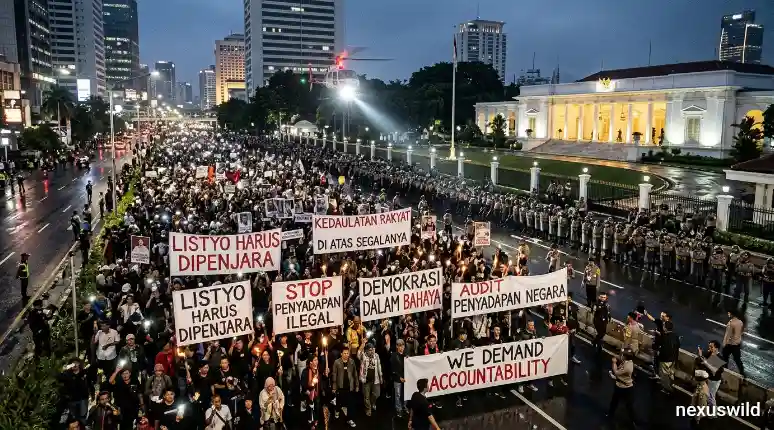

A Surveillance Allegation Reaches Indonesia’s Presidential Office
Indonesia is facing a significant political and institutional test after President Prabowo Subianto dismissed his Presidential Chief of Staff, General Listyo Sigit Prabowo, following his detention as a suspect in an alleged illegal wiretapping operation.
The development has placed the country's police and presidential institutions under scrutiny. Investigators allege that senior police officers used state interception infrastructure to monitor telephone numbers without following the required legal and administrative procedures. The alleged targets included the president, government officials, political figures, journalists, civil society representatives and business executives.
The case became public on November 3, 2026, when Indonesia's National Police Criminal Investigation Agency announced that three senior officers had been named as suspects and detained. The following day, State Secretary Prasetyo Hadi confirmed that President Prabowo had signed a decree dismissing Listyo from his position as Presidential Chief of Staff. Lieutenant General Ariyo Windutomo was appointed acting chief of staff to maintain continuity in the presidential administration. <Cite refs={["turn107645search2","turn107645search3","turn107645news13"]}/>
The allegations are particularly sensitive because Listyo had led the National Police for more than five years before moving into the presidential administration in October 2026. Investigators say the suspected surveillance activity began in 2025, when he was still serving as national police chief.
The investigation is ongoing. The suspects have not been convicted, and authorities have not publicly established why the alleged surveillance was conducted or who ultimately directed it.
Three Senior Officers Named as Suspects
Indonesia's National Police Criminal Investigation Agency identified three officers by their initials during its initial announcement: LSP, ASN and EH.
Subsequent reporting identified them as Listyo Sigit Prabowo, Ahrie Sonta Nasution, head of the National Police Legal Division, and Eko Hadi Santoso, a senior officer associated with police education and training.
Investigators said the three had been detained at the National Police headquarters in Jakarta after being named as suspects. The case involves allegations of unlawful interception, unauthorised access to electronic systems and the deletion or alteration of electronic information.
According to statements attributed to Criminal Investigation Agency chief Asep Safrudin, investigators had questioned 10 witnesses and three expert witnesses. They also seized 11 mobile phones, one tablet and four USB flash drives as part of the evidence-gathering process. <Cite refs={["turn107645search3","turn107645search4","turn107645search6"]}/>
The identity and seniority of the suspects have made the investigation especially consequential. It is not simply a case involving the alleged misuse of an individual surveillance device. It concerns the possible misuse of an institutional capability designed to support lawful investigations.
The allegations also create an accountability question for the police organisation: how could telephone numbers allegedly be entered into an official interception system without the required authorisation, and what internal controls were supposed to prevent that from happening?
Those questions will be central to determining whether the case reflects individual misconduct, weaknesses in institutional oversight or a wider failure of internal controls.
How the Lawful Interception Management System Became Central to the Case
At the centre of the allegations is Indonesia's Lawful Interception Management System, commonly referred to as LIMS.
Lawful interception systems are designed to allow authorised agencies to obtain communications data or intercept communications as part of investigations conducted under applicable legal procedures. Such capabilities can be important in cases involving organised crime, terrorism and other serious offences. Their legitimacy, however, depends on clear legal authority, documented approvals, restricted access and effective oversight.
According to investigators' statements reported by regional and international media, the suspects allegedly entered telephone numbers into the police interception system without the required verification and procedural basis.
The alleged targets were not limited to people suspected of criminal activity. Police statements described a range of potential targets, including the president, state officials, political figures, media representatives, community leaders, non-governmental organisation activists and businesspeople.
This distinction is important. A lawful interception system is not inherently unlawful. The central question is whether it was used for a legitimate investigation with the necessary authorisation or whether officials allegedly bypassed the safeguards governing access.
The reported allegations suggest that some telephone numbers were entered without being connected to a proper inquiry or investigation. If established, such conduct would raise serious concerns about the use of state surveillance capabilities outside their intended legal framework. <Cite refs={["turn107645search3","turn107645search4","turn107645search6"]}/>
The case also highlights the importance of audit trails. Interception systems need reliable records showing who requested surveillance, who approved it, which targets were authorised, how long monitoring was permitted and whether the activity complied with applicable law.
Without those records, independent review becomes more difficult. That is why the alleged deletion of surveillance files has become a significant part of the investigation.
Alleged Deletion of Surveillance Records Raises Further Questions
Investigators have also alleged that electronic files containing records of intercepted communications were ordered deleted in October 2026.
According to police statements reported by Channel News Asia, the alleged deletion concerned files held within the Lawful Interception Management System. Officers who became aware of the activity reportedly raised concerns, prompting further scrutiny.
Police have described the alleged deletion as an attempt to conceal evidence or cover the tracks of the suspected operation. That remains an allegation under investigation rather than a finding established by a court. <Cite refs={["turn107645search3","turn107645search4"]}/>
The alleged destruction of electronic records could complicate the investigation in several ways.
First, investigators need to establish the scale and duration of the surveillance. System logs may help identify which accounts accessed the platform, which telephone numbers were entered and when interception activity took place.
Second, records can help establish whether the activity was approved, whether the relevant procedures were followed and whether access was concentrated among a small group of officials.
Third, electronic evidence may help investigators reconstruct the sequence of events surrounding the alleged deletion. Device records, backups, system logs and communications between personnel could provide information about who initiated or authorised particular actions.
Police have reported seizing electronic devices and storage media as part of their investigation. The extent to which those materials can recover deleted information or establish responsibility has not yet been publicly determined.
The case therefore involves two connected questions: whether surveillance was conducted unlawfully and whether evidence of that activity was subsequently removed.
Palace Raises National Security Concerns, but Motive Remains Unclear
The allegations have moved beyond the boundaries of an ordinary police disciplinary matter because the reported surveillance included the sitting president and other senior figures.
Presidential spokesperson Prasetyo Hadi described the alleged activity as potentially extending beyond misconduct by individual officers. He said the actions could be considered conduct tending towards treason and could endanger state interests and the safety of national leadership.
The language reflects the seriousness with which the presidential administration is treating the allegations. However, it should not be interpreted as confirmation that the suspects have been convicted of treason or that investigators have established a politically motivated conspiracy.
Coordinating Minister for Law, Human Rights, Immigration and Corrections Yusril Ihza Mahendra said the purpose of the alleged surveillance remained under investigation. He indicated that no established motive had yet been determined and that the allegations needed to be examined through the legal process. <Cite refs={["turn107645search1","turn107645search3","turn107645search10"]}/>
This distinction matters for Indonesia's legal and political institutions. The interception of a head of state's communications could have major security implications, but the legal classification of the conduct must depend on evidence and applicable law.
The investigation will need to establish who was targeted, what information was obtained, whether the information was shared, whether any wider organisation was involved and what purpose the alleged surveillance served.
Until those questions are answered, claims about treason, political espionage or an attempt to undermine the government remain matters of allegation or interpretation rather than established conclusions.
A Major Personnel Change Inside the Presidential Administration
Listyo's dismissal is one of the most immediate institutional consequences of the case.
He became Presidential Chief of Staff on October 1, 2026, after leaving the position of National Police chief. His appointment placed a former head of the national police within the presidential administration, where the office supports coordination and the implementation of presidential priorities.
President Prabowo's decision to remove him followed the announcement that he had been named a suspect. State Secretary Prasetyo Hadi described the dismissal as a consequence of the case and confirmed that a presidential decree had been signed.
Lieutenant General Ariyo Windutomo was appointed acting chief of staff. The temporary appointment is intended to ensure that the office continues operating while the investigation proceeds. <Cite refs={["turn107645search2","turn107645search7"]}/>
The decision does not itself determine criminal responsibility. Administrative removal and criminal proceedings are separate processes. The dismissal changes Listyo's position within the government, while investigators and ultimately the courts must determine the legal consequences of the allegations.
Nevertheless, the development is significant because it places a senior presidential aide at the centre of an investigation involving state security capabilities.
It also creates a leadership transition within an office responsible for supporting coordination between the president and government institutions.
Police Accountability and the Legal Limits of Surveillance
The scandal has renewed attention on the legal safeguards governing surveillance in Indonesia.
Lawful interception can be an important investigative tool, but its use involves access to highly sensitive personal and institutional information. A system that can monitor communications may expose private conversations, professional relationships, political discussions and confidential business information.
For this reason, surveillance powers generally require legal limits and oversight mechanisms. Depending on the applicable framework, these may include a valid investigative basis, authorisation by competent officials, restrictions on the scope and duration of monitoring, access controls and records that can be independently reviewed.
The allegations involving LIMS raise questions about whether these safeguards were followed.
A central issue is the relationship between operational access and legal authority. An officer may have the technical ability to enter a telephone number into a system, but that does not automatically mean the officer has the legal authority to conduct surveillance.
If investigators establish that officials bypassed the required procedures, the case could prompt a review of how interception requests are approved and monitored.
Potential areas for institutional review include:
- Clear separation between officers requesting surveillance and those authorising it.
- Multi-level approval for access to sensitive interception systems.
- Immutable logs that record system activity and prevent unauthorised deletion.
- Regular independent audits of interception requests and system access.
- Clear penalties for misuse of surveillance powers.
- Procedures for reporting suspected abuse without retaliation against whistleblowers.
Such measures would not prevent legitimate investigations. Their purpose would be to ensure that sensitive powers remain subject to legal and institutional controls.
Political Implications for Prabowo's Government
The allegations arrive at a sensitive moment for Indonesia's political leadership.
Listyo's movement from the National Police to the presidential administration had already made him an important figure within the state structure. His removal now raises questions about institutional relationships and the management of senior appointments.
International reporting has also placed the case within the wider political context surrounding Prabowo, former president Joko Widodo and their respective political networks. Some analysts have discussed Listyo's previous position and relationships as relevant background. However, no public evidence has established that the alleged surveillance was part of a factional political operation. <Cite refs={["turn107645news13","turn107645news16","turn107645search1"]}/>
The investigation may therefore have consequences beyond the immediate suspects, but those consequences should not be confused with proof of political motives.
For the administration, the challenge is to demonstrate that the investigation will proceed through transparent legal procedures, including where allegations concern senior officials.
For political institutions, the case raises a broader question: how should a government ensure that intelligence and law-enforcement capabilities cannot be used to monitor political competitors, critics or public officials without lawful grounds?
The answer will depend not only on the outcome of this case but also on whether oversight mechanisms are strengthened after the investigation.
Troop Readiness in Jakarta Adds to the Security Atmosphere
The wiretapping investigation has unfolded alongside heightened military readiness in the capital.
Reports published on November 4 said that Indonesia had deployed nearly 21,000 military personnel in Jakarta, with a further 13,140 on standby. The military described the deployment as part of routine national-security preparedness and did not officially link it to the wiretapping investigation.
That distinction is important. The timing has attracted attention, but the available public statements do not establish that the troop deployment was ordered in response to the arrests or that authorities expected unrest connected to the case. <Cite refs={["turn107645news14","turn107645news13","turn107645search5"]}/>
Military readiness in a politically sensitive period can nevertheless influence public perceptions of stability. The government will need to communicate clearly about the purpose of security measures while ensuring that the investigation does not become a source of unnecessary public alarm.
For diplomatic observers and businesses, the key issue is whether the scandal remains contained within the legal and institutional process or develops into a wider dispute involving state agencies.
Implications for Journalists, Civil Society and Business
The alleged target list makes the case especially important for groups outside the government.
Journalists and media organisations rely on confidential communication with sources. If communications are monitored without lawful authority, the ability to protect sources and investigate matters of public interest could be weakened.
Civil society organisations and non-governmental groups also depend on secure communication to coordinate advocacy, research and public-interest activities. Unauthorised monitoring could discourage people from sharing information or participating in public debate.
Businesses face a different but related risk. Corporate communications may contain commercial strategies, financial information, negotiations and sensitive operational data. If business executives were among the alleged surveillance targets, investigators will need to establish whether any information was accessed, retained or shared and whether it was used for an improper purpose.
The allegations do not establish that all these groups were actually monitored or that information was misused. They do, however, demonstrate why surveillance safeguards matter beyond the immediate political leadership.
For international partners, the case may also raise questions about the governance of sensitive security technologies, the protection of communications and the reliability of institutional controls.
What the Investigation Needs to Establish
The next stage will depend on the evidence gathered by investigators and the legal process that follows.
Several questions remain unresolved:
- Which telephone numbers were entered into LIMS, and how many people were affected?
- Who requested, approved or technically carried out the interceptions?
- Were any communications accessed, stored, copied or shared outside the authorised system?
- What records were allegedly deleted, and can investigators recover them?
- Was the activity directed by the three named suspects alone, or were additional individuals involved?
- What was the purpose of the alleged surveillance?
- Were any public officials, political groups or private organisations involved in directing or benefiting from the operation?
The answers will determine whether the case concerns individual violations of police procedures or a broader failure of institutional oversight.
The investigation also needs to distinguish between technical access, actual interception and the subsequent use of information. These are related but separate questions, and evidence of one does not automatically establish the others.
Authorities have reported that the suspects face allegations involving illegal interception, unauthorised access to electronic systems and the deletion or alteration of electronic information. The reported legal provisions carry different penalties, and the final charges and outcomes will depend on the evidence and proceedings. <Cite refs={["turn107645search3","turn107645search4","turn107645search10"]}/>
Conclusion: A Test of Surveillance Oversight and Institutional Trust
Indonesia's wiretapping scandal has exposed the risks that emerge when powerful state surveillance capabilities are allegedly used outside their legal framework.
The dismissal of Listyo Sigit Prabowo marks an immediate political consequence, but it does not resolve the central questions surrounding the alleged operation. Investigators must establish how LIMS was accessed, who authorised or carried out the interceptions, whether electronic records were deliberately deleted and what purpose the surveillance served.
The case is also a test of institutional accountability. Indonesia's ability to investigate allegations involving senior police figures without political interference will matter for public confidence in its law-enforcement and presidential institutions.
For journalists, civil society organisations, businesses and international observers, the wider issue is the protection of communications and the limits placed on state surveillance.
The outcome will depend on evidence, legal procedure and the willingness of institutions to examine their own controls. Until then, the allegations remain serious but unresolved, and the investigation will be closely watched as a measure of Indonesia's commitment to accountability and the rule of law.
Nexuswild welcomes factual corrections. Email contact@nexuswild.com with evidence and the article URL.